
Loading, please wait...
LOT 1601
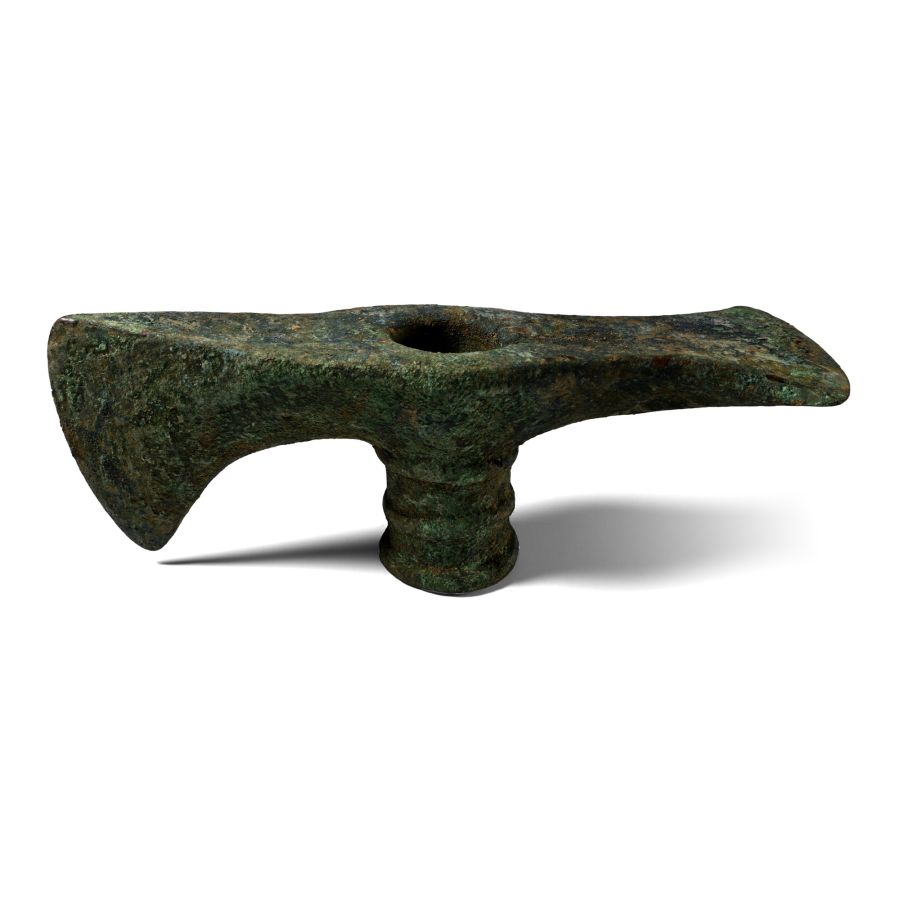
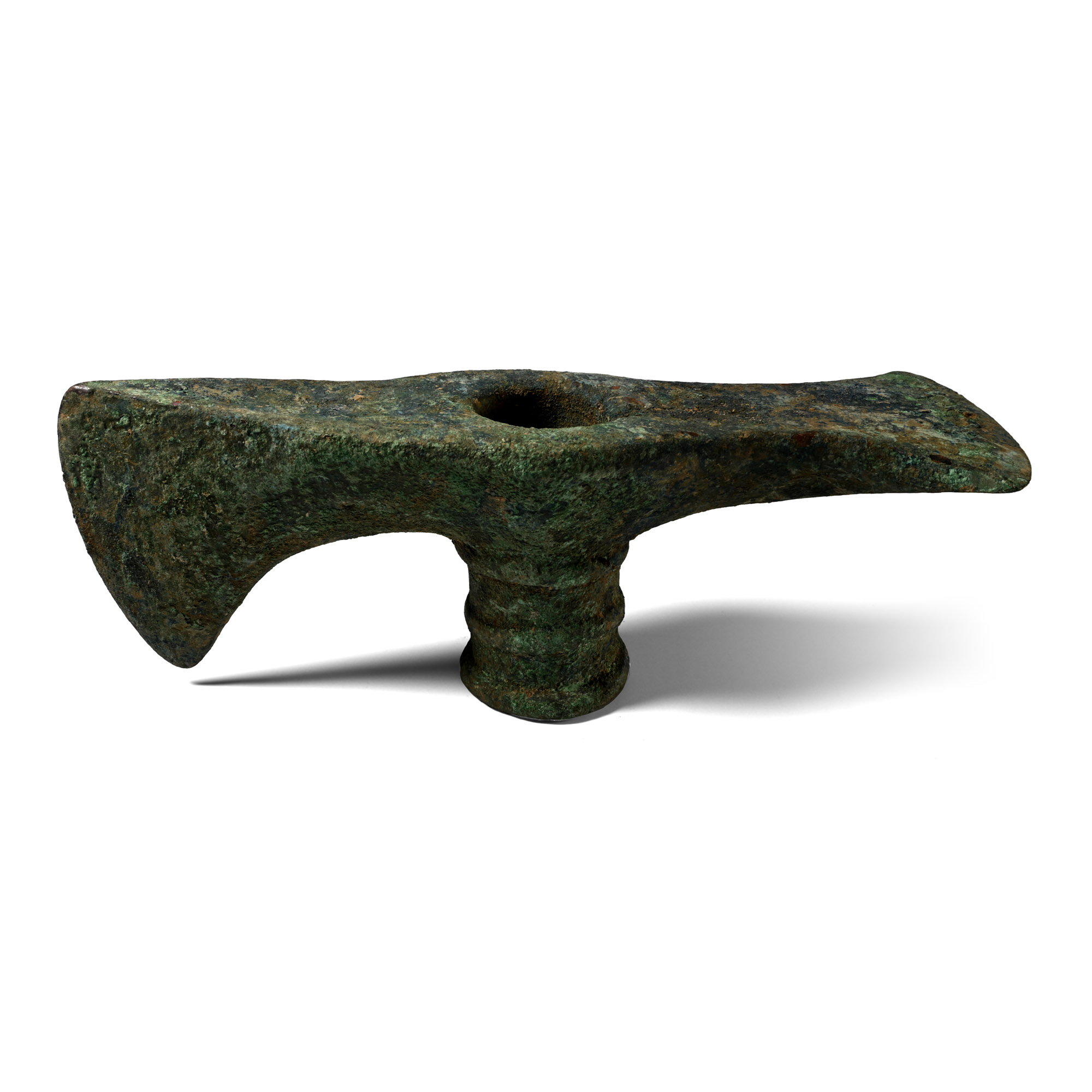
Luristan Socketted Axehead
2ND-1ST MILLENNIUM B.C.
6 7/8 in. (755 grams, 17.5 cm).
An adze-axe head with central shaft hole and curved blades.
ProvenanceAcquired 1980-2015.
Ex Abelita family collection.
This lot is accompanied by an illustrated lot declaration signed by the Head of the Antiquities Department, Dr Raffaele D’Amato.
Cf. Christie's, The Axel Guttmann Collection of Ancient Arms and Armour, part 2, London, 2004, item 34, p.32.
FootnotesThe adze-axe was a fundamental axe of many Bronze Age cultures over the world. Its form was one that lends itself to dual purposes - for war and peace. As a tool, it functions in fabricating wood and as a weapon, its heavy mass and compact form make it a deadly striking and chopping weapon, even able to defeat light armour.
CONDITIONTimeLine Auctions follows a vetting process to ensure the authenticity and legality of all items, reinforcing our commitment to integrity and responsible trading. Each antiquity, antique, and coin lot undergoes thorough examination by a vetting committee of at least ten external specialists, professional trade association members, scientists, and archaeologists: Our Vetting Process
AUCTIONS:
TimeLine is a leading auction house specialising in antiquities, ancient art, collectables, natural history, coins, medals, and books. Our auctions offer museums, collectors, historians, and enthusiasts the opportunity to acquire unique and historically significant pieces.
-
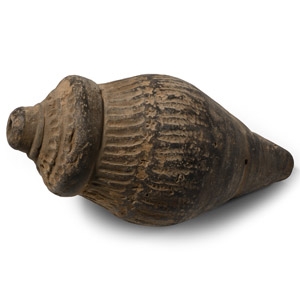
Turco-Mongol 'Greek Fire' Ceramic Fire Bomb or Hand Grenade
13th-15th century A.D.Sold for (Inc. bp): £78
A hollow vessel with cylindrical body, short neck and domed mouth, impressed linear decoration to the body; intended to be filled with explosive liquid and a wick, and used as a hand grenade. 630 grams, 16.4 cm
From an important specialist collection, London, UK, 1990s onwards. Academic report by Dr Raffaele D'Amato. This lot is accompanied by an illustrated lot declaration signed by the Head of the Antiquities Department, Dr Raffaele D’Amato. -
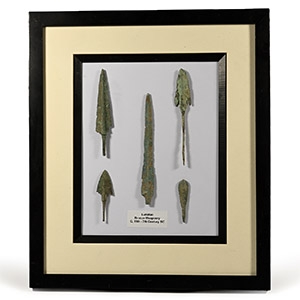
Cased Luristan Arrowhead Collection
Circa 11th-7th century B.C.Sold for (Inc. bp): £39
Including leaf-shaped and barbed types in a glazed frame. 1.1 kg, 33.5 x 38.5 cm
Ex G. While collection, South Wales, 1980s. This lot is accompanied by an illustrated lot declaration signed by the Head of the Antiquities Department, Dr Raffaele D’Amato. -
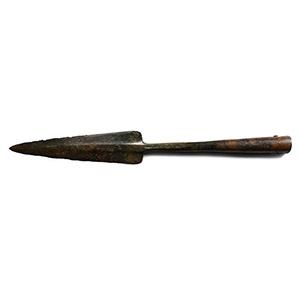
Luristan Bronze Spearhead
13th-7th century B.C.Estimate: £250 - 350 (+bp*)
Opening Bid: £130
Composed of a leaf-shaped blade with tapering socket. 355 grams, 44 cm
Acquired 1980-2015. Ex Abelita family collection. This lot is accompanied by an illustrated lot declaration signed by the Head of the Antiquities Department, Dr Raffaele D’Amato.
