
Loading, please wait...
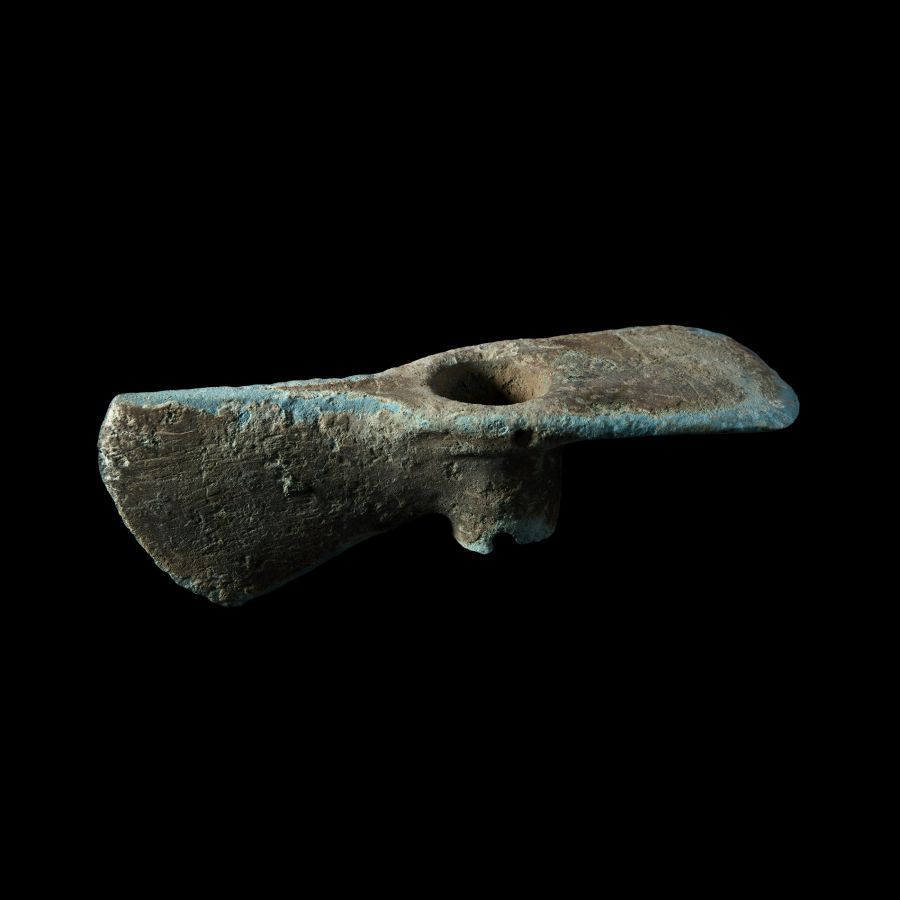
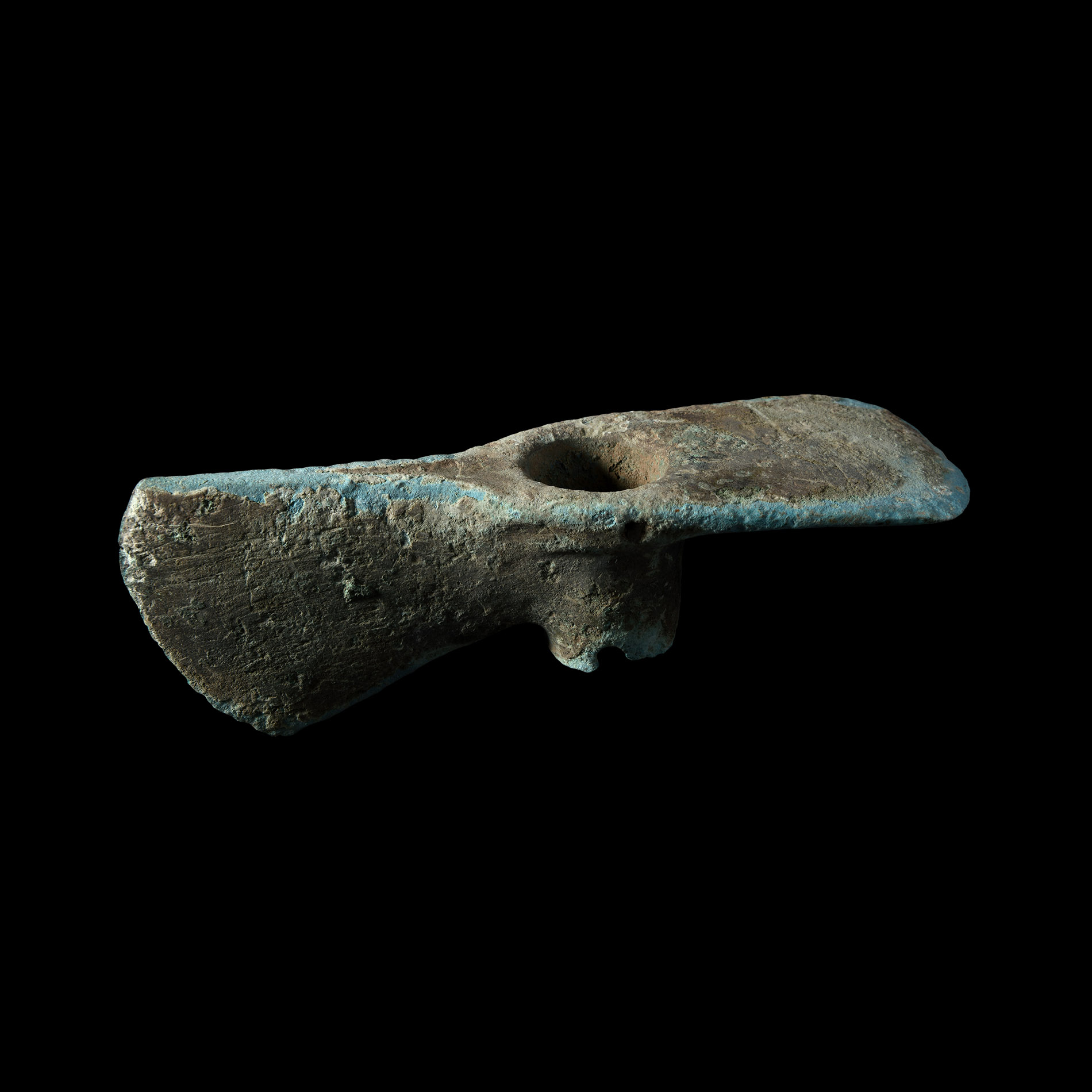
LOT 1071
Luristan Socketted Axe-Adze
13TH-7TH CENTURY B.C.
6 1/2 in. (559 grams, 16.5 cm).
A substantial copper-alloy adze-axe head composed of a cylindrical socket, one blade at a right angle to the socket with tapering sides and D-section cutting edge; one blade upright with convex cutting edge. [No Reserve]
ProvenanceAcquired in the 1980s.
London, UK, private collection.
Property of an Essex gentleman.
TimeLine Auctions follows a vetting process to ensure the authenticity and legality of all items, reinforcing our commitment to integrity and responsible trading. Each antiquity, antique, and coin lot undergoes thorough examination by a vetting committee of at least ten external specialists, professional trade association members, scientists, and archaeologists: Our Vetting Process
AUCTIONS:
TimeLine is a leading auction house specialising in antiquities, ancient art, collectables, natural history, coins, medals, and books. Our auctions offer museums, collectors, historians, and enthusiasts the opportunity to acquire unique and historically significant pieces.
-
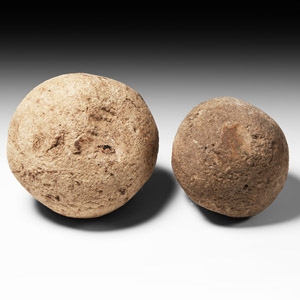
Roman Ballista Catapult Shot Group
1st-3rd century A.D.Sold for (Inc. bp): £156
A pair of differently sized ballistas made from limestone, suitable for use with a catapult type siege weapon. 650 grams total, 55-71 mm
Acquired before 2000. From the collection of a European gentleman living in the UK. -
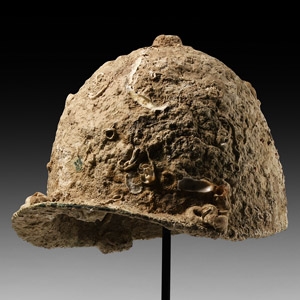
Roman Legionary Helmet with Inscription
1st century B.C.Estimate: £12,000 - 17,000 (‡+bp*)
Opening Bid: £6,000
A bronze Montefortino helmet with bulbous domed skull and a plain crest knob with flattened top; plain and flat neck guard with thickened rim; the front with punched Latin inscription 'A N CFN'; the surface largely covered in marine encrustations; accompanied by a custom-made display stand. 2.2 kg, 28 cm (4 kg total, 45 cm high including stand)
Private Swiss collection, acquired 2001. Accompanied by an academic report by Dr Raffaele D'Amato. This lot has been checked against the Interpol Database of stolen works of art and is accompanied by searcher certificate no.11576-198953.
This Montefortino specimen belongs to type C or D of Robinson’s classification, also identified under the continental system as Buggenum. The helmets of this category, mainly legionary helmets, were produced in mass by the state to be supplied to the troops fighting in the civil wars of the 1st century B.C. Artistic sources of the same period provide evidence for the use of Montefortino and Buggenum type helmets in sea battles, which has been confirmed by archaeological finds from the Albenga ship. The legionary helmets had inscriptions punched upon them, indicating the name of the wearer and the unit, i.e. cohors, centuria or turma. Here the punched letters 'AN' refer probably to the initials of the owner (Ancus N.?), and 'CFN' to centuria of Fabius C. -
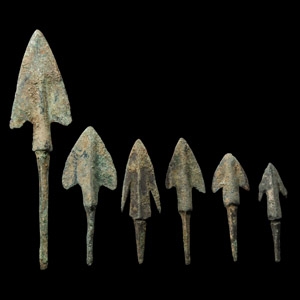
Luristan Arrowhead Group
2nd millennium B.C.Sold for (Inc. bp): £260
A group of six bronze arrowheads with deltoid form, a sharp barbed blade and prominent midrib extending to a long tang. 52 grams total, 4.3-10.9 cm
Acquired 1980-2015. Ex Abelita family collection.
A number of arrowheads of this type have been excavated from the Northern Iranian Plateau, in Luristan and in the South-Caspian region. Many parallels have a burial provenance, but a large hoard of them was found in a non-funerary context. This type of arrowhead has been in use from the 2nd millennium B.C. Godard claimed that barbed types of heads came from tombs from Luristan, like the ones found in Tang-i-Hamamlan.
