
Loading, please wait...
LOT 1037
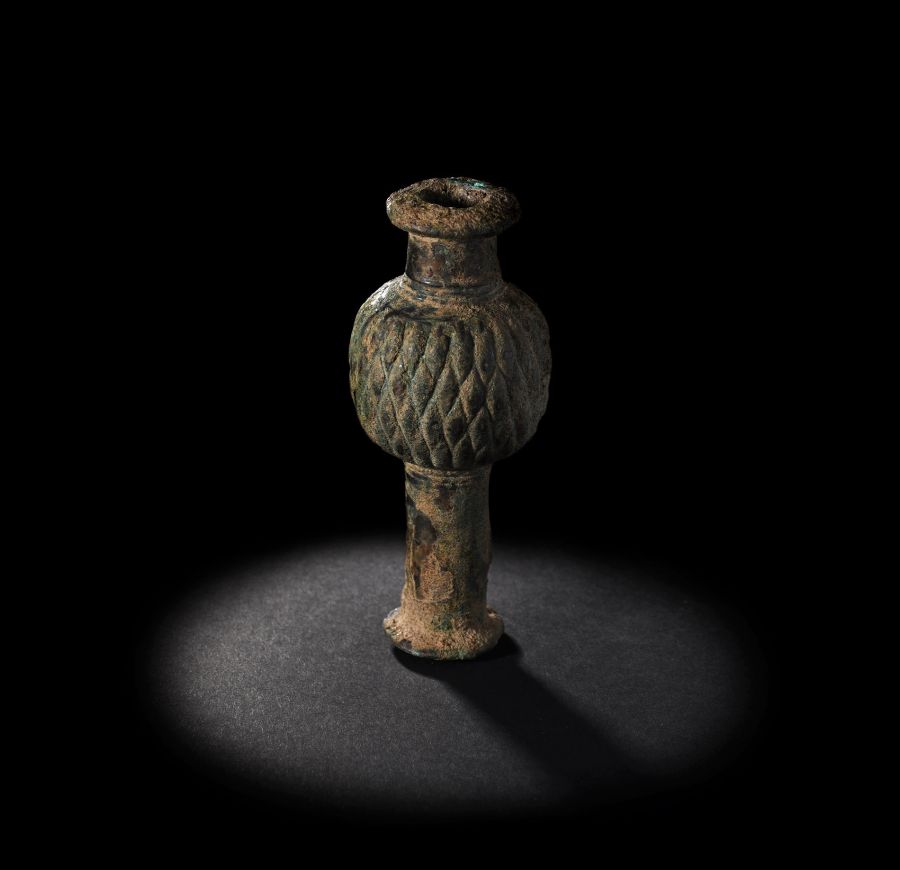
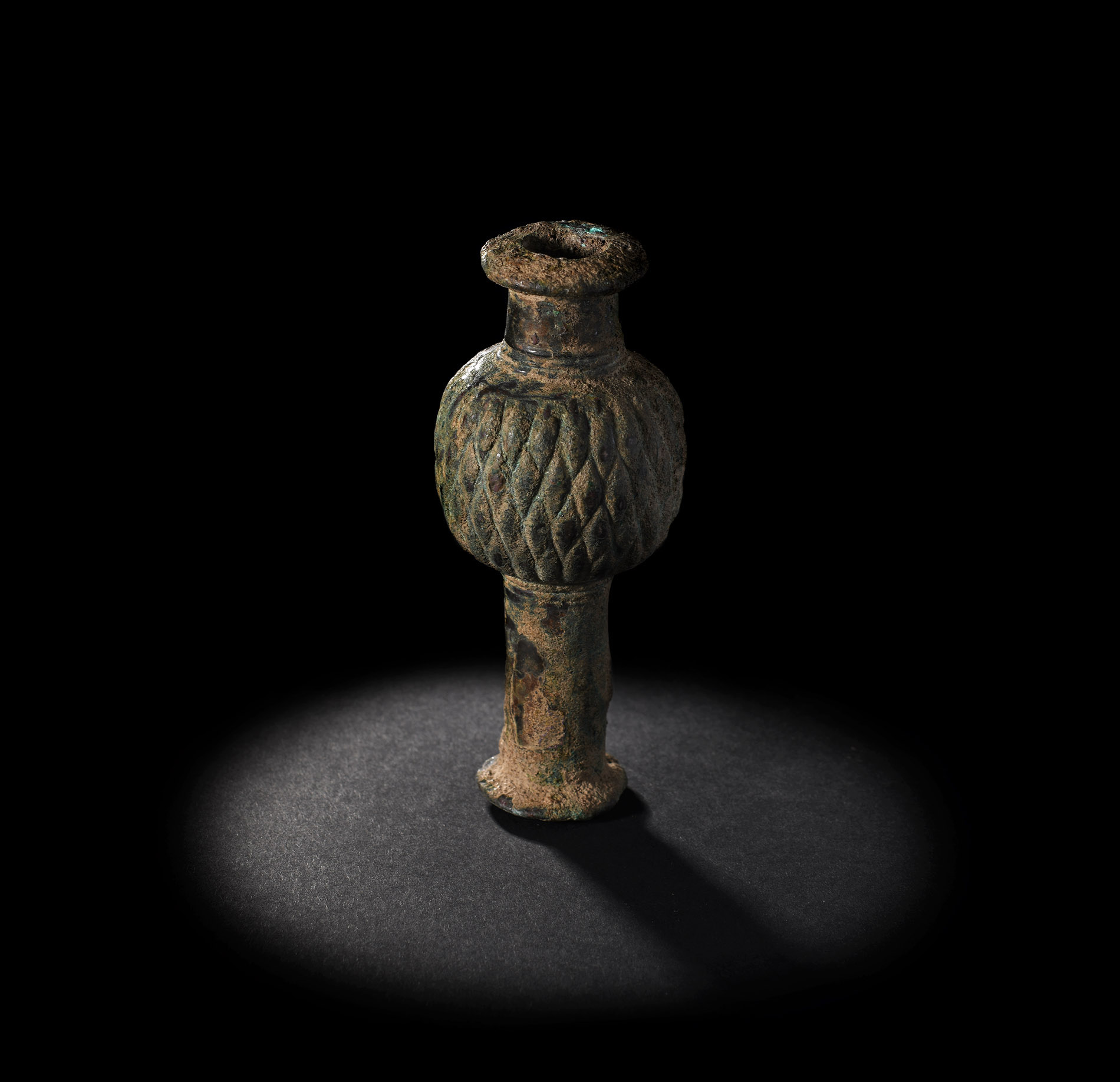
Luristan Sara Gorz Macehead
13TH-7TH CENTURY B.C.
5 in. (272 grams, 12.5 cm high).
A bronze mace head with cylindrical shaft extended over the top, rounded knobs around the swollen head, flanked by horizontal grooved bands.
ProvenanceAcquired mid 1980s to early 1990s.
Private family collection formed in London, UK.
Cf. Musé Cernuschi., Bronzes du Luristan: Enigmes De L'Iran Ancien IIIe-Ier millenaire ac. j.-c., Paris musées, 2008, p.103, for a comparable item.
CONDITIONTimeLine Auctions follows a vetting process to ensure the authenticity and legality of all items, reinforcing our commitment to integrity and responsible trading. Each antiquity, antique, and coin lot undergoes thorough examination by a vetting committee of at least ten external specialists, professional trade association members, scientists, and archaeologists: Our Vetting Process
AUCTIONS:
TimeLine is a leading auction house specialising in antiquities, ancient art, collectables, natural history, coins, medals, and books. Our auctions offer museums, collectors, historians, and enthusiasts the opportunity to acquire unique and historically significant pieces.
LOT 1037
Luristan Sara Gorz Macehead
Estimate £450 - 650€520 - 750 (for guidance only)$610 - 880 (for guidance only)
-
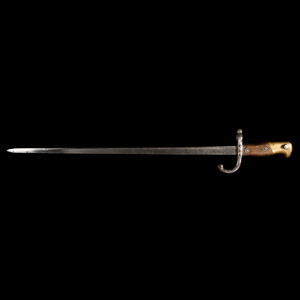
French Gras Model 1874 Rifle Bayonet
Dated 1878 A.D.Sold for (Inc. bp): £49
A Gras bayonet with T-shaped tapering 'epee' blade fitted with steel perforated quillon, rivetted wood grip scales and brass pommel slotted to fit the rifle barrel key; various punchmarks and numbered '54506' to quillon, the back of the blade inscribed 'Mme d'Arennes de Chatrs Avril 1878' in script. 573 grams,64.5 cm
Acquired on the UK antiques market between 1974-1985. Albert Ward collection, Essex, UK. -
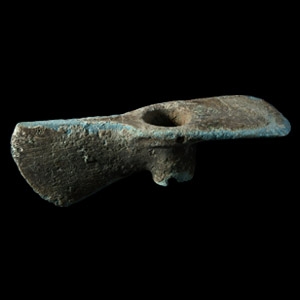
Luristan Socketted Axe-Adze
13th-7th century B.C.Sold for (Inc. bp): £121
A substantial copper-alloy adze-axe head composed of a cylindrical socket, one blade at a right angle to the socket with tapering sides and D-section cutting edge; one blade upright with convex cutting edge. 559 grams, 16.5 cm
Fine condition.
Acquired in the 1980s. London, UK, private collection. Property of an Essex gentleman. -
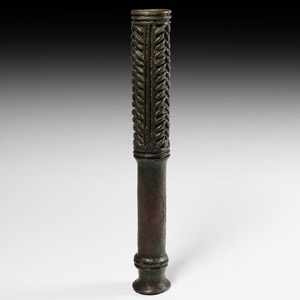
Akkadian Bronze Mace Head
2400-2000 B.C.Sold for (Inc. bp): £390
A bronze cylindrical mace head or cudgel with collared stem and flanged rim, the upper body with alternating vertical ribs and chevrons. 510 grams, 23 cm
Acquired 1980-2015. Ex Abelita family collection.
