
Loading, please wait...
LOT 1043
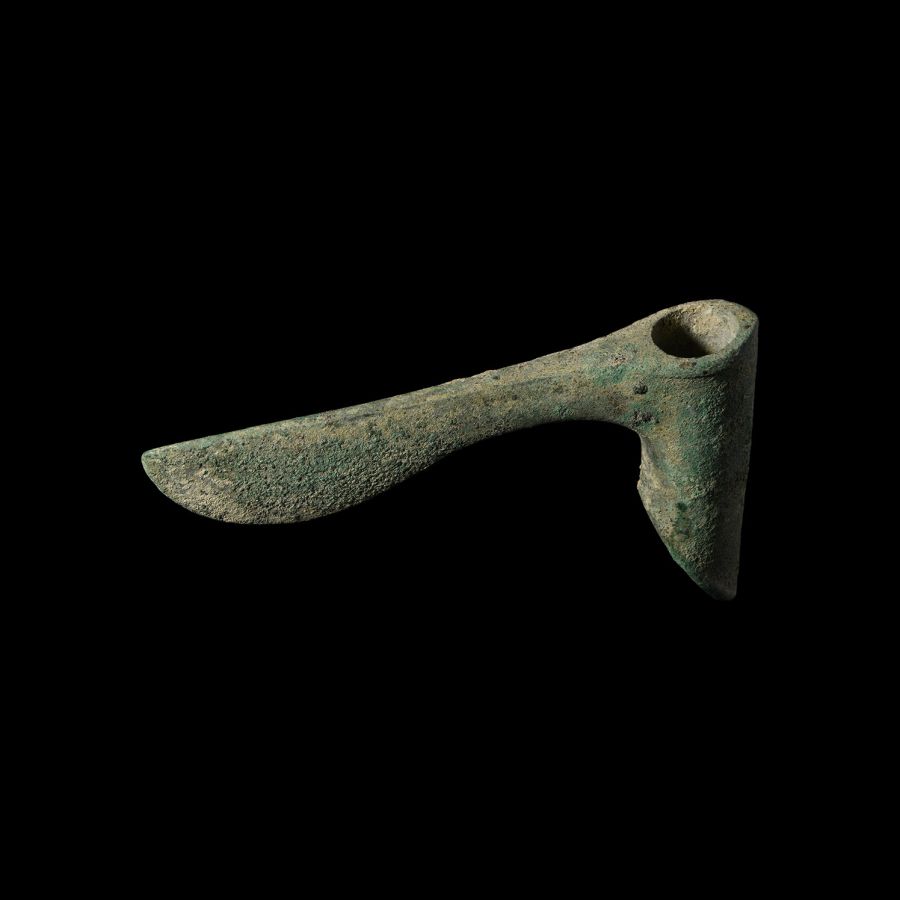
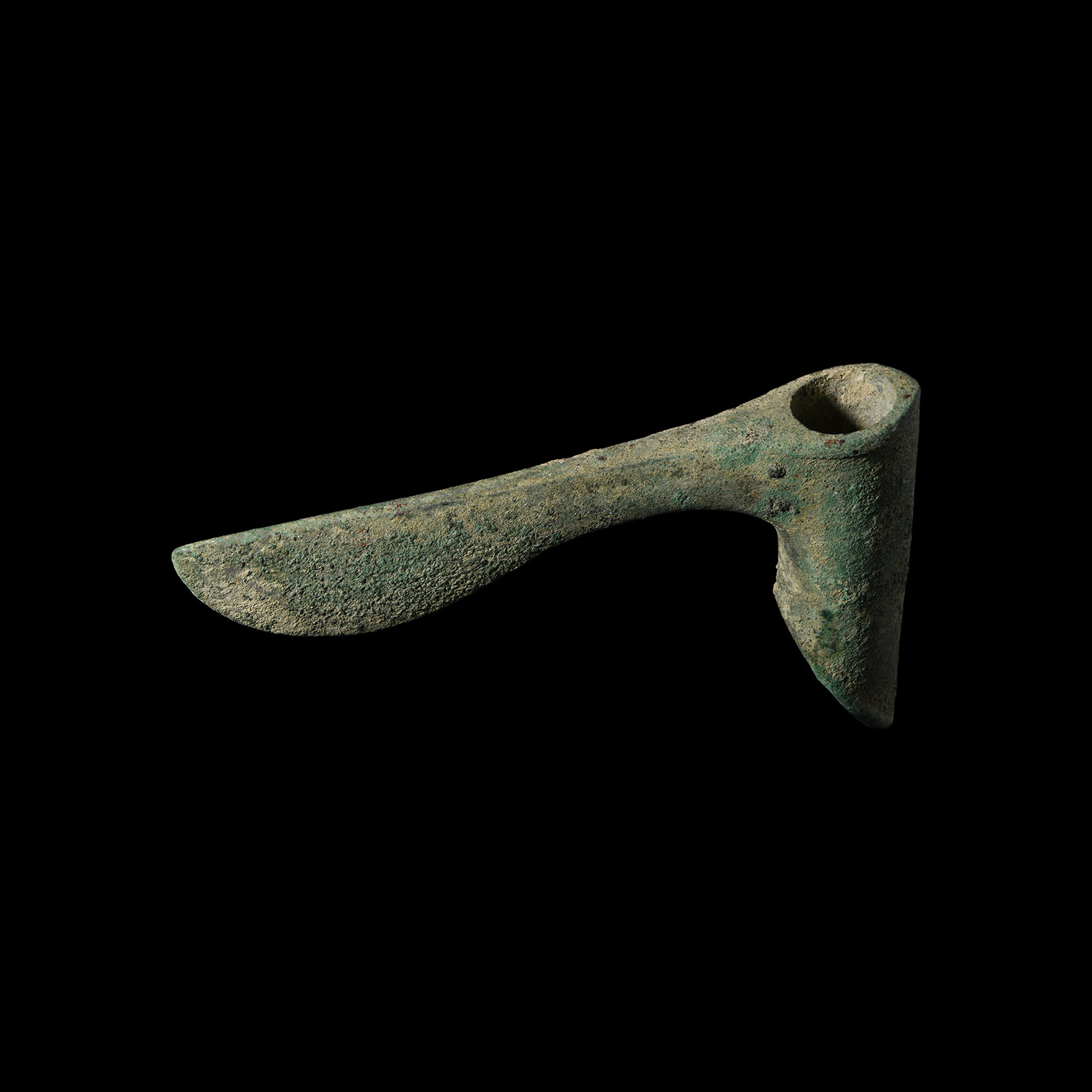
Luristan Sar-e Tabar Socketted Axehead
2ND MILLENNIUM B.C.
7 in. (465 grams, 18 cm).
A bronze axe with plain cylindrical socket and staff, off-set at the base, of simple undecorated shape with a long lentoid-section D-shaped blade with scooped profile.
ProvenanceEarlier 20th century collection.
London Mayfair gallery, UK.
Dr D.G. collection, 1990s-2019.
Cf. Moorey, P.R.S., Catalogue of the ancient Persian Bronzes in the Ashmolean Museum, Oxford, 1971, pl.1, items 4 and 5.
FootnotesMany examples of bronze axeheads are attributed to the Luristan culture and various shapes have been discussed by different scholars. Moorey (1971, pp.39-41) shows similar axeheads, stating that the texts executed on some specimens have shown them made of arsenical bronze, and attributes them to the late 3rd millennium B.C. or 2nd millennium B.C., period in which this alloy was used abundantly.
CONDITIONTimeLine Auctions follows a vetting process to ensure the authenticity and legality of all items, reinforcing our commitment to integrity and responsible trading. Each antiquity, antique, and coin lot undergoes thorough examination by a vetting committee of at least ten external specialists, professional trade association members, scientists, and archaeologists: Our Vetting Process
AUCTIONS:
TimeLine is a leading auction house specialising in antiquities, ancient art, collectables, natural history, coins, medals, and books. Our auctions offer museums, collectors, historians, and enthusiasts the opportunity to acquire unique and historically significant pieces.
LOT 1043
Luristan Sar-e Tabar Socketted Axehead
Estimate £200 - 300€230 - 350 (for guidance only)$270 - 410 (for guidance only)
-
Viking Period Socketted Spearhead Group
Circa 8th-10th century A.D.Sold for (Inc. bp): £663
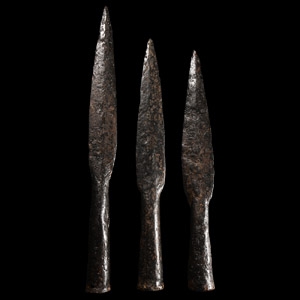
A group of three short iron spearheads with lentoid-section lanceolate blade, short neck and tapering circular socket with forge-welded split, single hole for attachment pin; remains of wood inside one of the shafts. 578 grams total, 24.5-28.5 cm
Acquired 1971-1972. From the collection of the vendor's father. Property of a London, UK, collector.
The spears belong to the type A of the first main group of Viking spears, the so-called Frankish spearheads, which occur between 750 and 950 A.D., but mainly in the 8th and 9th centuries. The Mediterranean influence is still evident on the foliate shape of the blade. -
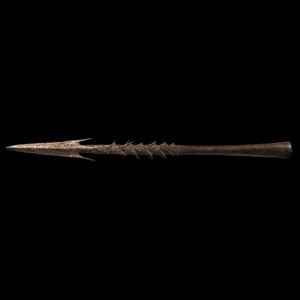
Medieval Socketted Catapult Dart
14th-16th century A.D.Sold for (Inc. bp): £208
An iron catapult dart formed with a tapering cylindrical socket and rectangular-section neck with barbs, barbed triangular head with full-length medial rib to both faces. 83 grams, 25 cm
Acquired before 2000. From the collection of a European gentleman living in the UK. -
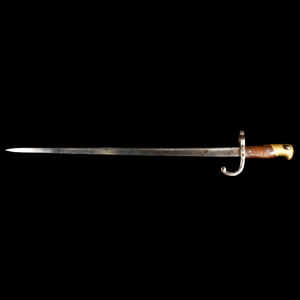
French Gras Model 1874 Rifle Bayonet
Dated 1876 A.D.Sold for (Inc. bp): £65
A Gras bayonet with T-shaped tapering 'epee' blade fitted with steel perforated quillon, rivetted wood grip scales and brass pommel slotted to fit the rifle barrel key; various punchmarks and numbered '7233' to quillon, the back of the blade inscribed 'Usine de Stoyr 1876' in script. 581 grams, 64.5 cm
Good condition.
Acquired on the UK antiques market between 1974-1985. Albert Ward collection, Essex, UK.
