
Loading, please wait...
LOT 1016
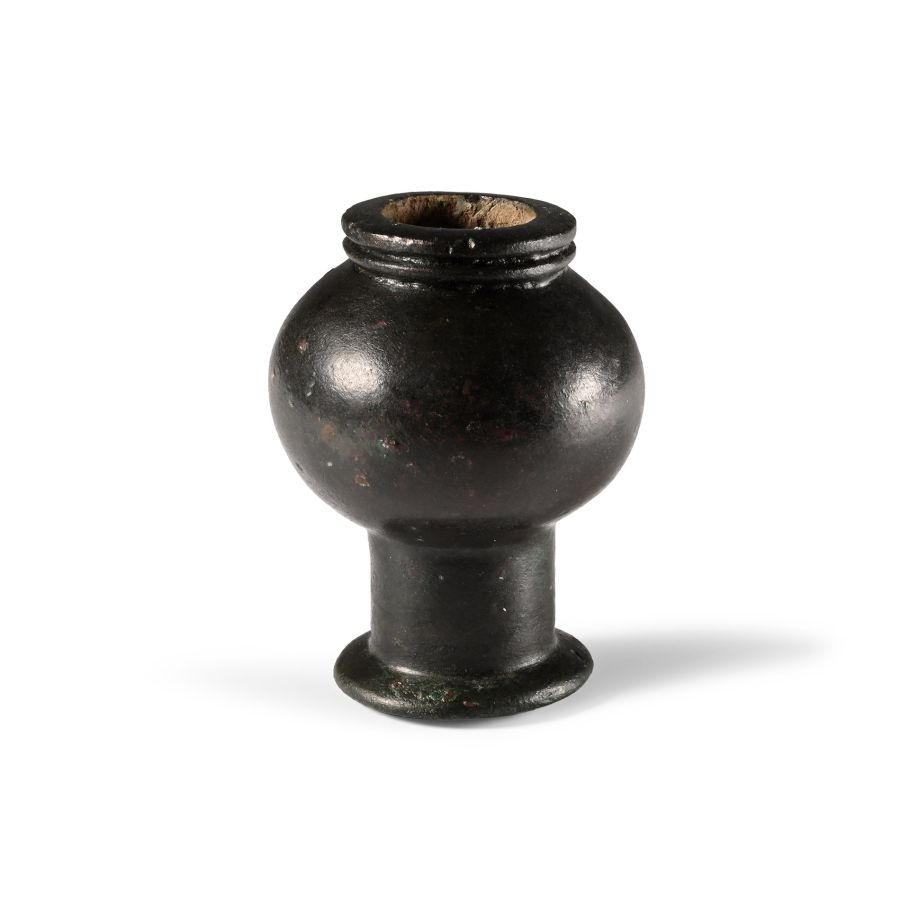
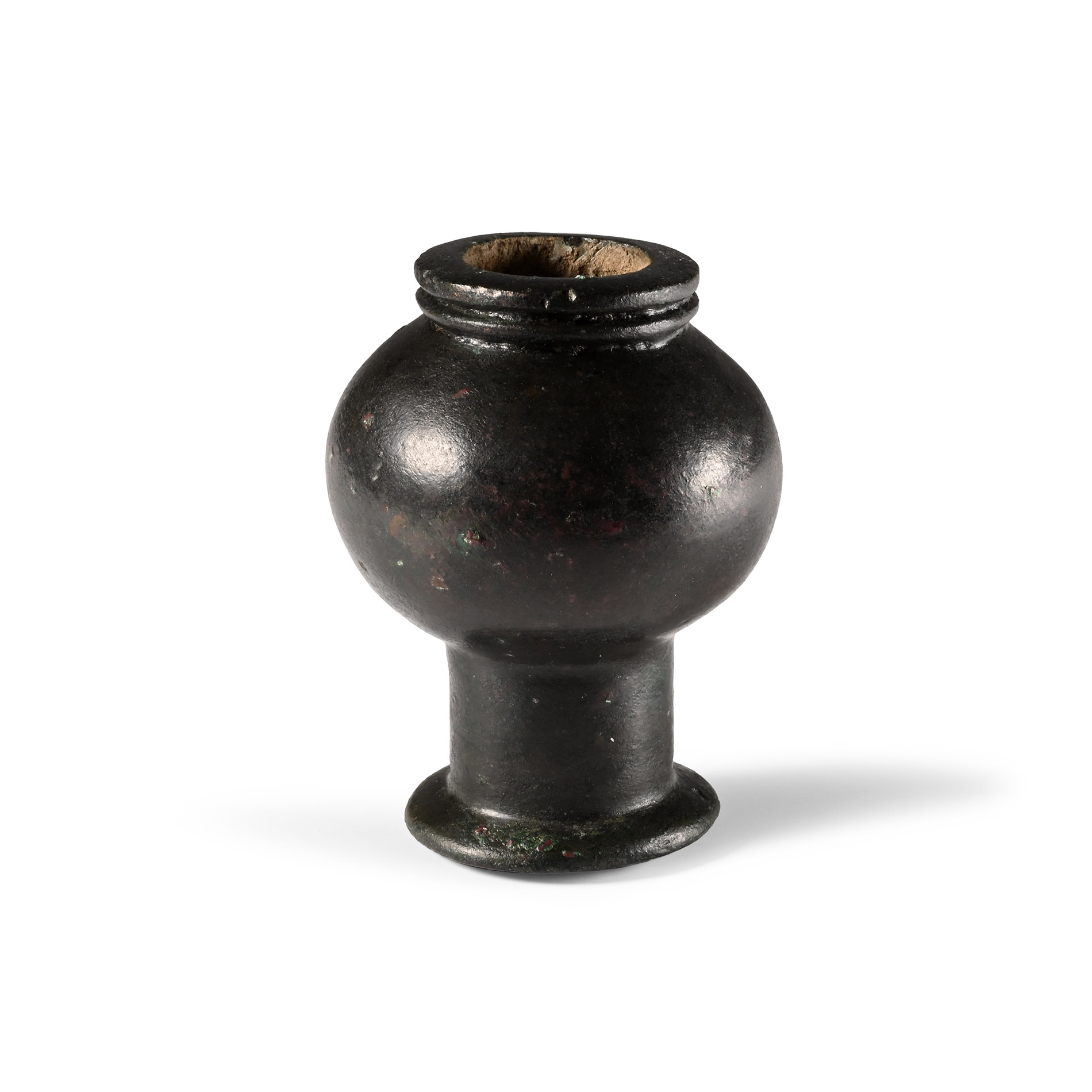
Luristan Sar-e Gorz Luristan Bronze Macehead
14TH-13TH CENTURY B.C.
2 3/4 in. (279 grams, 70 mm high).
With plain globular body, extended to a small raised ring encircling the top of the mace-head, circular short shaft expanding to a circular flat base.
ProvenanceAcquired 1980-2015.
Ex Abelita family collection.
For similar examples of maces see Gorelik, M., Weapons of Ancient East, IV millennium BC-IV century BC, Saint Petersburg (2003), pl.XXXI, no.21 (Luristan).
FootnotesCaucasian stone and bronze maces were distinguished by modestly finished, clean processed and predominantly close-to-ball shapes (with a variety of surface finishing, ranging from the smooth, ribbed, lobular forms to the rounded with protrusions and spikes), and the Western Iranian maces, especially the Luristan ones, notable for the variety of different forms. Similar mace-heads, probably realised in Luristan, decorated the head of the sceptres of Assyrian kings like Tukulti-Ninurta I (1243-1207 B.C.).
CONDITIONTimeLine Auctions follows a vetting process to ensure the authenticity and legality of all items, reinforcing our commitment to integrity and responsible trading. Each antiquity, antique, and coin lot undergoes thorough examination by a vetting committee of at least ten external specialists, professional trade association members, scientists, and archaeologists: Our Vetting Process
AUCTIONS:
TimeLine is a leading auction house specialising in antiquities, ancient art, collectables, natural history, coins, medals, and books. Our auctions offer museums, collectors, historians, and enthusiasts the opportunity to acquire unique and historically significant pieces.
LOT 1016
Luristan Sar-e Gorz Luristan Bronze Macehead
Estimate £200 - 300€230 - 350 (for guidance only)$270 - 410 (for guidance only)
-
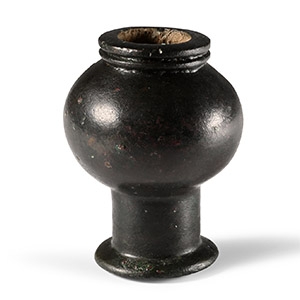
Luristan Sar-e Gorz Luristan Bronze Macehead
14th-13th century B.C.Estimate: £200 - 300 (+bp*)
Opening Bid: £111
With plain globular body, extended to a small raised ring encircling the top of the mace-head, circular short shaft expanding to a circular flat base. 279 grams, 70 mm high
Acquired 1980-2015. Ex Abelita family collection.
Caucasian stone and bronze maces were distinguished by modestly finished, clean processed and predominantly close-to-ball shapes (with a variety of surface finishing, ranging from the smooth, ribbed, lobular forms to the rounded with protrusions and spikes), and the Western Iranian maces, especially the Luristan ones, notable for the variety of different forms. Similar mace-heads, probably realised in Luristan, decorated the head of the sceptres of Assyrian kings like Tukulti-Ninurta I (1243-1207 B.C.). -
.jpg)
British Fairbairn-Sykes 'Beaded and Ringed' Commando Dagger in Scabbard
Circa 1942 A.D.Sold for (Inc. bp): £1,170
By Rodgers, with finely shaped 15cm stiletto blade with traces of original black finish tapering to a steel oval guard and fitted with a brass 'beaded and ringed' shaped hilt secured by a copper pommel nut; the hilt bearing the War Department 'broad arrow' and '2' marks near to the guard; with the original leather scabbard fitted with brass rivets and chape, pierced for belt wear and with the side flaps for sewing cut away as commonly seen when belt worn; the dagger showing wear with minor chipping to the blade, and movement in the hilt. 254 grams, 33 cm overall
Property of a Luton, UK gentleman, by inheritance.
In the autumn of 1942, the Rodgers firm produced what many consider to be the best of all the wartime Fairbairn-Sykes knives: the 'Beads and Ridges' model (or 'Beaded and Ringed'); so-called for its distinctive grip pattern to the brass hilt of single rings of tiny beads, interspersed between sections of four to seven plain rings. The blade is delicate and uniform, and the weapon, though light, is well balanced. The blade finish was black (as this example) or nickel. All of this type are considered to be at least scarce. According to both Fredrick Stephens and Leroy Thompson the type was a commercial variant for private purchase; however, there are some rare cases of this type which were officially issued with the War Department broad arrow and number marks, as with this example. -
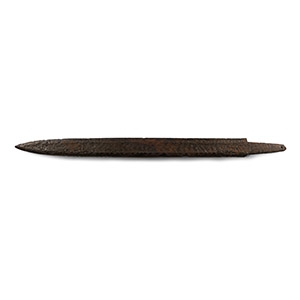
Roman Pattern-Welded Iron Spatha
Circa late 4th century A.D.Estimate: £3,000 - 4,000 (+bp*)
Opening Bid: £1,500
A section of a double-edged long sword (spatha) of Illerup-Wyhl typology; half of the blade still intact with the tang created in later times by shortening a part of the blade; narrow parallel cutting edges tapering towards the point; both sides showing pattern-welding in form of ZS stripes and torsion technique B.II.1.2. 287 grams, 54.6 cm
Ex private collection of Mr M.B., Mainz, Germany, since the 1980s. Acquired from the above, 2004. This lot has been checked against the Interpol Database of stolen works of art and is accompanied by search certificate no.11976-210915.
Dr Miks refers to the spathae of the 'lllerup-Wyhl' type I as to a large group of blades which in terms of their proportions, dimensions and shape, are probably a mixture of blades of the more classical 'Straubing-Nydam' and 'Lauriacum-Hromowka' types of long Roman swords. They are one of the most complicated category of late Roman swords and therefore difficult to clearly identify. The chosen double designation (lllerup-Wyhl) takes into account the circumstance that the blades of this category could be identified in a lighter, narrower shape, with several representatives in the concentration ‘C’ of the moor finds from lllerup Ädal (Miks, 2007, A321), while heavy and broad specimens may be visible, like the well-preserved blade from body grave 22 of a late Roman influenced grave field in Wyhl (Miks, 2007, A798).
