
Loading, please wait...
_900x900.jpg "Luristan Mythical Animal Horse Bit")
_200x200.jpg "Luristan Mythical Animal Horse Bit")
.jpg "Luristan Mythical Animal Horse Bit")
LOT 0197
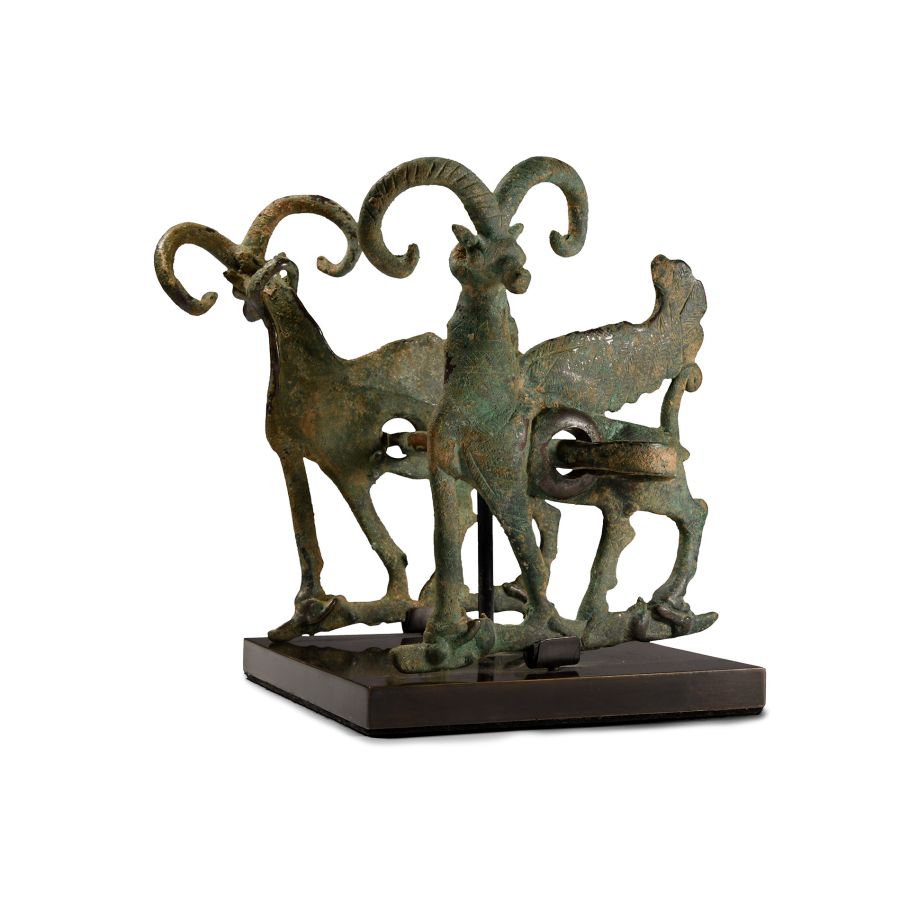
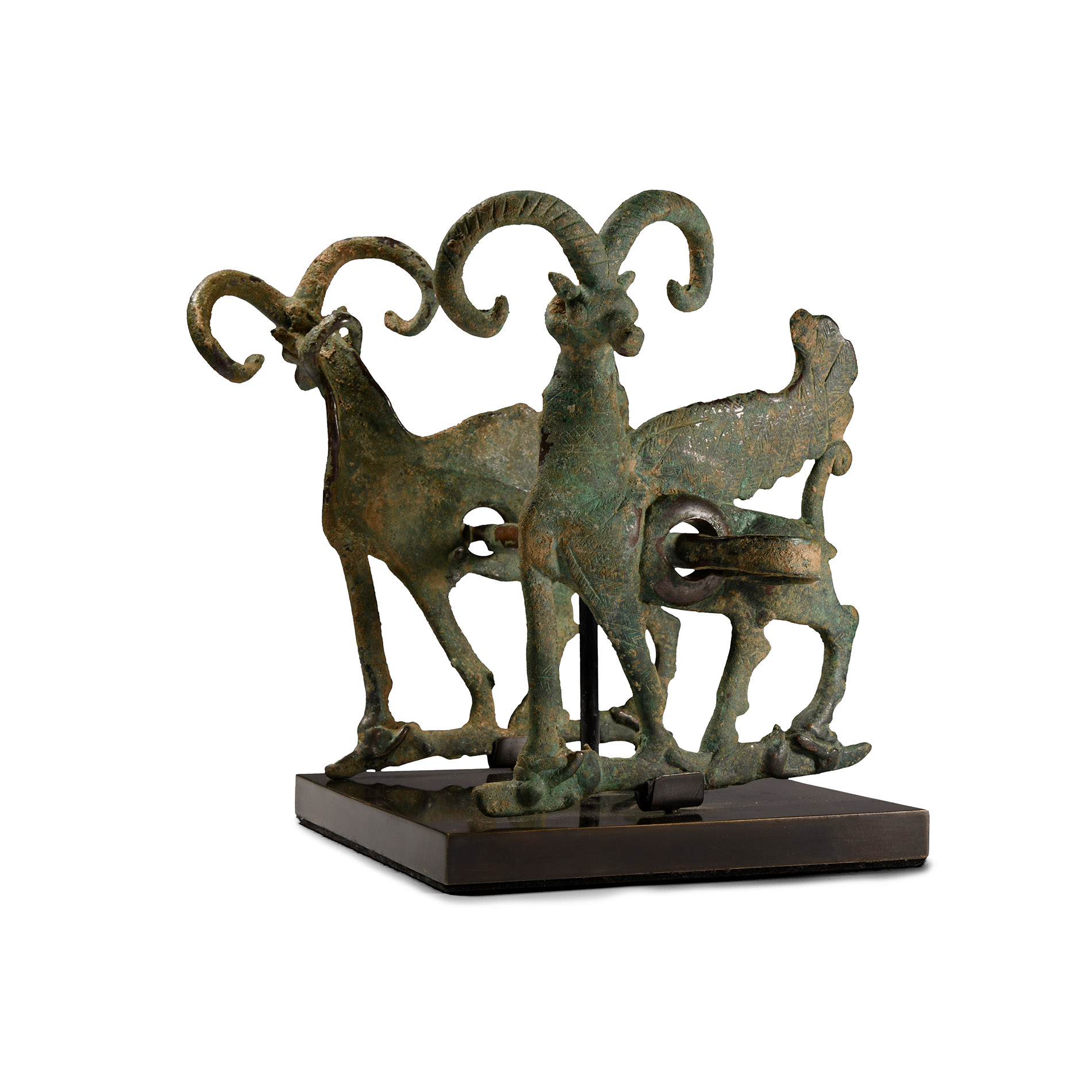
Luristan Mythical Animal Horse Bit
9TH-7TH CENTURY B.C.
7 7/8 in. (1.86 kg total, 20 cm high including stand).
The tripartite bit comprising: a round-section bar with flattened and coiled terminals; two cheekpieces, each formed as a winged ibex standing facing outwards on a ground line, simple detailing to the large horns, neck collar and wing; suspension loops to necks and rumps of the reverses; mounted on a custom-made display stand.
ProvenanceToufic Aarakji, Hamburg, 1998.
with Christie's, London, sale no.21014, lot 62.
This lot has been checked against the Interpol Database of stolen works of art and is accompanied by search certificate number no.11867-206897.
Cf. The Cleveland Museum of Art, accession number 1980.102, for similar.
CONDITIONTimeLine Auctions follows a vetting process to ensure the authenticity and legality of all items, reinforcing our commitment to integrity and responsible trading. Each antiquity, antique, and coin lot undergoes thorough examination by a vetting committee of at least ten external specialists, professional trade association members, scientists, and archaeologists: Our Vetting Process
AUCTIONS:
TimeLine is a leading auction house specialising in antiquities, ancient art, collectables, natural history, coins, medals, and books. Our auctions offer museums, collectors, historians, and enthusiasts the opportunity to acquire unique and historically significant pieces.
-
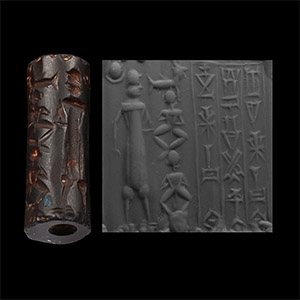
Old Babylonian Haematite Cylinder Seal for Ibni-Ea, son of Abi-tillati
Circa 1894-1595 B.C.Sold for (Inc. bp): £715
With low-relief drilled standing figure and three columns of cuneiform text: Ibni-Ea, son of Abi-tillati, servant of (the god) Ea. 8.4 grams, 29 mm
Acquired 1970s-1996. Property of a North American collector, collection no.17. London collection, 2016. -
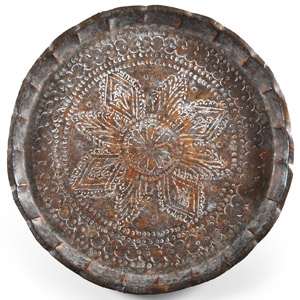
Western Asiatic Decorated Bronze Dish
Early 20th century A.D.Sold for (Inc. bp): £33
The rim formed as flower petals, a geometric floral design punched to the interior base. 350 grams, 27.5 cm wide
Collected from 1979-1999. From the collection of the late Mr S.M., London, UK. -
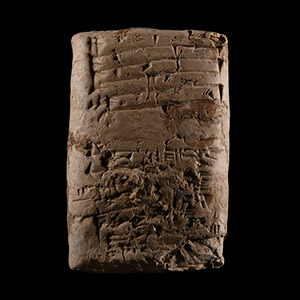
Mesopotamian Cuneiform Tablet
2nd-1st millennium B.C.Sold for (Inc. bp): £286
Pillow-shaped in form and displaying cuneiform text to both principal faces; repaired. 220 grams, 95 mm
Specialised collection of cuneiform texts, the property of a London gentleman and housed in London before 1992. Thence by descent to family members. Examined by Professor Wilfrid George Lambert FBA (1926-2011), historian, archaeologist, and specialist in Assyriology and Near Eastern archaeology, in the late 1980s and early 1990s. This small collection is exceptional for the variety of types, including some very rare and well preserved examples.
