
Loading, please wait...
LOT 1090
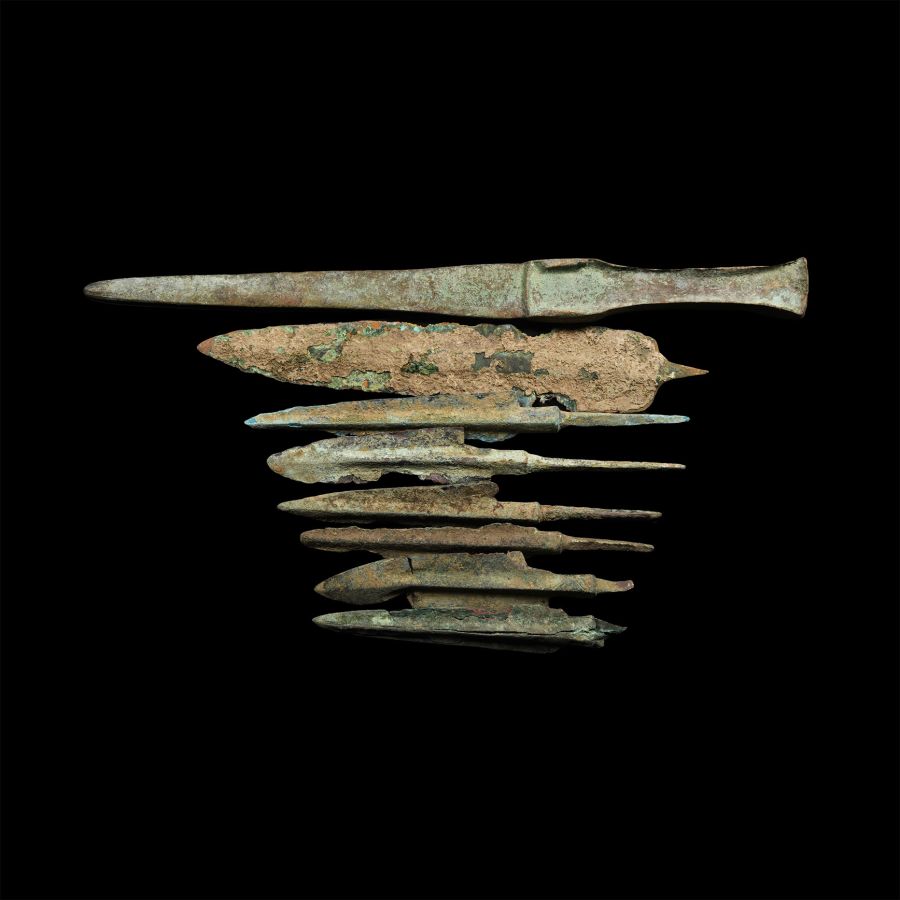
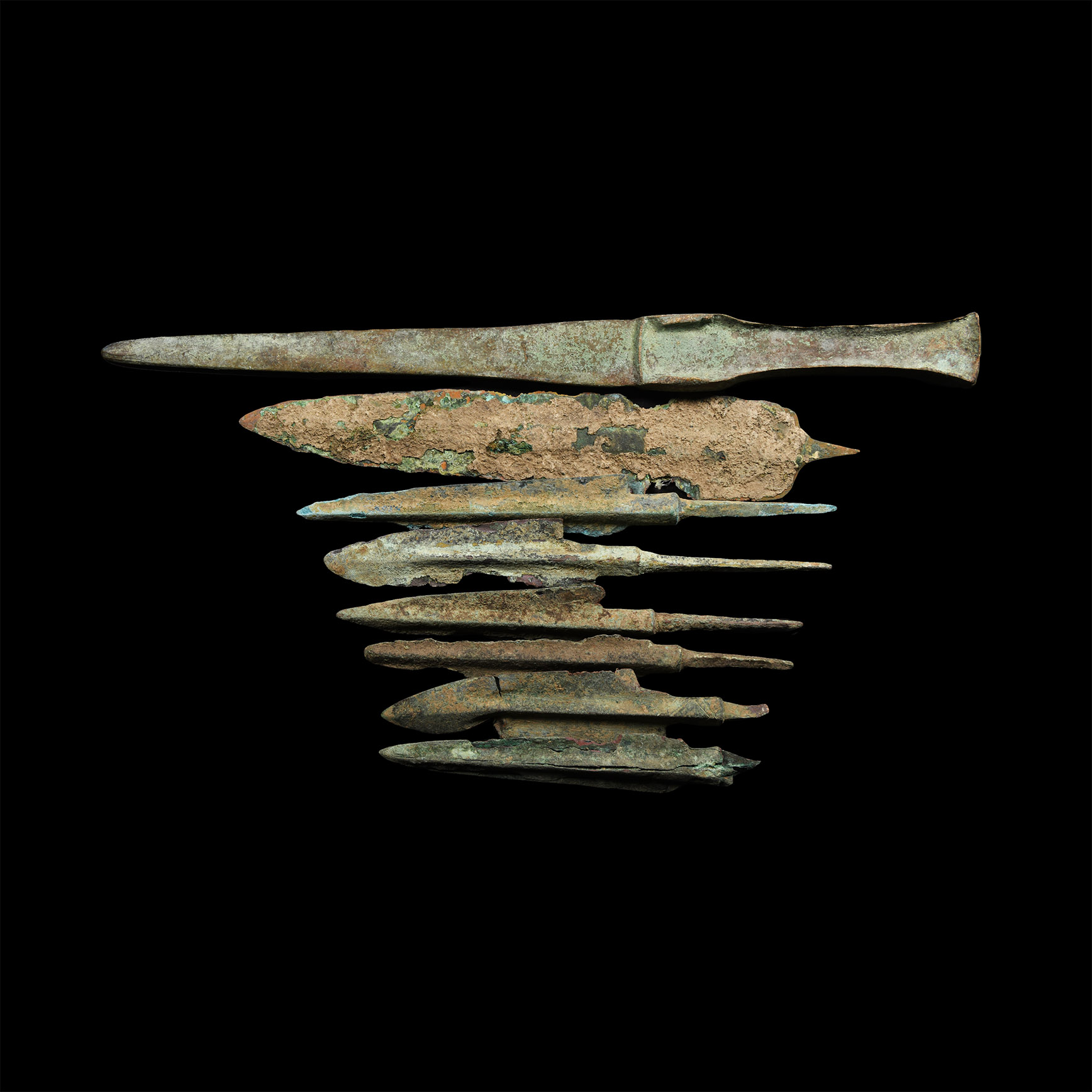
Luristan Mixed Blade Group
2ND-1ST MILLENNIUM B.C. AND LATER
4 1/2 - 10 1/2 in. (374 grams total, 11.4-26.5 cm).
A mixed group of bronze bladed weapons including arrowheads; dagger believed to be a reproduction. [8]
ProvenanceAcquired 1970s-1990s.
Ex Rabi Gallery, Mayfair, London, U.K.
From a specialist collection of pottery.
TimeLine Auctions follows a vetting process to ensure the authenticity and legality of all items, reinforcing our commitment to integrity and responsible trading. Each antiquity, antique, and coin lot undergoes thorough examination by a vetting committee of at least ten external specialists, professional trade association members, scientists, and archaeologists: Our Vetting Process
AUCTIONS:
TimeLine is a leading auction house specialising in antiquities, ancient art, collectables, natural history, coins, medals, and books. Our auctions offer museums, collectors, historians, and enthusiasts the opportunity to acquire unique and historically significant pieces.
-
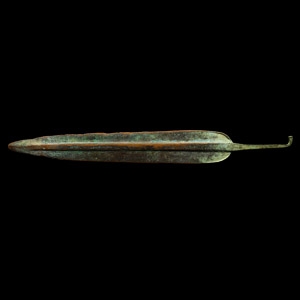
Marlik Spearhead with Pronounced Ridge
14th-10th century B.C.Sold for (Inc. bp): £114
A heavy bronze spearhead comprising an oval blade with gently curved shoulders and strong midrib, flat rectangular-section tang tapering to a curved end. 432 grams, 45.8 cm
Fine condition.
Ex Abelita family collection, 1980-2015.
The spearhead belongs to the type V of the heavy spearheads, similar to the ones excavated by Dr. Negahban in Tomb 47 (Trench XXIIE) of the Marlik necropolis. The heavy spearheads, cast in one piece, usually have an oval blade with rounded gently curved shoulders and a rounded midrib near the tang. -
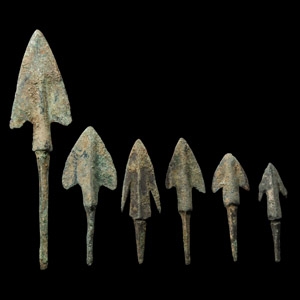
Luristan Arrowhead Group
2nd millennium B.C.Sold for (Inc. bp): £260
A group of six bronze arrowheads with deltoid form, a sharp barbed blade and prominent midrib extending to a long tang. 52 grams total, 4.3-10.9 cm
Acquired 1980-2015. Ex Abelita family collection.
A number of arrowheads of this type have been excavated from the Northern Iranian Plateau, in Luristan and in the South-Caspian region. Many parallels have a burial provenance, but a large hoard of them was found in a non-funerary context. This type of arrowhead has been in use from the 2nd millennium B.C. Godard claimed that barbed types of heads came from tombs from Luristan, like the ones found in Tang-i-Hamamlan. -
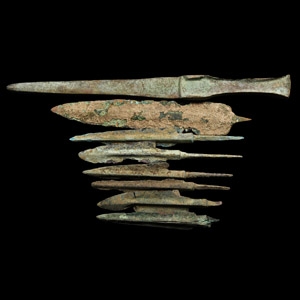
Luristan Mixed Blade Group
2nd-1st millennium B.C. and laterSold for (Inc. bp): £169
A mixed group of bronze bladed weapons including arrowheads; dagger believed to be a reproduction. 374 grams total, 11.4-26.5 cm
Acquired 1970s-1990s. Ex Rabi Gallery, Mayfair, London, U.K. From a specialist collection of pottery.
