
Loading, please wait...
_900x900.jpg "Luristan Lion Head Attachment")
_200x200.jpg "Luristan Lion Head Attachment")
.jpg "Luristan Lion Head Attachment")
LOT 0911
Luristan Lion Head Attachment
13TH-7TH CENTURY B.C.
2 in. (32.7 grams, 49 mm wide).
A bronze attachment with a curved, round-section body, an incomplete hoop to one arm and a lion-head terminal to the other, with a collar and stylised detailing to mane and face. [No Reserve]
ProvenanceEx private family collection formed in London, mid 1980s to early 1990s.
CONDITIONTimeLine Auctions follows a vetting process to ensure the authenticity and legality of all items, reinforcing our commitment to integrity and responsible trading. Each antiquity, antique, and coin lot undergoes thorough examination by a vetting committee of at least ten external specialists, professional trade association members, scientists, and archaeologists: Our Vetting Process
AUCTIONS:
TimeLine is a leading auction house specialising in antiquities, ancient art, collectables, natural history, coins, medals, and books. Our auctions offer museums, collectors, historians, and enthusiasts the opportunity to acquire unique and historically significant pieces.
-
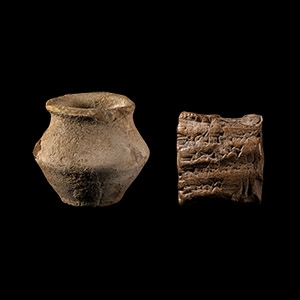
Babylonian Ur Vessel and Cuneiform Tablet Relating to Beer for Mercenaries in the Service of Babylon
Circa 2000-1500 B.C.Sold for (Inc. bp): £780
A group of two ceramic artefacts: an Ur miniature pot of carinated form with everted lip, dated c.2000 B.C.; a roughly rectangular tablet bearing cuneiform text to both principal faces and to each side edge, a memo relating to an expenditure of beer for mercenaries in garrison in the service of Babylon (20th year Abi-ešuh 1711-1684 BC): '2 jars of 15 liters for the rations of the troop of the Cassites. Contribution of Ibnatum.' 100 grams total, 36-43 mm
From an old UK collection. From the private collection of Alf Baxendale (1941-2016) part 2, keen Egyptologist, member of the Egyptology Society, trustee of the Amarna Trust; thence by descent. Accompanied by two identification display cards. Accompanied by a copy of his obituary published in Horizon, The Amarna Project and Amarna Trust newsletter, Issue 18, 2017, p.21, by Barry John Kemp, CBE, FBA, Professor Emeritus of Egyptology at the University of Cambridge and directing excavations at Amarna in Egypt. -
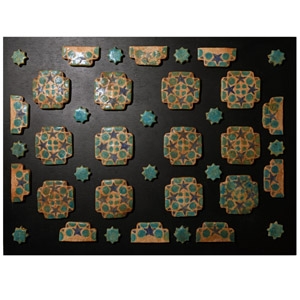
Western Asiatic Glazed Ceramic Tile Group with Stars
13th-14th century A.D.Sold for (Inc. bp): £624
A mixed group of glazed ceramic floor tiles: 16 small star-shaped examples with blue glaze finish; 12 square ones with a step to each corner, white glaze finish with design of turquoise roundels and dark blue stars; ten similar stepped half-tiles; mounted on a custom-made display stand. 3.7 kg total, 67.5 x 49.7 cm
Fine condition.
Acquired 1970s-1996. Property of a North American collector. London collection, 2016. -
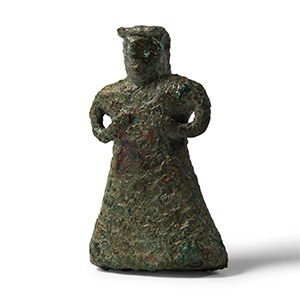
Bactrian Female Figured Kohl Pot
Mid 2nd millennium B.C.Estimate: £3,000 - 4,000 (+bp*)
Opening Bid: £1,500
An early copper-alloy kohl pot formed as a stylised female figure wearing a floor-length garment which splays outwards towards her feet, her arms placed on her hips to form loop handles, stylised facial detailing; circular recess to top of head. 110 grams, 80 mm
with a London, UK gallery 1971-early 2000s. This lot has been checked against the Interpol Database of stolen works of art and is accompanied by search certificate no.11642-199679.
