
Loading, please wait...
LOT 0893
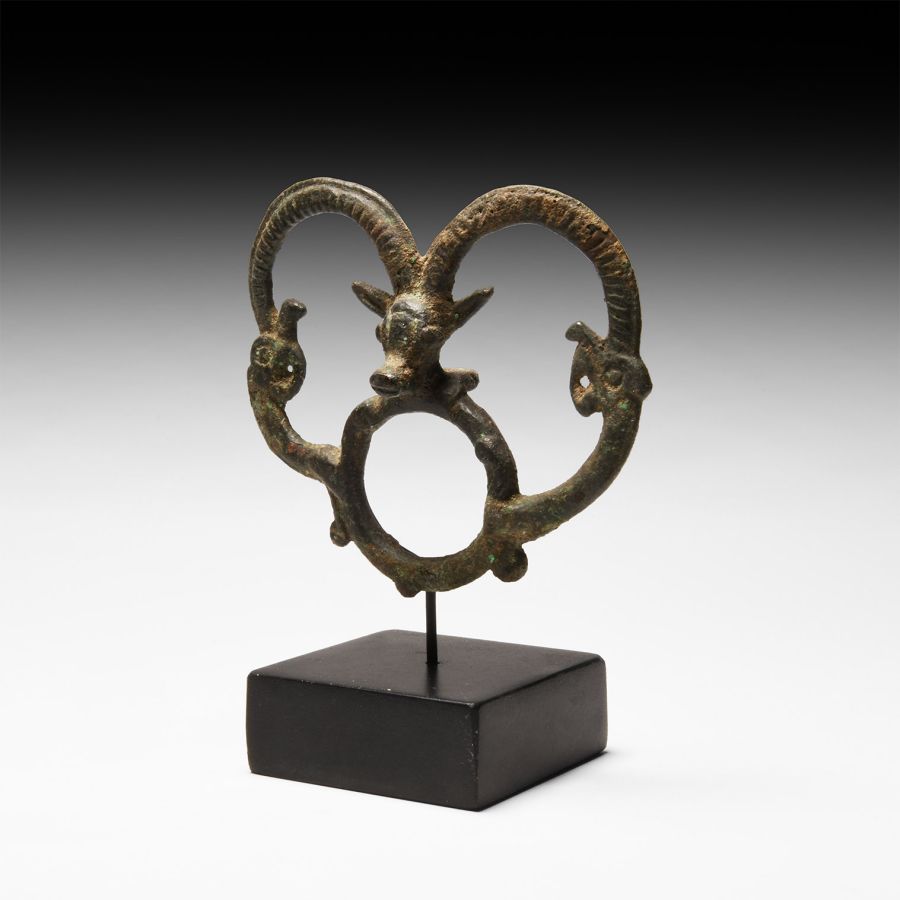
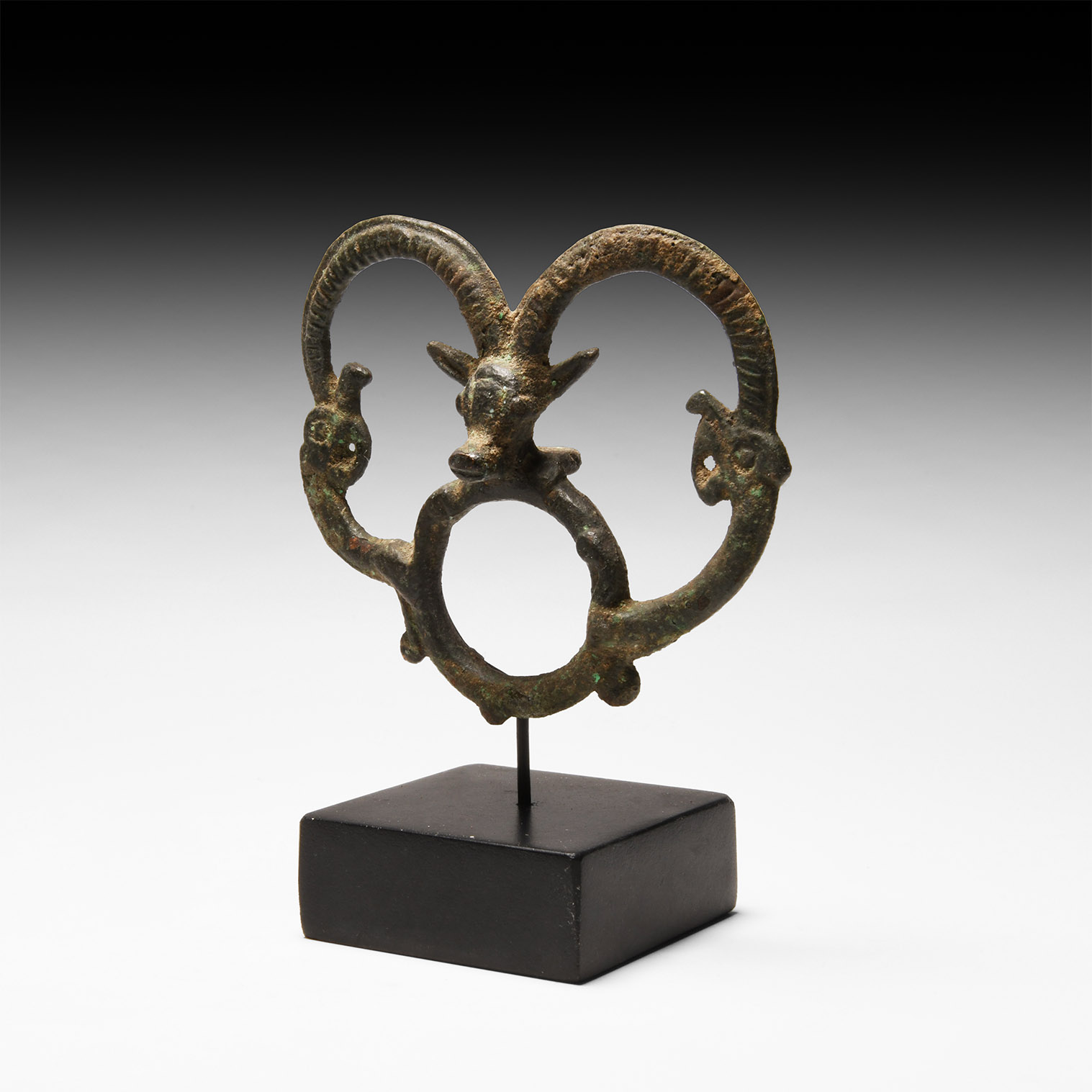
Luristan Fantastic Animal Terminal
13TH-6TH CENTURY B.C.
3 1/2 in. (4 1/2 in.) (78 grams, 89 mm (224 grams total, 11.4 cm high including stand)).
A bronze finial comprising a ring surmounted by a facing ibex head with the horns extending to two beast-heads emerging from the sides of the ring; small retaining ledge to the reverse; accompanied by a custom-made display stand.
ProvenanceAcquired 1990s.
From an important Paris gallery, France.
Ex Parisian collection.
This piece likely formed part of a horse harness.
CONDITIONTimeLine Auctions follows a vetting process to ensure the authenticity and legality of all items, reinforcing our commitment to integrity and responsible trading. Each antiquity, antique, and coin lot undergoes thorough examination by a vetting committee of at least ten external specialists, professional trade association members, scientists, and archaeologists: Our Vetting Process
AUCTIONS:
TimeLine is a leading auction house specialising in antiquities, ancient art, collectables, natural history, coins, medals, and books. Our auctions offer museums, collectors, historians, and enthusiasts the opportunity to acquire unique and historically significant pieces.
LOT 0893
Luristan Fantastic Animal Terminal
Estimate £250 - 350€290 - 410 (for guidance only)$340 - 470 (for guidance only)
-
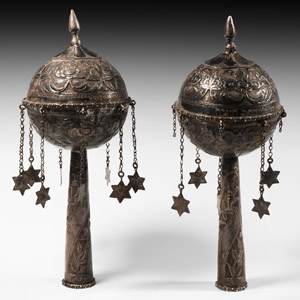
Jewish Silver Rimonim Group
19th century A.D.Sold for (Inc. bp): £780
A group of two silver rimonim or Torah finials, each comprising a spherical body with conical finial and tapering cylindrical socket, medial band of dangles with inscription above, embossed and chased stylised floral and foliate motifs to body and socket. 734 grams total, 27 cm each
From a UK private collection. -
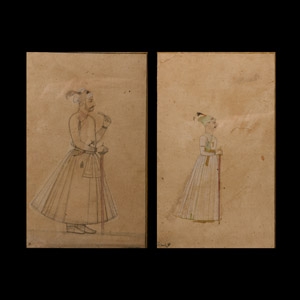
Framed Mughal Watercolour Painting Pair by Assad Irani
Early 19th century A.D.Estimate: £300 - 400 (+bp*)
Opening Bid: £150
A pair of watercolours, each showing a nobleman standing right, leaning on a sword, concentric borders and gold-coloured stipple-effect, signed by an Iranian artist Assad Irani; both mounted in a reveal and a glazed wooden frame. 2.45 kg total, each 42 x 32 cm
Fine condition.
Acquired on the UK art market, 1980s-1990s. The Woodbridge collection of Indo-Persian art. -
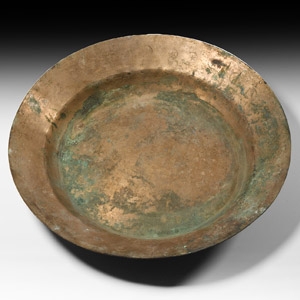
Western Asiatic Decorated Bowl
19th-20th century A.D. or earlierEstimate: £100 - 140 (+bp*)
Opening Bid: £50
A copper-alloy bowl raised from a single sheet of metal, with a squat tapering body and broad everted rim, the interior punch-decorated with a band of five-pointed stars within roundels to the rim and geometric floral motifs to the bowl, encircled by stylised flowerheads and circlets. 468 grams, 27 cm wide
Acquired 1980-2015. Ex Abelita family collection.
