
Loading, please wait...
LOT 0226
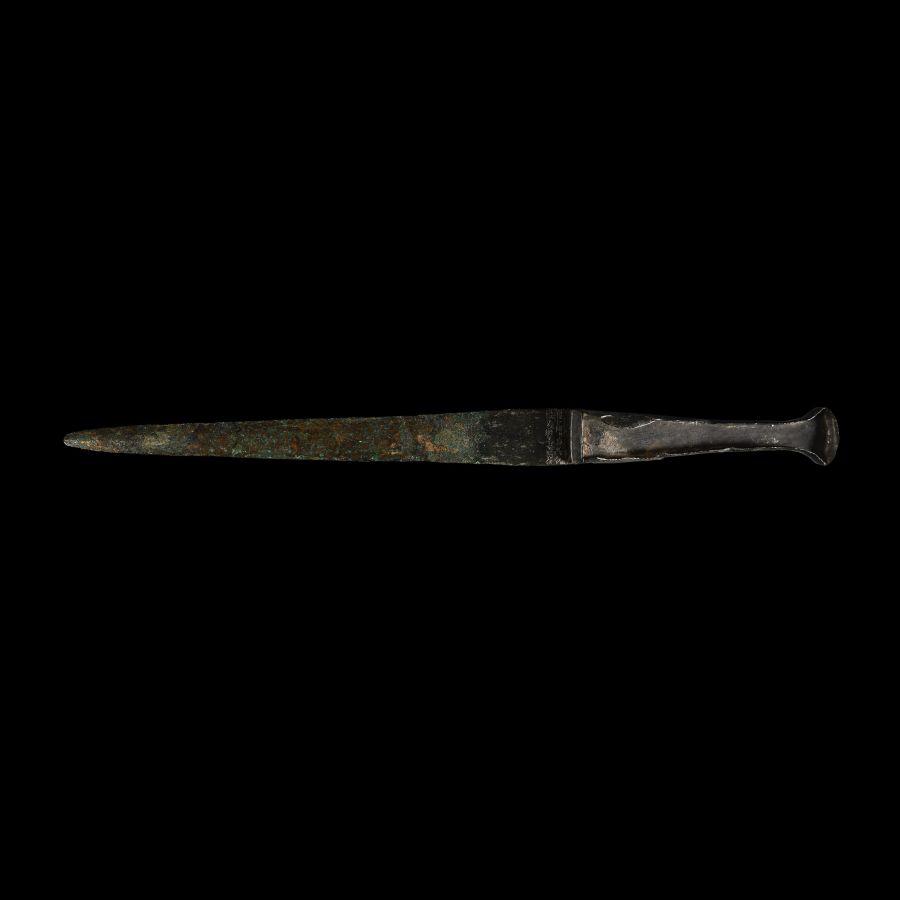
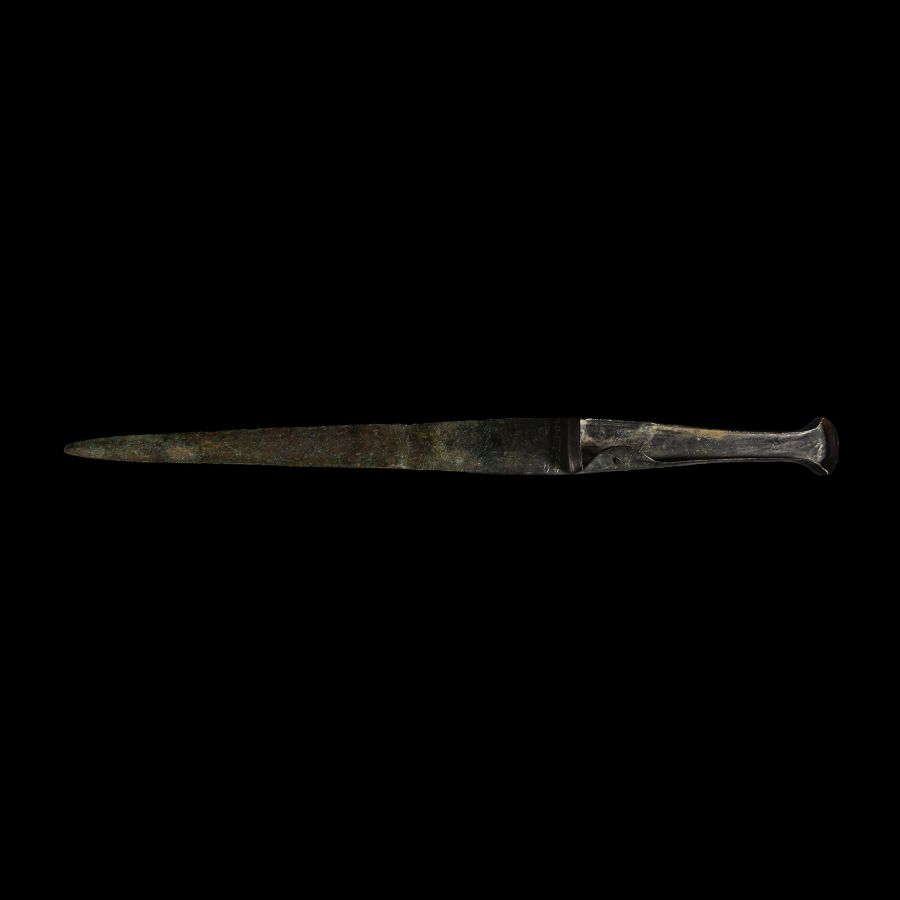
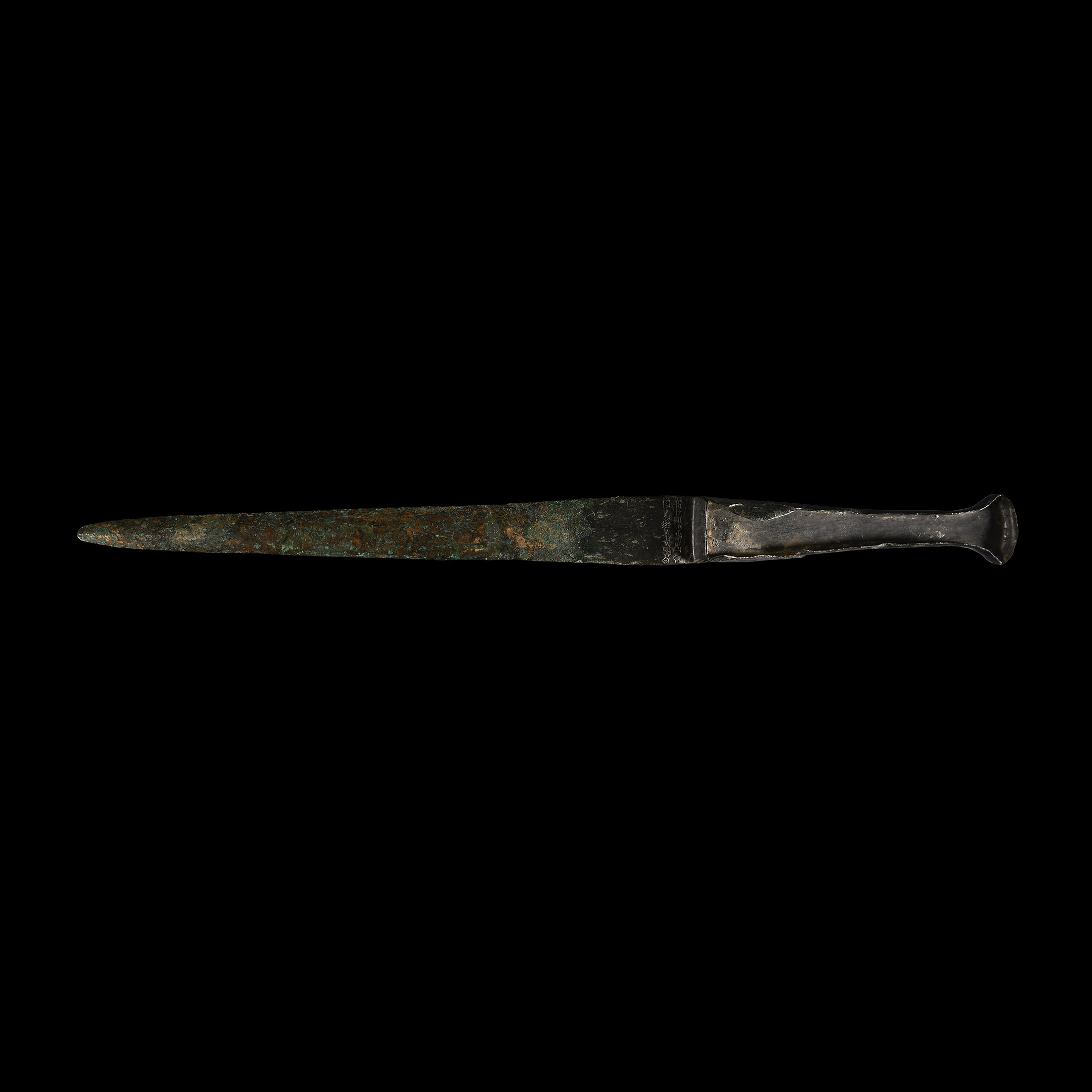
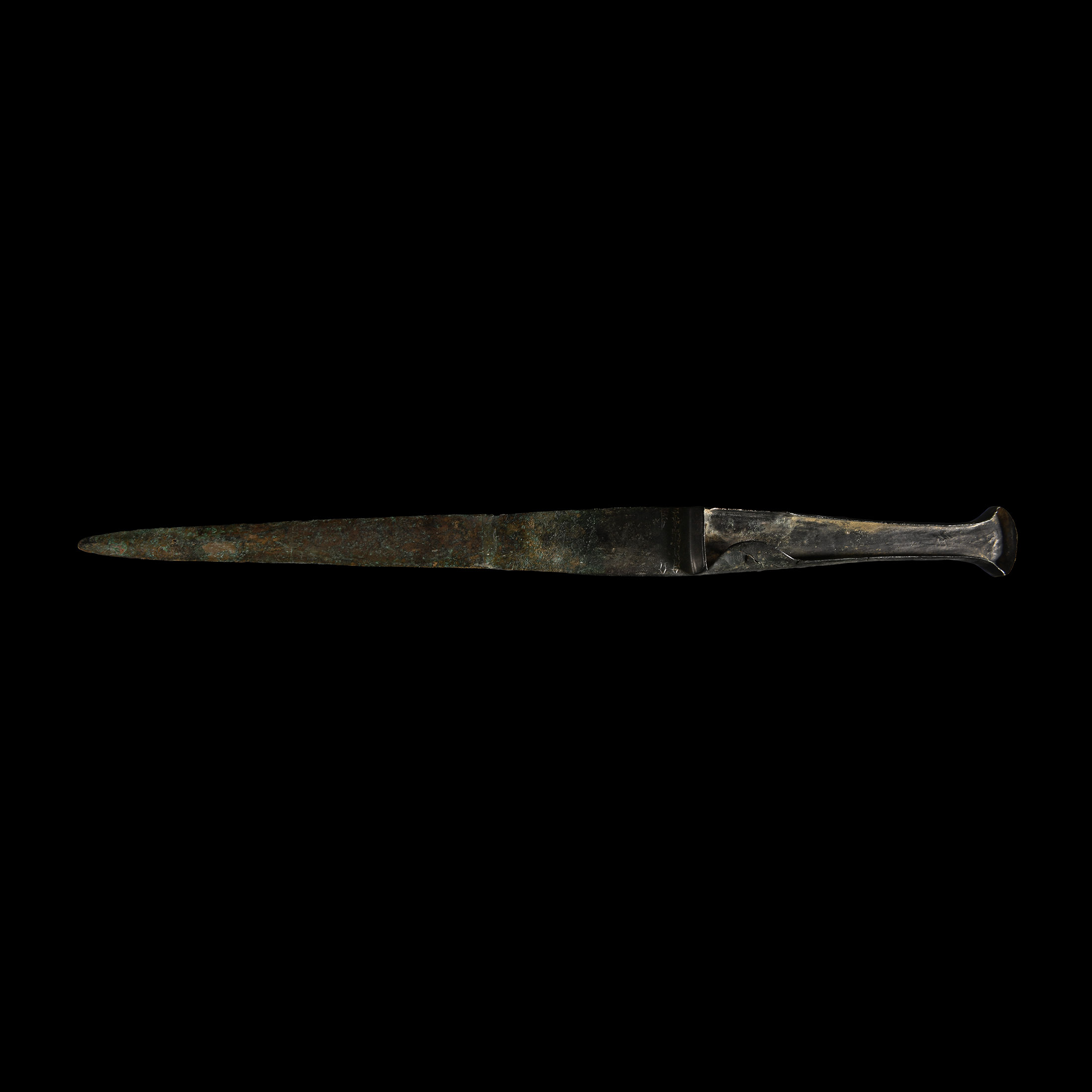
Luristan Dirk with Cuneiform Inscription
1125-1104 B.C.
15 3/4 in. (188 grams, 40 cm).
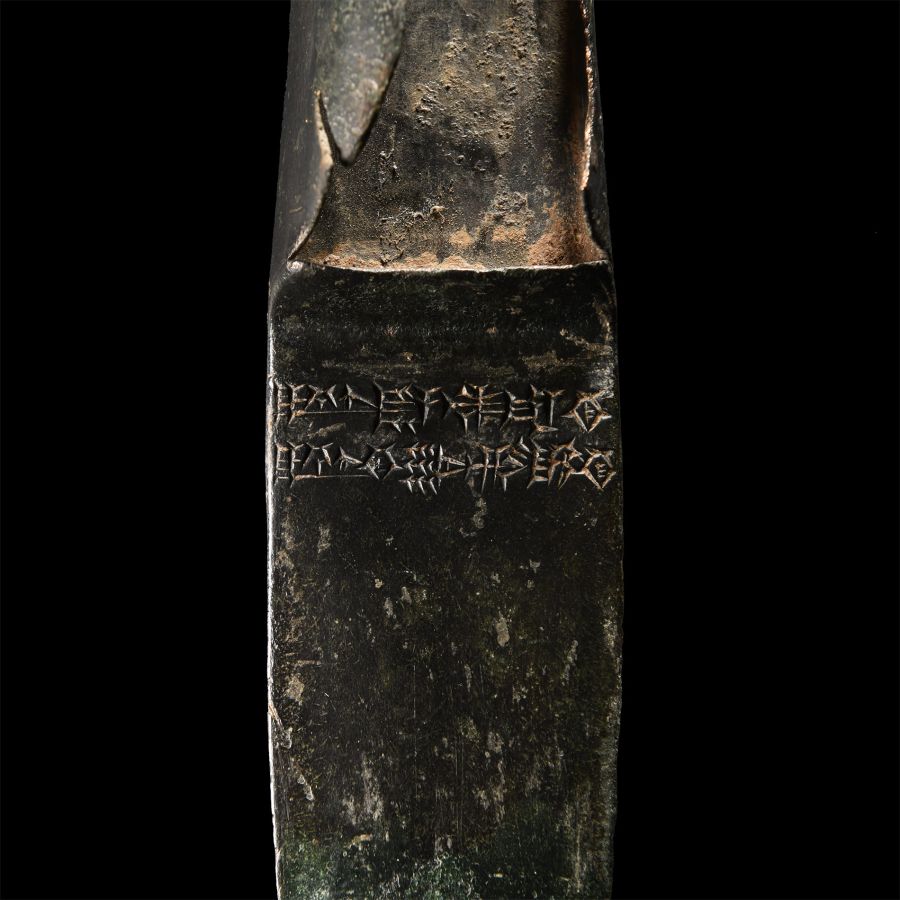
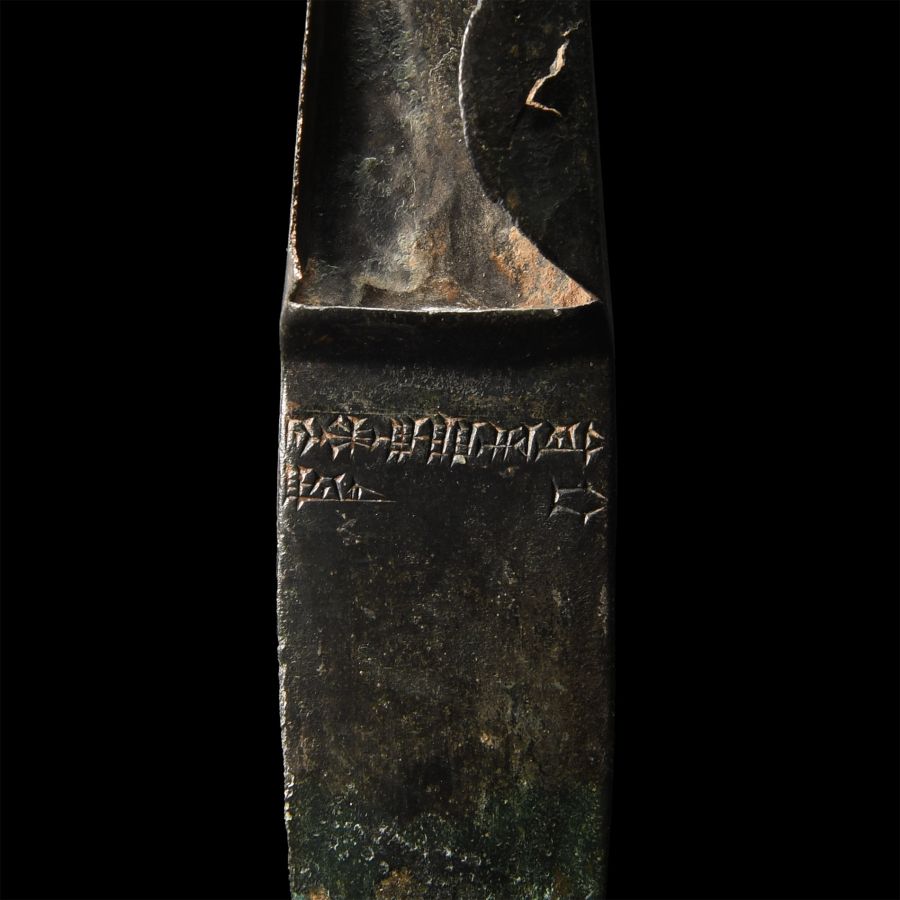
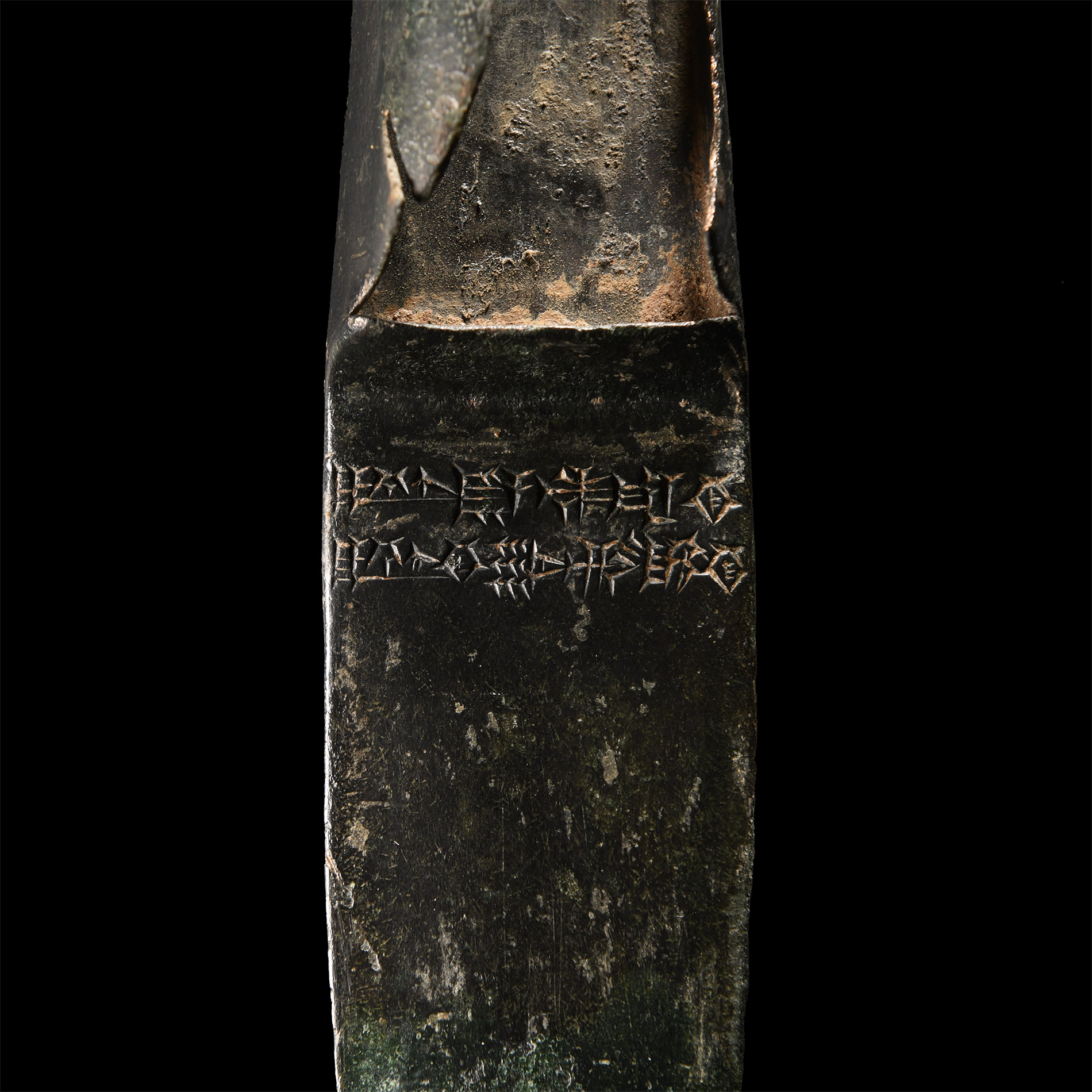
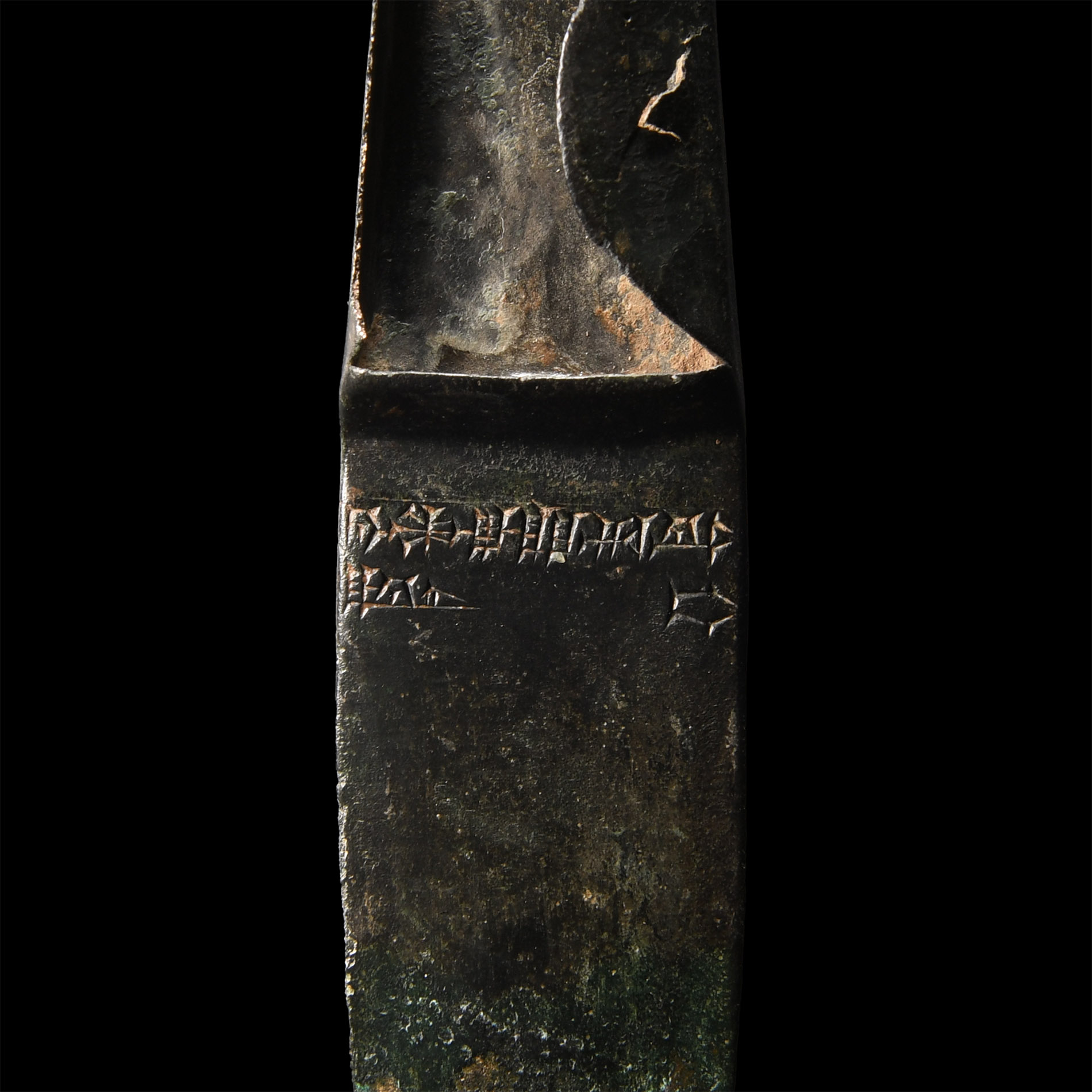
A bronze dirk or dagger with raised flanges to the grip, possibly to accept organic inserts, cuneiform script over two lines inscribed to the blade below the grip on both faces; blade repaired.
Provenancewith a London, UK gallery 1971-early 2000s.
Accompanied by an academic report by Dr Raffaele D'Amato.
This lot has been checked against the Interpol Database of stolen works of art and is accompanied by search certificate number no.11591-199676.
Cf. identical type in Khorasani, M.M., Arms and Armour from Iran - The Bronze Age to the End of the Qajar Period, Tübingen, 2006, p.377, cat.6.
FootnotesThis is a dagger with an inscription of King Nebuchadnezzar I of Babylon, 1125-1104 B.C. The inscription is identical to those on four other bronze daggers (reportedly from Luristan), three of which are in the Foroughi collection and one in the Iran Bastan museum (National Museum of Iran, inventory no.626/1626).
The Type IIIa bronze dirk of the Medveskaya classification belongs to a series of weapons bearing the same engraved inscription in Babylonian cuneiform script which reads: 'It belongs to Nabu, the King of Kiohatti, the King of Babylon, King of Sumer and Akkad'. It was cast in one piece (hilt and blade) and probably formed an endowment to the royal guard.
TimeLine Auctions follows a vetting process to ensure the authenticity and legality of all items, reinforcing our commitment to integrity and responsible trading. Each antiquity, antique, and coin lot undergoes thorough examination by a vetting committee of at least ten external specialists, professional trade association members, scientists, and archaeologists: Our Vetting Process
AUCTIONS:
TimeLine is a leading auction house specialising in antiquities, ancient art, collectables, natural history, coins, medals, and books. Our auctions offer museums, collectors, historians, and enthusiasts the opportunity to acquire unique and historically significant pieces.
LOT 0226
Luristan Dirk with Cuneiform Inscription
Estimate £8,000 - 10,000€9,280 - 11,600 (for guidance only)$10,800 - 13,500 (for guidance only)
-
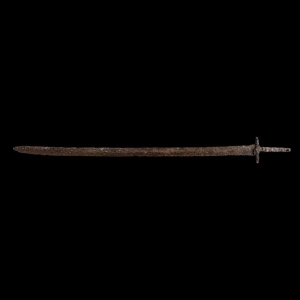
Volga-Ural Nomad Sabre
9th-11th century A.D.Sold for (Inc. bp): £381
An iron single-edged sabre with slightly curving blade showing battle nicks, evidence of a possible iron extension together with a tongue to the side of the blade, beneath the straight guard. 725 grams, 89 cm
Fine condition.
Acquired 1971-1972. From the collection of the vendor's father. Property of a London, UK, collector. Accompanied by an academic report by military specialist Dr Raffaele D'Amato.
Various sabres of similar typology were found in a complex of medieval nomad weapons in archaeological excavations in the steppe and forest-steppe zone of the Volga-Ural region; chronologically, they were dated to the 9th-11th centuries. -
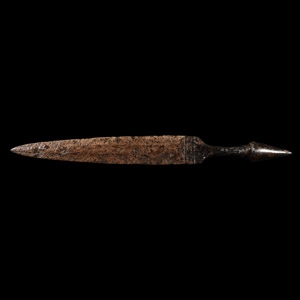
Luristan Dagger with Mushroom Pommel
13th century B.C.Estimate: £400 - 600 (+bp*)
Opening Bid: £150
A bronze short dagger with double-edged blade, central rib to both sides, a slender fullered handle with a high conical pommel. 491 grams, 41 cm
UK private collection before 2000. UK art market. Property of a London gentleman.
The sword has a solid cast hilt with a straight horizontal guard. However, its main characteristic is the exaggerated mushroom pommel, which resembles the type dated by Moorey to the end of the 2nd millennium B.C. According to some authors, these swords were produced in Northern Iran and dated between 1400-1200 B.C. -
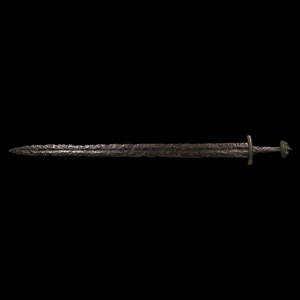
Viking Age Sword with Five-Lobed Pommel
10th century A.D.Sold for (Inc. bp): £12,350
A double-edged sword of Petersen Type L or S variant with straight tapering blade, light traces of pattern-welding and battle-nicks along the blade, tapering fullers and a sturdy long tang; boat-shaped lower guard curving gently towards the blade, decorated with punched ring-and-dot ornament along the edges; the upper guard with Trewhiddle Style ornament, surmounted by an elegant five-lobed pommel decorated with geometric patterns in the same style; cleaned and conserved. 755 grams, 89 cm
Acquired 1971-1972. From the collection of the vendor's father. Property of a London, UK, collector. Accompanied by an academic report by Dr Raffaele D’Amato. This lot has been checked against the Interpol Database of stolen works of art and is accompanied by searcher certificate no.11574-198855.
