
Loading, please wait...
LOT 1014
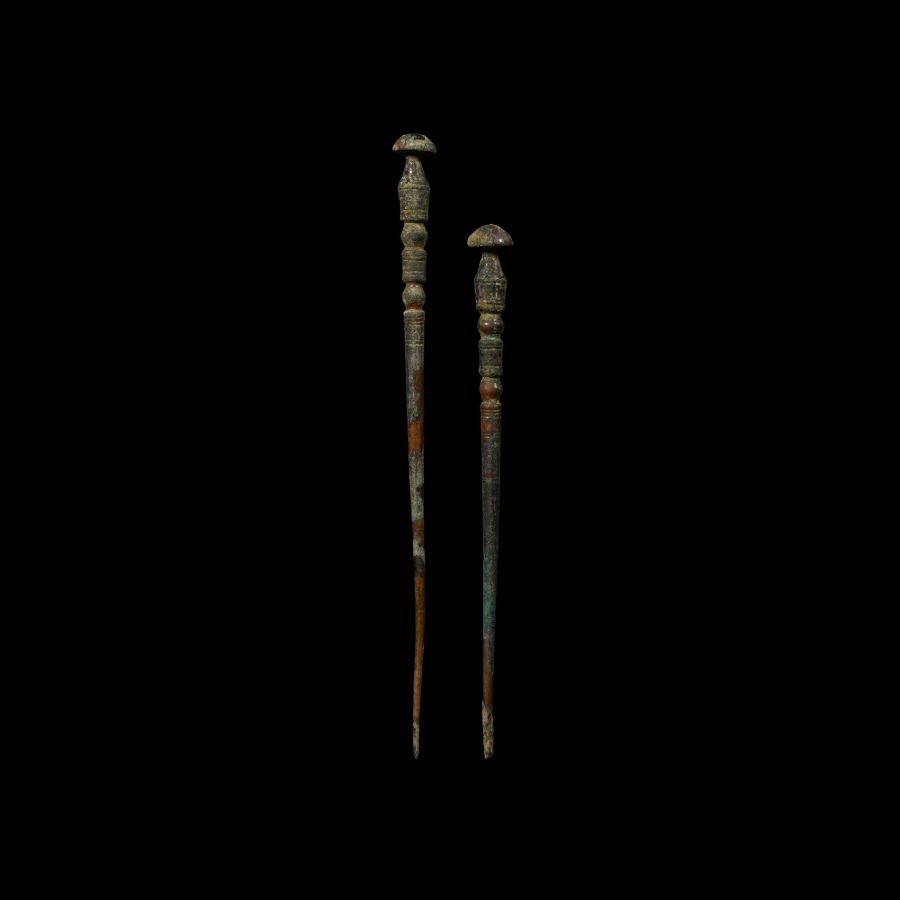
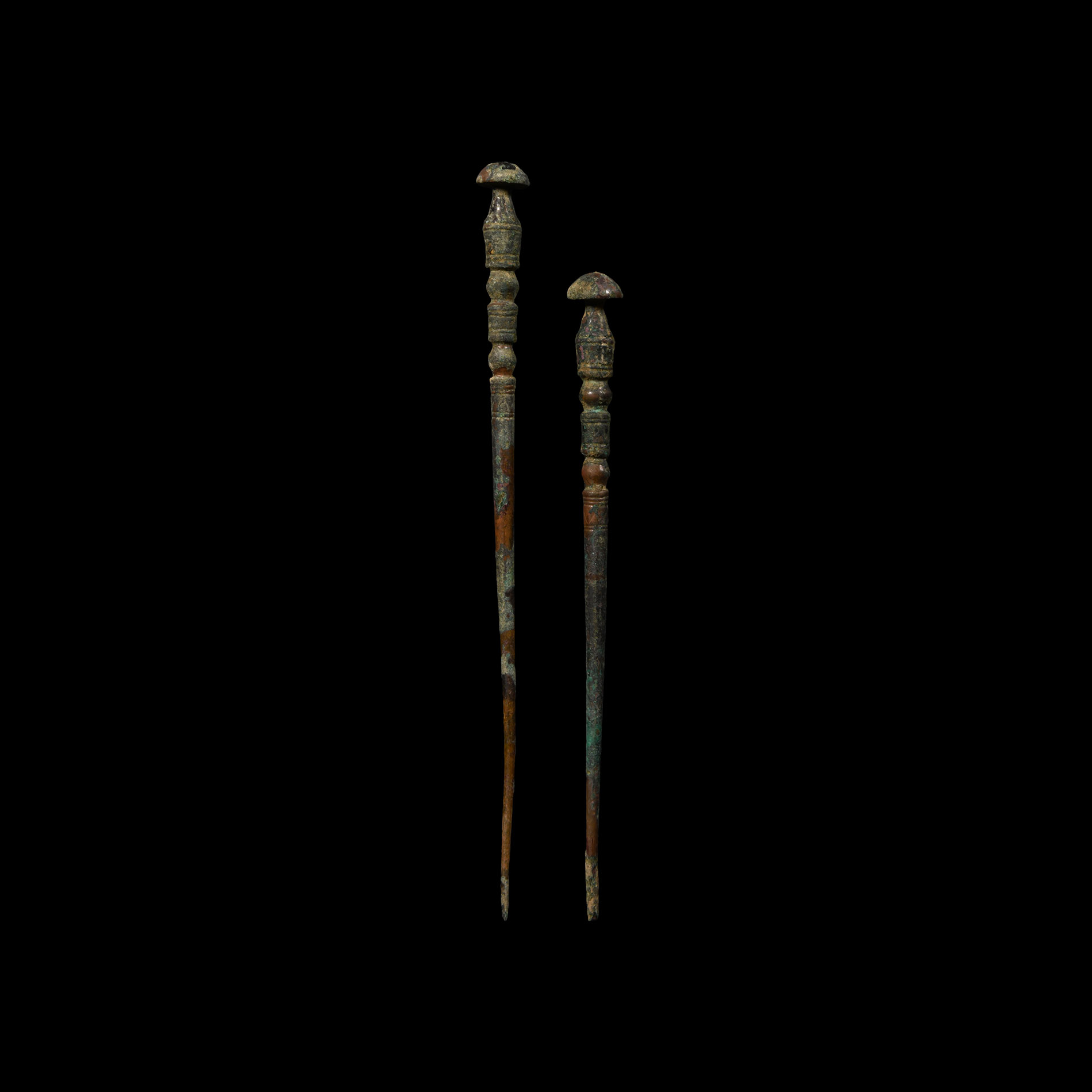
Luristan Decorated Pin Pair
13TH-6TH CENTURY B.C.
5 5/8 - 6 1/2 in. (54 grams total, 14.3-16.7 cm).
A pair of bronze pins composed of tapering round-section stems and balustered upper bodies and domed heads; one pin tip lost in antiquity. [2, No Reserve]
ProvenanceUK private collection before 2000.
UK art market.
Property of a London gentleman.
TimeLine Auctions follows a vetting process to ensure the authenticity and legality of all items, reinforcing our commitment to integrity and responsible trading. Each antiquity, antique, and coin lot undergoes thorough examination by a vetting committee of at least ten external specialists, professional trade association members, scientists, and archaeologists: Our Vetting Process
AUCTIONS:
TimeLine is a leading auction house specialising in antiquities, ancient art, collectables, natural history, coins, medals, and books. Our auctions offer museums, collectors, historians, and enthusiasts the opportunity to acquire unique and historically significant pieces.
-
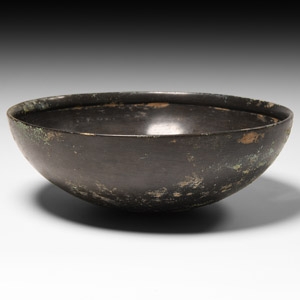
Western Asiatic Bronze Bowl
1st millennium B.C.Sold for (Inc. bp): £98
A hemispherical bronze bowl with rounded base, convex lip to the inner rim. 218 grams, 13.1 cm
Previously in a private collection since the 1990s. Property of a Sussex, UK, teacher. -
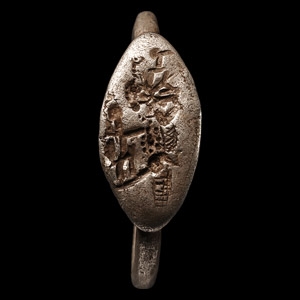
Achaemenid Silver Ring with Warriors
7th-4th century B.C.Estimate: £200 - 300 (+bp*)
Opening Bid: £110
A silver finger ring with scaphoid bezel, incuse image of an armoured warrior with shield and spear, a horseman and a hatched gate or wall. 4.12 grams, 25.84 mm overall, 21.41 mm internal diameter (approximate size British V, USA 10 1/2, Europe 23.77, Japan 22)
Acquired 1980-2015. Ex Abelita family collection. -
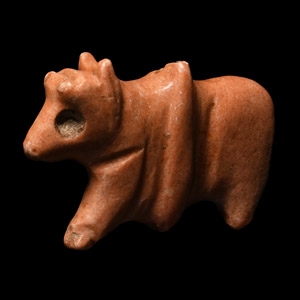
Sumerian Jemdet Nasr Period Animal Amulet
3rd millennium B.C.Sold for (Inc. bp): £279
A carved jasper amuletic pendant of a calf with a band and supporting loop to its middle, sockets for insertion of separate eyes. 18.11 grams, 43 mm
Fine condition, loop broken.
Acquired 1980-2000s. Important collection of a London gentleman.
