
Loading, please wait...
LOT 0958
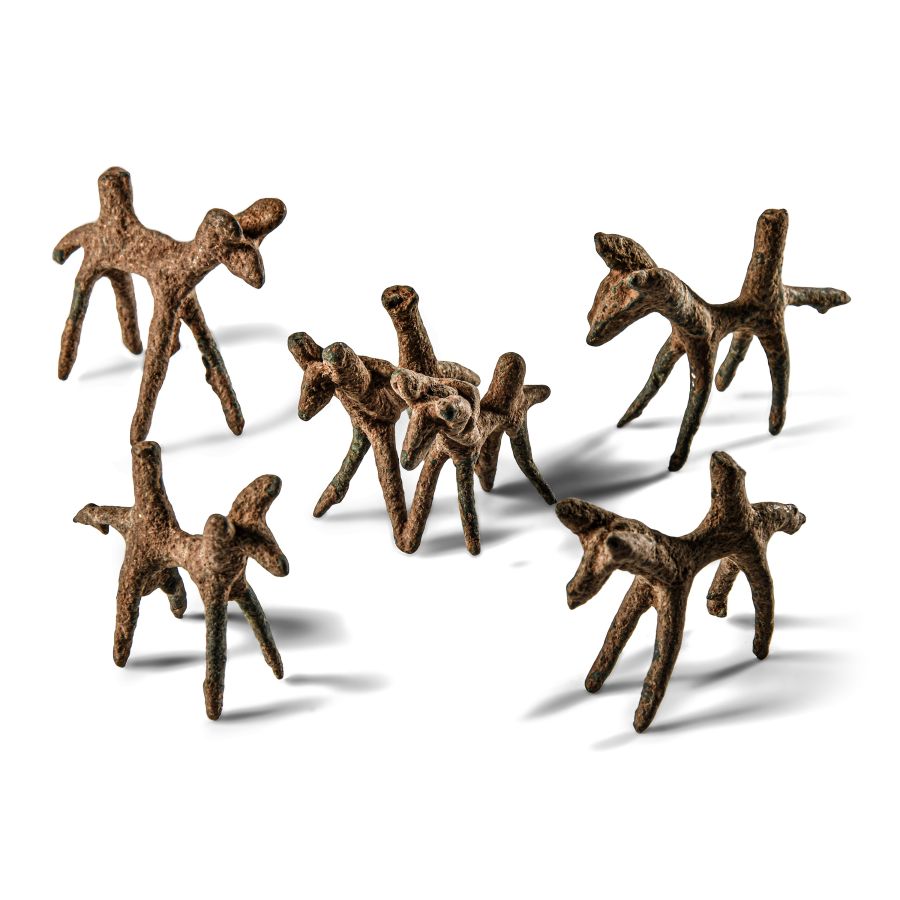
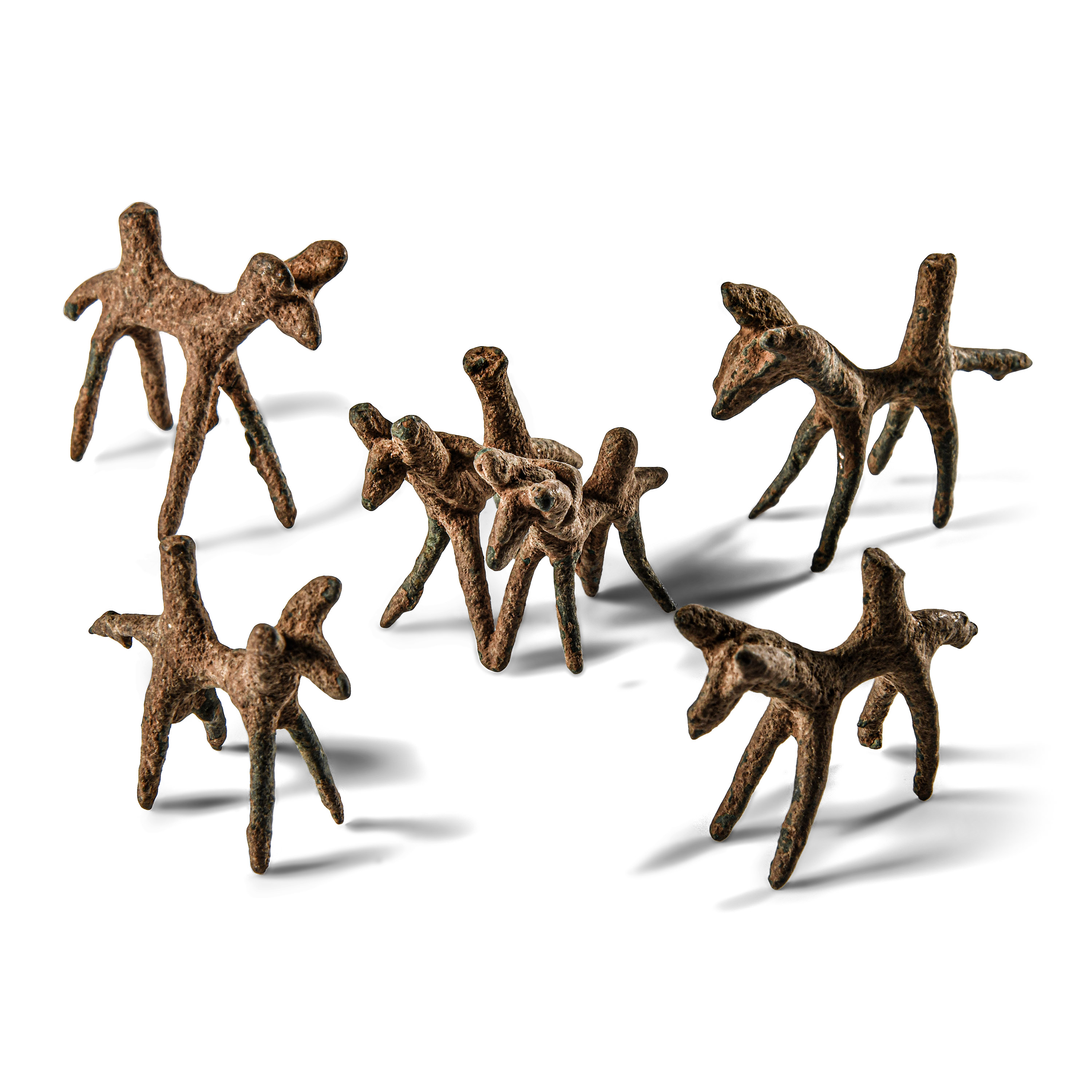
Luristan Bronze Votive Animal Group
EARLY 1ST MILLENNIUM B.C.
1 3/8 - 1 1/2 in. (52.4 grams total, 34-40 mm).
Model horses each with splayed legs and a stub to the rump (to accept a rider figure?). [5]
ProvenancePrivate collection formed in the 1990s.
Acquired from a central London gallery.
Property of an Essex gentleman.
TimeLine Auctions follows a vetting process to ensure the authenticity and legality of all items, reinforcing our commitment to integrity and responsible trading. Each antiquity, antique, and coin lot undergoes thorough examination by a vetting committee of at least ten external specialists, professional trade association members, scientists, and archaeologists: Our Vetting Process
AUCTIONS:
TimeLine is a leading auction house specialising in antiquities, ancient art, collectables, natural history, coins, medals, and books. Our auctions offer museums, collectors, historians, and enthusiasts the opportunity to acquire unique and historically significant pieces.
-
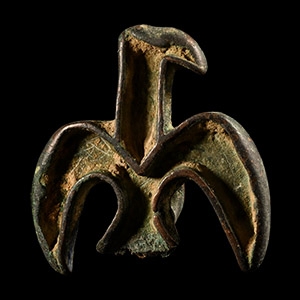
Central Asian Bronze Compartmented Eagle Seal Matrix
Circa 2300-2000 B.C.Sold for (Inc. bp): £208
Accompanied by a typed and signed scholarly note written by Professor Wilfrid George Lambert FBA (1926-2011), historian, archaeologist, and specialist in Assyriology and Near Eastern archaeology, in the late 1980s and early 1990s, which states: 'This bears the shape of the design, with flat compartmented face and flat back, on which a handle of inverted V-shape is mounted. The design consists of a heraldic eagle, with head sideways at the top, body beneath, and wings spread and curving downwards. This comes from west central Asia and dates to c. 2300-2000 B.C. it is a fine design and in very good condition save that the lower part of the body is missing.' 17.2 grams, 38 mm high
Ex S Collection, London, UK, 1970-1990s. Accompanied by a typed scholarly note signed by Professor Wilfrid George Lambert FBA (1926-2011), historian, archaeologist, and specialist in Assyriology and Near Eastern archaeology, in the late 1980s and early 1990s with reference no.V-619. -
.jpg)
Mesopotamian Silver Bead Necklace
3rd-early 2nd millennium B.C.Estimate: £15,000 - 20,000 (+bp*)
Opening Bid: £7,500
Restrung and comprising mainly spherical, elongated ovals, oblates, and segmented tube shapes. 224 grams, 54 cm long (1.5 kg total, 24.2 x 24.2cm including case)
Numismatic and Ancient Art Gallery AG, Ancient Art of the Mediterranean World, No 8, lot 5, c.1982. Taisei Gallery, Gold & Silver Auction, Part II, Ancient to Renaissance, 5 November 1992, The Conrad Salon, The Waldorf-Astoria, New York, lot 39. From an important North West London collection. This lot has been checked against the Interpol Database of stolen works of art and is accompanied by search certificate no.11970-210480. -
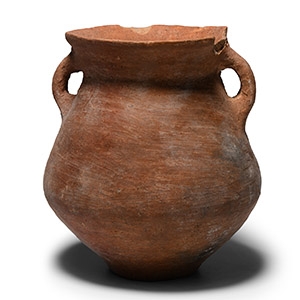
Trans Jordan Terracotta Jar with Handles
Early Bronze Age, 3rd millennium B.C.Sold for (Inc. bp): £65
Of biconical form with flared mouth, two small loop handles to the shoulder; rim chipped. 332 grams, 12.2 cm high
Ex London, UK, collection, 1988.
