
Loading, please wait...
LOT 1486
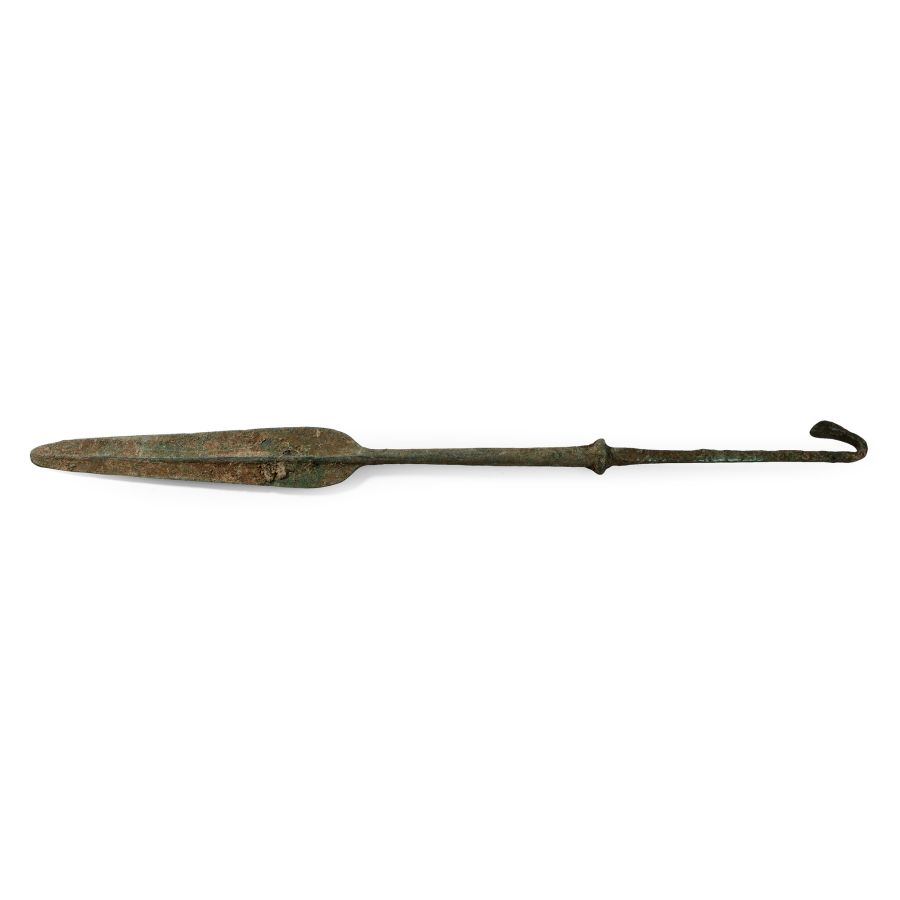
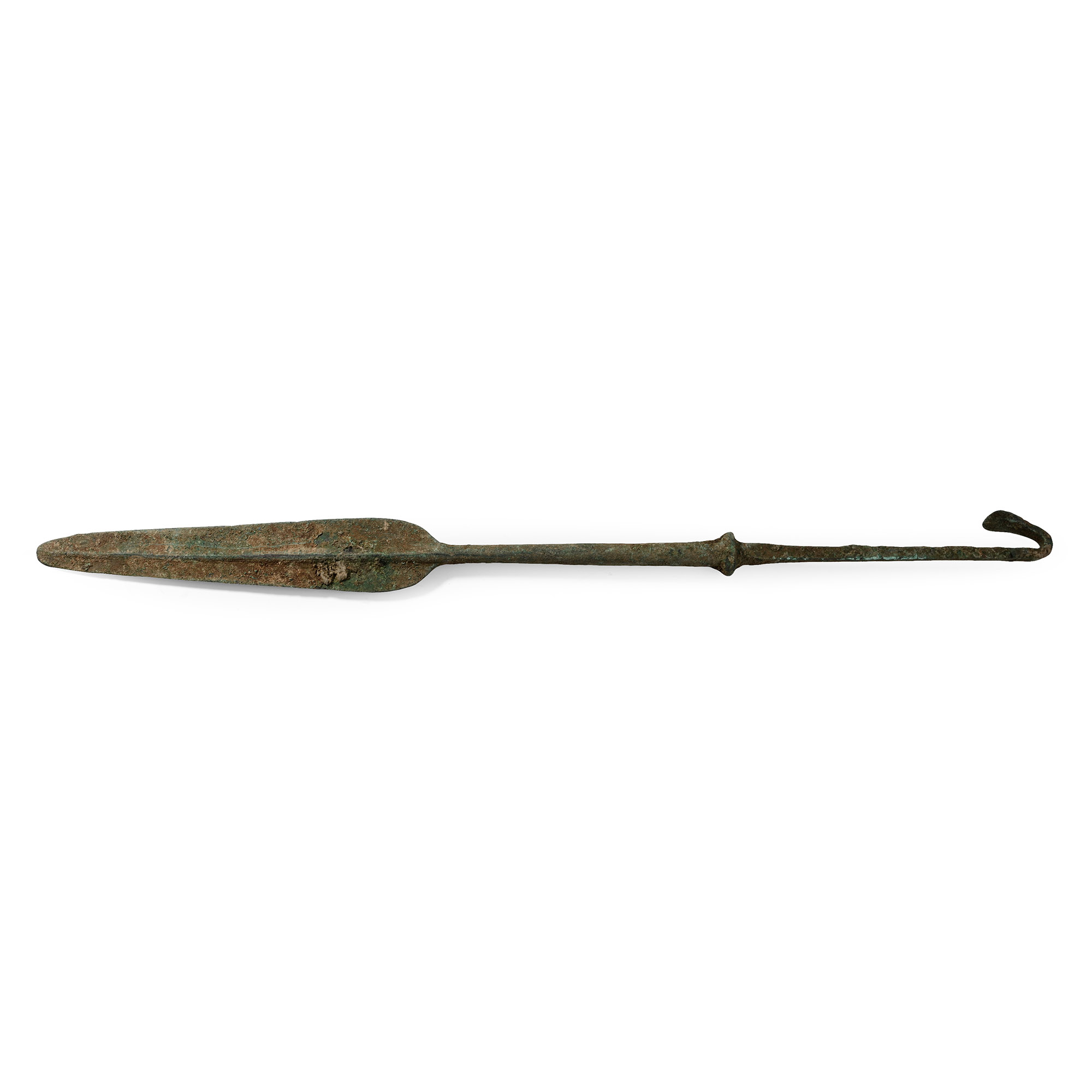
Luristan Bronze Tanged Spearhead
2ND-1ST MILLENNIUM B.C.
17 in. (197 grams, 43.1 cm).
Featuring a slender leaf-shaped blade with a long tapering shaft and a rectnagular-section tang with a bent finial.
ProvenanceEx Abelita collection, 1990s.
LiteratureCf. Gorelik, M., Weapons of Ancient East, IV millennium BC-IV century BC, Saint Petersburg, 2003, in Russian, see pl.XXXIII, no.82, from Tepe Hissar; Gernez, G., L’armament en métal au Proche et Moyen-Orient: des origines a 1750 av. J.C., Paris, 2007, p.301, fig.2.88, subtype L2.B.b.
CONDITIONTimeLine Auctions follows a vetting process to ensure the authenticity and legality of all items, reinforcing our commitment to integrity and responsible trading. Each antiquity, antique, and coin lot undergoes thorough examination by a vetting committee of at least ten external specialists, professional trade association members, scientists, and archaeologists: Our Vetting Process
AUCTIONS:
TimeLine is a leading auction house specialising in antiquities, ancient art, collectables, natural history, coins, medals, and books. Our auctions offer museums, collectors, historians, and enthusiasts the opportunity to acquire unique and historically significant pieces.
-
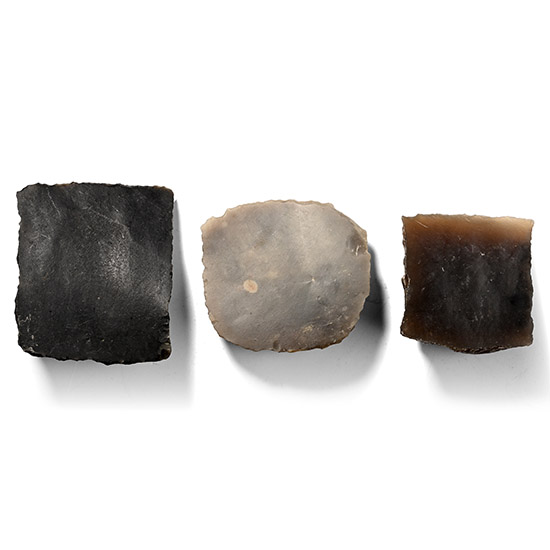
Knapped Musket Gun Flint Group
Circa 18th century A.D.Sold for (Inc. bp): £13
Comprising three gun flints, one tongue-shaped and the other two rectangular. 33.1 grams total, 29-36 mm
From the private collection of the late Mr M., a collector from Waterlooville, Hampshire, UK; late 1980s-early 1990s. -
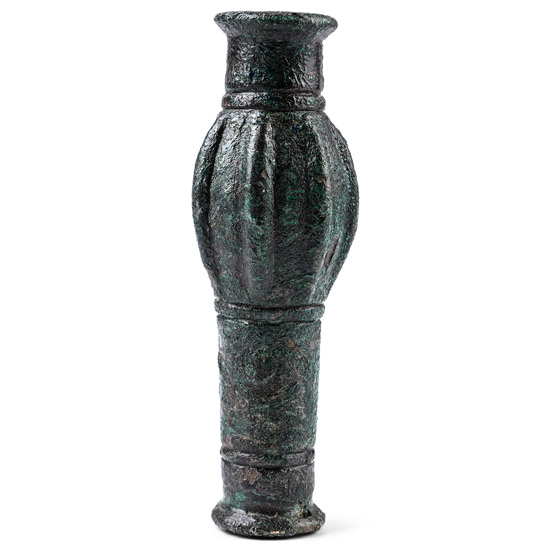
Western Asiatic Bronze Macehead
2nd-1st millennium B.C.Estimate: £180 - 240 (+bp*)
Opening Bid: £90
Comprising a cylindrical shaft with flared mouth, rounded flanges around the bulb, and horizontal stepped collars. 263 grams, 13.4 cm
Ex Abelita family collection, 1980s-2000s. -
.jpg)
Medieval Iron Hand-and-Half Sword with Bronze Pommel with Coat of Arms
13th century A.D.Sold for (Inc. bp): £4,680
Comprising: two-edged lenticular-section piled blade (Oakshott's Type XII) with gentle taper overall to a narrow point; quillons round in section with taper to ends and hooked finial; broad flat-section tang tapering to the upper end; disc pommel of Oakshott's Type K with scooped border to each face, central disc with beaded rim, inner heater-shaped panel with reserved cross potent. 1.32 kg, 101 cm
From the private family collection of a lady, UK; acquired in Germany, mid-20th century. Accompanied by an academic report by Dr Raffaele D'Amato. This lot has been checked against the Interpol Database of stolen works of art and is accompanied by search certificate number no.13303-257659.
