
Loading, please wait...
LOT 1849
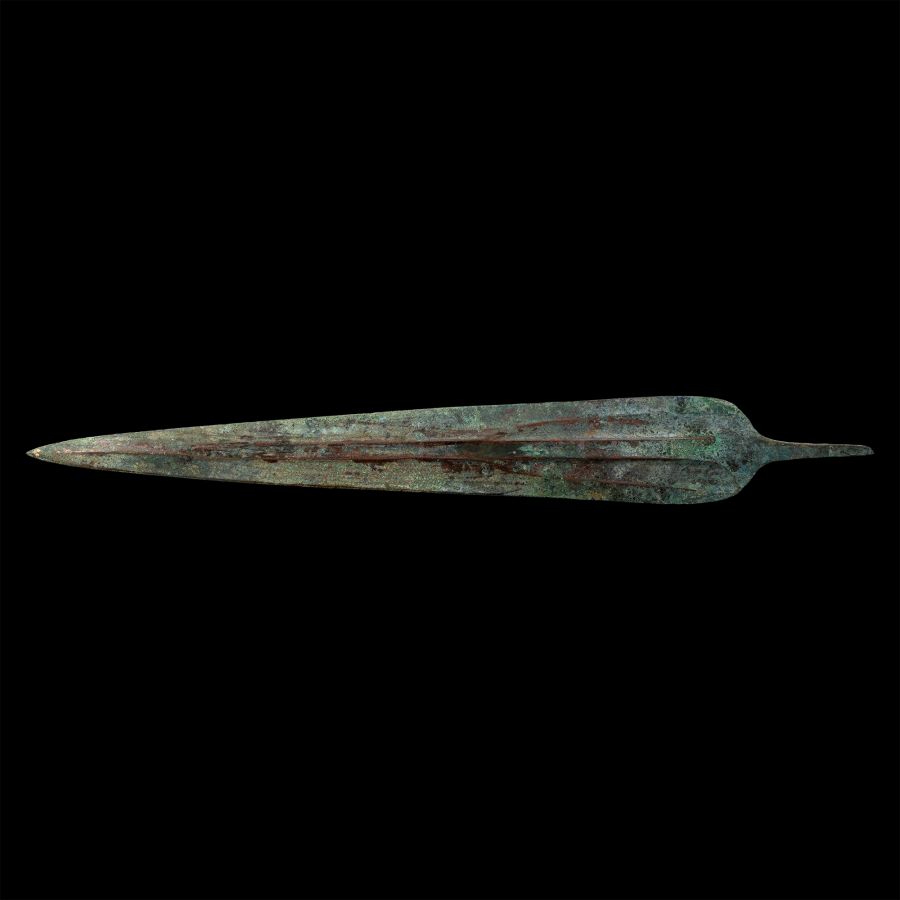
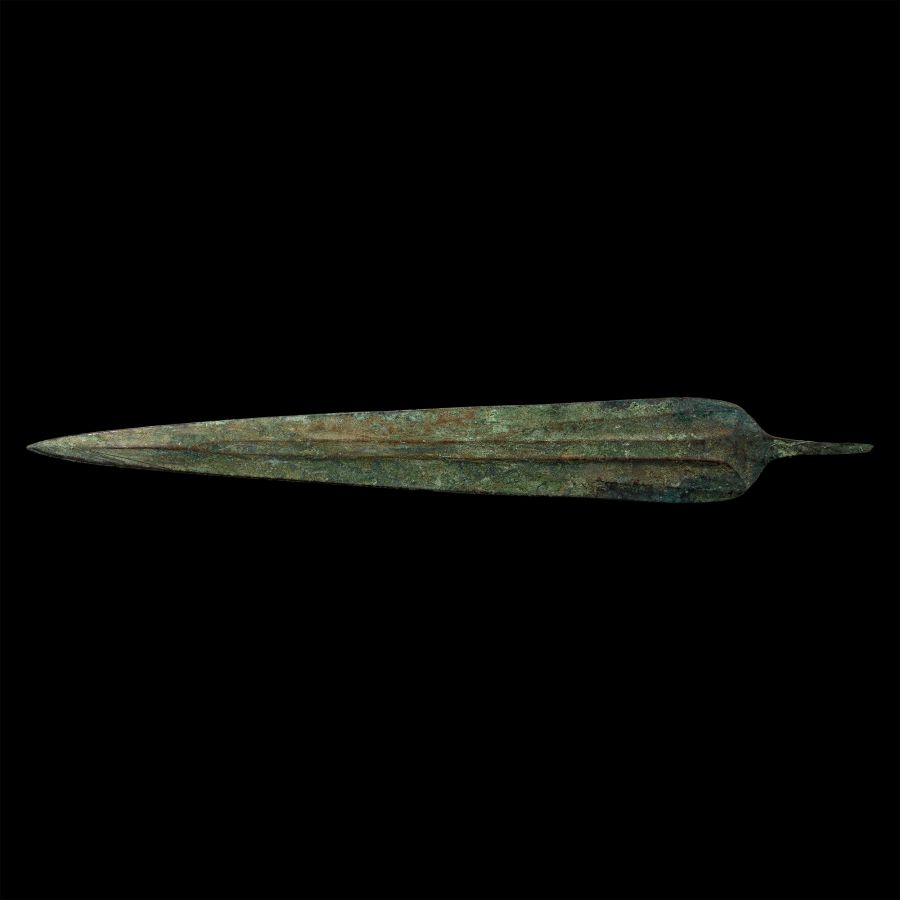
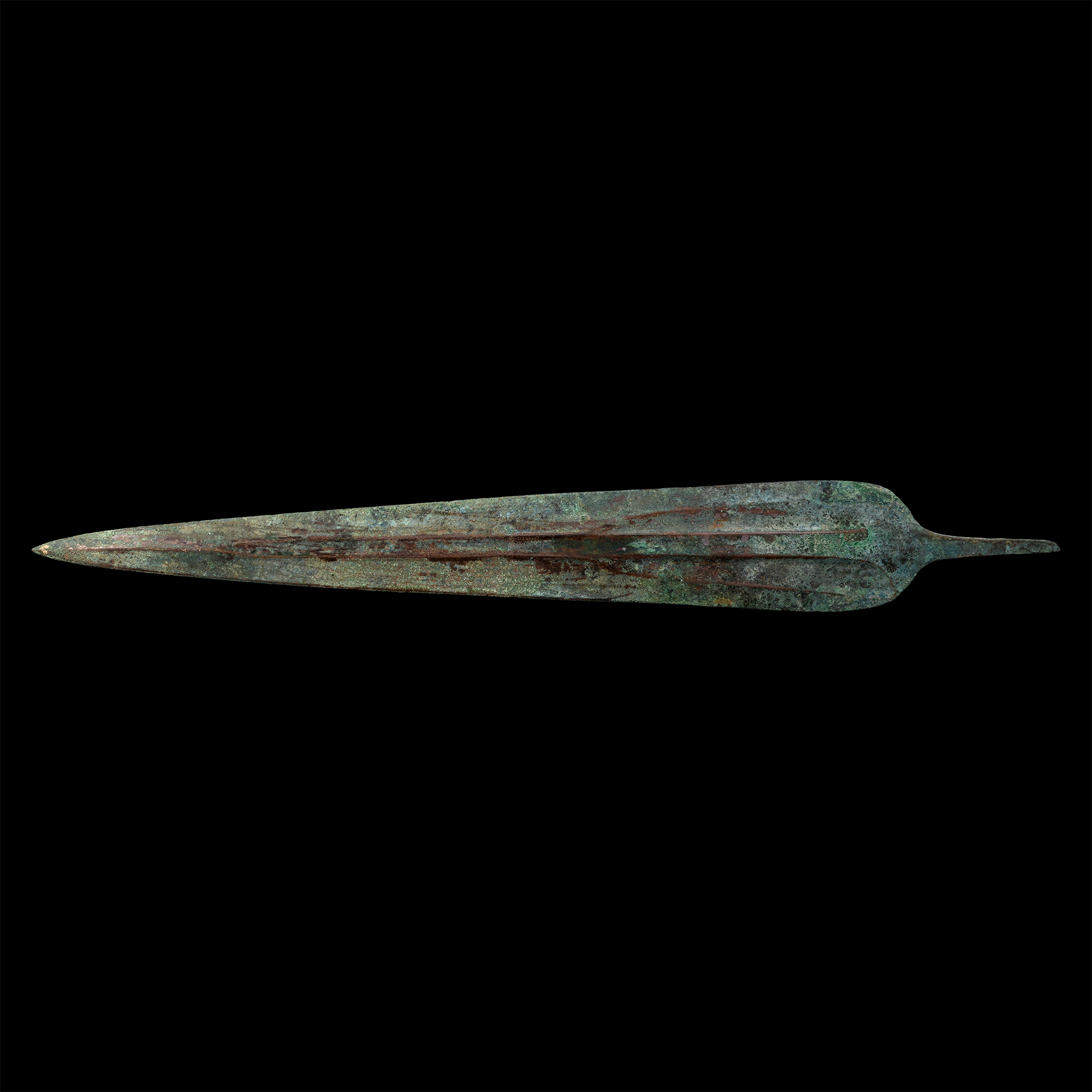
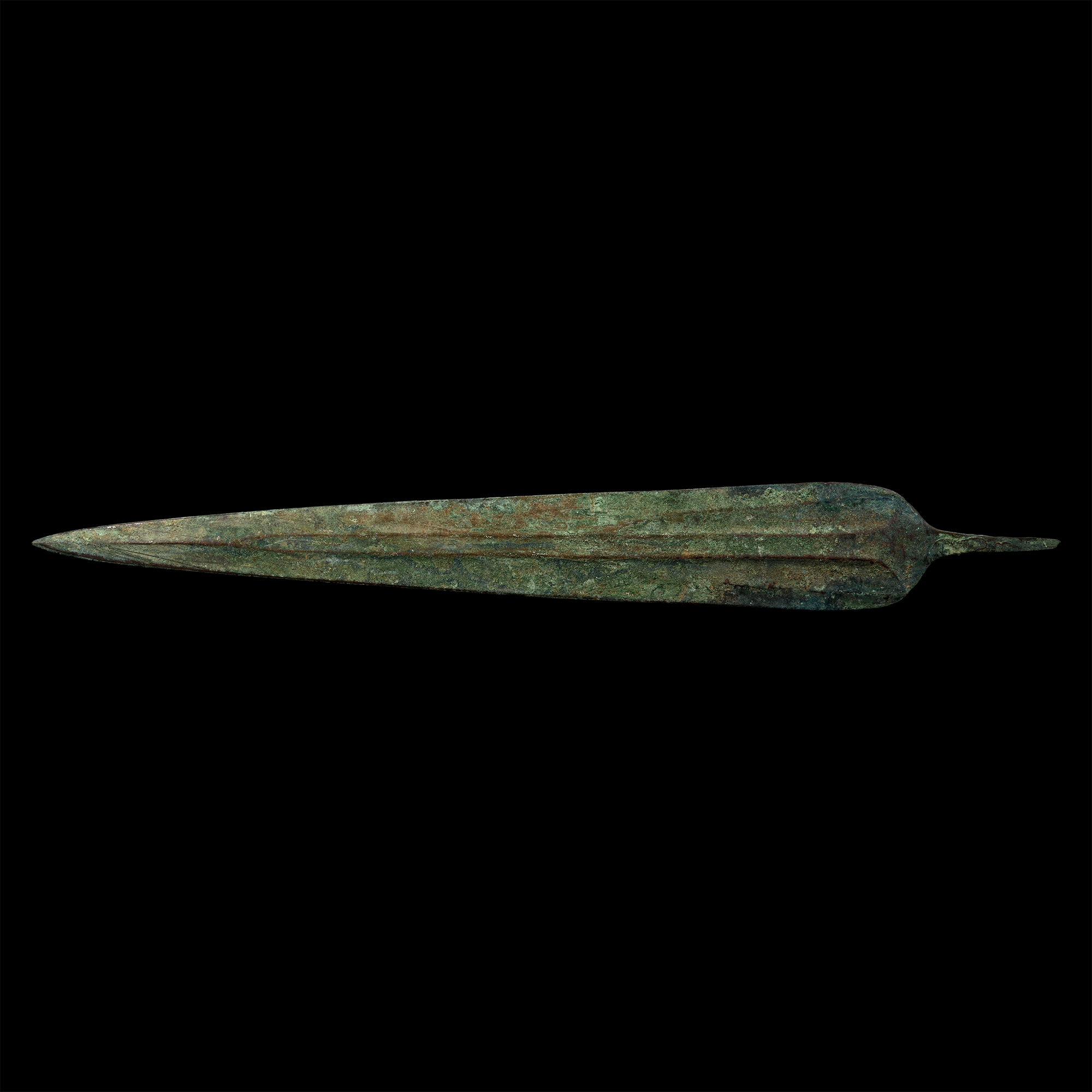
Luristan Bronze Tanged Short Sword
2ND-1ST MILLENNIUM B.C.
16 3/4 in. (355 grams, 42.7 cm).
Substantial blade with rounded shoulders and a short rectangular-section tang.
ProvenanceEx Abelita family collection, 1980s-2000s.
LiteratureCf. Christie's, The Axel Guttmann Collection of Ancient Arms and Armour, part 2, London, 2004, item 36, p.33.
FootnotesLuristan was hardly an ethnic or political entity, but the people of Luri had relations through warfare and trade with Sumerians, Lullubi, Assyrians, Babylonians and Elamites over a long period of time, spanning from the 3rd to the 2nd millennium B.C. The ruling elites of warrior horsemen were buried in the graves with their weapons and horses.
CONDITIONTimeLine Auctions follows a vetting process to ensure the authenticity and legality of all items, reinforcing our commitment to integrity and responsible trading. Each antiquity, antique, and coin lot undergoes thorough examination by a vetting committee of at least ten external specialists, professional trade association members, scientists, and archaeologists: Our Vetting Process
AUCTIONS:
TimeLine is a leading auction house specialising in antiquities, ancient art, collectables, natural history, coins, medals, and books. Our auctions offer museums, collectors, historians, and enthusiasts the opportunity to acquire unique and historically significant pieces.
-
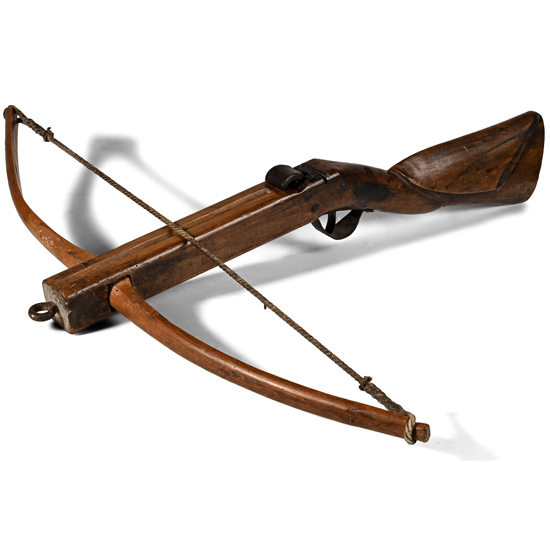
Antique Wooden Crossbow
19th century A.D.Sold for (Inc. bp): £78
Carved, stocky body with an iron suspension ring, rope cable and iron trigger. 1.38 kg, 75 cm wide
Private collection, London, UK. (For sale only to bidders of at least 18 years of age. UK buyers only.) -
.jpg)
Urartian Bronze Helmet with Embossed Decoration
9th-7th century B.C.Sold for (Inc. bp): £6,500
A Caucasian or Urartian helmet of domed profile, hammered from a single sheet of metal; radiating rows of small repoussé bosses with interstitial rows connecting larger examples; shallow recess at the forward edge; old accession label to inner face 'AG334'; later pseudo-inscription; some restoration. 1.5 kg total, 41 cm including stand
Ex Axel Guttmann Collection of Ancient Arms and Armour, Germany [1944-2001], AG 334, 1990. with Hermann Historica, Munich, Germany, 2008. Private collection, New York, USA. Accompanied by an academic report by Dr Raffaele D’Amato. This lot has been checked against the Interpol Database of stolen works of art and is accompanied by search certificate number no.13262-254403.
The Urartian craftsmen were especially famous for their metalworking skills. However, the shape of this helmet differs considerably from the usual pointed Urartian examples, and shows a strong influence from the Scythian and Moeotic military headgear, which is not surprising if we consider that Urartu had been at war with the Scythian tribes of Caucasus since the 7th century B.C. The remainder of the helmet is its bowl, embossed and decorated, and an unusual recess on the front part. The helmet was used with a padded cap, which probably formed an integral part of the same headgear. -
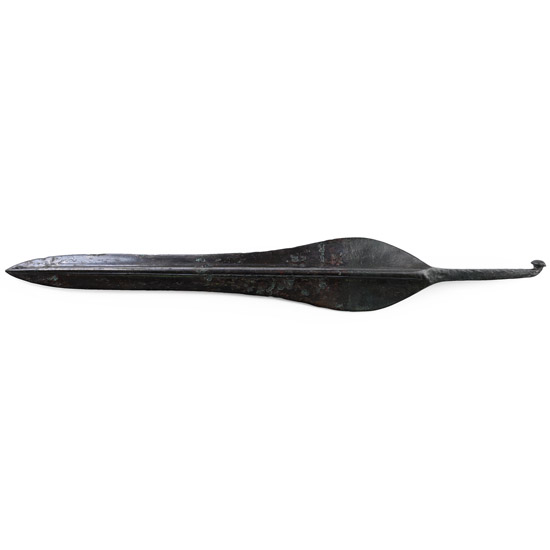
Luristan Bronze Spearhead
Early 2nd millennium B.C.Sold for (Inc. bp): £442
Foliate blade with a central rib and slender shoulders, short rectangular shaft and tang with a bent finial. 643 grams, 42.2 cm
Ex Abelita family collection, 1980s-2000s.
A number of similar blades, some considered to be spearheads and others to be daggers, all with a bent tang, derived from Tepe Hissar Culture III. Some of them, like our specimen, have a button terminal, and some others have a plain, pointed terminal. The general dating of these specimens is fixed to the early 2nd millennium B.C.
