
Loading, please wait...
LOT 1853
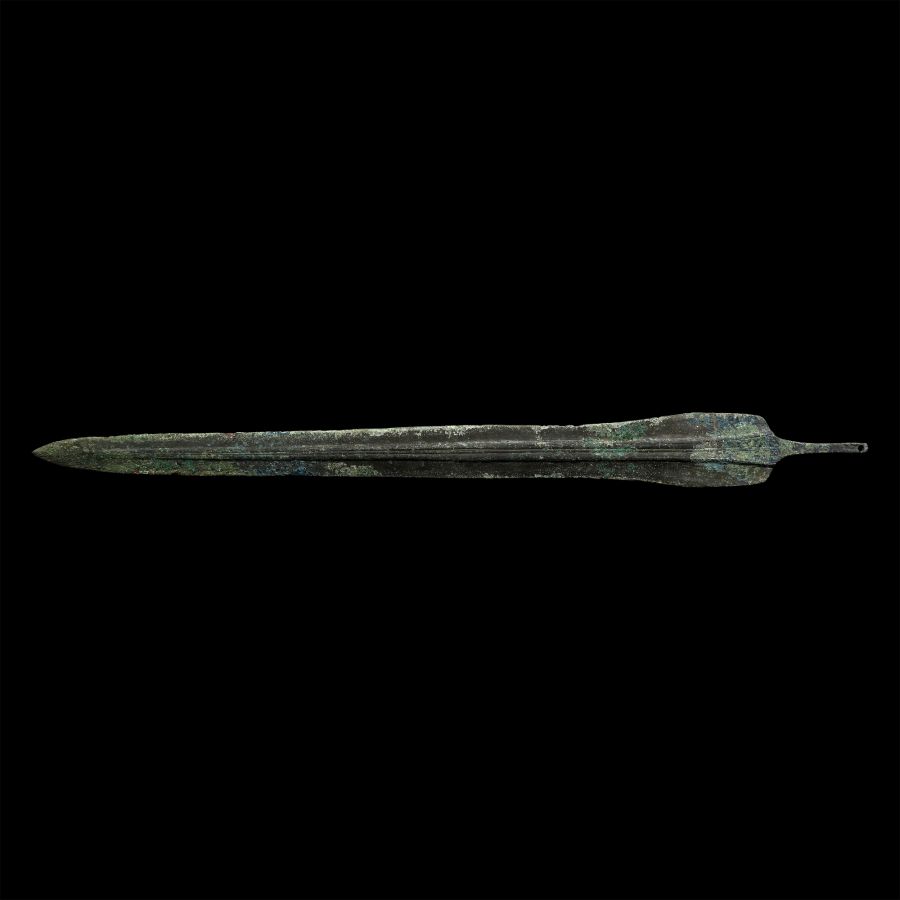
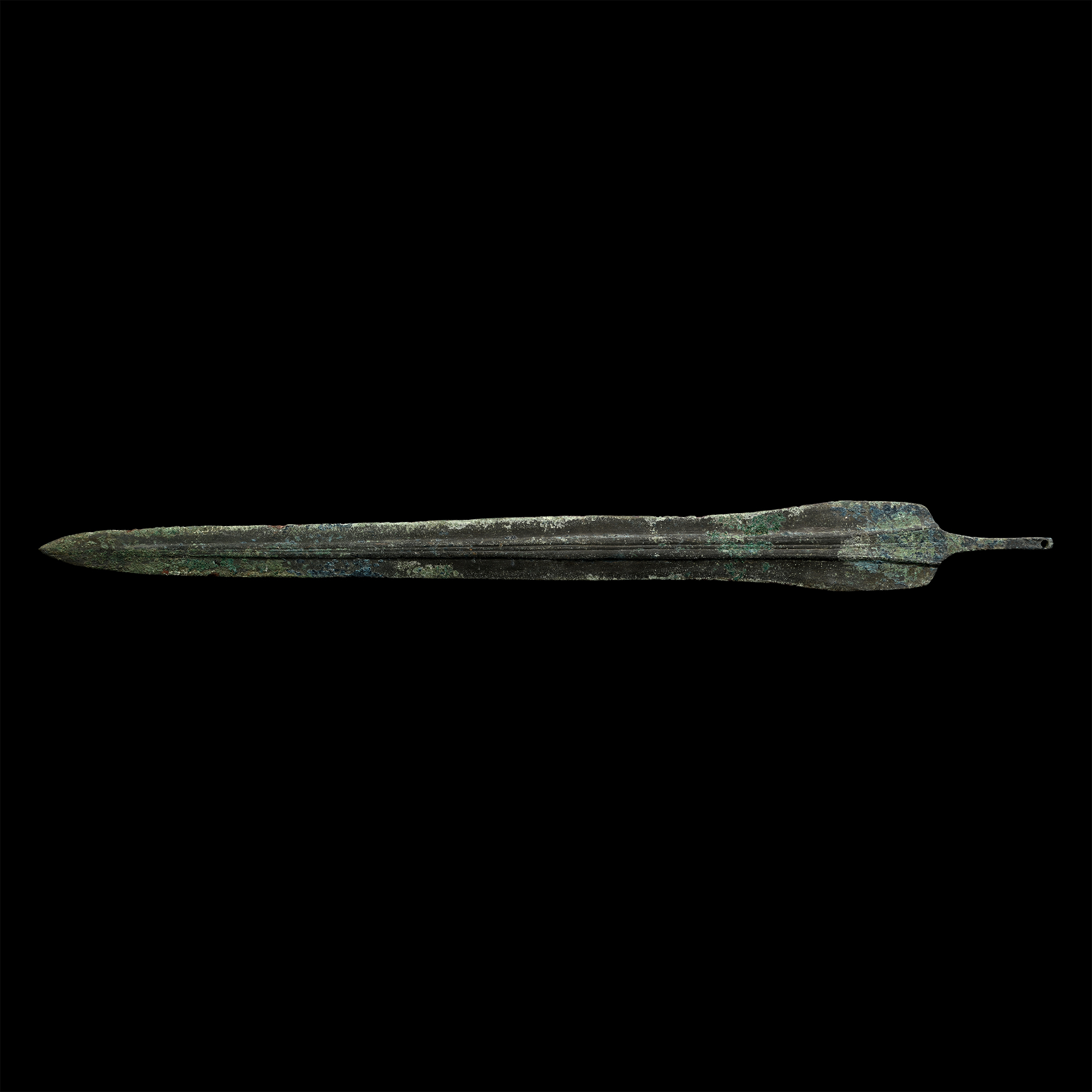
Luristan Bronze Tanged Dirk
EARLY 1ST MILLENNIUM B.C.
16 3/8 in. (200 grams, 41.5 cm).
Comprising a slender blade with a raised midrib with grooves, a short rectangular-section tang pierced at the end.
ProvenanceEx Abelita family collection, 1980s-2000s.
LiteratureCf. Christie's, The Axel Guttmann Collection of Ancient Arms and Armour, part 2, London, 2004, item 40, p.36.
FootnotesThe Luri people produced a quantity of fine metalwork, which, according to Dr Khorasani, could be due to a settled period arising as a result of the defeat of the Elamites by the Babylonians, leaving the Luristani people in relative peace for a period of time after 1200 BC. According to Khorasani, 'A culture of innovation and experimentation flourished, and the repertoire of the Luristan smiths expanded in the period between 1150-1050 B.C.'
CONDITIONTimeLine Auctions follows a vetting process to ensure the authenticity and legality of all items, reinforcing our commitment to integrity and responsible trading. Each antiquity, antique, and coin lot undergoes thorough examination by a vetting committee of at least ten external specialists, professional trade association members, scientists, and archaeologists: Our Vetting Process
AUCTIONS:
TimeLine is a leading auction house specialising in antiquities, ancient art, collectables, natural history, coins, medals, and books. Our auctions offer museums, collectors, historians, and enthusiasts the opportunity to acquire unique and historically significant pieces.
-
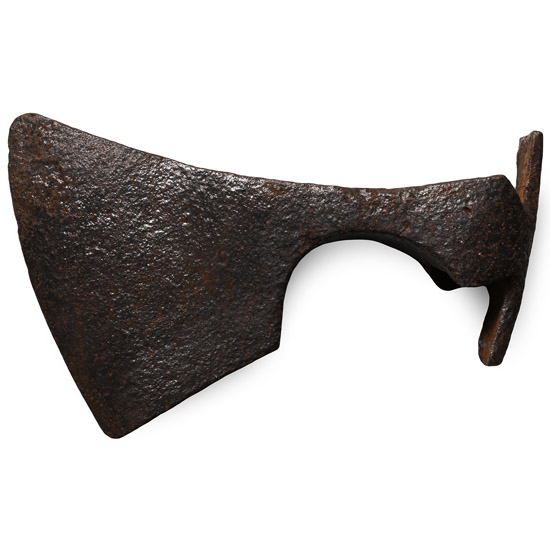
Viking Age Iron Bearded Axehead
Circa 9th-11th century A.D.Sold for (Inc. bp): £260
With a broad, curved blade and a narrow neck, a round socket with an extended edge to the reverse. 358 grams, 15.1 cm
Ex North American collection, 1970s-1980s. -
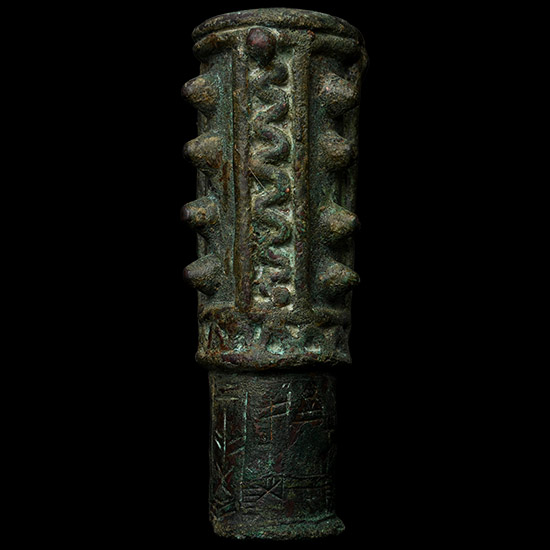
Elamite Bronze Macehead Inscribed 'To Nin’azu, Bala, son of Lugal-kare-si'
Early Dynastic IIIB Period, circa 2500-2340 B.C.Sold for (Inc. bp): £2,340
Comprising a cylindrical shaft with a narrow flanged base, the upper section with three vertical relief panels decorated by round spikes alternated with a wavy pattern, divided and bordered by parallel ridges, engraved with five lines of Sumerian cuneiform text around the socket, a votive inscription translating to: 'To Nin’azu, Bala, son of Lugal-kare-si, the merchant, has presented (it)'. 350 grams, 11.6 cm
Acquired before 1983. Ex London gallery, 1990s. Private collection, London, UK. This lot has been checked against the Interpol Database of stolen works of art and is accompanied by search certificate number no.13257-253385.
This gorz mace head belongs to the category of truncheon-shaped mace heads, a type developed on the Iranian plateau during the Bronze Age, used by Elamite and Luristan warriors since the 3rd millennium B.C. This category of objects was also interpreted as a part of a shaft or cudgel, but most scholars agree on the interpretation of use as a mace. -
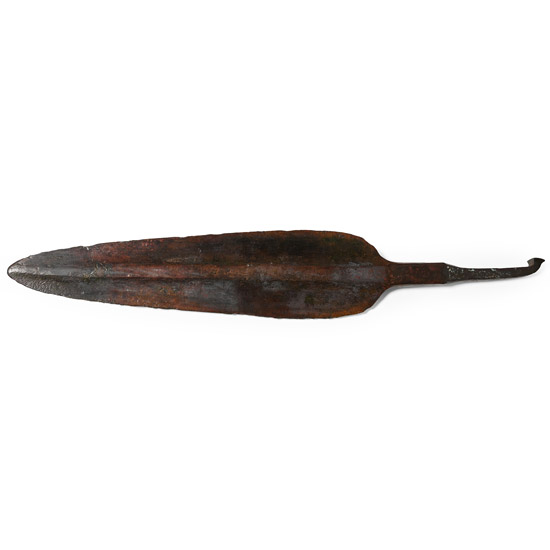
Western Asiatic Bronze Spear Blade
2nd-1st millennium B.C.Estimate: £200 - 300 (+bp*)
Opening Bid: £100
Comprising a triangular blade with a broad midrib, a short neck and a square-section tang with a bent finial. 309 grams, 32.6 cm
Ex Abelita family collection, 1980s-2000s.
