
Loading, please wait...
LOT 1481
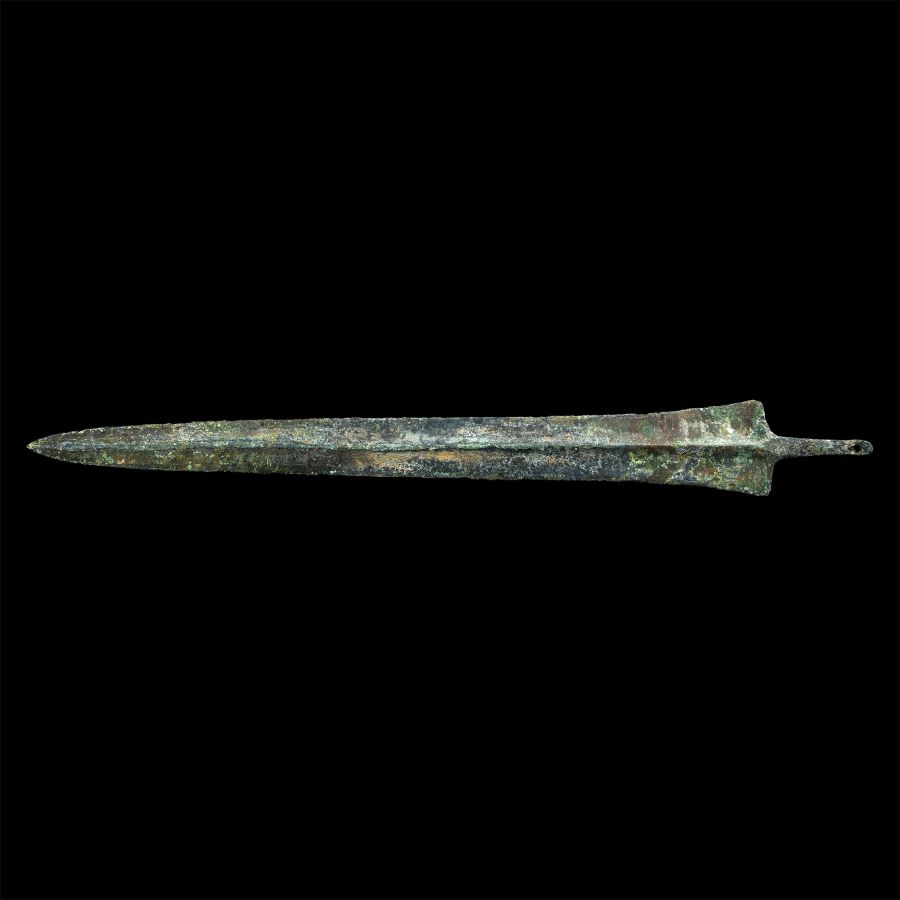
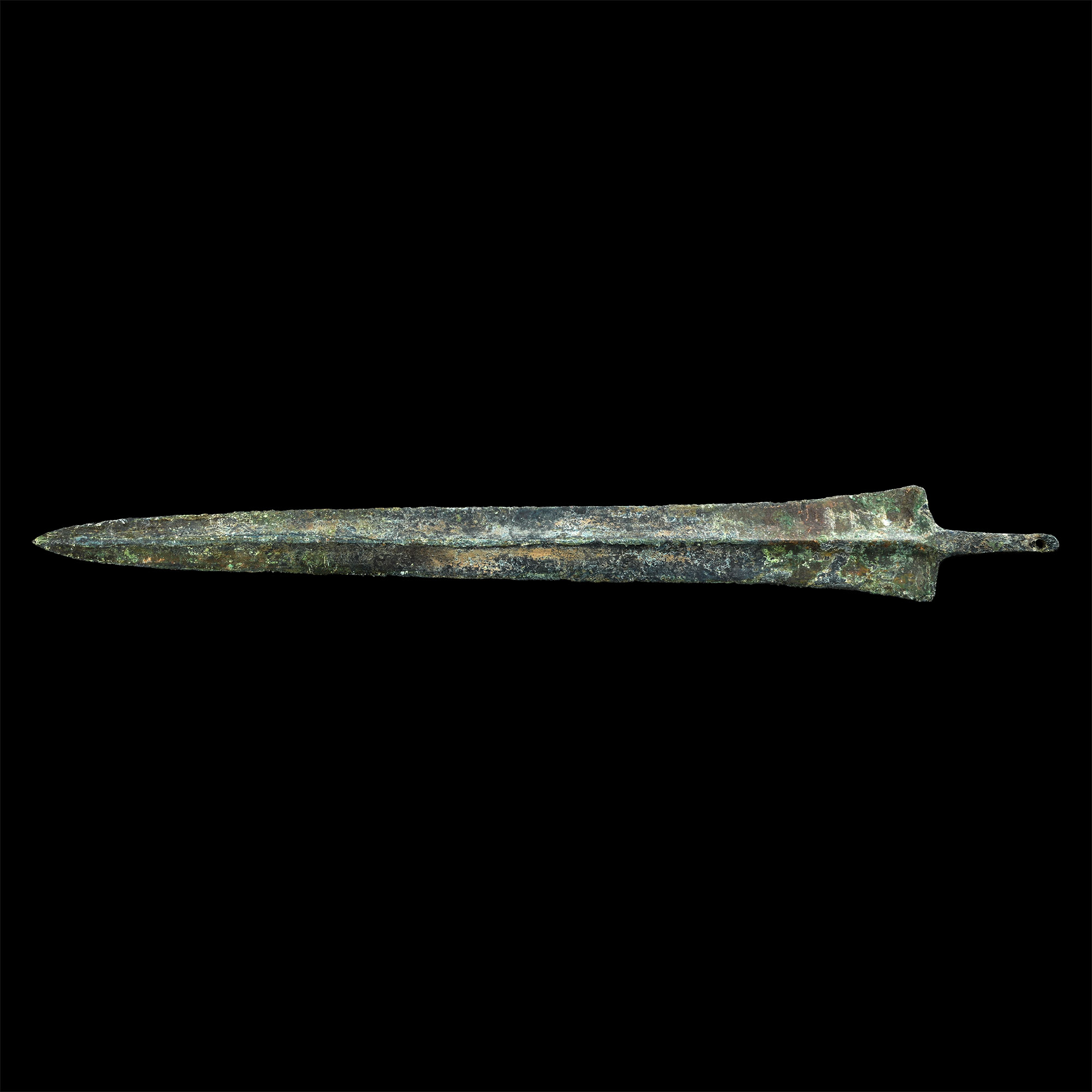
Luristan Bronze Tanged Dirk
CIRCA 1ST MILLENNIUM B.C.
15 in. (192 grams, 38.3 cm).
Comprising a slender triangular blade with a raised midrib and a short rectangular-section pierced tang.
ProvenanceEx Abelita family collection, 1980s-2000s.
LiteratureCf. Christie's, The Axel Guttmann Collection of Ancient Arms and Armour, part 2, London, 2004, item 40, p.36.
FootnotesThe Luri people produced a quantity of fine metalwork, which according to Dr. Khorasani, could be due to a settled period which arose as a result of the defeat of the Elamites by the Babylonians, leaving the Luristani people in relative peace for a period of time after 1200 B.C. According to Khorasani, 'A culture of innovation and experimentation flourished, and the repertoire of the Luristan smiths expanded in the period between 1150–1050 BC.'
CONDITIONTimeLine Auctions follows a vetting process to ensure the authenticity and legality of all items, reinforcing our commitment to integrity and responsible trading. Each antiquity, antique, and coin lot undergoes thorough examination by a vetting committee of at least ten external specialists, professional trade association members, scientists, and archaeologists: Our Vetting Process
AUCTIONS:
TimeLine is a leading auction house specialising in antiquities, ancient art, collectables, natural history, coins, medals, and books. Our auctions offer museums, collectors, historians, and enthusiasts the opportunity to acquire unique and historically significant pieces.
-
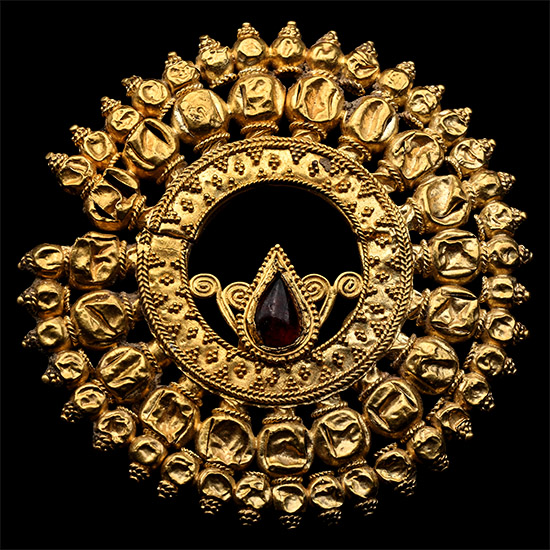
Achaemenid Elaborate Gold Earring
Circa 5th century B.C.Estimate: £3,000 - 4,000 (+bp*)
Opening Bid: £1,500
Crescent plaque with granulated inner borders and radiating triangles of granulation surrounded by a band of nineteen spheres, representing pomegranates, each with a filigree collar above and below, the outer band consisting of smaller spheres with a granulated pyramidal finial, at the centre a teardrop-shaped garnet cabochon set in a cell with a granulated border flanked by spirals. 13.55 grams, 51 mm
Ex David Lindhal, London, UK, in the 1990s. From a privately held London, UK, collection from the 1980s-1990s. This lot has been checked against the Interpol Database of stolen works of art and is accompanied by search certificate number no.13267-253966.
Fruits were generally considered to be a symbol of sensuality, temptation and fertility; the giving and accepting of fruit may be regarded as a symbolic sexual act, or at least a prelude to marriage. It follows naturally that the pomegranate, with its innumerable fleshy seeds symbolising life and fecundity, was an attribute of Aphrodite. -
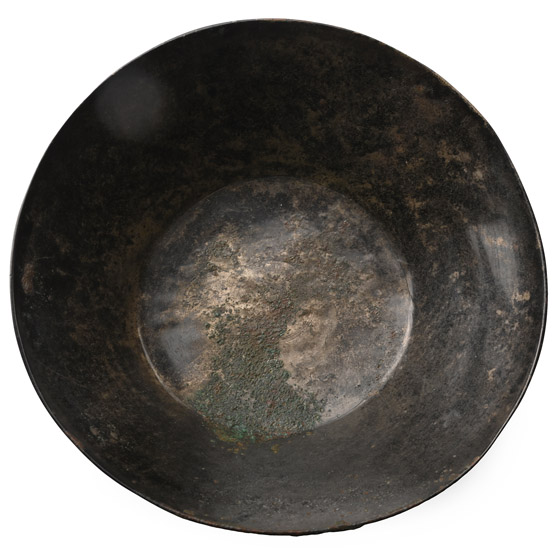
Sasanian Bronze Bowl
3rd-7th century A.D.Estimate: £150 - 200 (+bp*)
Opening Bid: £83
Broad and squat with flared sidewall and rounded edge to the mouth, concentric rings to inner centre. 241 grams, 17.5 cm
Ex Abelita family collection, 1980s-2000s. -
.jpg)
Western Asiatic Stone Cylinder Seal Group
2nd-1st millennium B.C.Sold for (Inc. bp): £260
Comprising: hero with spear flanked by animals; gryphon fleeing with objects in the field; zigzag on a barred field; starburst and plant motifs; each supplied with a museum-quality impression. 15.7 grams total, 15.5-27.3 mm
From the private collection of a European gentleman (1942-2024), formed since the 1970s.
