
Loading, please wait...
LOT 0263
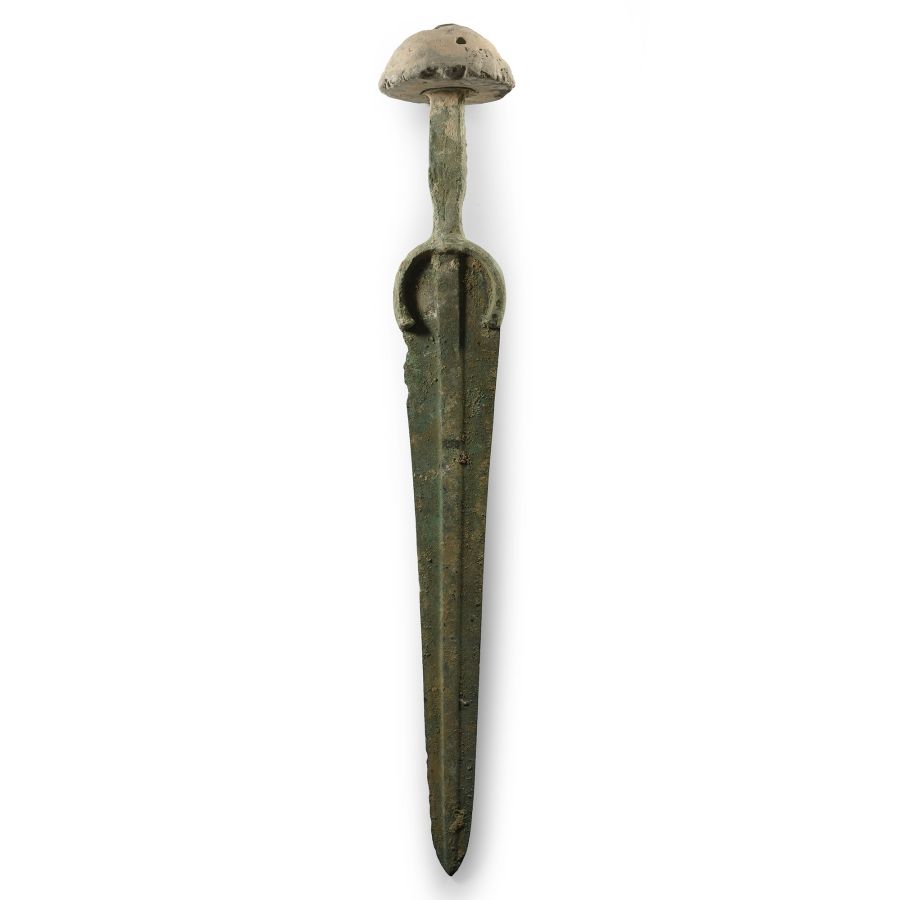
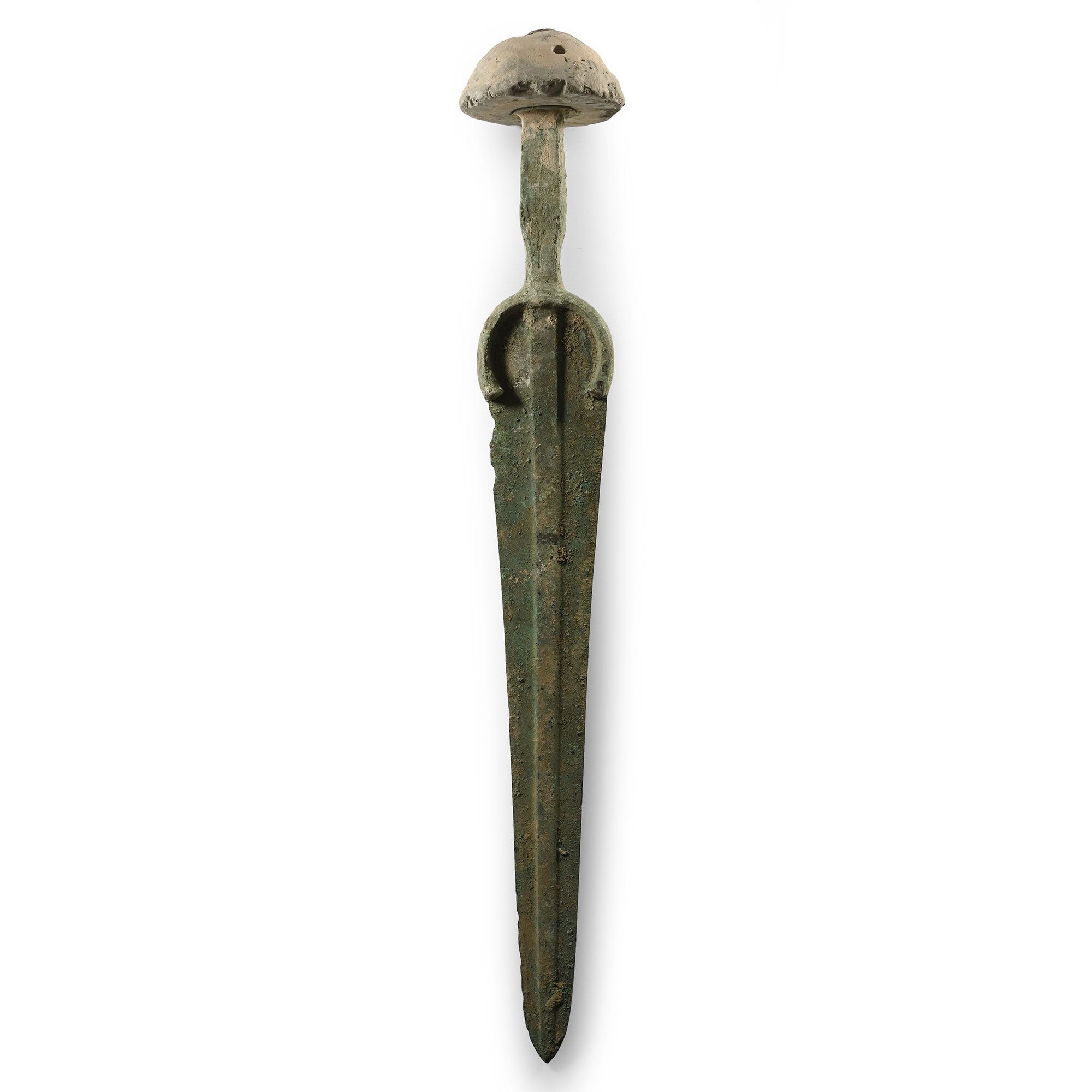
Luristan Bronze Sword
LATE 2ND MILLENNIUM B.C.
20 3/4 in. (967 grams, 52.5 cm).
With solid cast hilt and penannular guard, a massive grip with a later mushroom pommel, blade with central flat midrib tapering to a sharp tip.
ProvenanceAcquired 1980-2015.
Ex Abelita family collection.
This lot is accompanied by an illustrated lot declaration signed by the Head of the Antiquities Department, Dr Raffaele D’Amato.
Cf. Khorasani, M.M., Arms and Armour from Iran. The Bronze Age to the End of the Qajar Period, Tübingen, 2006, items 33, 34, and especially 35, pp. 394-395, for the type.
FootnotesThis sword is typical of the North-Western Iranian regions at the end of 2nd millennium B.C. Corresponding specimens found in Amarlu or other localities (Gheshlag Mazandaran Province) show that they were fitted with hollow-cast bronze mushroom pommels. The hilt was solid cast with penannular guard, and the blade was usually multi-fullered, but the specimen from Northern Iran published by Khorasani is fitted with a single fuller like our sword.
CONDITIONTimeLine Auctions follows a vetting process to ensure the authenticity and legality of all items, reinforcing our commitment to integrity and responsible trading. Each antiquity, antique, and coin lot undergoes thorough examination by a vetting committee of at least ten external specialists, professional trade association members, scientists, and archaeologists: Our Vetting Process
AUCTIONS:
TimeLine is a leading auction house specialising in antiquities, ancient art, collectables, natural history, coins, medals, and books. Our auctions offer museums, collectors, historians, and enthusiasts the opportunity to acquire unique and historically significant pieces.
-
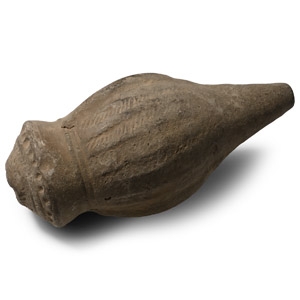
Turco-Mongol 'Greek Fire' Ceramic Fire Bomb or Hand Grenade
13th-15th century A.D.Sold for (Inc. bp): £72
A hollow vessel with cylindrical body, short neck and domed mouth, three raised lugs to the body; intended to be filled with explosive liquid and a wick, and used as a hand grenade. 409 grams, 16 cm
From an important specialist collection, London, UK, 1990s onwards. This lot is accompanied by an illustrated lot declaration signed by the Head of the Antiquities Department, Dr Raffaele D’Amato. -
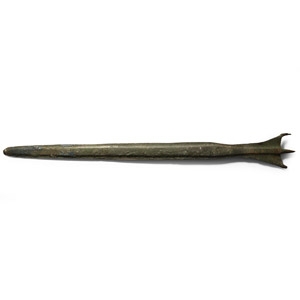
Western Asiatic Bronze Short Sword with Integral Hilt with Horns
Late 2nd-1st millennium B.C.Sold for (Inc. bp): £195
With prominently curved guard, which extends out from the ricasso of the blade and partly frames the hilt, thick flat midrib extending slightly above the ricasso where it held the hilt. 466 grams, 53 cm
Acquired 1980-2015. Ex Abelita family collection. This lot is accompanied by an illustrated lot declaration signed by the Head of the Antiquities Department, Dr Raffaele D’Amato.
The hilt of such swords was made separately, and unfortunately is nearly always missing from the archaeological records. Similar daggers had a northern Iranian background and excavated examples have been recorded from the South Caspian Area from Tomadjan and Ghalekuti. -
.jpg)
Medieval Iron Spur with Rowel
12th-14th century A.D.Sold for (Inc. bp): £78
With curving flat-section with looped finials, six-pointed rowel. 50 grams, 14.5 cm
From the private collection of a London gentleman, from his grandfather's collection formed before the early 1970s. This lot is accompanied by an illustrated lot declaration signed by the Head of the Antiquities Department, Dr Raffaele D’Amato.
