
Loading, please wait...
LOT 1655
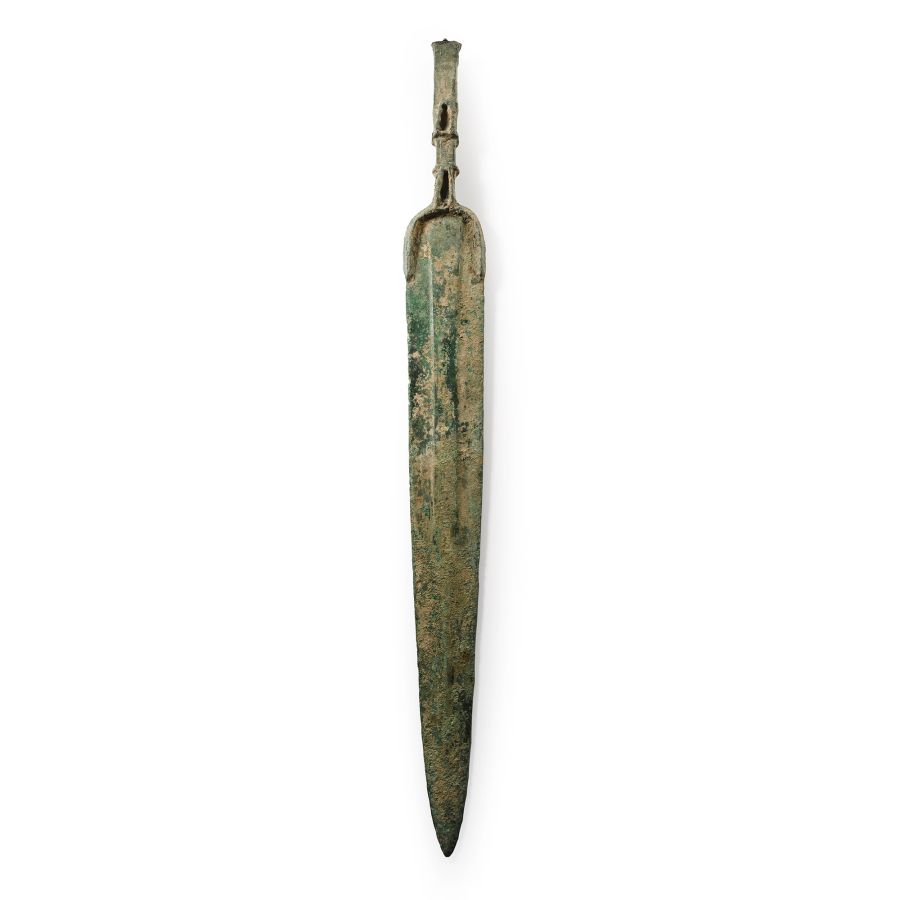
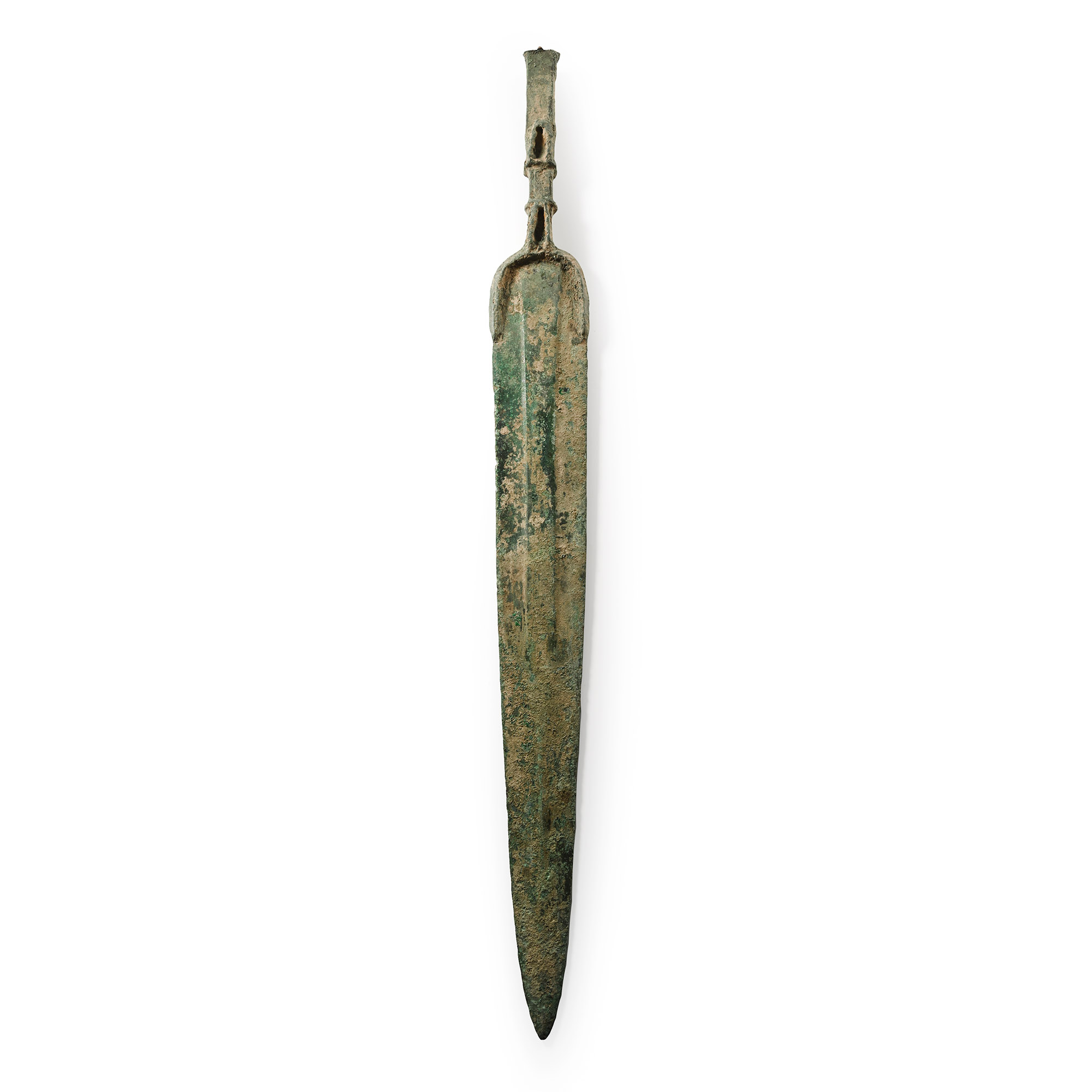
Luristan Bronze Sword
LATE 2ND-EARLY 1ST MILLENNIUM B.C.
20 1/8 in. (508 grams, 51.1 cm).
The grip decorated with horizontal flat grooves and raised aediculae, crescentic guard, long blade with ridged flat mid-grip.
ProvenanceAcquired 1980-2015.
Ex Abelita family collection.
This lot is accompanied by an illustrated lot declaration signed by the Head of the Antiquities Department, Dr Raffaele D’Amato.
See a similar sword in Gorelik, M., Weapons of Ancient East, IV millennium BC-IV century BC, Saint Petersburg (2003) in Russian, pl.XIV, no.40, from Luristan for the type; Christie's, The Axel Guttmann Collection of Ancient Arms and Armour, part 1, London, 2002, item 24, p.27.
FootnotesThis category of swords has been classified by Khorasani as 'swords with a mushroom pommel' and are usually characterised by a solid-cast hilt with a penannular guard, a ribbed or variously decorated grip and a conical hollow-cast mushroom pommel, here lost. Usually the blade is multi-fullered and tapers to a sharp tip. Moorey considers them to be from the end of the 2nd millennium B.C. Gorelik extends the dating to the 8th-7th century B.C.
CONDITIONTimeLine Auctions follows a vetting process to ensure the authenticity and legality of all items, reinforcing our commitment to integrity and responsible trading. Each antiquity, antique, and coin lot undergoes thorough examination by a vetting committee of at least ten external specialists, professional trade association members, scientists, and archaeologists: Our Vetting Process
AUCTIONS:
TimeLine is a leading auction house specialising in antiquities, ancient art, collectables, natural history, coins, medals, and books. Our auctions offer museums, collectors, historians, and enthusiasts the opportunity to acquire unique and historically significant pieces.
-
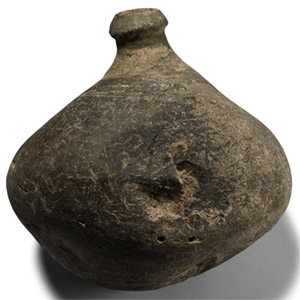
Byzantine 'Greek Fire' Ceramic Fire Bomb or Hand Grenade
9th-11th century A.D.Sold for (Inc. bp): £124
Biconvex in profile with tall neck and domed mouth, deformed when the clay was still wet. 1.1 kg total, 13 cm
From a specialist London, UK, arms and armour collection, 1990s. Accompanied by an academic paper by military specialist Dr Raffaele D'Amato, dated 15 July 2019 and titled 'Eastern Roman Empire - Greek Fire Bomb or Hand Grenade (μεσαίον kακάβιον) 9th-11th century AD'. This lot is accompanied by an illustrated lot declaration signed by the Head of the Antiquities Department, Dr Raffaele D’Amato.
Apart from the use of siphons or manual flame-throwers called cheirosiphona, special corps of Roman soldiers employed terracotta grenades, in the form of small jars, abundantly evidenced in archaeological excavations. They were called μεσαία kακαβιά or κυτροκακάβια where the former had a bulbous shape and the latter a more cylindrical form. -
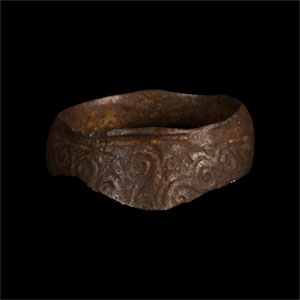
Medieval Bronze Archer's Thumb Ring
14th-15th century A.D.Sold for (Inc. bp): £72
Applied boss to the base of the hoop, triangular extension with foliate scrolls. 2.77 grams, 28.57 mm overall, 19.77 mm internal diameter (approximate size British T, USA 9 1/2, Europe 21.26, Japan 20)
From an English collection formed before 2000. This lot is accompanied by an illustrated lot declaration signed by the Head of the Antiquities Department, Dr Raffaele D’Amato. -
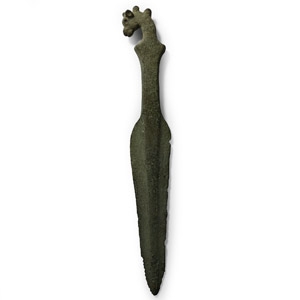
Luristan Bronze Miniature Dagger
12th-11th century B.C.Sold for (Inc. bp): £124
Short dagger with leaf-shaped blade, with a slightly pronounced midrib, expanded handle terminating in an equine protome. 294 grams, 25.2 cm
Acquired 1980-2015. Ex Abelita family collection. This lot is accompanied by an illustrated lot declaration signed by the Head of the Antiquities Department, Dr Raffaele D’Amato.
Miniature weapons such as this one apparently functioned as models for actual weapons and may have had a cultic purpose. The hilt of this dagger, if effectively used, should have been flanged for the filling with organic material. Unfortunately, only a few miniature tools and weapons have been found in the archaeological context of the graves, which does not offer clear elements of understanding and comparison.
