
Loading, please wait...

LOT 0340
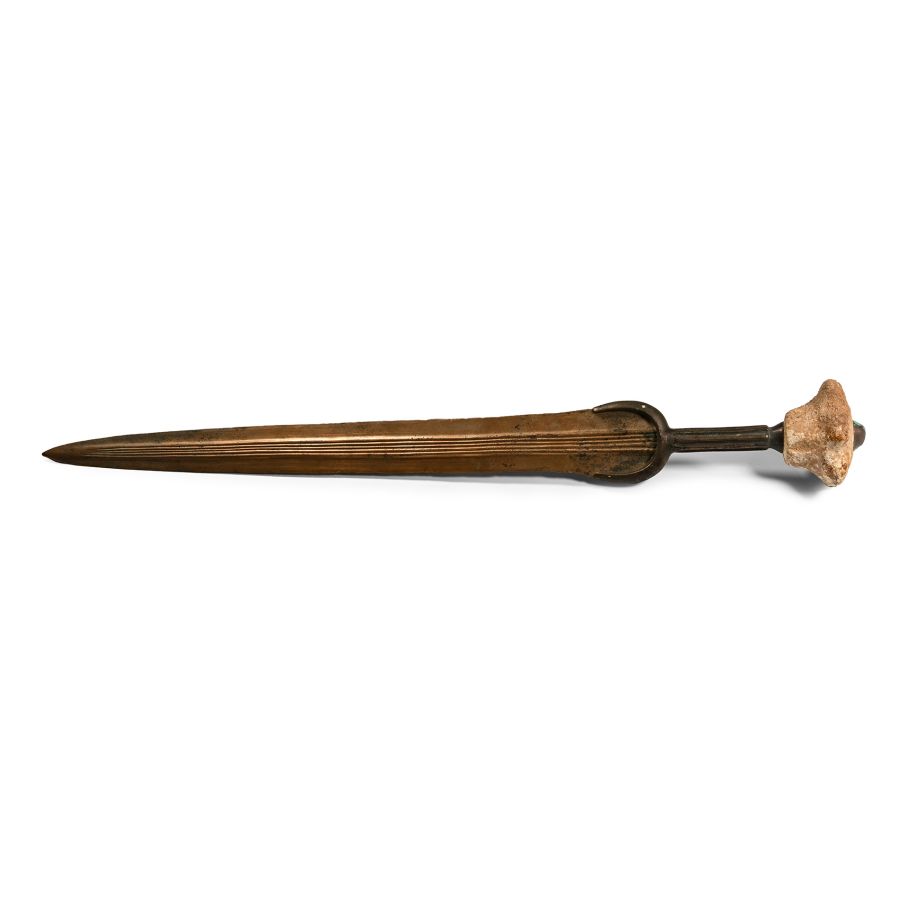
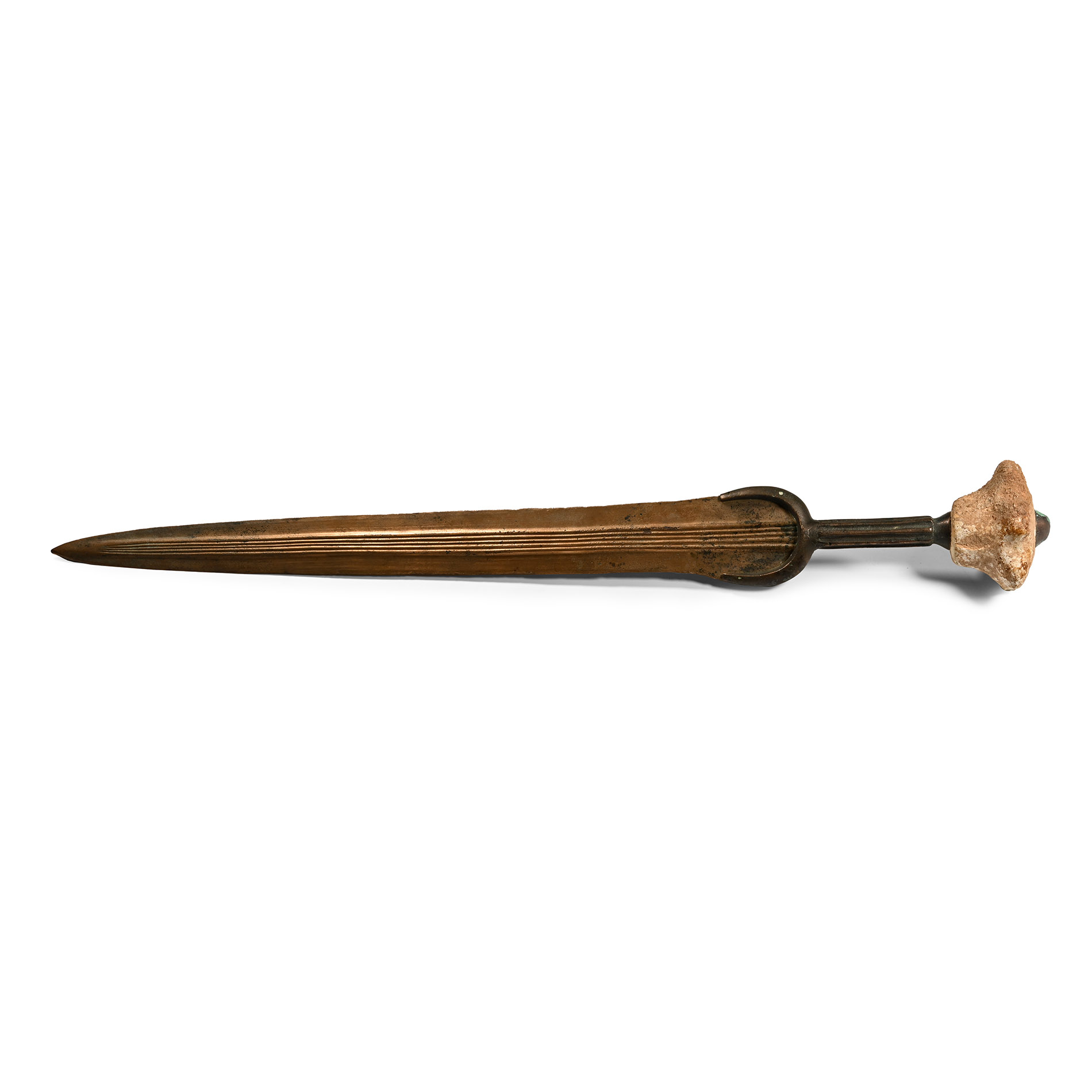
Luristan Bronze Sword with Decorated Stone Pommel
13TH-7TH CENTURY B.C.
25 in. (1.03 kg, 63.5 cm).
With solid cast hilt with penannular guard and a horizontally ribbed grip; a massive star-shaped pommel and a multi-fullered blade tapering to a sharp tip; handle restored.
ProvenanceAcquired 1980-2015.
Ex Abelita family collection.
Cf. Gorelik, M., Weapons of Ancient East, IV millennium BC-IV century BC, Saint Petersburg, 2003, in Russian, see pl.XIV no.40, from Luristan; Khorasani, M.M., Arms and Armor from Iran: The Bronze Age to the End of the Qajar Period, Tübingen, 2006, pp.394-5, for type.
FootnotesAccording to Moorey, such category of swords were distributed in the Northern Iran area, as proved by the Amarlu finds. Based on the example from the Ashmolean Museum, he dated them to the end of the 2nd millennium B.C., more precisely to a period between 1400-1200 B.C. The type was in use until the 7th century B.C.
CONDITIONTimeLine Auctions follows a vetting process to ensure the authenticity and legality of all items, reinforcing our commitment to integrity and responsible trading. Each antiquity, antique, and coin lot undergoes thorough examination by a vetting committee of at least ten external specialists, professional trade association members, scientists, and archaeologists: Our Vetting Process
AUCTIONS:
TimeLine is a leading auction house specialising in antiquities, ancient art, collectables, natural history, coins, medals, and books. Our auctions offer museums, collectors, historians, and enthusiasts the opportunity to acquire unique and historically significant pieces.
-
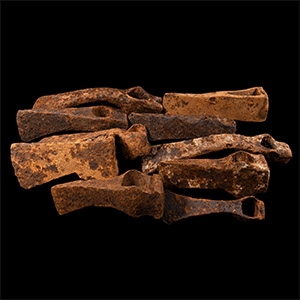
Viking Age and Later Axehead Group
Circa 10th-18th century A.D.Sold for (Inc. bp): £52
Comprising socketted axeheads of various types; some possibly stamped with maker's marks. 7 kg total, 16-24.5 cm
Acquired 1990s-early 2000s. East Anglian private collection.
An axe similar to those of our group was found in the fortified camp of Péran, in Brittany, among the objects that emerged from a conflagration due to the attack of Alain Barbetorte's Bretons on a Viking camp, in 936 A.D. These axes were certainly work tools, although in case of necessity they could also serve as improvised weapons -
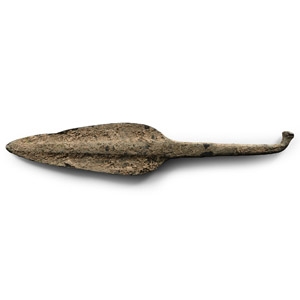
Luristan Bronze Spearhead
Early 1st millennium B.C.Sold for (Inc. bp): £26
With foliate blade and raised mid-rib with the tang bent at the tip. 233 grams, 26.7 cm
Acquired 1980-2015. Ex Abelita family collection.
Similar spearheads were excavated in the Marlik Royal cemetery by Dr Negahban, see for example in tomb 47, Trench XXIIE. They were the evolution of a typology which began much earlier in Mesopotamia and the fertile crescent, the type 4 of the Stronach classification, with straight tang and square section, usually thickened at the base with a button tang. The foliate blade was wide and exaggerated in some specimens excavated at Marlik. -
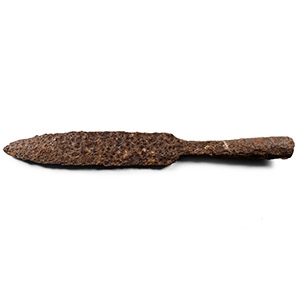
Medieval Iron Spearhead
14th-16th century A.D.Sold for (Inc. bp): £46
Long blade with shallow point and parallel sides, sturdy neck and narrow split socket. 380 grams, 35 cm
From a private Barnsley, UK, family collection.
