
Loading, please wait...


LOT 0284
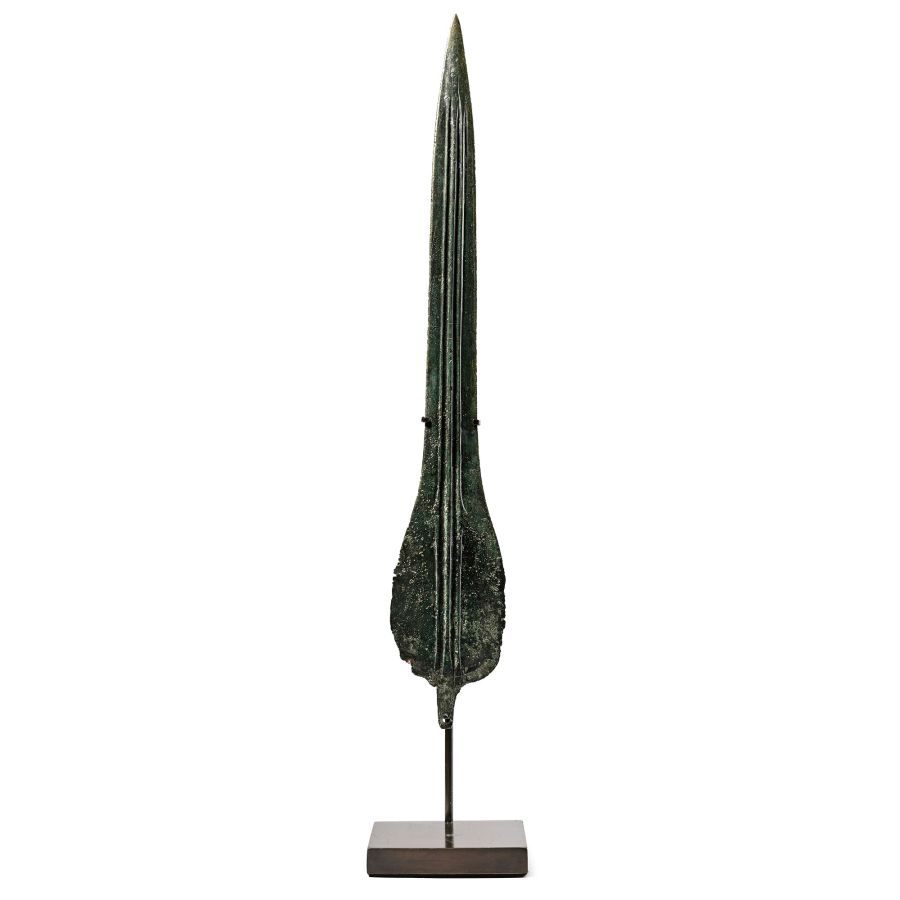
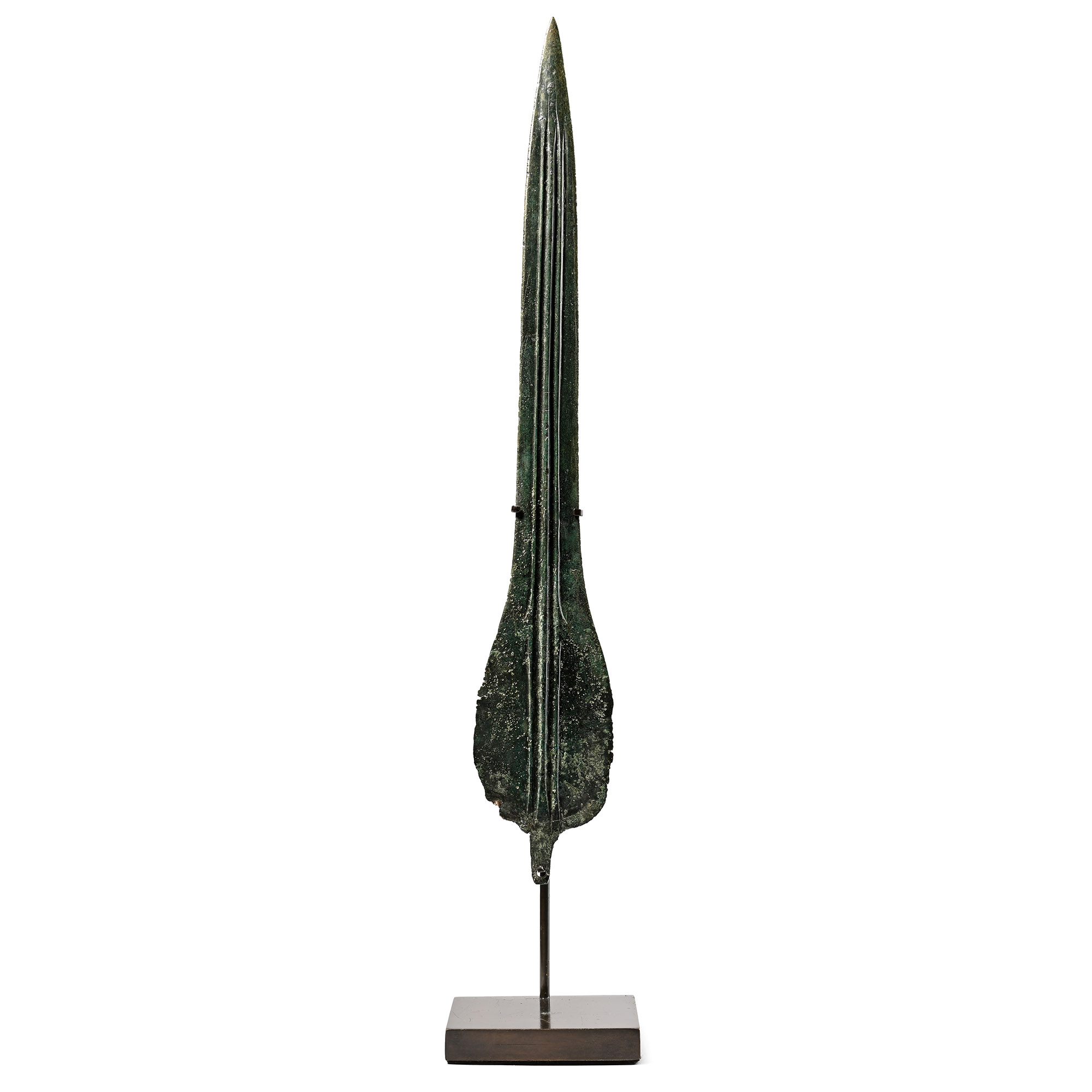
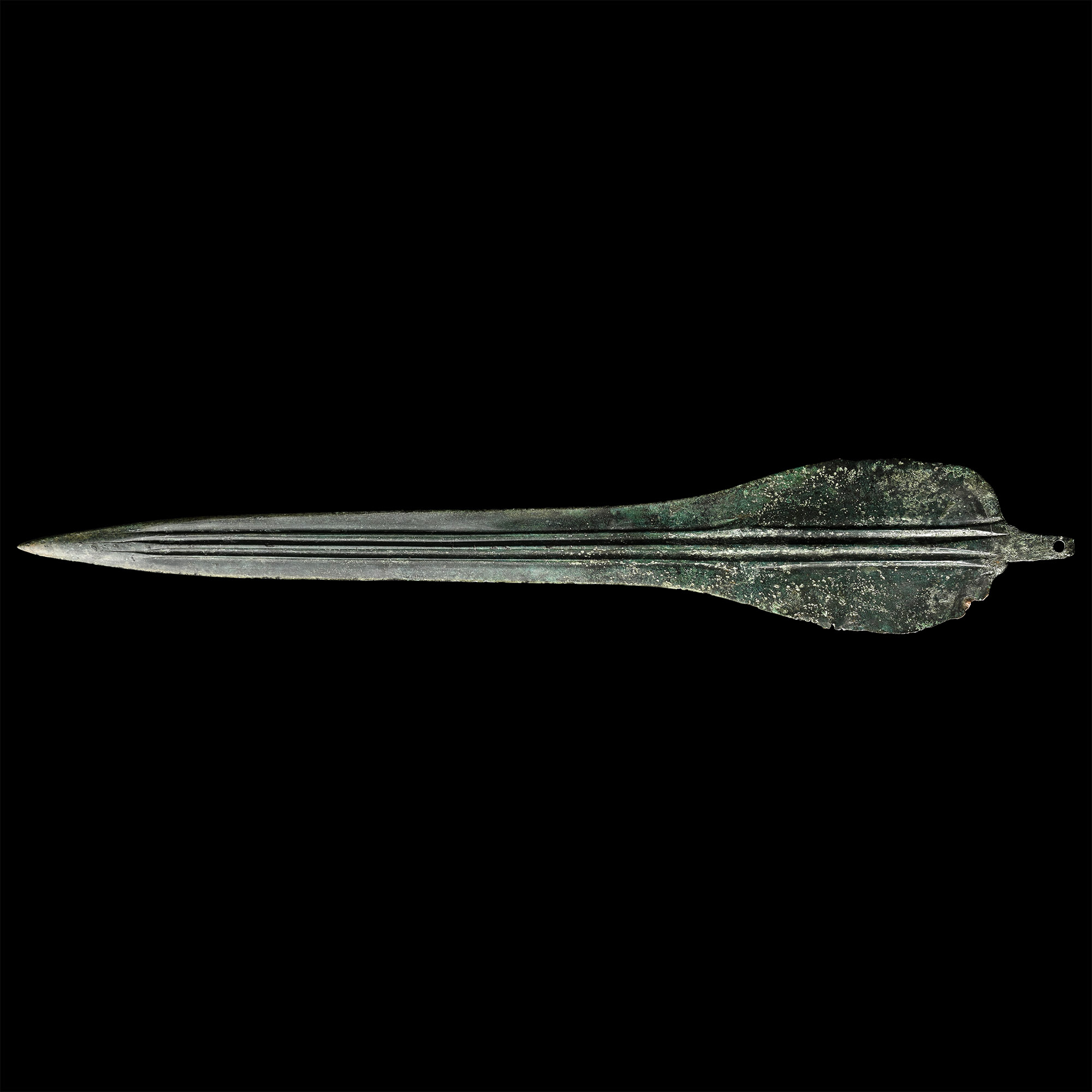
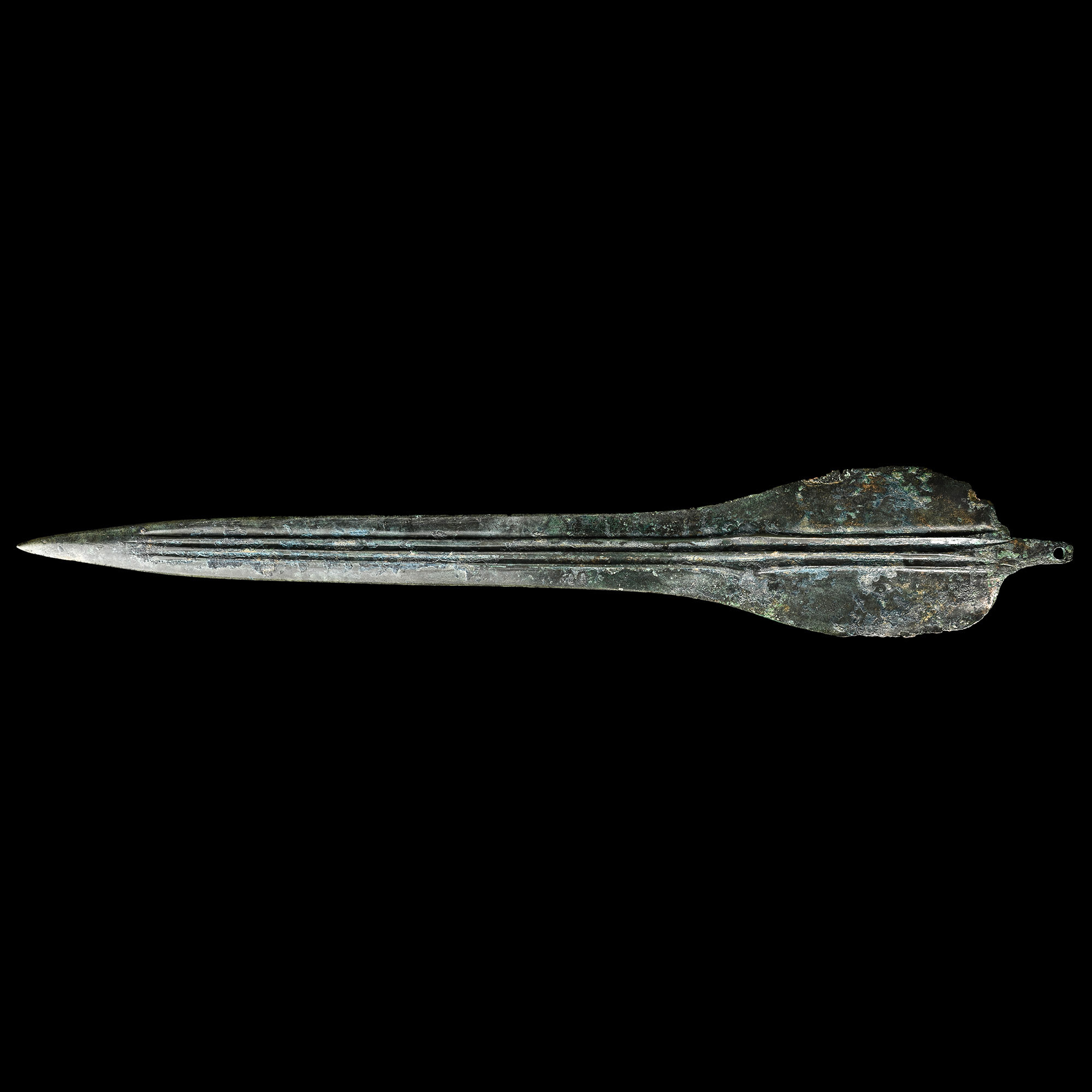
Luristan Bronze Sword Blade
13TH-7TH CENTURY B.C.
16 1/8 in. (420 grams total, 41 cm high including stand).
Slender blade widening at the base, three raised median ribs extending to the short tang; accompanied by a custom-made display stand.
ProvenanceGerman collection, cologne 1990s.
Ex John Lawton private collection, Surrey, UK.
Cf. Gorelik, M., Weapons of Ancient East, IV millennium BC-IV century BC, Saint Petersburg, 2003, in Russian, see pl.XIV no.40, from Luristan; Khorasani, M.M., Arms and Armor from Iran: The Bronze Age to the End of the Qajar Period, Tübingen, 2006, pp.394-5, for type.
FootnotesAccording to Moorey, such categories of swords were distributed in the Northern Iran area, as proved by the Amarlu finds. Based on the example from the Ashmolean Museum, he dated them to the end of the 2nd millennium B.C., more precisely to a period between the 14th and 13th centuries B.C. The type was in use until the 7th century B.C.
CONDITIONTimeLine Auctions follows a vetting process to ensure the authenticity and legality of all items, reinforcing our commitment to integrity and responsible trading. Each antiquity, antique, and coin lot undergoes thorough examination by a vetting committee of at least ten external specialists, professional trade association members, scientists, and archaeologists: Our Vetting Process
AUCTIONS:
TimeLine is a leading auction house specialising in antiquities, ancient art, collectables, natural history, coins, medals, and books. Our auctions offer museums, collectors, historians, and enthusiasts the opportunity to acquire unique and historically significant pieces.
LOT 0284
Luristan Bronze Sword Blade
Estimate £600 - 800€700 - 930 (for guidance only)$810 - 1,080 (for guidance only)
-
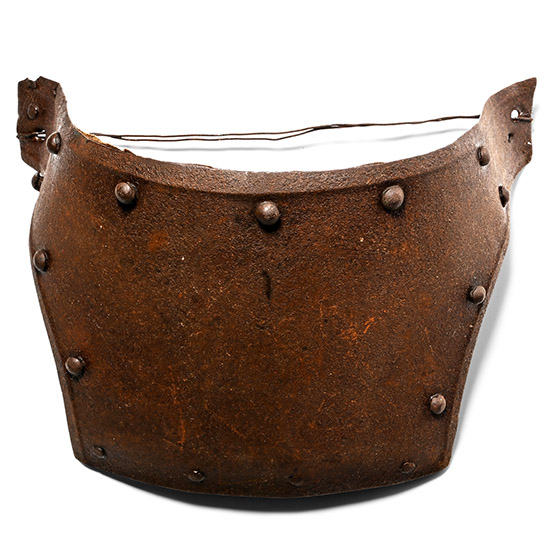
Stuart Period Iron Plate Armour Scarsella
Circa 17th century A.D.Estimate: £300 - 400 (+bp*)
Opening Bid: £150
Curved in profile with recurved ends to the broad upper edge; carination around three edges, attachment rivets; extensive leather lining strips to reverse; later suspension wire for display. 270 grams, 21.5 cm
Acquired on the UK art market. From a gentleman's collection from East Sussex, UK.
Lower part of a tasset with the outer edges deformed due to repair work. Tassets are pieces of plate armour designed to protect the upper thighs. -
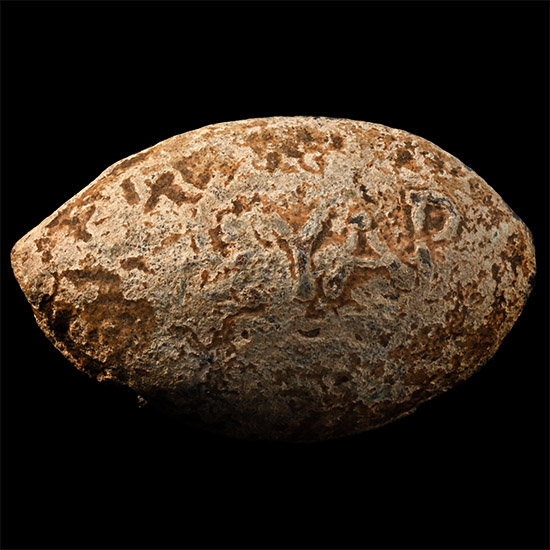
Greek Lead Slingshot inscribed EYAP//MANHC
3rd-2nd century B.C.Estimate: £100 - 140 (+bp*)
Opening Bid: £50
Biconical in profile with letters 'MANHC' on one side and 'EYAP' on the other side. 25.17 grams, 27 mm
From a German private collection, formed since the 1980s.
This slingshot bullet is inscribed with two names. On one side, the Lydian name Manes; on the other, a name starting with Euar(…). -
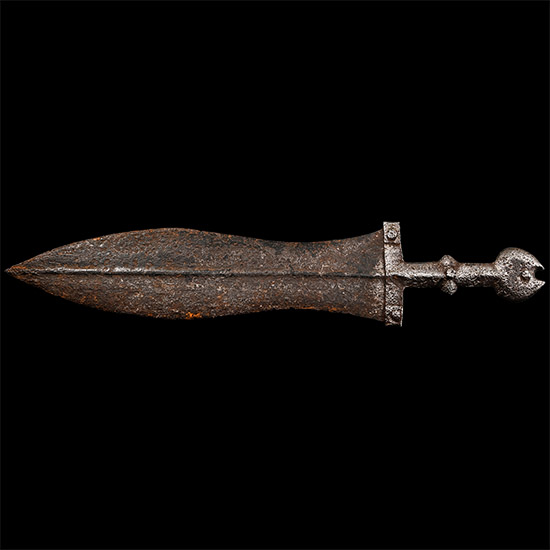
Roman Iron Pugio Dagger
Circa 3rd century A.D.Estimate: £2,500 - 3,500 (+bp*)
Opening Bid: £1,250
Leaf-shaped wide blade with a narrow waist, a thick crossbar and a lozenge-section handle with a double-lobed pommel; accompanied by a custom-made display stand. 772 grams total including stand, dagger: 343 grams, 37 cm
Spanish collection, German auction, 1980s. Ex John Lawton private collection, Surrey, UK. Accompanied by a copy of a previous illustrated catalogue page, including provenance. This lot has been checked against the Interpol Database of stolen works of art and is accompanied by search certificate no.13495-263284.
This dagger belongs to the last period of evolution of the Roman type III pugio, and to the blade types of the III period, according to the Saliola-Casprini classification (Saliola-Casprini, 2012, nos.45,54). Compared to the previous types of the 1st century A.D., the slender, lanceolate blade shows a considerable size, up to 45 cm long or longer, with a plain appearance and no decoration, even on the scabbard, when preserved.
