
Loading, please wait...


LOT 1974
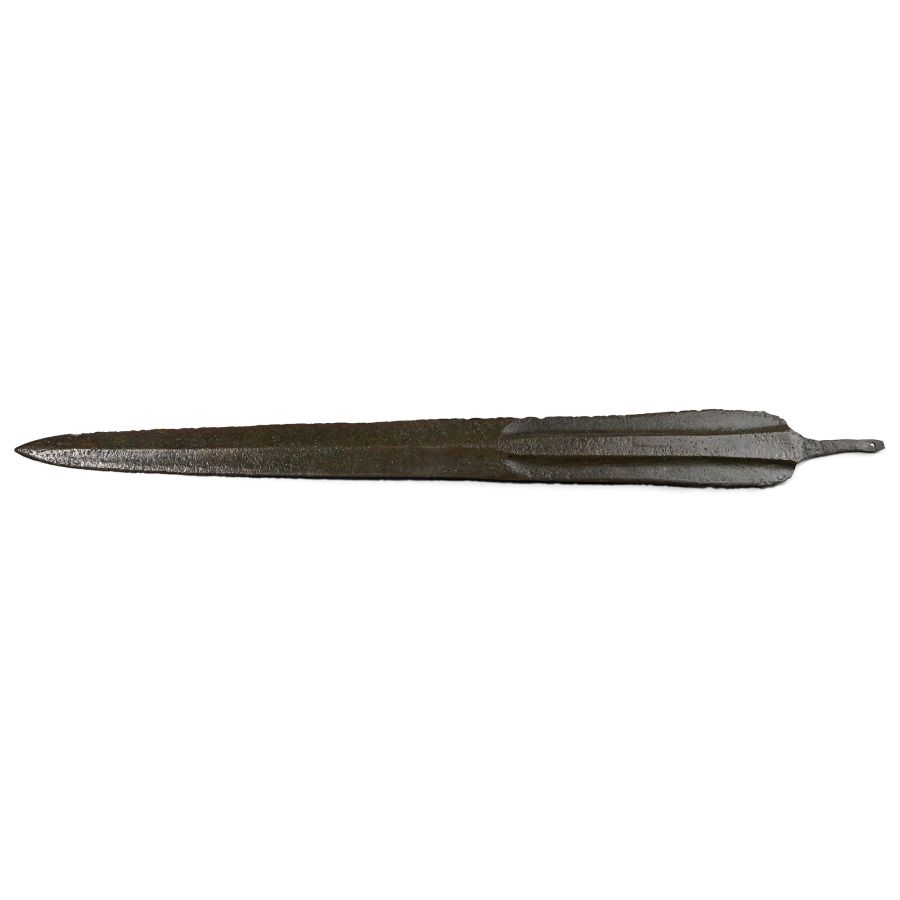
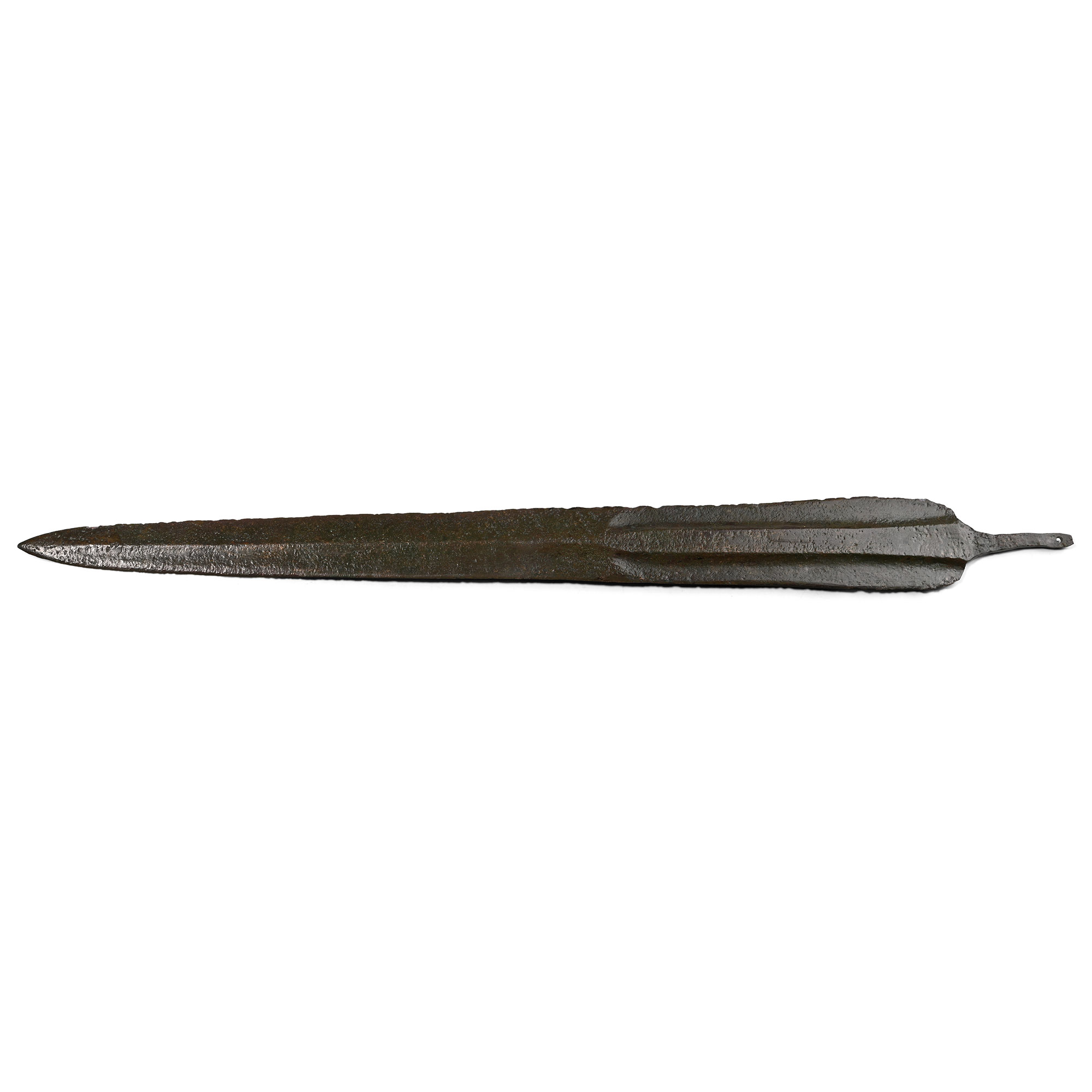
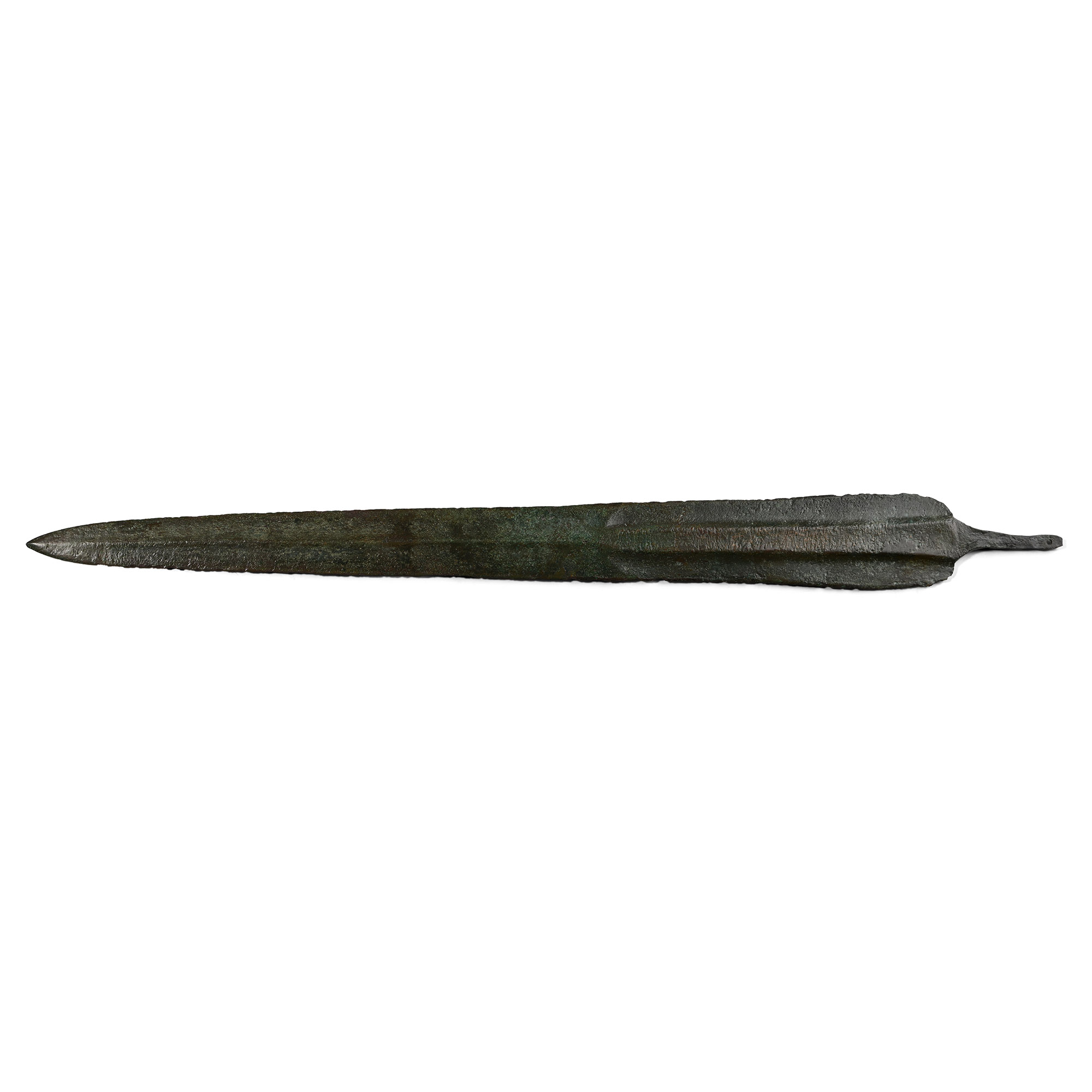
Luristan Bronze Sword Blade
CIRCA 6TH-4TH CENTURY B.C.
18 3/8 in. (358 grams, 46.8 cm).
Tapering leaf-shaped type with raised flat-section midrib in the upper third, rounded shoulders with short rectangular-section tang pierced at the upper end; lower blade lozenge-section with light bulb at the point.
ProvenanceEx Abelita collection, 1980s-2010.
LiteratureSee Muscarella, O.W., Bronze and Iron. Ancient Near Eastern Artefacts in the Metropolitan Museum of Art.
CONDITIONTimeLine Auctions follows a vetting process to ensure the authenticity and legality of all items, reinforcing our commitment to integrity and responsible trading. Each antiquity, antique, and coin lot undergoes thorough examination by a vetting committee of at least ten external specialists, professional trade association members, scientists, and archaeologists: Our Vetting Process
AUCTIONS:
TimeLine is a leading auction house specialising in antiquities, ancient art, collectables, natural history, coins, medals, and books. Our auctions offer museums, collectors, historians, and enthusiasts the opportunity to acquire unique and historically significant pieces.
LOT 1974
Luristan Bronze Sword Blade
Estimate £300 - 400€350 - 460 (for guidance only)$410 - 540 (for guidance only)
Opening Bid
£150 (EUR 174; USD 203) +BP*
-
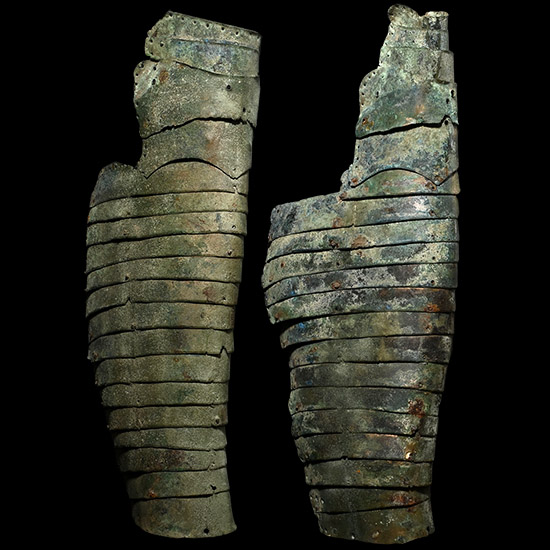
Pair of Roman Lamellar Greaves of a Heavily Armoured Mounted Cataphractarius Soldier
2nd-3rd century A.D.Estimate: £20,000 - 30,000 (+bp*)
Bids: 2 | Current Bid: £12,000
A complete pair of lamellar greaves, anatomically formed protection featuring curved, overlapping metal plates (lames), the knee area having large plates and cut-outs at the sides to enable better movement; the left greave consists of nineteen overlapping U-shaped metal strips, whilst the right consists of twenty, each with two rivets at each end of every strip. 1.8 kg total, 45-50.5 cm
Acquired on the Munich art market in the 1990s. From a South German private collection. German export licence no.15771. Accompanied by an academic report by Prof. Dr Phil. Peter Rothenhöfer and Dr Raffaele D'Amato. This lot has been checked against the Interpol Database of stolen works of art and is accompanied by search certificate no.13540-263658.
A close example in construction technique and material is an arm guard (manica) from Newstead (Trimontium). The heavy armoured cavalrymen (cataphractarii) were often protected entirely on arms and legs, as shown by the Dura Europos graffito and echoed in the words of Nazianzius describing the clibanarii of Maxentius (Pan., XXII,5ff.): 'In the army they are called clibanarii, the men are covered in the upper part, an armour (lorica) which extends down to the horses’chest (pectora equorum) and hang to their forelegs protects them from the injury of a wound without impending their gait…' Nazanzius speaks of an ostentatio armorum (display of armour) and of operti ferro exercitus (army covered with iron). A long splint-armour gauntlet with metal staves had already begun to appear as early as the third century in the Roman army. It had an Iranian origin and is typical of Eurasian horse people. -
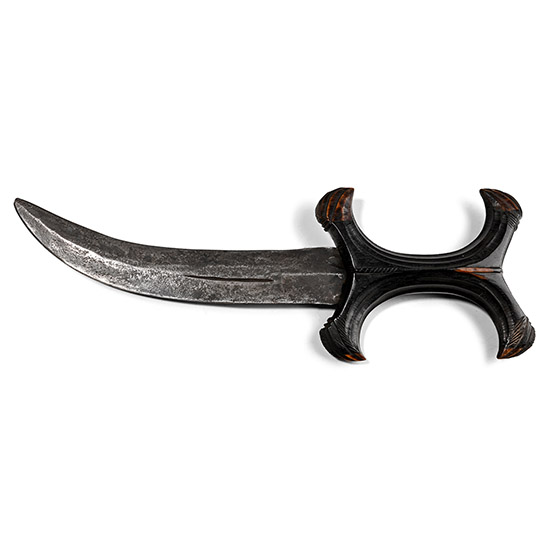
Beja or Hadendoa Curved Dagger
Sudan, late 19th-early 20th century A.D.Estimate: £80 - 100 (+bp*)
Opening Bid: £5
Comprising a thin leaf-shaped two-edged blade in an X-shaped wooden hilt with carved fluting and median rib. 188 grams, 30 cm
From the private collection of Peter Clayton, FCILIP, Dip, Arch, FSA, FRNS, Hemel Hempstead, Hertfordshire, UK; formed since the late 1950s. -
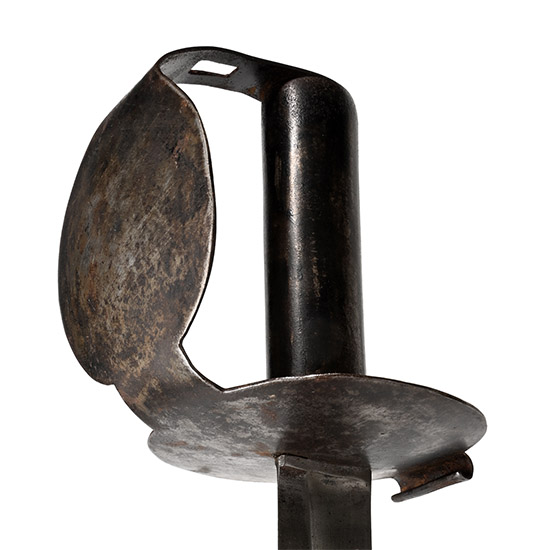
British Napoleonic 'Battle of Trafalgar Period' Naval Boarding Cutlass
1801-1840 A.D.Estimate: £500 - 700 (+bp*)
Bids: 1 | Current Bid: £5
Broad slightly curved blade with thick back and shallow fuller, narrow pointed tip; hollow iron grip with 'figure-of-eight' guard protecting the gripping hand and the knuckles; 1801-4 patent type; with old collector's tag 'British Figure of Eight Naval boarding cutlass - smooth grip pattern 1801-4 (then corrugated grip 1840)' 883 grams, 83 cm
From the private collection of Peter Clayton, FCILIP, Dip, Arch, FSA, FRNS, Hemel Hempstead, Hertfordshire, UK; formed since the late 1950s.
The hilt pattern was replaced in 1840 by a type with similar guard but with a ribbed grip.
