
Loading, please wait...
LOT 1474
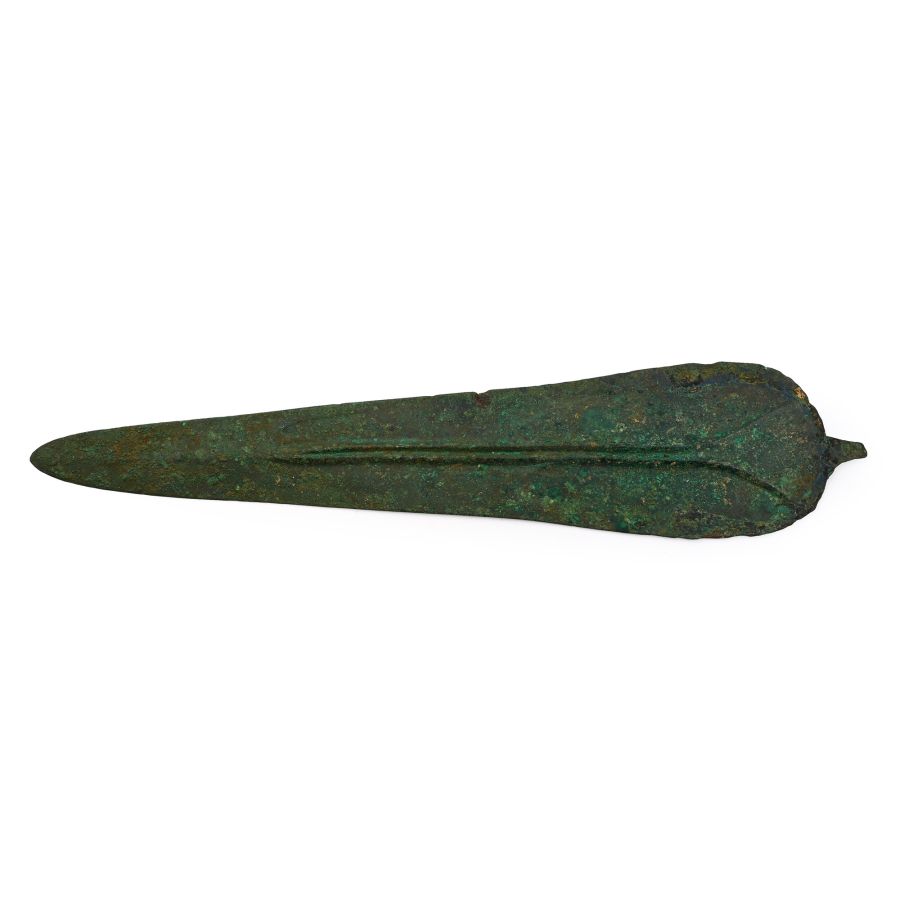
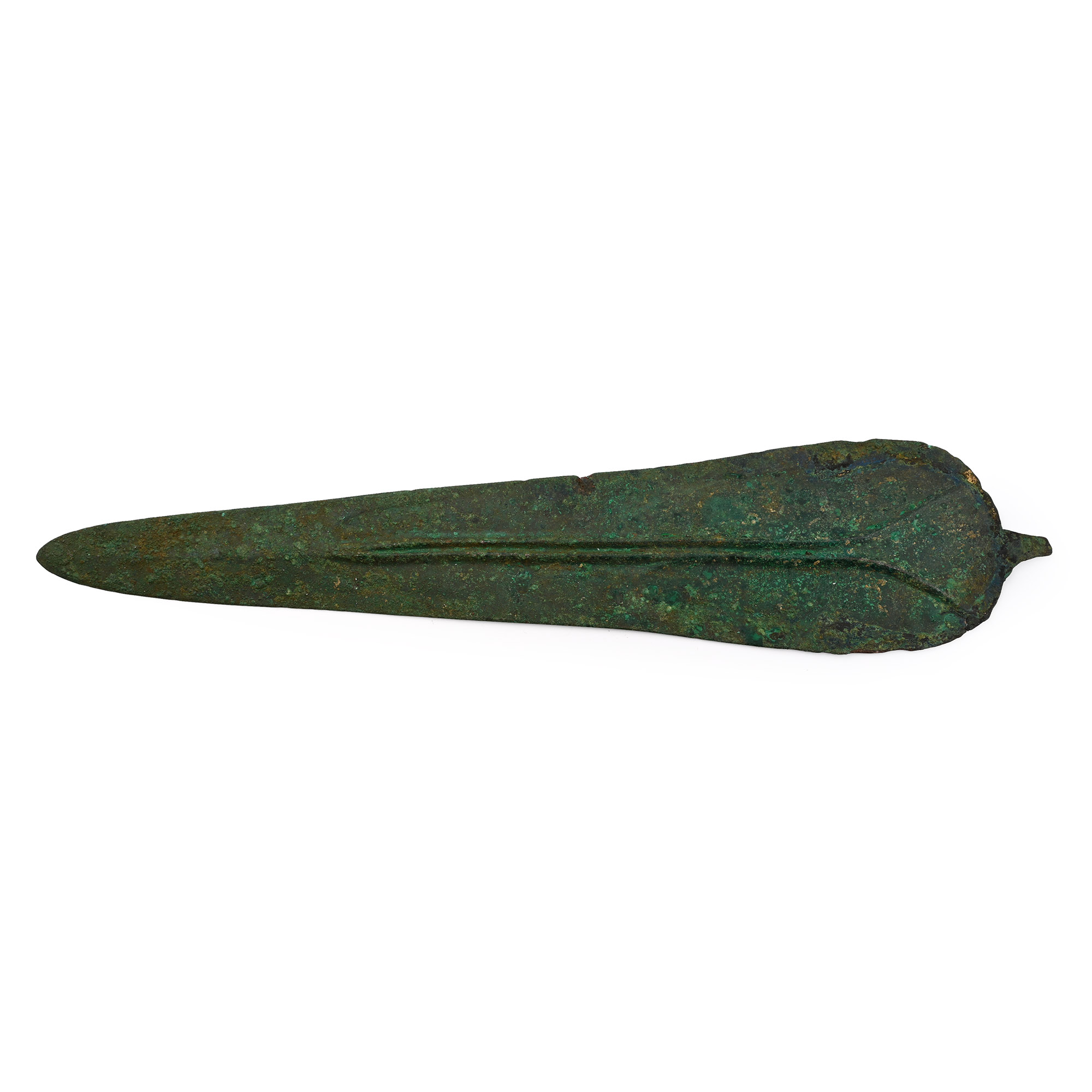
Luristan Bronze Sword Blade with Corrugation
2ND-1ST MILLENNIUM B.C.
13 3/4 in. (296 grams, 35 cm).
A two-edged blade, leaf-shaped with short rectangular tang, corrugated midrib extending almost to the tip and flared at the shoulder. [No Reserve]
ProvenanceProperty of an East Sussex, UK, teacher; formerly with a London gallery; previously acquired on the London art market in the 1990s.
From the private collection of John Meredith, acquired since the 1990s; thence by descent.
This lot is accompanied by an illustrated lot declaration signed by the Head of the Antiquities Department, Dr Raffaele D'Amato.
See Khorasani, M.M., Arms and Armour from Iran. The Bronze Age to the End of the Qajar Period, Tübingen, 2006, s.cat 31, for type.
FootnotesThe metalworking techniques used in making bronze weapons in Luristan were very complex. Surfaces were often finished in repoussé work, and some of the weapons were chased, others engraved. The ruling elites of warrior horsemen were buried in the graves with their weapons and horses which are the main sources of the Luristan bronze weapons.
CONDITIONTimeLine Auctions follows a vetting process to ensure the authenticity and legality of all items, reinforcing our commitment to integrity and responsible trading. Each antiquity, antique, and coin lot undergoes thorough examination by a vetting committee of at least ten external specialists, professional trade association members, scientists, and archaeologists: Our Vetting Process
AUCTIONS:
TimeLine is a leading auction house specialising in antiquities, ancient art, collectables, natural history, coins, medals, and books. Our auctions offer museums, collectors, historians, and enthusiasts the opportunity to acquire unique and historically significant pieces.
-
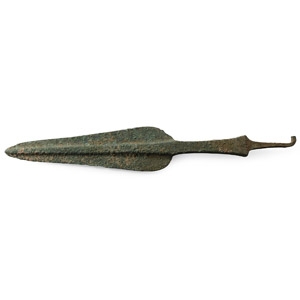
Large Amlash Bronze Spearhead
1200-1100 B.C.Sold for (Inc. bp): £117
Tapering leaf-shaped blade with raised midrib developing to a sturdy V-shaped shank, tapering rectangular-section tang. 280 grams, 32.5 cm
Acquired in the 1990s. Ex Abelita family collection. This lot is accompanied by an illustrated lot declaration signed by the Head of the Antiquities Department, Dr Raffaele D'Amato.
The weapon belongs to the type 1 of the spear-head classification of Khorasani, mainly from Marlik or Amlash areas. Similar pieces have been dated by Stutzinger to 1200-1100 B.C. -
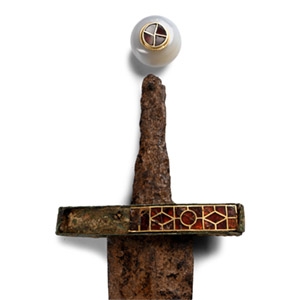
Late Roman Iron Sword with Decorated Guard
5th-6th century A.D.Sold for (Inc. bp): £2,340
A two-edged spatha type with a lentoid parallel-sided blade, sloped shoulders and short tang pierced by an attachment rivet for the grip; the bronze lower guard rectangular in plan and scaphoid in section with inset garnet cloisonné in gold cells with rhomboid patterns alternating with circles; the upper top roundel of the pommel or insertion of the hanging stone divided into four gold cells in garnet cloisonné; accompanied by a barrel-shaped polished hilt stone. 696 grams, 74 cm
From the private collection of a London gentleman, from his grandfather's collection formed before the early 1970s. Accompanied by an academic report by Dr Raffaele D’Amato. This lot has been checked against the Interpol Database of stolen works of art and is accompanied by search certificate no. 12586-240319. This lot has been cleared against the Art Loss Register database, and is accompanied by an illustrated lot declaration signed by the Head of the Antiquities Department, Dr Raffaele D'Amato.
The sword is a Migration Period sword which usually had stones hanging from the pommel or hilt, like the one preserved here, which finds a parallel with the sword of Lord of Morken (Strassmeir, 2019, p.55, lett.G). This typology was widespread in Central Europe by the Huns and there are also specimens attested in Gaul and Spain in the 5th century. -
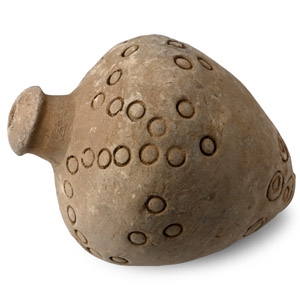
Byzantine 'Greek Fire' Ceramic Fire Bomb or Hand Grenade
9th-11th century A.D.Sold for (Inc. bp): £117
Piriform body with dome mouth, impressed annulets to the body; intended to be filled with explosive liquid and a wick, and used as a hand grenade. 570 grams, 12.2 cm
From an important specialist collection, London, UK, 1990s onwards. Accompanied by an academic paper by military specialist Dr Raffaele D'Amato, dated 15 July 2019 and titled 'Eastern Roman Empire - Greek Fire Bomb or Hand Grenade (μεσαίον kακάβιον) 9th-11th century AD'. This lot is accompanied by an illustrated lot declaration signed by the Head of the Antiquities Department, Dr Raffaele D'Amato.
Apart from the use of siphons or manual flame-throwers called cheirosiphona, special corps of Roman soldiers employed terracotta grenades, in the form of small jars, abundantly evidenced in archaeological excavations. They were called μεσαία kακαβιά or κυτροκακάβια where the former had a bulbous shape and the latter a more cylindrical form.
