
Loading, please wait...
LOT 0248
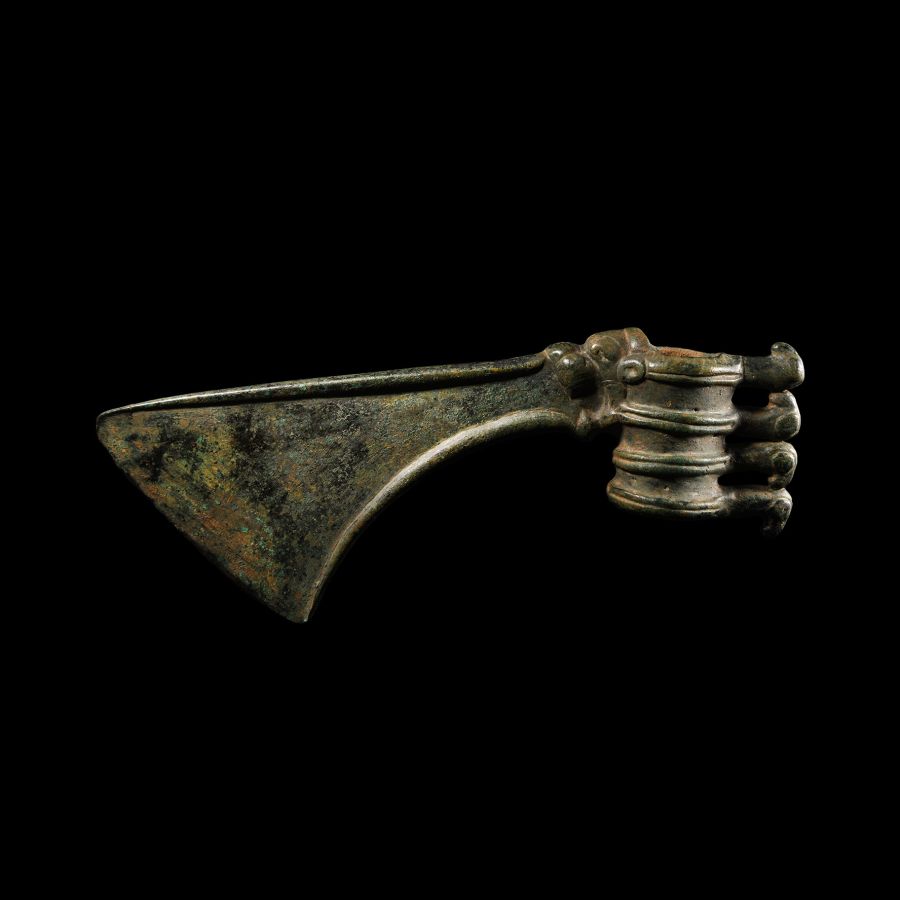
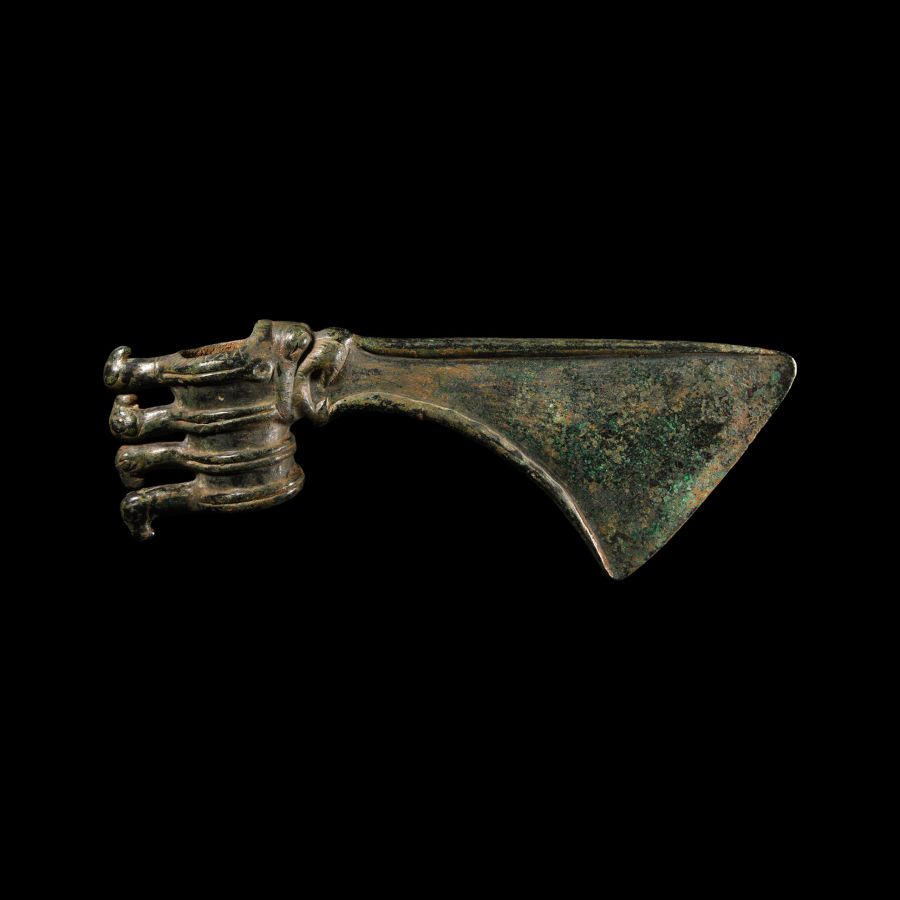
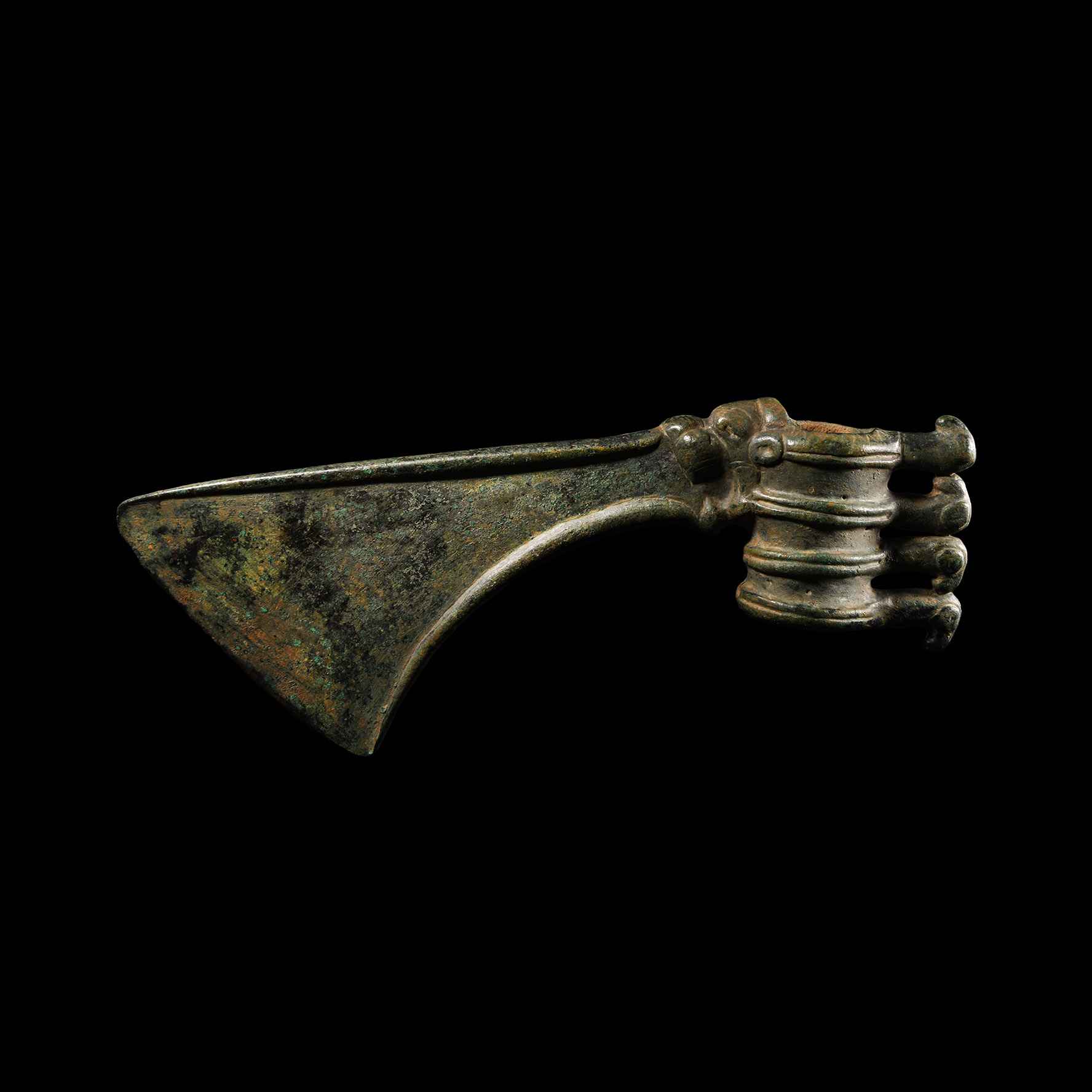
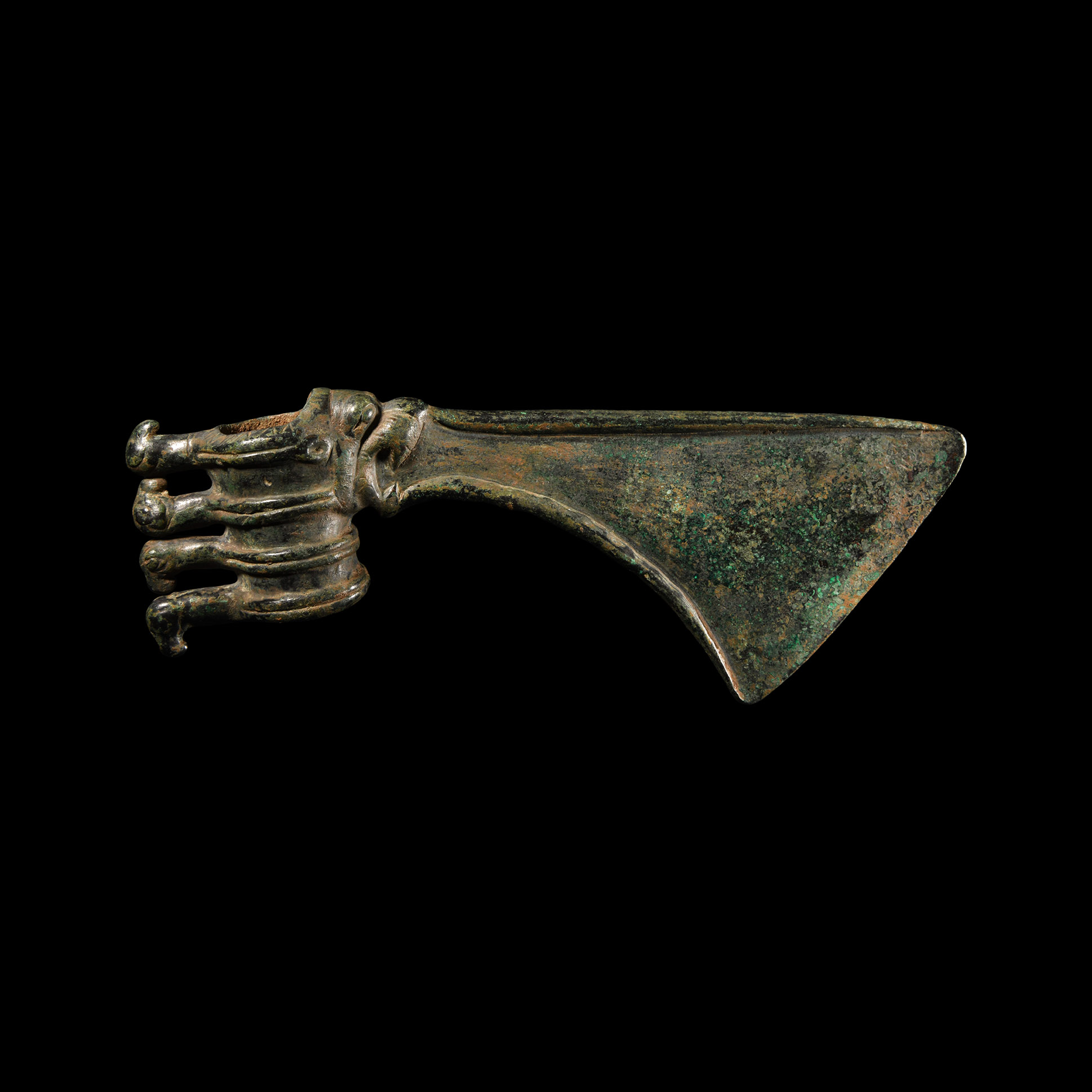
Luristan Bronze Spike-Butted Axehead
11TH-8TH CENTURY B.C.
8 7/8 in. (478 grams, 22.5 cm).
Blade with folded upper and lower edge, cylindrical socket with projecting ribs formed as the necks and heads of birds, blace 'projecting' from the mouth of a roaring lion at the neck.
ProvenanceEx Parisian private collection.
with Cuvreau Expertises Enchères S.A., sale 60, 21 June 2009, lot 105.
This lot has been checked against the Interpol Database of stolen works of art and is accompanied by search certificate number no.11876-206787.
Cf. The British Museum, museum number 130676 for similar; cf. The Metropolitan Museum, New York, accession numbers 32.161.3 and 1988.102.2, for similar.
CONDITIONTimeLine Auctions follows a vetting process to ensure the authenticity and legality of all items, reinforcing our commitment to integrity and responsible trading. Each antiquity, antique, and coin lot undergoes thorough examination by a vetting committee of at least ten external specialists, professional trade association members, scientists, and archaeologists: Our Vetting Process
AUCTIONS:
TimeLine is a leading auction house specialising in antiquities, ancient art, collectables, natural history, coins, medals, and books. Our auctions offer museums, collectors, historians, and enthusiasts the opportunity to acquire unique and historically significant pieces.
LOT 0248
Luristan Bronze Spike-Butted Axehead
Estimate £5,000 - 7,000€5,800 - 8,120 (for guidance only)$6,750 - 9,450 (for guidance only)
-
Western Asiatic Glass Vessel Collection
8th-10th century A.D.Sold for (Inc. bp): £65
Including cut glass molar flasks; chipped. 114 grams total, 27-51 mm
Acquired 1970s-1996. Property of a North American collector. London collection, 2016. -
Western Asiatic Bronze Eagle Statuette
6th-8th century A.D.Estimate: £200 - 300 (+bp*)
Opening Bid: £111
Modelled in the round with semi-naturalistic detailing, curved beak and almond-shaped eyes, fitting rivet to underside. 27.3 grams, 47 mm
‘The Ancient Menagerie Collection’ formerly the property of a Cambridgeshire lady, collected since the 1990s and acquired from auctions and dealers throughout Europe and the USA, now ex London collection. -
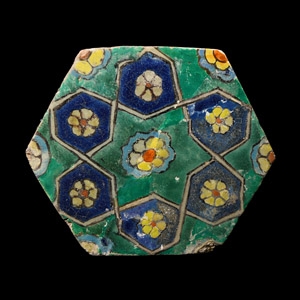
Safavid Ceramic Tile with Flowers
17th century A.D.Sold for (Inc. bp): £169
Decorated with a polychrome design composed of a central star formed from a ring of small hexagons, each with a stylised flower head at the centre; partial flower to each of the six corners of the tile; remains of glaze; restored. 968 grams, 21 cm
Fine condition, heavily restored.
Aquired from the UK art market. Private Scottish collection.
