
Loading, please wait...
LOT 1863
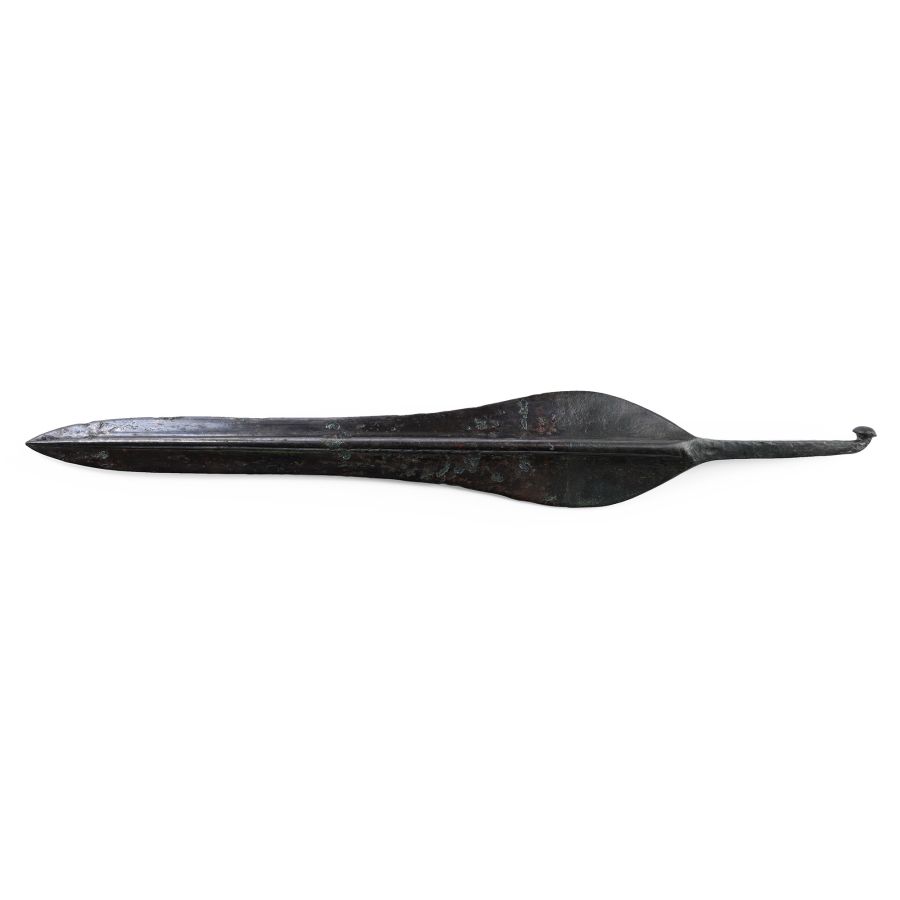
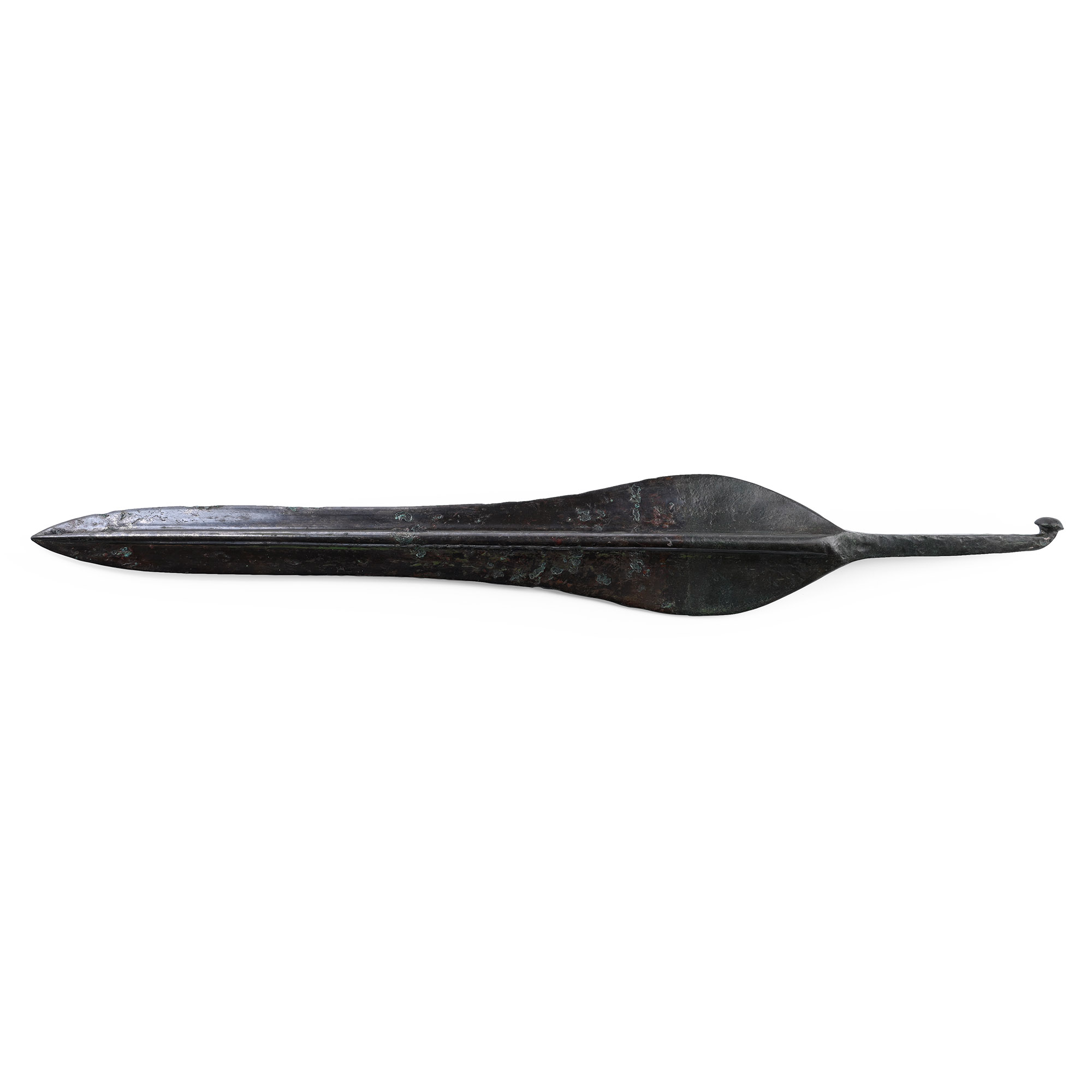
Luristan Bronze Spearhead
EARLY 2ND MILLENNIUM B.C.
16 5/8 in. (643 grams, 42.2 cm).
Foliate blade with a central rib and slender shoulders, short rectangular shaft and tang with a bent finial. [No Reserve]
ProvenanceEx Abelita family collection, 1980s-2000s.
LiteratureCf. Muscarella, O.W., Bronze and Iron, ancient Near Eastern Artifacts in the Metropolitan Museum of Art, New York, 1988, no.176, for the type.
FootnotesA number of similar blades, some considered to be spearheads and others to be daggers, all with a bent tang, derived from Tepe Hissar Culture III. Some of them, like our specimen, have a button terminal, and some others have a plain, pointed terminal. The general dating of these specimens is fixed to the early 2nd millennium B.C.
CONDITIONTimeLine Auctions follows a vetting process to ensure the authenticity and legality of all items, reinforcing our commitment to integrity and responsible trading. Each antiquity, antique, and coin lot undergoes thorough examination by a vetting committee of at least ten external specialists, professional trade association members, scientists, and archaeologists: Our Vetting Process
AUCTIONS:
TimeLine is a leading auction house specialising in antiquities, ancient art, collectables, natural history, coins, medals, and books. Our auctions offer museums, collectors, historians, and enthusiasts the opportunity to acquire unique and historically significant pieces.
-
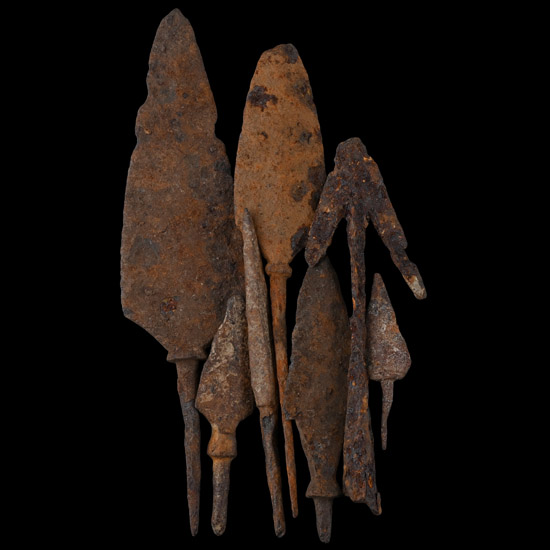
Roman to Medieval Iron Arrowhead Collection
3rd-14th century A.D.Sold for (Inc. bp): £117
Comprising seven tanged arrowheads, one a swallowtail type. 86 grams total, 5.7-13 cm
Ex German art market, 2000s. Acquired from an EU collector living in London. From the collection of a Surrey, UK, gentleman. -
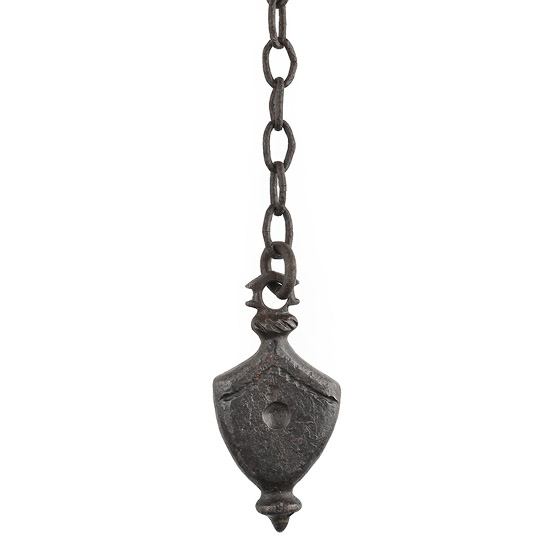
Medieval Socketted Iron Tournament Flail
Circa 15th century A.D.Sold for (Inc. bp): £676
Comprising: tubular socket with segmented lower ends pieced to accept attachment pins, decorative ring above; short length of chain with butted iron links; heater shield-shaped striker with knop finial and torque to the neck, punched design of a chevron and central pellet; one face with possible maker's mark above the pellet. 364 grams, 52.1 cm
Ex North American private collection, 1970s-1990s. -
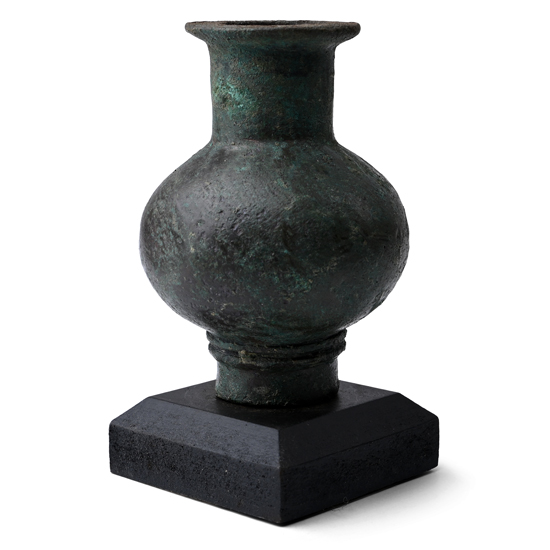
Luristan Bronze Macehead
2nd-1st millennium B.C.Sold for (Inc. bp): £286
With a globular body and tubular socket with two raised collars above and a flaring base; accompanied by a custom-made display stand. 329 grams total, mace: 83 mm
From the collection of the late Sir Clinton Charles Donald Cory, 5th Baronet of Coryton. Ex Philip Auction House, 24 September 1985.
