
Loading, please wait...

LOT 1499
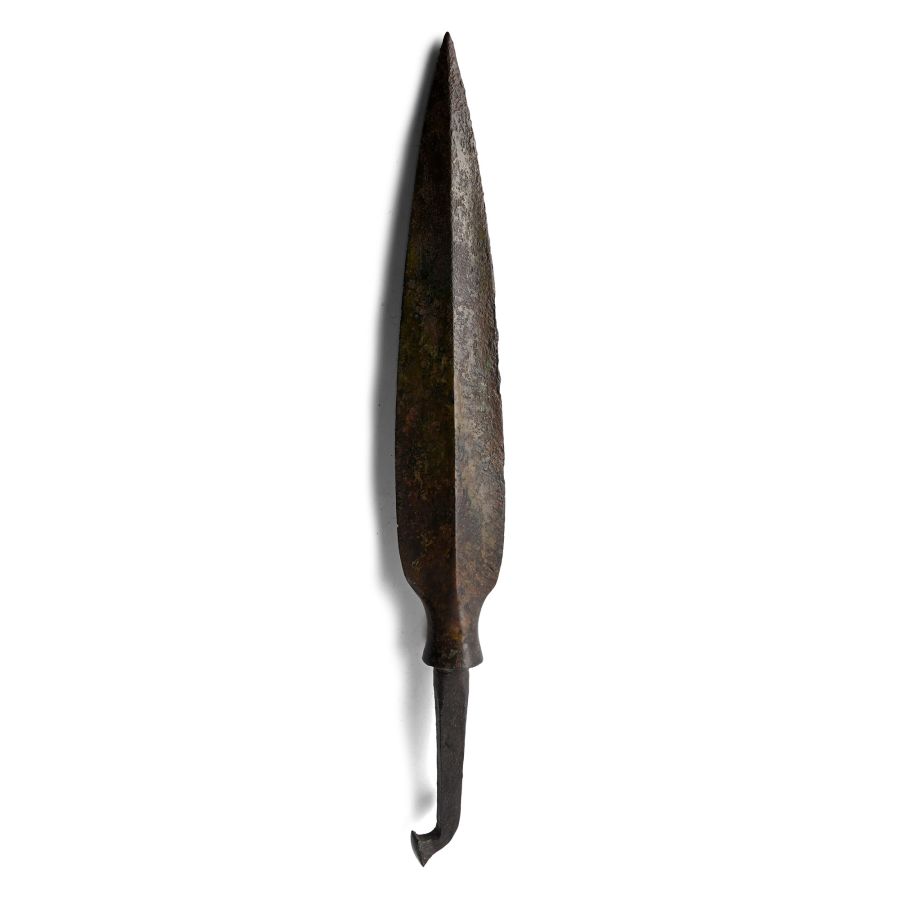
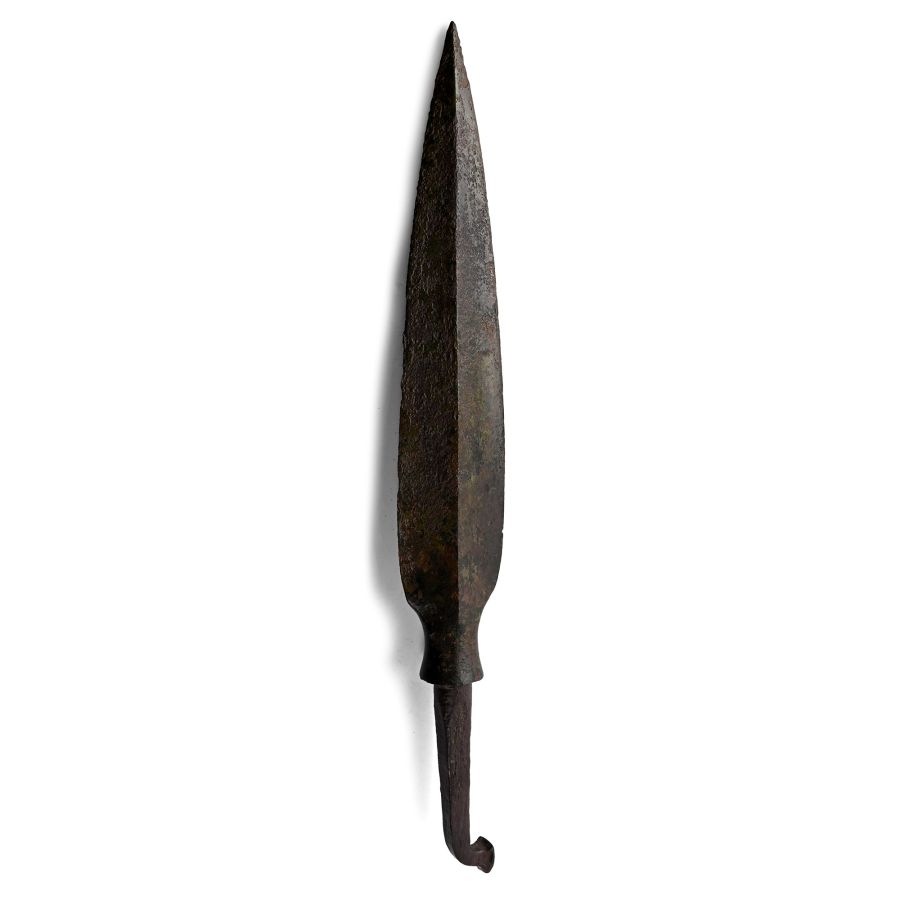
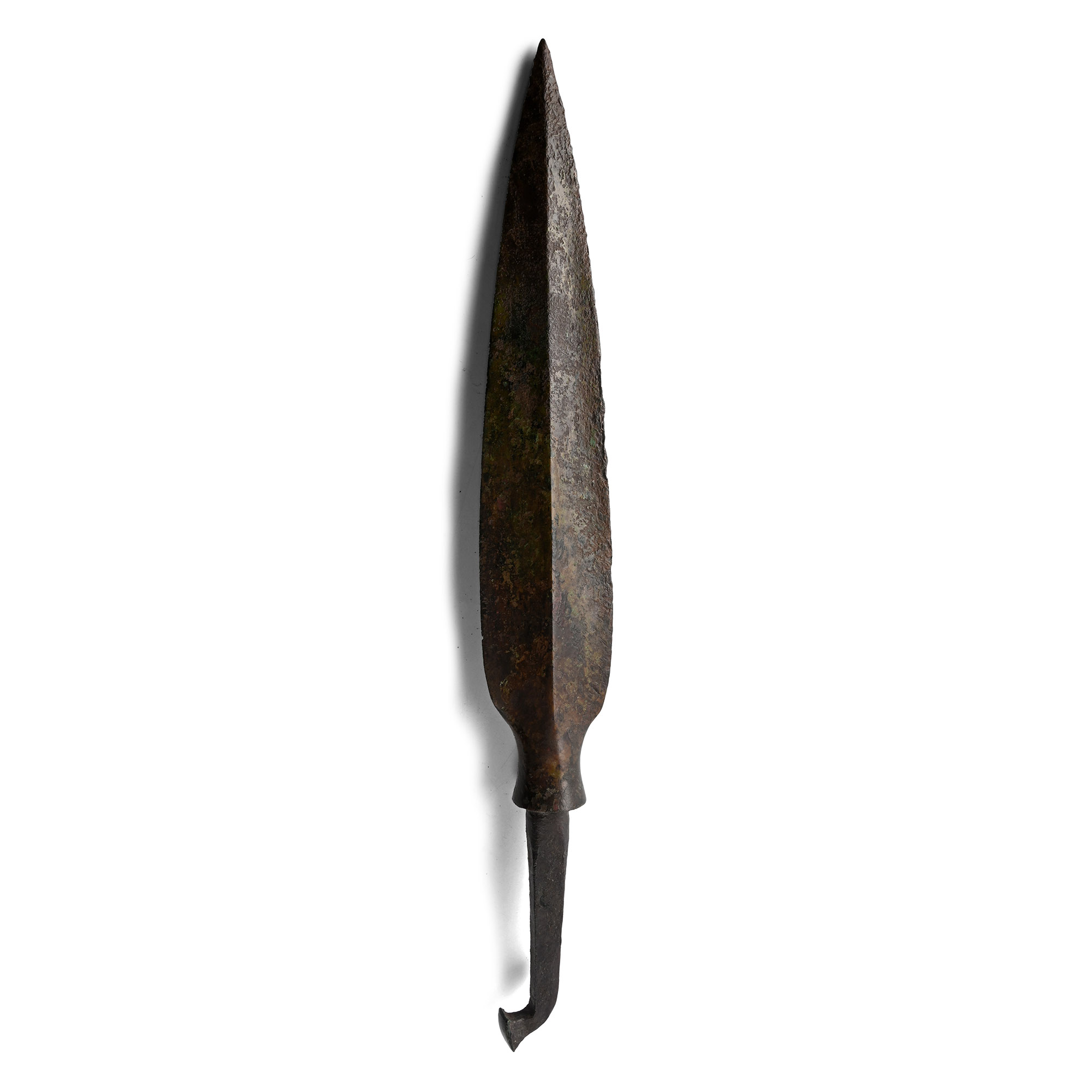
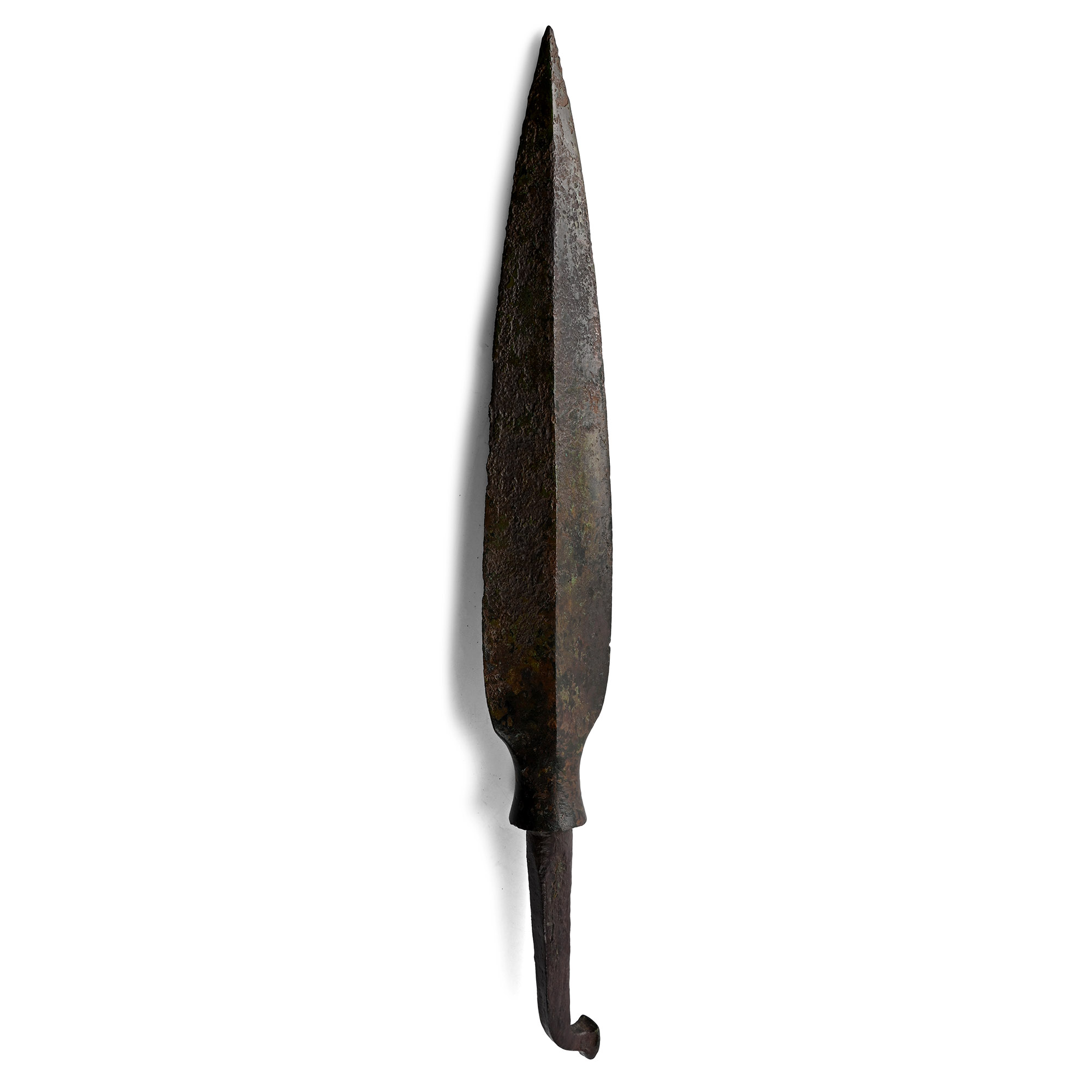
Luristan Bronze Spearhead
2ND-1ST MILLENNIUM B.C.
13 1/2 in. (608 grams, 34.2 cm).
Comprising a leaf-shaped blade with a raised midrib extending to the shaft with a flared collar, rectangular-section tang with curved end and a button finial.
ProvenanceEx Abelita family collection, 1980s-2000s.
LiteratureCf. Gernez, G., L’armament en métal au Proche et Moyen-Orient: des origines a 1750 av. J.C., Paris, 2007, fig.2.88, type L2.B., variant L2.B.c, for type.
FootnotesThe type belongs to the category of tripartite lances with a long, pointed biconvex blade and single bevelled tang. In this typology, the blade, of rhomboidal section, is usually well balanced. The stem, medium or short, is widened at its base and forms a fairly clean stop. Elements of the shaft of a similar spear found at Tepe Hissar have allowed the reconstruction of the length of the spear reaching up to 1.40 m.
CONDITIONTimeLine Auctions follows a vetting process to ensure the authenticity and legality of all items, reinforcing our commitment to integrity and responsible trading. Each antiquity, antique, and coin lot undergoes thorough examination by a vetting committee of at least ten external specialists, professional trade association members, scientists, and archaeologists: Our Vetting Process
AUCTIONS:
TimeLine is a leading auction house specialising in antiquities, ancient art, collectables, natural history, coins, medals, and books. Our auctions offer museums, collectors, historians, and enthusiasts the opportunity to acquire unique and historically significant pieces.
-
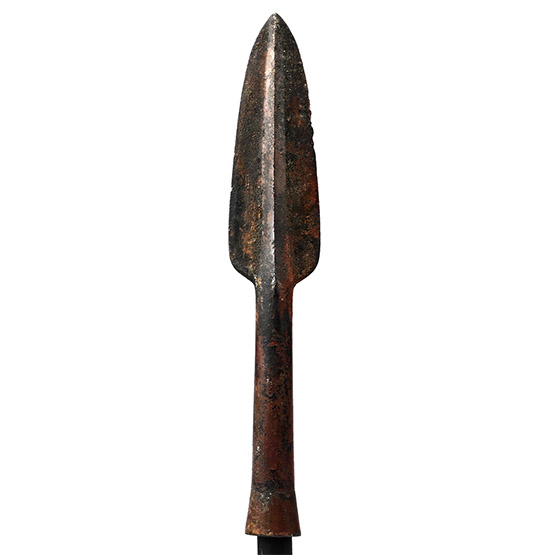
Luristan Bronze Socketted Spearhead
13th-6th century B.C.Sold for (Inc. bp): £169
With a broad leaf-shaped blade, a triangular mid-rib and a tapering tubular socket; accompanied by a display stand. 382 grams total, spearhead: 23.1 cm (31.2 cm including stand)
Ex Abelita family collection, 1980s-2000s.
The spear belongs to the type VIII classified by Khorasani (spearheads with well-projecting midribs and long folded sockets) and more specifically to subtype C (with leaf-shaped blade and short hollow socket). Usually, the willow-leaf blade has an almost straight shoulder base and a wide, flat midrib tapering towards the point. -
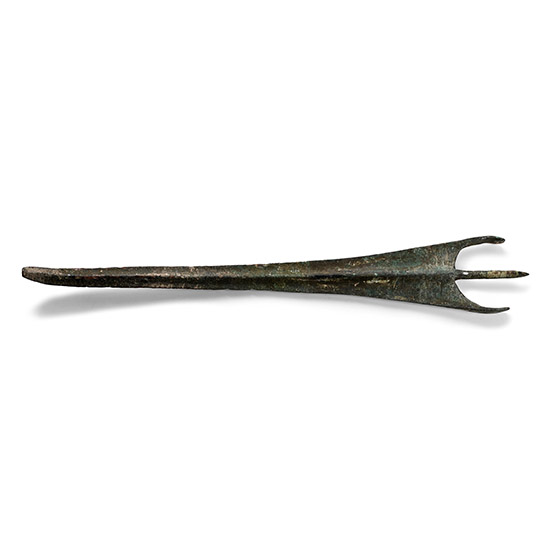
Western Asiatic Bronze Dagger Blade
2nd-1st millennium B.C.Sold for (Inc. bp): £117
With a prominently curved guard, extending out from the ricasso of the blade and partly frames the hilt, a thick midrib extending slightly above the ricasso where it held the hilt. 250 grams, 38.5 cm
Ex Abelita family collection, 1980s-2000s.
The hilt of such swords was made separately, and unfortunately, is nearly always missing from the archaeological records. Similar daggers had a northern Iranian background, and excavated examples have been recorded from the South Caspian Area from Tomadjan and Ghalekuti. -
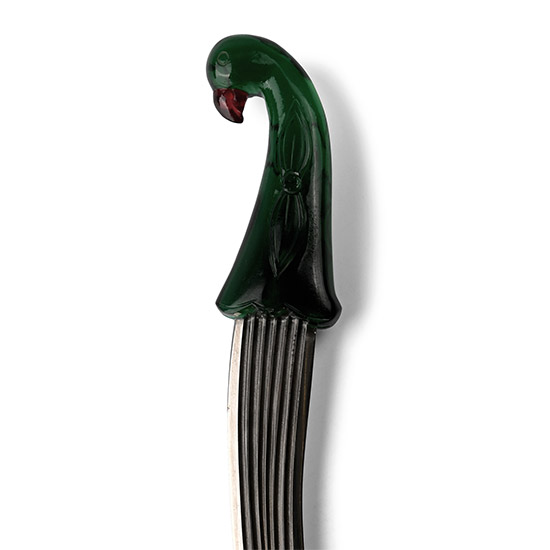
Indian Iron Dagger with Green Glass Hilt
20th century A.D.Sold for (Inc. bp): £156
Comprising a swept two-edged blade with ribbed central panel, bird-head pommel to the grip with incised rosette. 480 grams, 42 cm
Private collection, UK.
