
Loading, please wait...
LOT 1522
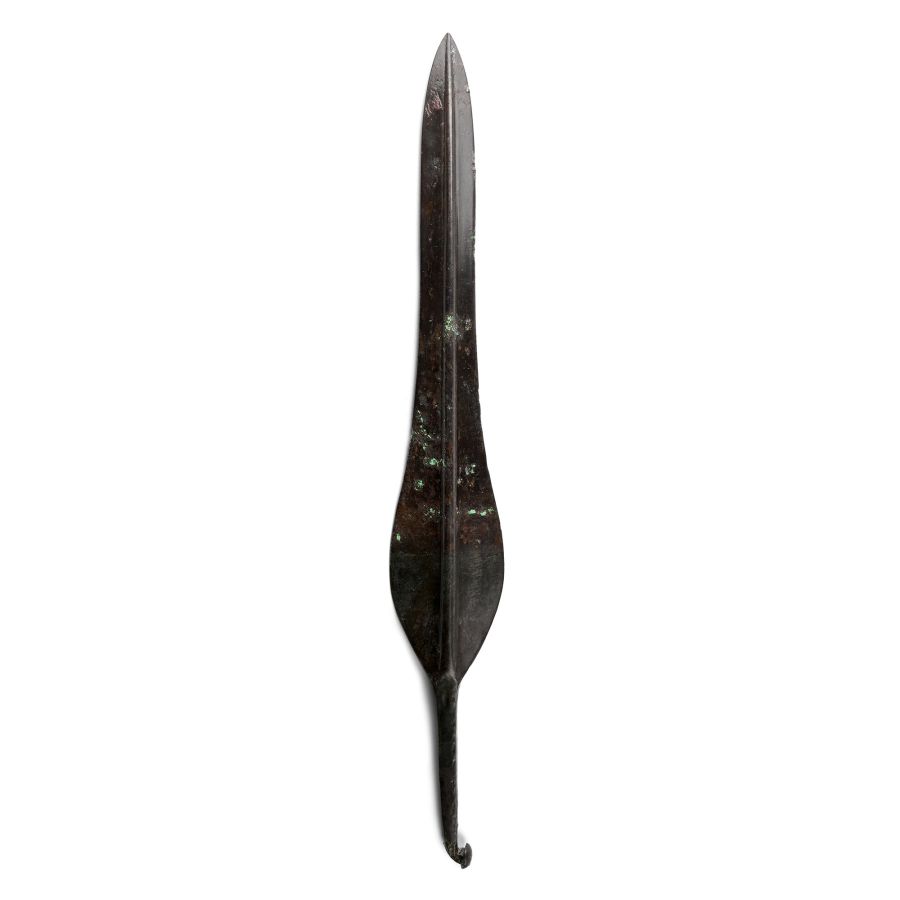
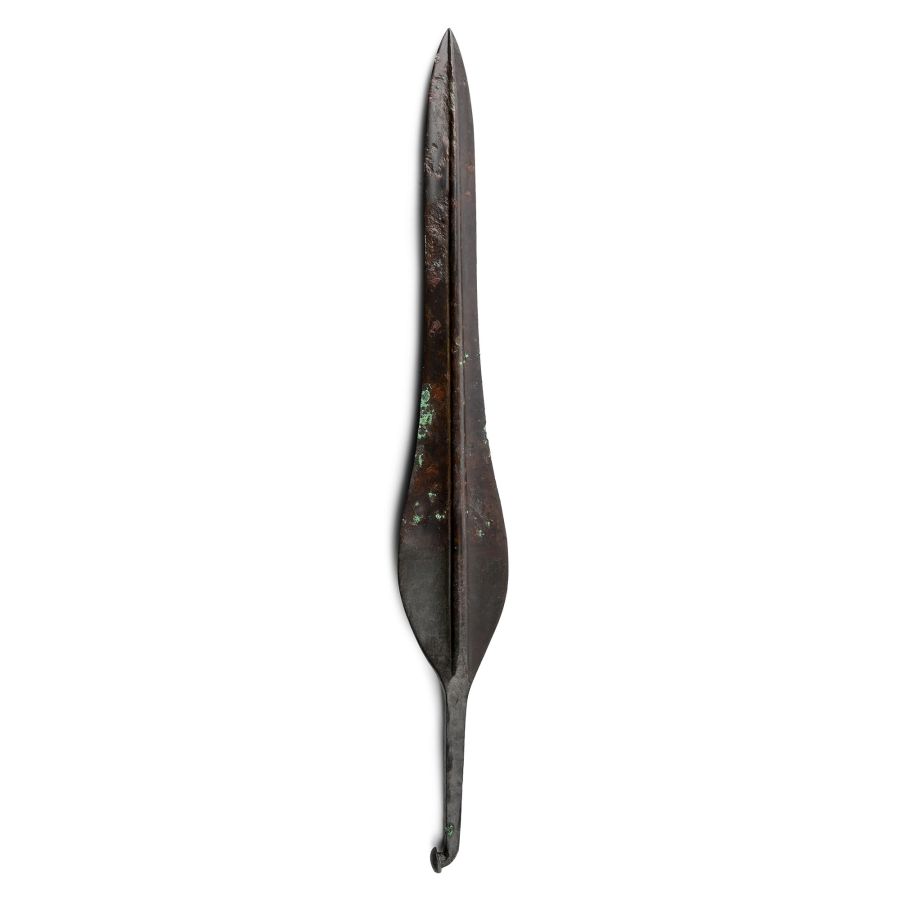
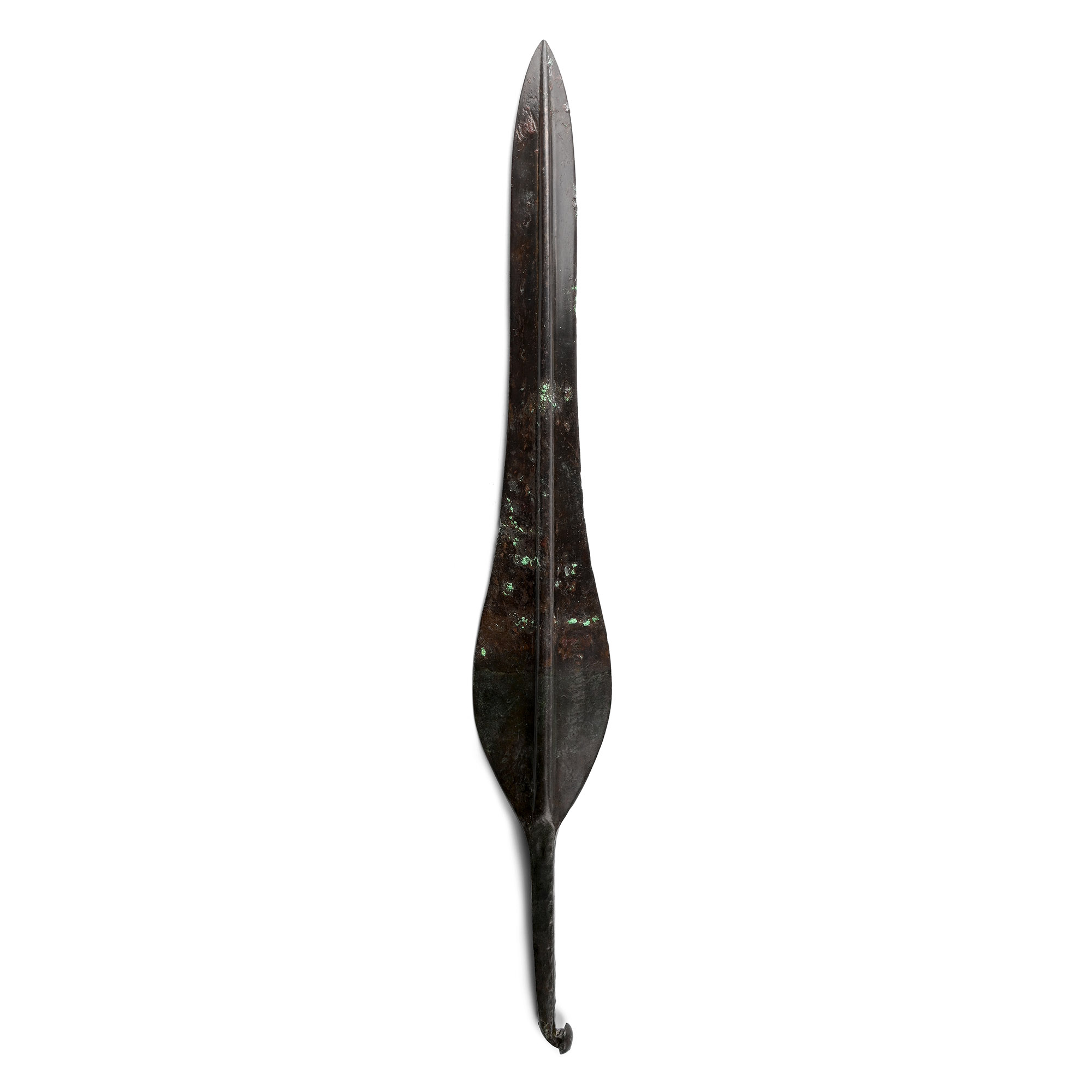
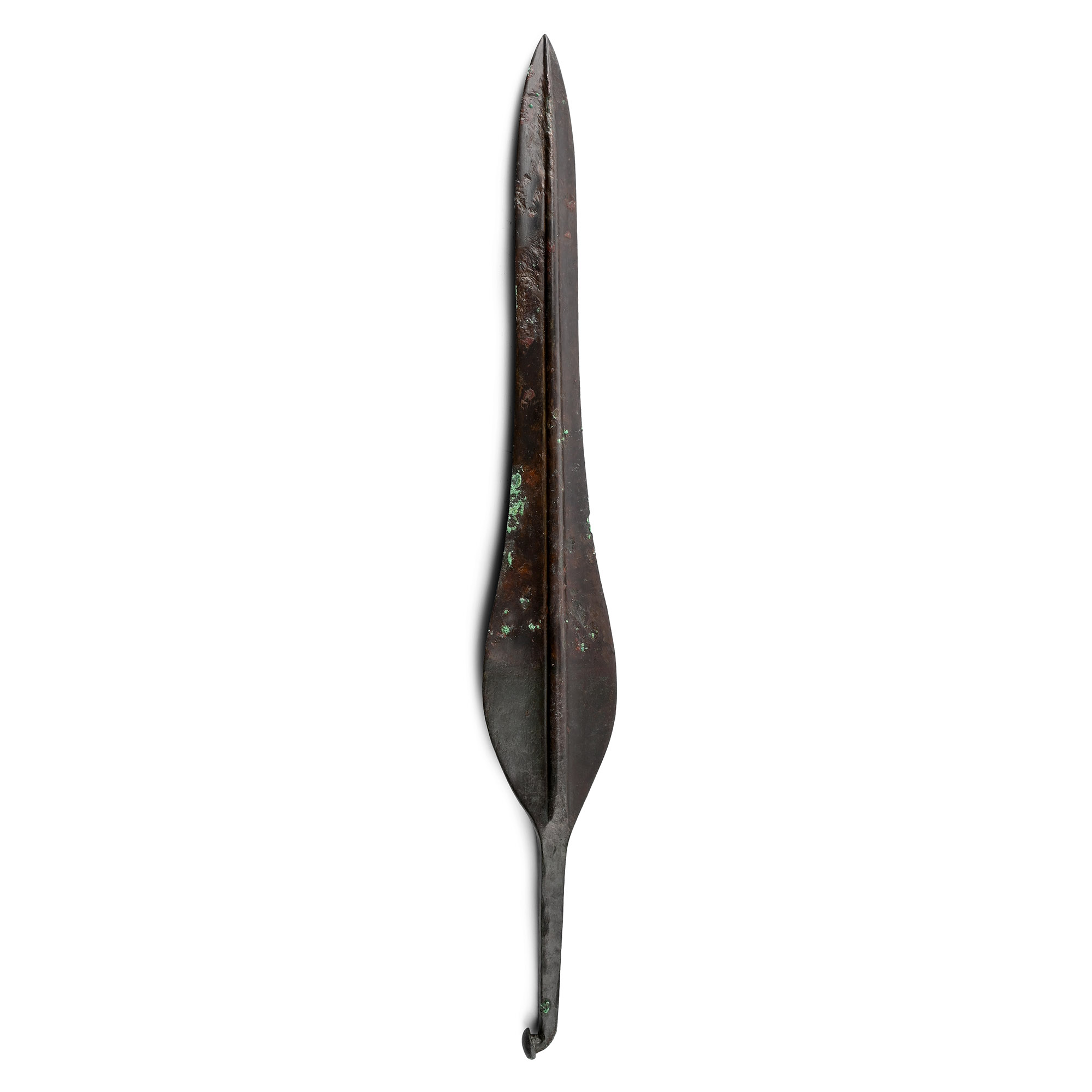
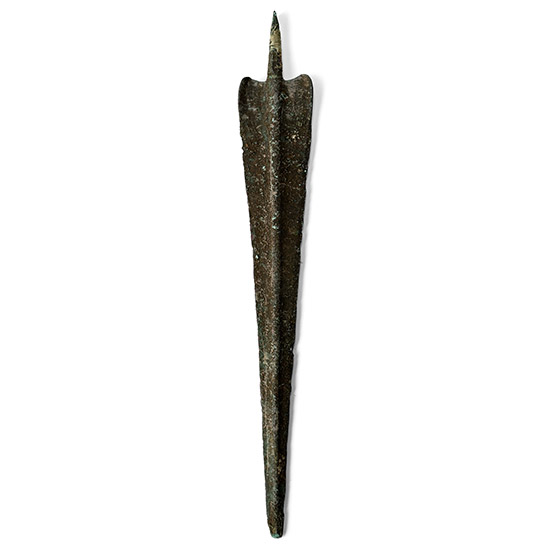
Luristan Bronze Spearhead
EARLY 2ND MILLENNIUM B.C.
16 5/8 in. (643 grams, 42.2 cm).
Foliate blade with a central rib and slender shoulders, short rectangular shaft and tang with a bent finial.
ProvenanceEx Abelita family collection, 1980s-2000s.
LiteratureCf. Muscarella, O.W., Bronze and Iron, ancient Near Eastern Artifacts in the Metropolitan Museum of Art, New York, 1988, no.176, for the type.
FootnotesA number of similar blades, some considered to be spearheads and others to be daggers, all with a bent tang, derived from Tepe Hissar Culture III. Some of them, like our specimen, have a button terminal, and some others have a plain, pointed terminal. The general dating of these specimens is fixed to the early 2nd millennium B.C.
CONDITIONTimeLine Auctions follows a vetting process to ensure the authenticity and legality of all items, reinforcing our commitment to integrity and responsible trading. Each antiquity, antique, and coin lot undergoes thorough examination by a vetting committee of at least ten external specialists, professional trade association members, scientists, and archaeologists: Our Vetting Process
AUCTIONS:
TimeLine is a leading auction house specialising in antiquities, ancient art, collectables, natural history, coins, medals, and books. Our auctions offer museums, collectors, historians, and enthusiasts the opportunity to acquire unique and historically significant pieces.
LOT 1522
Luristan Bronze Spearhead
Estimate £400 - 600€460 - 700 (for guidance only)$540 - 810 (for guidance only)
-
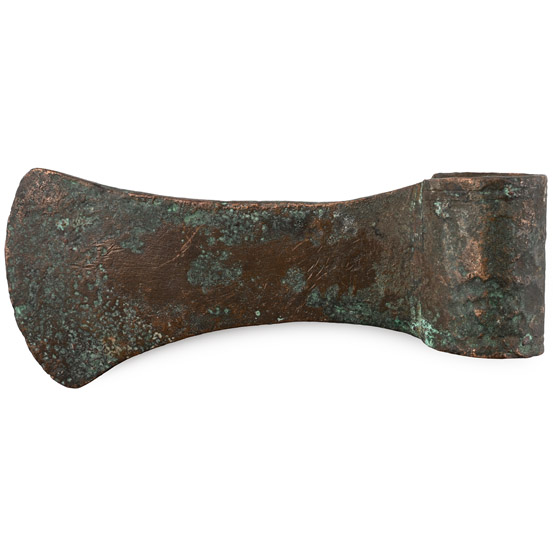
Western Asiatic Bronze Socketted Axehead
2nd-1st millennium B.C.Estimate: £100 - 140 (+bp*)
Opening Bid: £50
With flat blade a curved cutting edge, hammered round-section tubular socket. 112 grams, 10.8 cm
Ex Abelita family collection, 1980s-2000s. -
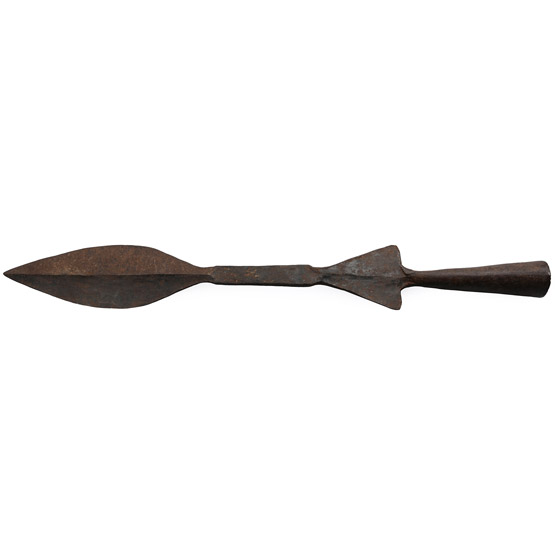
African Iron Socketted Spearhead
Late 20th century A.D.Sold for (Inc. bp): £26
Comprising a lentoid-section lanceolate head on a long flat-setion neck and triangular shoulder developing to a shallow conical socket. 200 grams, 36.3 cm
Property of a Berkshire, UK, gentleman collector. -
North-Western Persian Bronze Sword Blade
11h-7th century B.C.Sold for (Inc. bp): £117
With a prominently curved guard extending out from the ricasso, partly framing the hilt, thick midrib extending slightly above the ricasso. 286 grams, 35.5 cm
Ex Abelita family collection, 1980s-2000s.
The hilt of such swords was made separately and, unfortunately, is nearly always missing from the archaeological records. Similar daggers had a northern Iranian background, and excavated examples have been recorded from the South Caspian area from Tomadjan and Ghalekuti. Their chronology ranges from the late 2nd millennium B.C. to the 7th century B.C.
