
Loading, please wait...
LOT 1550
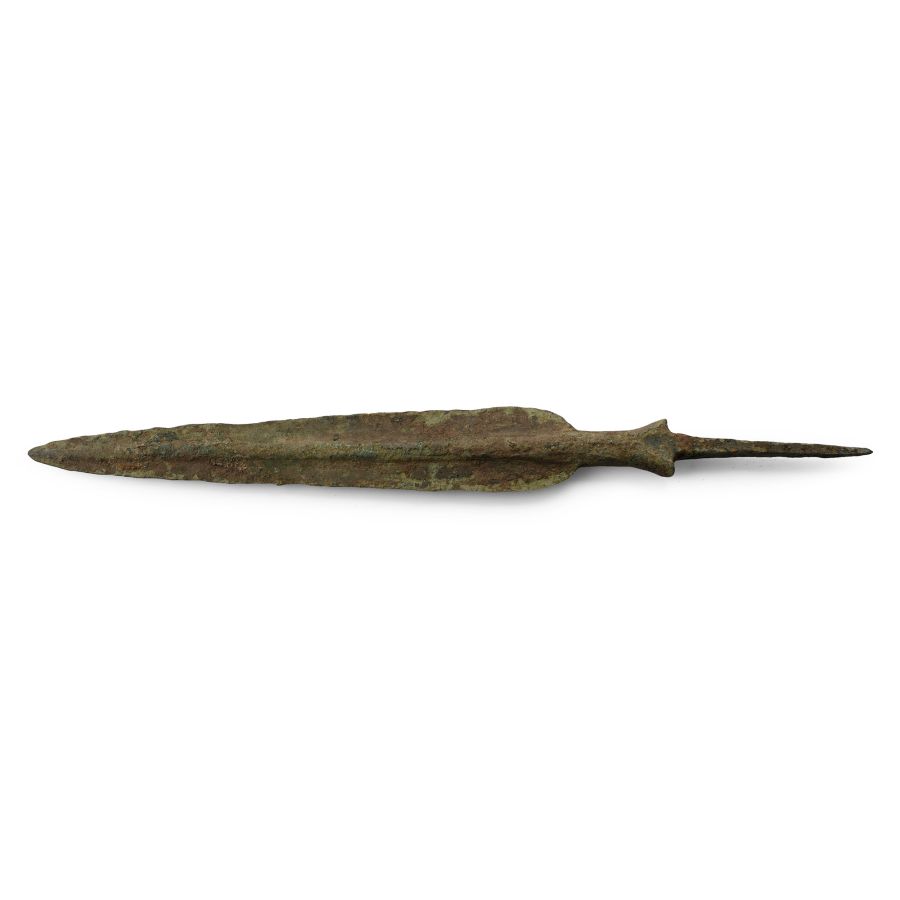
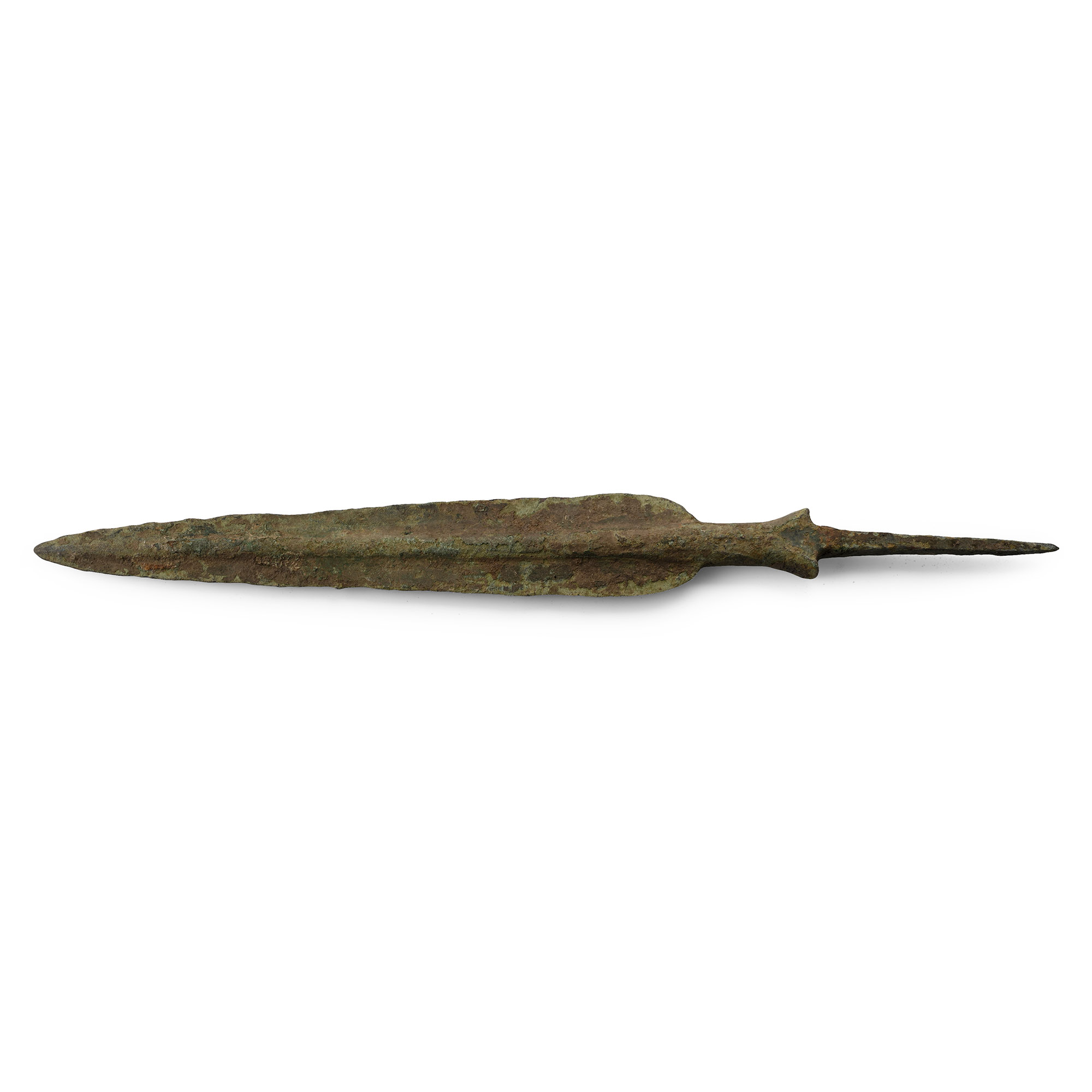
Luristan Bronze Spearhead
2ND-1ST MILLENNIUM B.C.
15 3/8 in. (357 grams, 39 cm).
With leaf-shaped blade, central rib and rounded shoulders, the lozenge-section shaft flared and the square-section tang with pointed tip.
ProvenanceAcquired in the 1990s.
Ex Abelita family collection.
This lot is accompanied by an illustrated lot declaration signed by the Head of the Antiquities Department, Dr Raffaele D'Amato.
Cf. Khorasani, M.M., Arms and Armour from Iran. The Bronze Age to the End of the Qajar Period, Tübingen, 2006, item 291, p.636.
CONDITIONTimeLine Auctions follows a vetting process to ensure the authenticity and legality of all items, reinforcing our commitment to integrity and responsible trading. Each antiquity, antique, and coin lot undergoes thorough examination by a vetting committee of at least ten external specialists, professional trade association members, scientists, and archaeologists: Our Vetting Process
AUCTIONS:
TimeLine is a leading auction house specialising in antiquities, ancient art, collectables, natural history, coins, medals, and books. Our auctions offer museums, collectors, historians, and enthusiasts the opportunity to acquire unique and historically significant pieces.
-
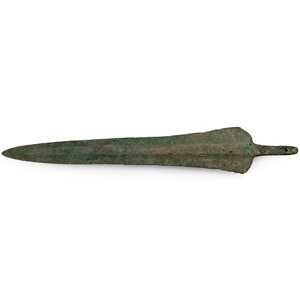
Luristan Bronze Leaf-Shaped Dagger Blade
2nd-1st millennium B.C.Sold for (Inc. bp): £221
With a triangular blade flaring to the shoulders and wide midrib, narrow tang with one hole for rivet. 218 grams, 30 cm
Acquired in the 1990s. Ex Abelita family collection. This lot is accompanied by an illustrated lot declaration signed by the Head of the Antiquities Department, Dr Raffaele D'Amato. -
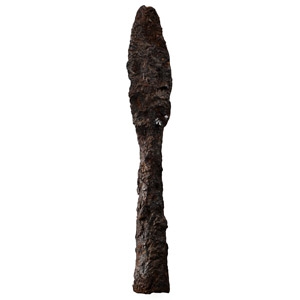
Viking Socketted Iron Spearhead
9th-11th century A.D.Sold for (Inc. bp): £39
A short, leaf-shaped blade and tapering, round-section socket, pierced for attachment to a shaft. 102 grams, 18 cm
Fair condition.
UK gallery, acquired in the 2000s. Property of an English gentleman. This lot is accompanied by an illustrated lot declaration signed by the Head of the Antiquities Department, Dr Raffaele D'Amato. -
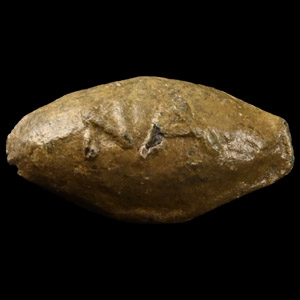
Greek Macedonian Lead Inscribed Slingshot
3rd-1st century B.C.Sold for (Inc. bp): £85
A biconical glans with an inscription 'MEP' to one side and 'NA' to the other. 27.5 grams, 28 mm
Ex German art market, 2000s. Acquired from an EU collector living in London. From the collection of a Surrey, UK, gentleman. This lot is accompanied by an illustrated lot declaration signed by the Head of the Antiquities Department, Dr Raffaele D'Amato.
The leaden bullets, which were thrown from slings, were called in Greek Molivdainai (μολύβδαιναι), and in Latin glandes- the former indicating the material ‘lead’, the latter the shape ‘acorns’. These bullets were cast in a mould, and bore letters or devices or both, on two sides or on only one. In form they were more like an almond than an acorn, but many are pointed at both ends; in size, they are generally about one inch and a half maximum length, and under one inch in maximum width. Bullets from Mecyberna possess the abbreviated inscription MER (obverse) and NA (reverse), which some scholar translated as Mecyberna. The presence of the Mecyberna inscription is expected, since the Polis of Mecyberna produced clay moulds, which suggests local production. Inscribed bullets with the name of a city may also denote the place of manufacture
