
Loading, please wait...

LOT 1672
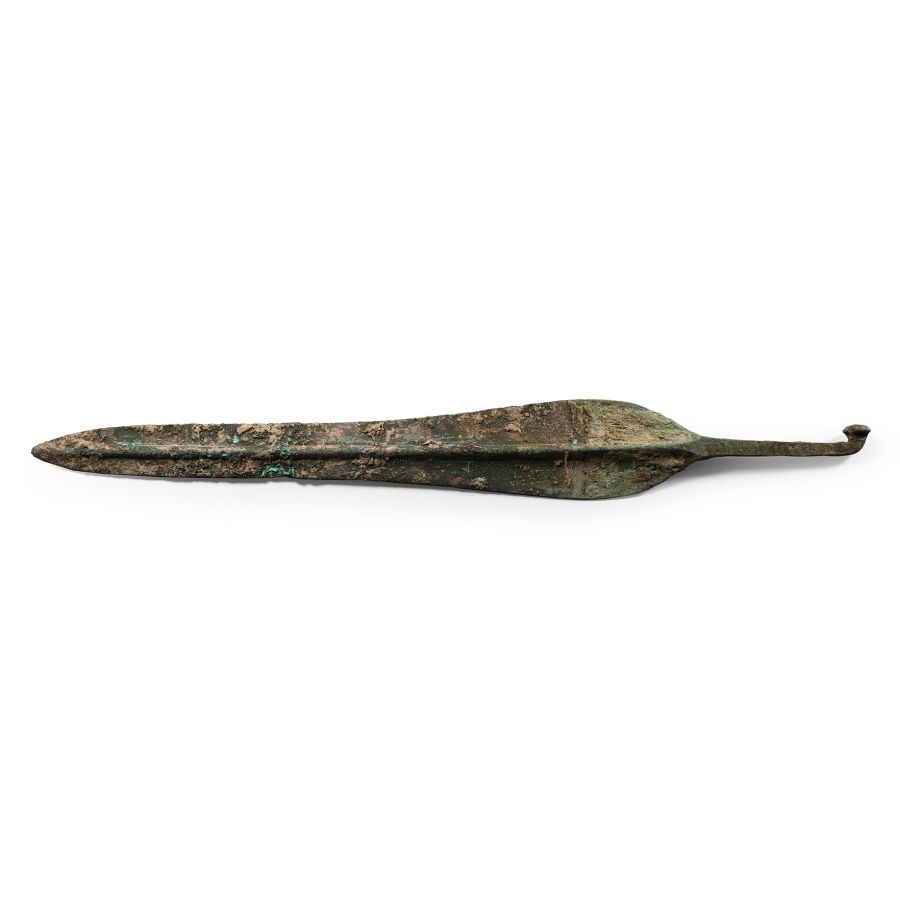
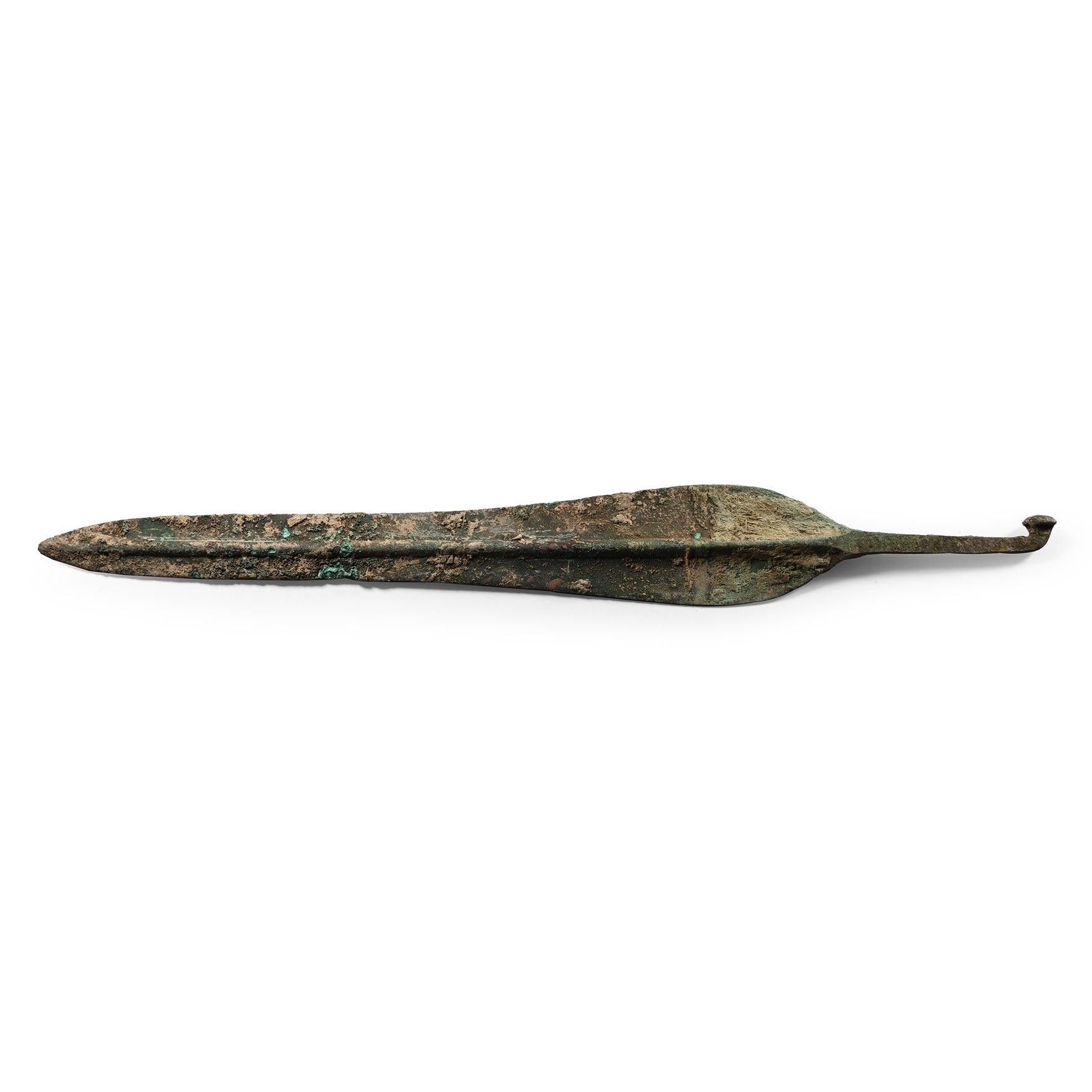
Luristan Bronze Spearhead
EARLY 2ND MILLENNIUM B.C.
16 3/4 in. (412 grams, 42.5 cm).
Having foliate blade with central rib and slender shoulders, short rectangular shaft and tang with a bent end.
ProvenanceAcquired 1980-2015.
Ex Abelita family collection.
This lot is accompanied by an illustrated lot declaration signed by the Head of the Antiquities Department, Dr Raffaele D’Amato.
Cf. Muscarella, O.W., Bronze and Iron, ancient Near Eastern Artifacts in the Metropolitan Museum of Art, New York, 1988, no.176, for the type.
FootnotesA number of similar blades, some considered to be spearheads and others to be daggers, all with bent tang, derived from Tepe Hissar Culture III. Some of them, like our specimen, have a button terminal, some others have a plain, pointed terminal. The general dating of these specimens is fixed to the early 2nd millennium B.C.
CONDITIONTimeLine Auctions follows a vetting process to ensure the authenticity and legality of all items, reinforcing our commitment to integrity and responsible trading. Each antiquity, antique, and coin lot undergoes thorough examination by a vetting committee of at least ten external specialists, professional trade association members, scientists, and archaeologists: Our Vetting Process
AUCTIONS:
TimeLine is a leading auction house specialising in antiquities, ancient art, collectables, natural history, coins, medals, and books. Our auctions offer museums, collectors, historians, and enthusiasts the opportunity to acquire unique and historically significant pieces.
LOT 1672
Luristan Bronze Spearhead
Estimate £100 - 140€120 - 160 (for guidance only)$140 - 190 (for guidance only)
-
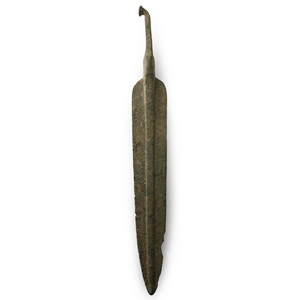
Massive Amlash Bronze Spearhead Blade
13th-12th century B.C.Estimate: £100 - 140 (+bp*)
Opening Bid: £50
With large ovate blade, broad midrib, rounded shoulders and rectangular-section tang with bent tip ending with a button. 370 grams, 42.5 cm
Acquired 1980-2015. Ex Abelita family collection. This lot is accompanied by an illustrated lot declaration signed by the Head of the Antiquities Department, Dr Raffaele D’Amato.
The massive spearhead belongs to type 1 of the Khorasani classification. Similar excavated examples from Marlik attest the use of such spearheads with bent tang in the area, and Stutzinger dated such weapons to 1200-1100 B.C. The type was the evolution of a typology which began much earlier in Mesopotamia and the fertile crescent, the type 4 of the Stronach classification, with straight square-section tang, usually thickened at the base with a button tang. -
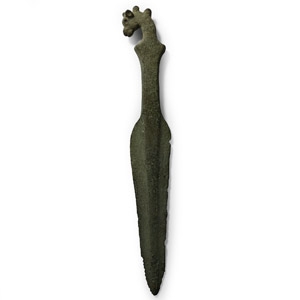
Luristan Bronze Miniature Dagger
12th-11th century B.C.Sold for (Inc. bp): £124
Short dagger with leaf-shaped blade, with a slightly pronounced midrib, expanded handle terminating in an equine protome. 294 grams, 25.2 cm
Acquired 1980-2015. Ex Abelita family collection. This lot is accompanied by an illustrated lot declaration signed by the Head of the Antiquities Department, Dr Raffaele D’Amato.
Miniature weapons such as this one apparently functioned as models for actual weapons and may have had a cultic purpose. The hilt of this dagger, if effectively used, should have been flanged for the filling with organic material. Unfortunately, only a few miniature tools and weapons have been found in the archaeological context of the graves, which does not offer clear elements of understanding and comparison. -
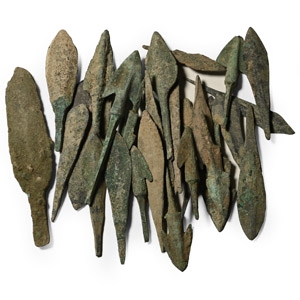
Luristan Bronze Arrowhead Group
13th-6th century B.C.Sold for (Inc. bp): £182
Including barbed-and tanged, leaf-shaped, lozengiform and other types. 232 grams total, 41-91 mm
Acquired 1980-2015. Ex Abelita family collection. This lot is accompanied by an illustrated lot declaration signed by the Head of the Antiquities Department, Dr Raffaele D’Amato.
