
Loading, please wait...


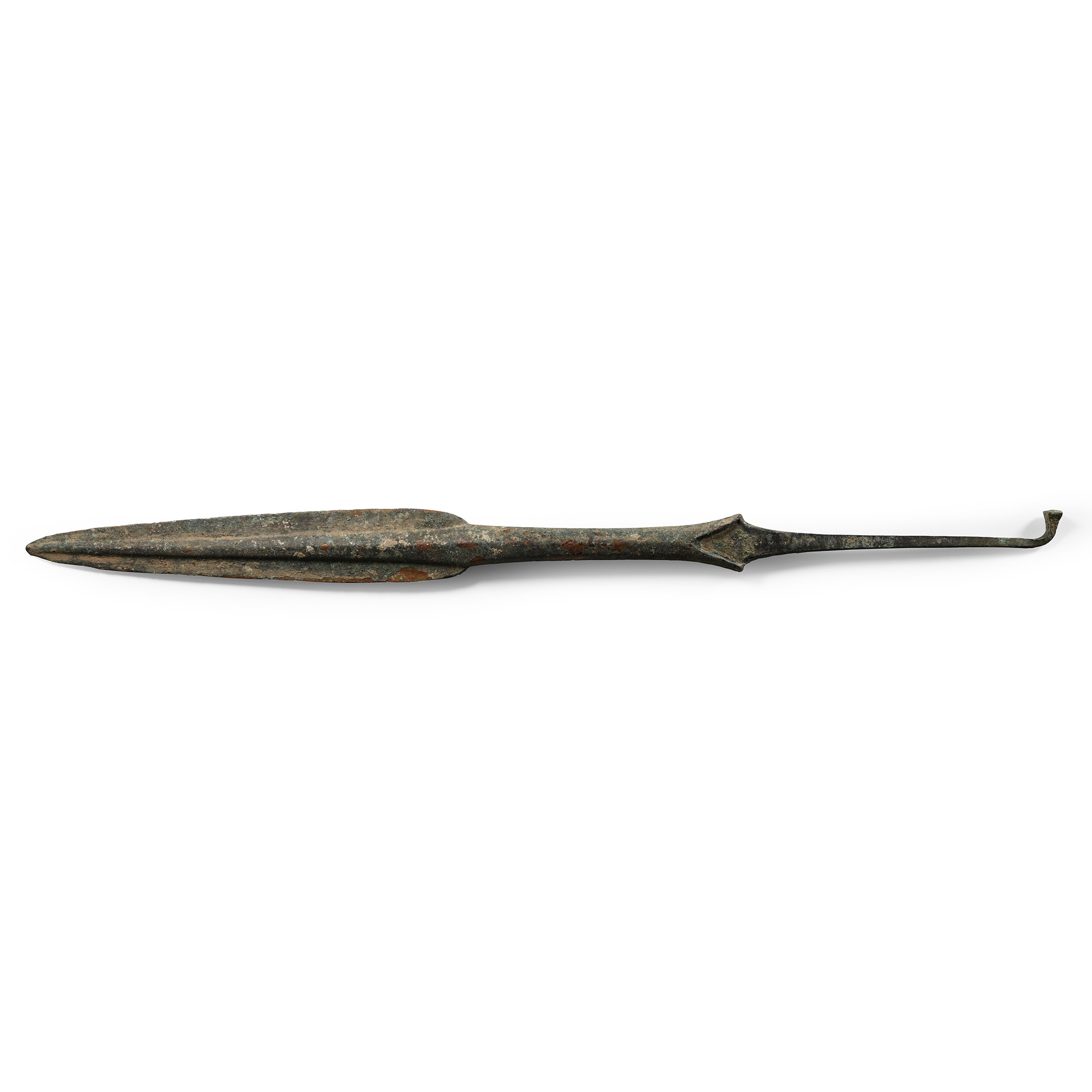
LOT 1561
Luristan Bronze Spearhead
LATE 2ND MILLENNIUM B.C.
17 1/4 in. (351 grams, 44 cm).
With ovate blade, central round rib and curved shoulders, the cylindrical long shaft widening towards the end, encasing a rectangular tang with bent tip.
ProvenanceAcquired 1980-2015.
Ex Abelita family collection.
This lot is accompanied by an illustrated lot declaration signed by the Head of the Antiquities Department, Dr Raffaele D’Amato.
Cf. Khorasani, M.M., Arms and Armour from Iran. The Bronze Age to the End of the Qajar Period, Tübingen, 2006, item 277, for the type.
FootnotesSimilar spearheads were excavated in Marlik. Negahban stated that based upon the evidence on archaeological finds from West-North Iran, this type of spearhead may be dated to the final centuries of 2nd millennium B.C.
CONDITIONTimeLine Auctions follows a vetting process to ensure the authenticity and legality of all items, reinforcing our commitment to integrity and responsible trading. Each antiquity, antique, and coin lot undergoes thorough examination by a vetting committee of at least ten external specialists, professional trade association members, scientists, and archaeologists: Our Vetting Process
AUCTIONS:
TimeLine is a leading auction house specialising in antiquities, ancient art, collectables, natural history, coins, medals, and books. Our auctions offer museums, collectors, historians, and enthusiasts the opportunity to acquire unique and historically significant pieces.
-
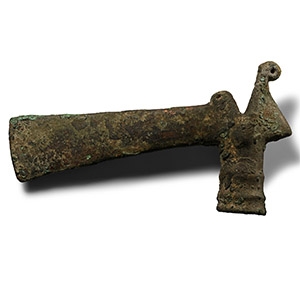
Luristan Decorated Bronze Axehead
Circa 12th-8th century B.C.Sold for (Inc. bp): £156
Wedge-shaped blade and a cylindrical socket with collared base and an upper face of stylised zoomorphic form, possibly representing a moufflon with jutting muzzle and horns above represented by a single scroll; the blade long, with a slightly convex blunt edge. 236 grams, 14.1 cm
Acquired 1980-2015. Ex Abelita family collection. Ex TimesAncient, Bristol, UK. Accompanied by a copy of a previous catalogue entry. This lot is accompanied by an illustrated lot declaration signed by the Head of the Antiquities Department, Dr Raffaele D’Amato.
The moufflon is a regularly used symbol in Luristan art. -
.jpg)
Viking Battle Axe Head with Silver Inlays
Northern Europe, 9th-11th century A.D.Sold for (Inc. bp): £8,970
With short, cylindrical socket to rear, narrow neck, flared blade with curved cutting edge; underside of the blade swept in a gentle curve; short flanges above and below the rear of the socket; decorated overall with finely engraved silver inlays forming two dragons and interlace patterns (probably not original); provided with a display stand. 390 grams, 15.7 cm (813 grams total, 26.2 cm high including stand)
Acquired 1982 in Kaliningrad and transported to Riga in 1986, moved to East Berlin in 1988, and again to Germany in 2000, then UK in 2014. Ex West London collection. Accompanied by a copy of an Art Loss Register certificate no.S00141022. Accompanied by an academic report by Dr Raffaele D'Amato. This lot has been checked against the Interpol Database of stolen works of art and is accompanied by search certificate number no.12476-228759. This lot has been cleared against the Art Loss Register database, and is accompanied by an illustrated lot declaration signed by the Head of the Antiquities Department, Dr Raffaele D’Amato. -
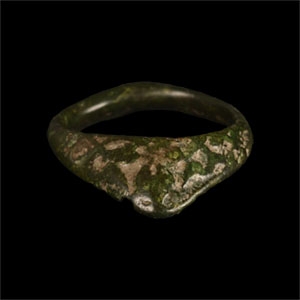
Medieval Bronze Archer's Thumb Ring
14th-15th century A.D.Sold for (Inc. bp): £124
Comprising a D-section hoop with raised boss to the base, triangular extension with incised decoration. 3.62 grams, 29.21 mm overall, 18.83 mm internal diameter (approximate size British P, USA 7 1/2, Europe 16.23, Japan 15)
From an English collection formed before 2000. This lot is accompanied by an illustrated lot declaration signed by the Head of the Antiquities Department, Dr Raffaele D’Amato.
