
Loading, please wait...
LOT 1580
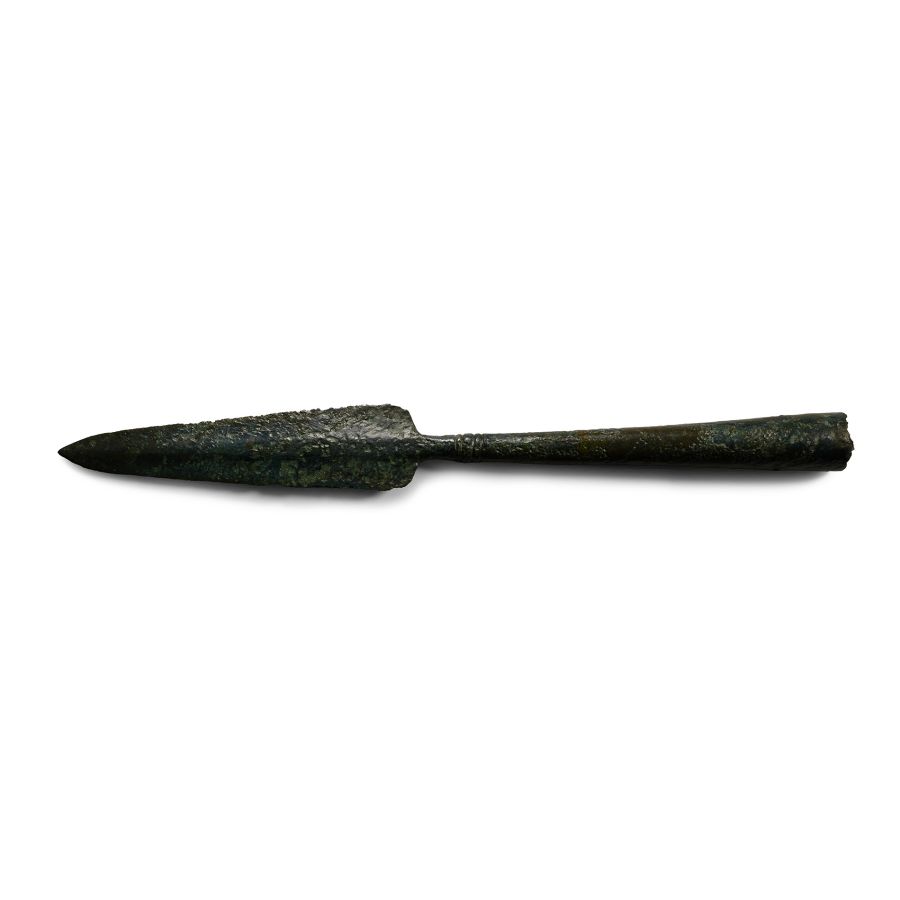
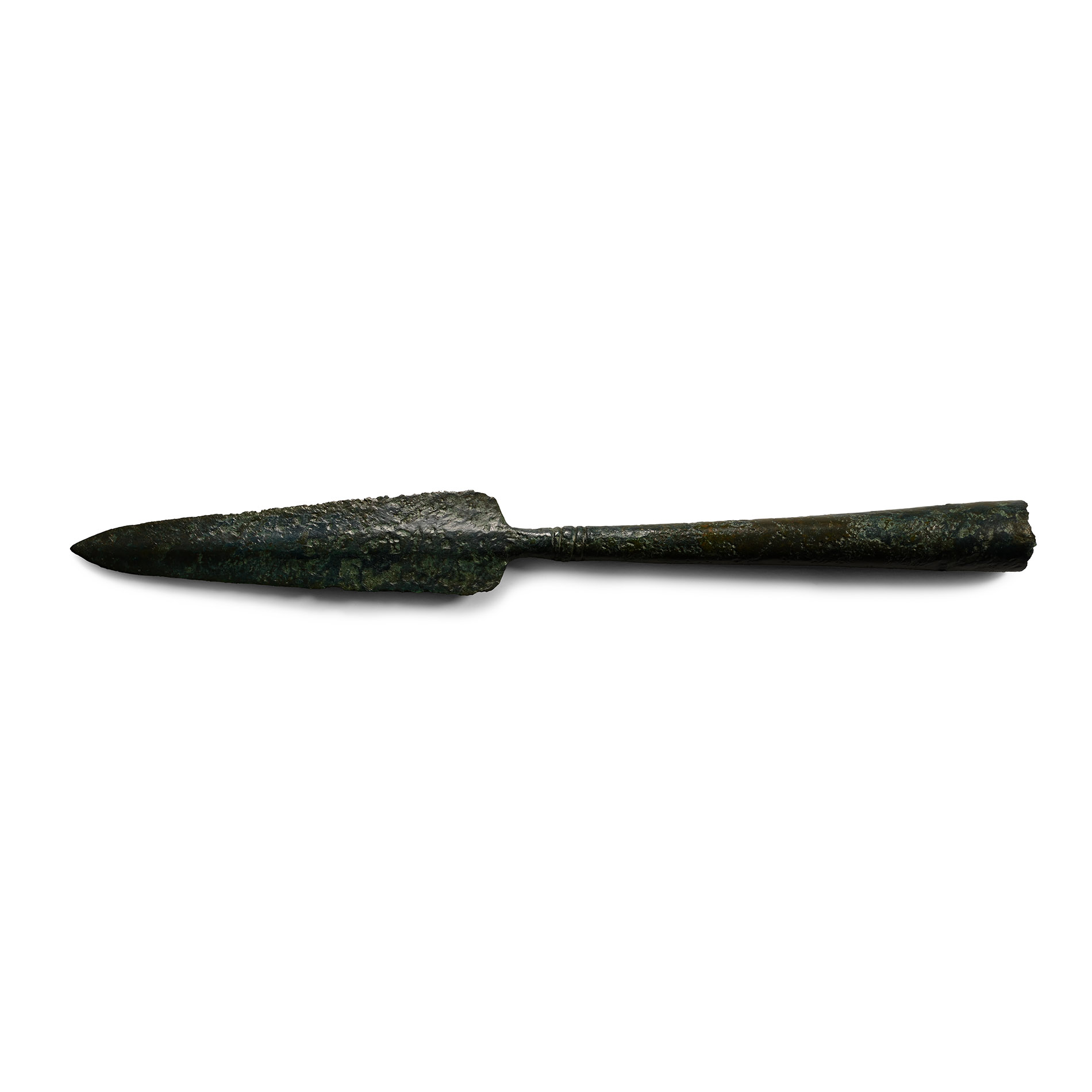
Luristan Bronze Spearhead
13TH-7TH CENTURY B.C.
12 1/2 in. (161 grams, 31.5 cm).
Composed of a leaf-shaped blade with tapering socket.
ProvenanceAcquired 1980-2015.
Ex Abelita family collection.
This lot is accompanied by an illustrated lot declaration signed by the Head of the Antiquities Department, Dr Raffaele D’Amato.
Cf. Christie's, The Axel Guttmann Collection of Ancient Arms and Armour, part 2, London, 2004, p.36, no.40; cf. Khorasani, M.M., Arms and Armour from Iran. The Bronze Age to the End of the Qajar Period, Tübingen, 2006, p.630, no.280.
CONDITIONTimeLine Auctions follows a vetting process to ensure the authenticity and legality of all items, reinforcing our commitment to integrity and responsible trading. Each antiquity, antique, and coin lot undergoes thorough examination by a vetting committee of at least ten external specialists, professional trade association members, scientists, and archaeologists: Our Vetting Process
AUCTIONS:
TimeLine is a leading auction house specialising in antiquities, ancient art, collectables, natural history, coins, medals, and books. Our auctions offer museums, collectors, historians, and enthusiasts the opportunity to acquire unique and historically significant pieces.
LOT 1580
Luristan Bronze Spearhead
Estimate £250 - 350€290 - 410 (for guidance only)$340 - 470 (for guidance only)
-
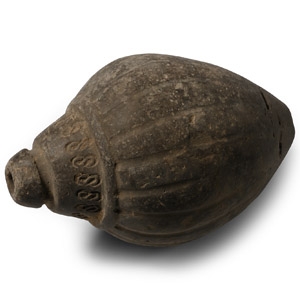
Byzantine 'Greek Fire' Ceramic Fire Bomb or Hand Grenade
9th-11th century A.D.Sold for (Inc. bp): £182
A piriform missile with dimed filler-hole, ribbed body and a band of stamped S-motifs around the neck, intended to be filled with explosive liquid and wick, used as a hand grenade. 560 grams, 14.2 cm
From an important specialist collection, London, UK, 1990s onwards. Accompanied by an academic paper by military specialist Dr Raffaele D'Amato, dated 15 July 2019 and titled 'Eastern Roman Empire - Greek Fire Bomb or Hand Grenade (μεσαίον kακάβιον) 9th-11th century AD'. This lot is accompanied by an illustrated lot declaration signed by the Head of the Antiquities Department, Dr Raffaele D’Amato. -
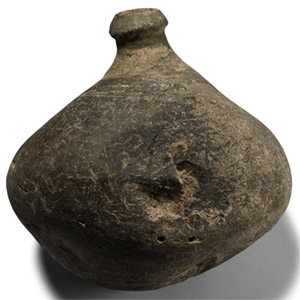
Byzantine 'Greek Fire' Ceramic Fire Bomb or Hand Grenade
9th-11th century A.D.Sold for (Inc. bp): £124
Biconvex in profile with tall neck and domed mouth, deformed when the clay was still wet. 1.1 kg total, 13 cm
From a specialist London, UK, arms and armour collection, 1990s. Accompanied by an academic paper by military specialist Dr Raffaele D'Amato, dated 15 July 2019 and titled 'Eastern Roman Empire - Greek Fire Bomb or Hand Grenade (μεσαίον kακάβιον) 9th-11th century AD'. This lot is accompanied by an illustrated lot declaration signed by the Head of the Antiquities Department, Dr Raffaele D’Amato.
Apart from the use of siphons or manual flame-throwers called cheirosiphona, special corps of Roman soldiers employed terracotta grenades, in the form of small jars, abundantly evidenced in archaeological excavations. They were called μεσαία kακαβιά or κυτροκακάβια where the former had a bulbous shape and the latter a more cylindrical form. -
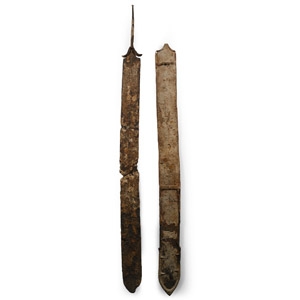
Iron Age Celtic Iron La Tene Sword with Scabbard
250-120 B.C.Estimate: £1,200 - 1,700 (+bp*)
Opening Bid: £600
Comprising a double-edged sword, the blade terminating in a round point, a shallow groove running along both sides of the blade, lozenge-section grip with four edges; supplied with a curved guard and a small cylindrical pommel; the scabbard with edged borders and the slide scabbard for the fastening of the suspension chain. 1.06 kg total, 64-76 cm
Ex German art market, 2000s. Acquired from an EU collector living in London. From the collection of Surrey, UK, gentleman. This lot is accompanied by an illustrated lot declaration signed by the Head of the Antiquities Department, Dr Raffaele D’Amato.
The sword belongs to the period of the last Celtic deeds in Europe, when their warriors succeededin sacking the Holy Sanctuary of Delphi in Greece. Livy, based upon the text of Polybius generically speaks of 'Gallica arma' and 'ferrum', the latter synonymous of a sword (Livy, XXI, 42, 1-4). Diodorus tells us that the swords were worn by the Celts on the right side, hanging from a belt tied around his waist and were not carried hanging from a baldric over the shoulder like the Greeks or the Etruscans (V, 30, 3). He describes (V, 29 and 30) the fighting techniques of the Celts (combat chariot) and a list of all the weapons used: shields as tall as a man which exhibit embossed figures of animals in rolled brass with both decorative and protective function; the brass helmets with high crests, horns, or with figures of birds and quadrupeds to the top; a chainmail armour in iron; long swords hanging from the right side by means of iron and bronze chain; spears; javelins; war trumpets with hoarse sounds; and gold or silver plated belts.
