
Loading, please wait...
LOT 1447
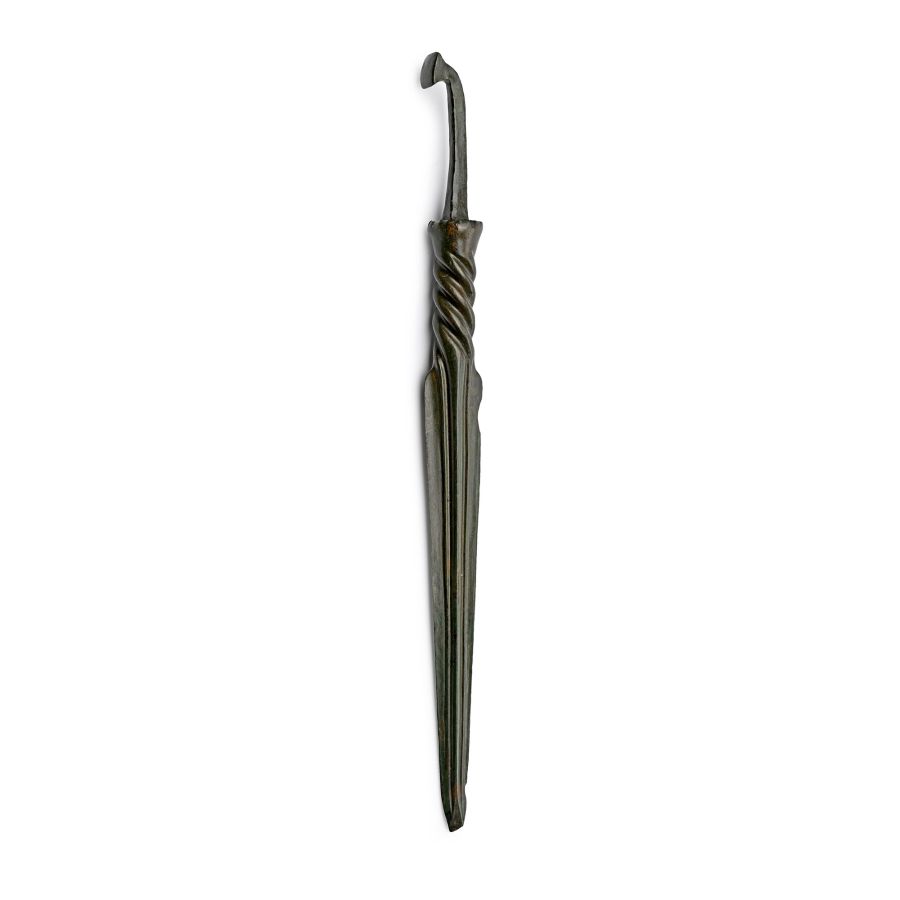
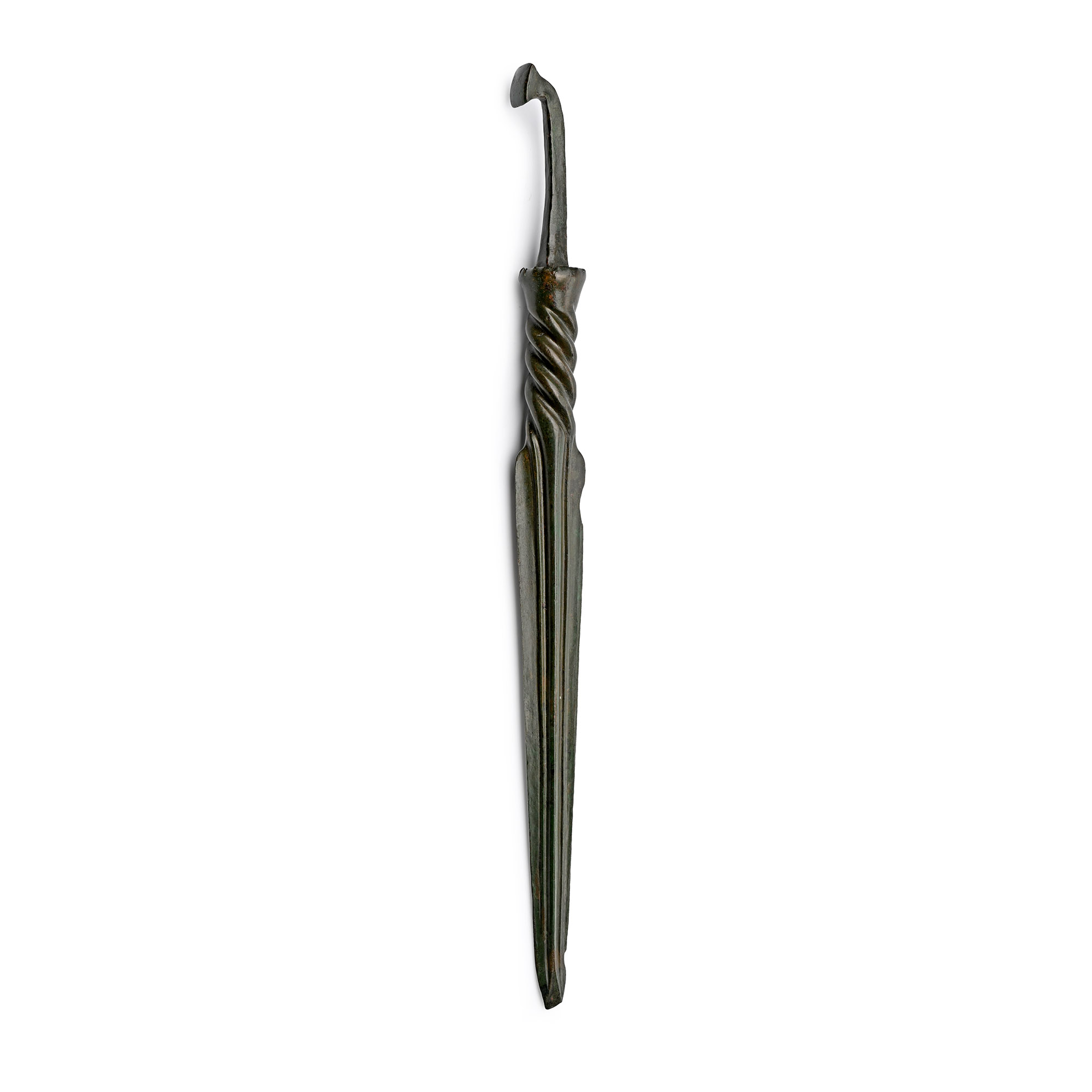
Luristan Bronze Spearhead with 'Twisted' Socket
2ND-1ST MILLENNIUM B.C.
13 in. (282 grams, 33 cm).
With narrow blade and strong stepped central rib, curved shoulders, the round-section shaft with barleytwist detailing, rectangular tang with bent tip and button finial.
ProvenanceAcquired in the 1990s.
Ex Abelita family collection.
This lot is accompanied by an illustrated lot declaration signed by the Head of the Antiquities Department, Dr Raffaele D'Amato.
TimeLine Auctions follows a vetting process to ensure the authenticity and legality of all items, reinforcing our commitment to integrity and responsible trading. Each antiquity, antique, and coin lot undergoes thorough examination by a vetting committee of at least ten external specialists, professional trade association members, scientists, and archaeologists: Our Vetting Process
AUCTIONS:
TimeLine is a leading auction house specialising in antiquities, ancient art, collectables, natural history, coins, medals, and books. Our auctions offer museums, collectors, historians, and enthusiasts the opportunity to acquire unique and historically significant pieces.
-
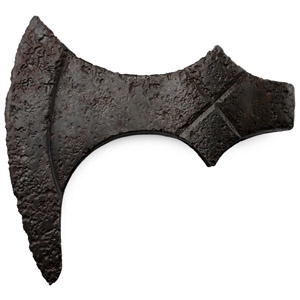
Viking Age Iron Hooked Axehead
Circa 9th-11th century A.D.Sold for (Inc. bp): £598
With long, deeply curved blade, narrow neck, socket with triangular flanges and incised crossed lines, rectangular extension to the rear. 378 grams, 13.5 cm
Ex North American private collection, 1970s. This lot is accompanied by an illustrated lot declaration signed by the Head of the Antiquities Department, Dr Raffaele D'Amato. -
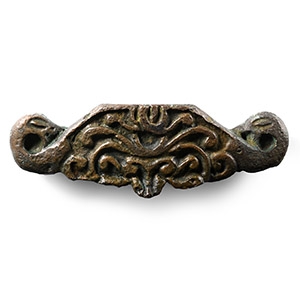
Viking Age Bronze Lower Sword Guard with Dragons
11th-13th century A.D.Estimate: £1,200 - 1,700 (+bp*)
Opening Bid: £400
Sloping shoulders and transverse slot to the upper face, lateral beast-head terminals; panel of palmette ornament to each broad face with tendrils, dentilled lower edge; Baltic Curonian type. 124 grams, 10 cm
From the private family collection of a lady, UK; acquired in Germany mid 20th century. Accompanied by an academic report by Dr Raffaele D'Amato. This lot has been checked against the Interpol Database of stolen works of art and is accompanied by a search certificate number no.12727-236128. This lot is accompanied by an illustrated lot declaration signed by the Head of the Antiquities Department, Dr Raffaele D'Amato.
The cross guard finds good parallels with Baltic swords used by Prussian, Curonian, Estonian and Lithuanian pagan warriors; see a clear parallel in Tomsons, 2012, fig.2,7 but especially fig. 3. The Curonian Type T swords were thoroughly examined by Tomsons and he was able to date the type to the 11th to 13th centuries. -
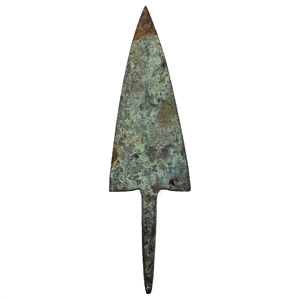
Large Luristan Bronze Arrowhead
2nd-1st millennium B.C.Sold for (Inc. bp): £85
Large triangular point with slightly raised midrib, long flat tang. 28.9 grams, 13.4 cm
Acquired on the UK art market before 2000. Property of an Essex, UK, gentleman. This lot is accompanied by an illustrated lot declaration signed by the Head of the Antiquities Department, Dr Raffaele D'Amato.
