
Loading, please wait...
LOT 1424
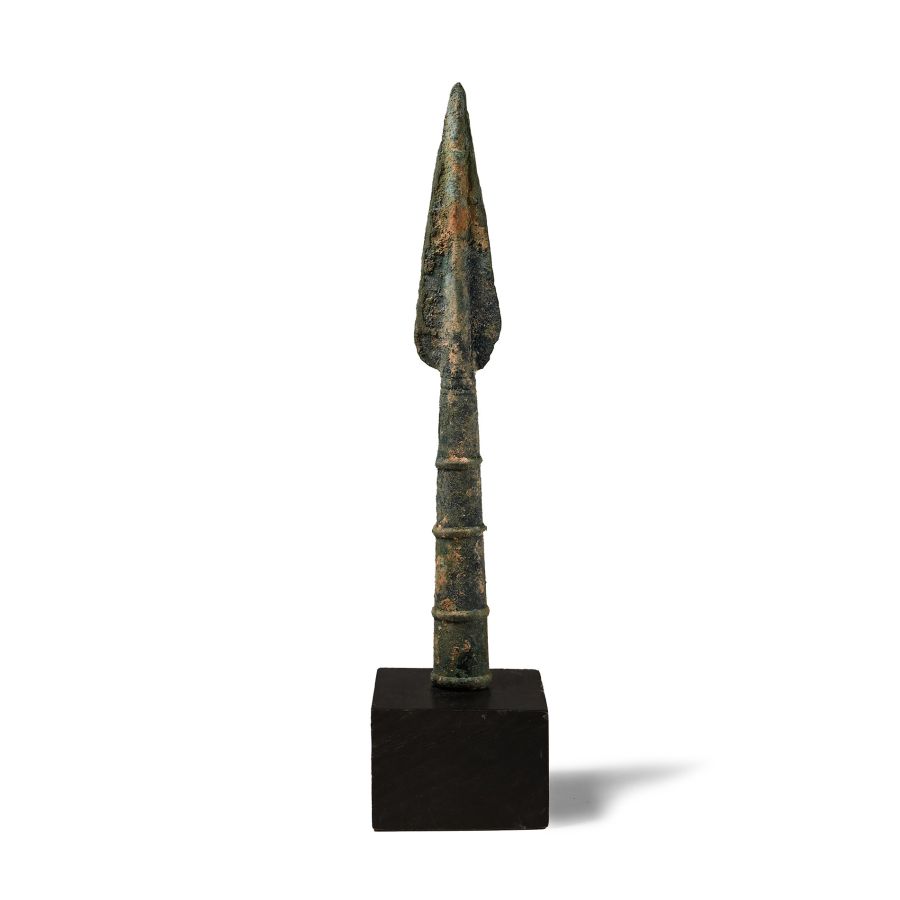
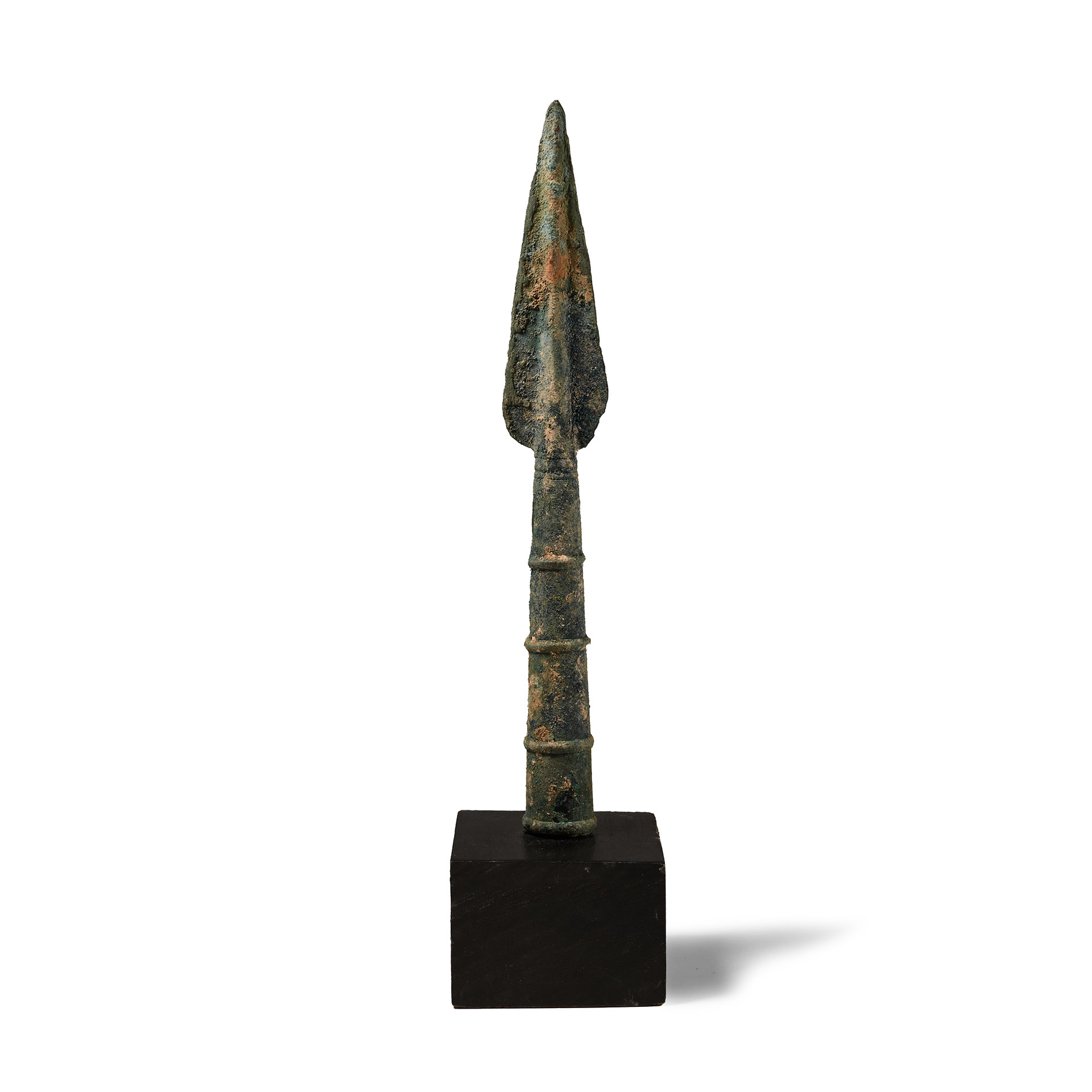
Luristan Bronze Spearhead with Circumferential Rings
9TH-6TH CENTURY B.C.
10 1/4 in. (199 grams total, 26.2 cm including stand).
With broad leaf-shaped blade and tapering tubular socket, four graduated horizontal rings securing the split socket. [No Reserve]
ProvenanceEx property of a North London, UK, gentleman, 1990s.
LiteratureCf. Overlaet, B., ‘Luristan metalwork in the Iron Age’ in Stöllner, T., Slotta, R. & Vatandoust, A. (eds.), Persiens Antike Pracht. Bergbau - Handwerk – Archäologie, Bochum, 2004, pp. 328-338, fig.7, p.335; Khorasani M.M., Arms and Armour from Iran. The Bronze Age to the End of the Qajar Period, Tübingen, 2006, pp.242-243.
FootnotesThe spear belongs to the type VIII classified by Khorasani (spearheads with well-projecting midribs and long folded sockets) and more specifically to subtype C (with leaf-shaped blade and short hollow socket). Usually the willow-leaf blade has an almost straight shoulder base and a wide, flat midrib tapering towards the point.
CONDITIONTimeLine Auctions follows a vetting process to ensure the authenticity and legality of all items, reinforcing our commitment to integrity and responsible trading. Each antiquity, antique, and coin lot undergoes thorough examination by a vetting committee of at least ten external specialists, professional trade association members, scientists, and archaeologists: Our Vetting Process
AUCTIONS:
TimeLine is a leading auction house specialising in antiquities, ancient art, collectables, natural history, coins, medals, and books. Our auctions offer museums, collectors, historians, and enthusiasts the opportunity to acquire unique and historically significant pieces.
-
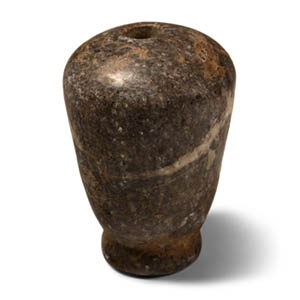
Western Asiatic White Veined Grey Stone Mace Head
3rd-2nd millennium B.C.Sold for (Inc. bp): £117
Barrel-shaped in profile with vertical socket expanding towards the base, rounded neck. 356 grams, 83 mm
Ex London gentleman's collection, 1990s. -
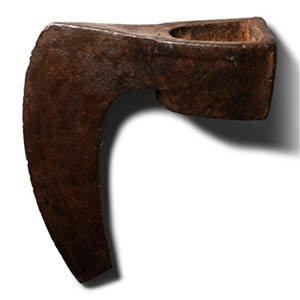
Medieval Iron Bearded Axehead
Circa 14th-16th century A.D. or laterSold for (Inc. bp): £46
With broad curved blade and square chin, narrow neck, deep socket with square-section hammer to the reverse. 899 grams, 15.7 cm
Ex North American collection, 1970s-1990s. -
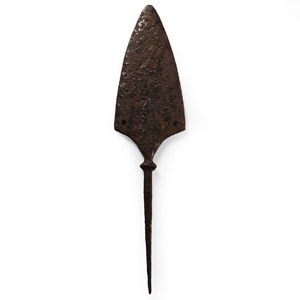
Medieval Pierced Incendiary Fire Arrowhead
Circa 12th-14th century A.D.Sold for (Inc. bp): £59
With heater-shaped profile and holes to the trailing edge, baluster to the neck, square-section tang. 100 grams, 21.5 cm
Private Buckingham, UK, collection, formed before 2000.
