
Loading, please wait...
LOT 0312
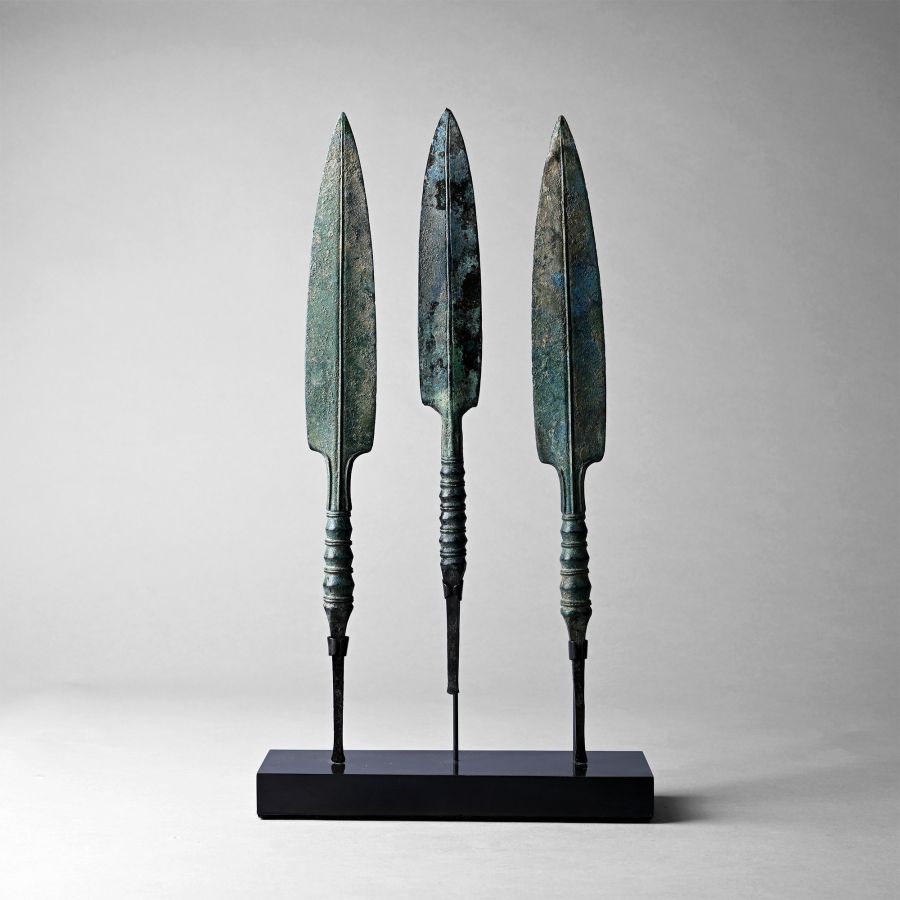
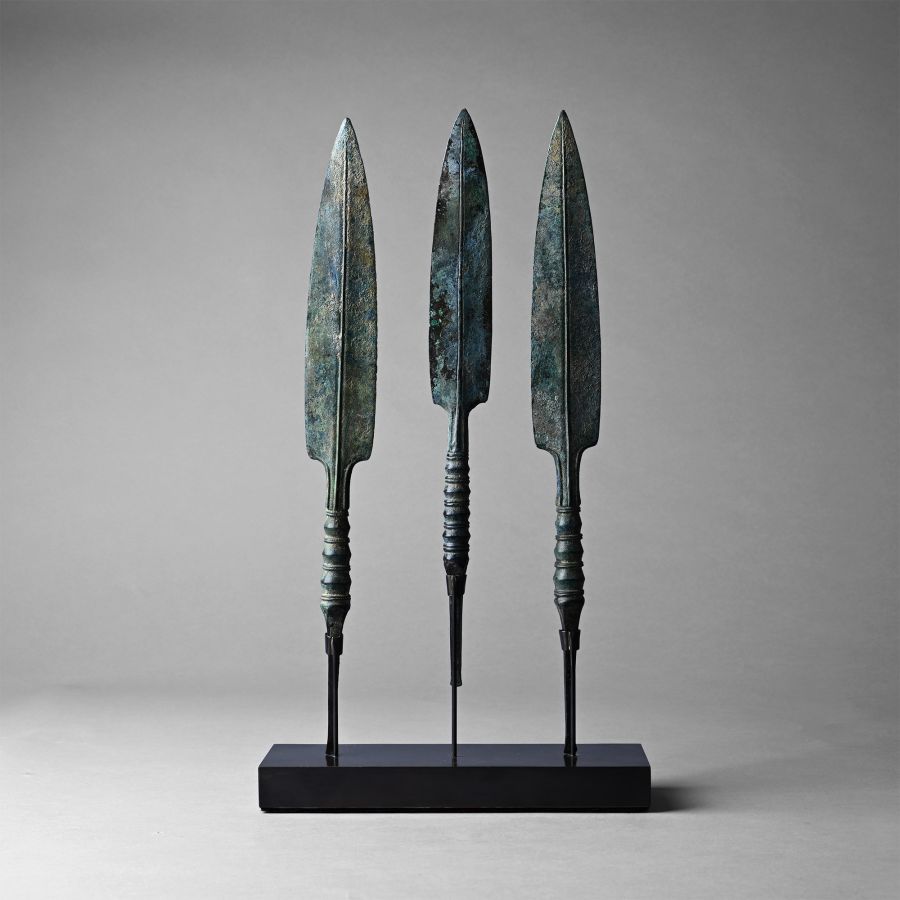
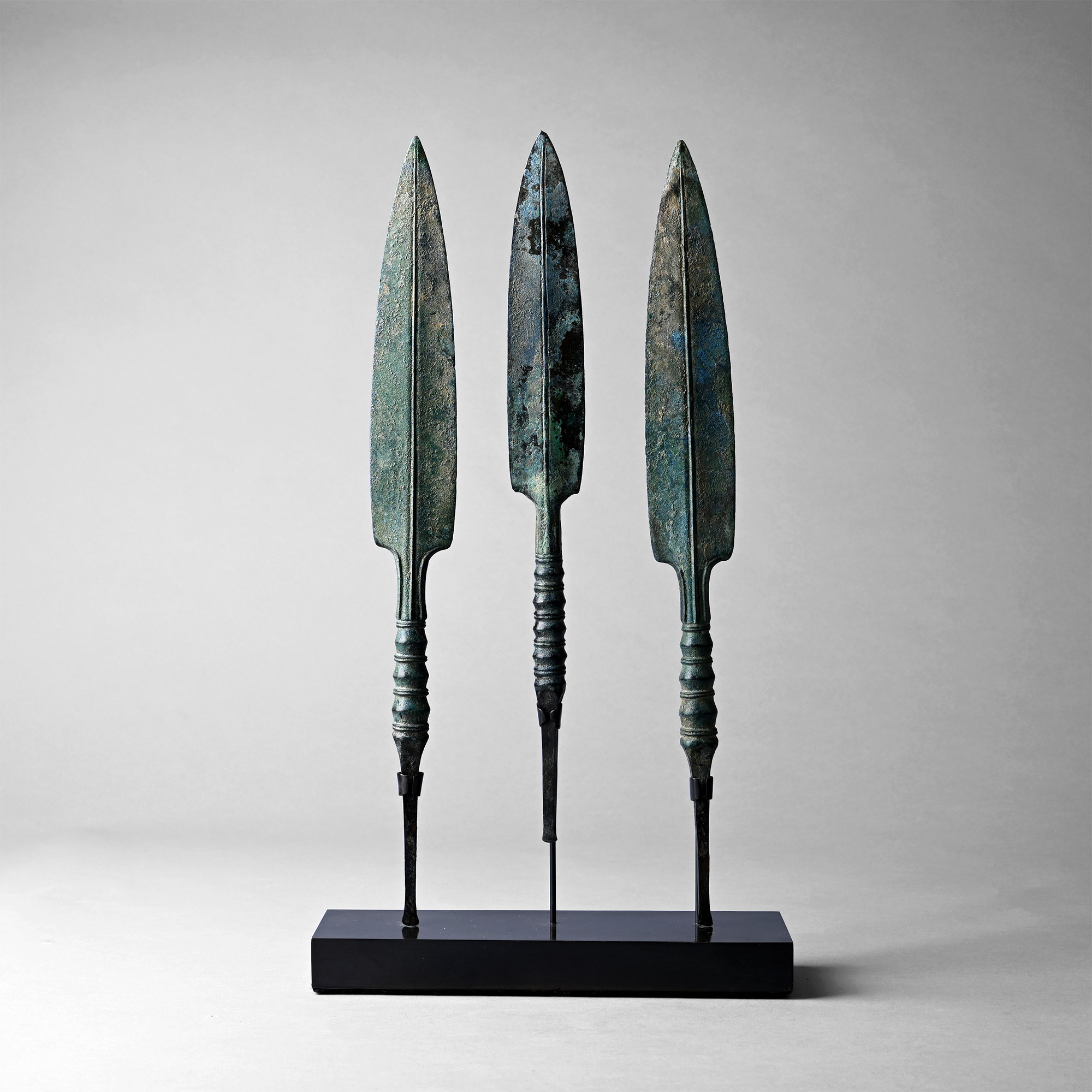
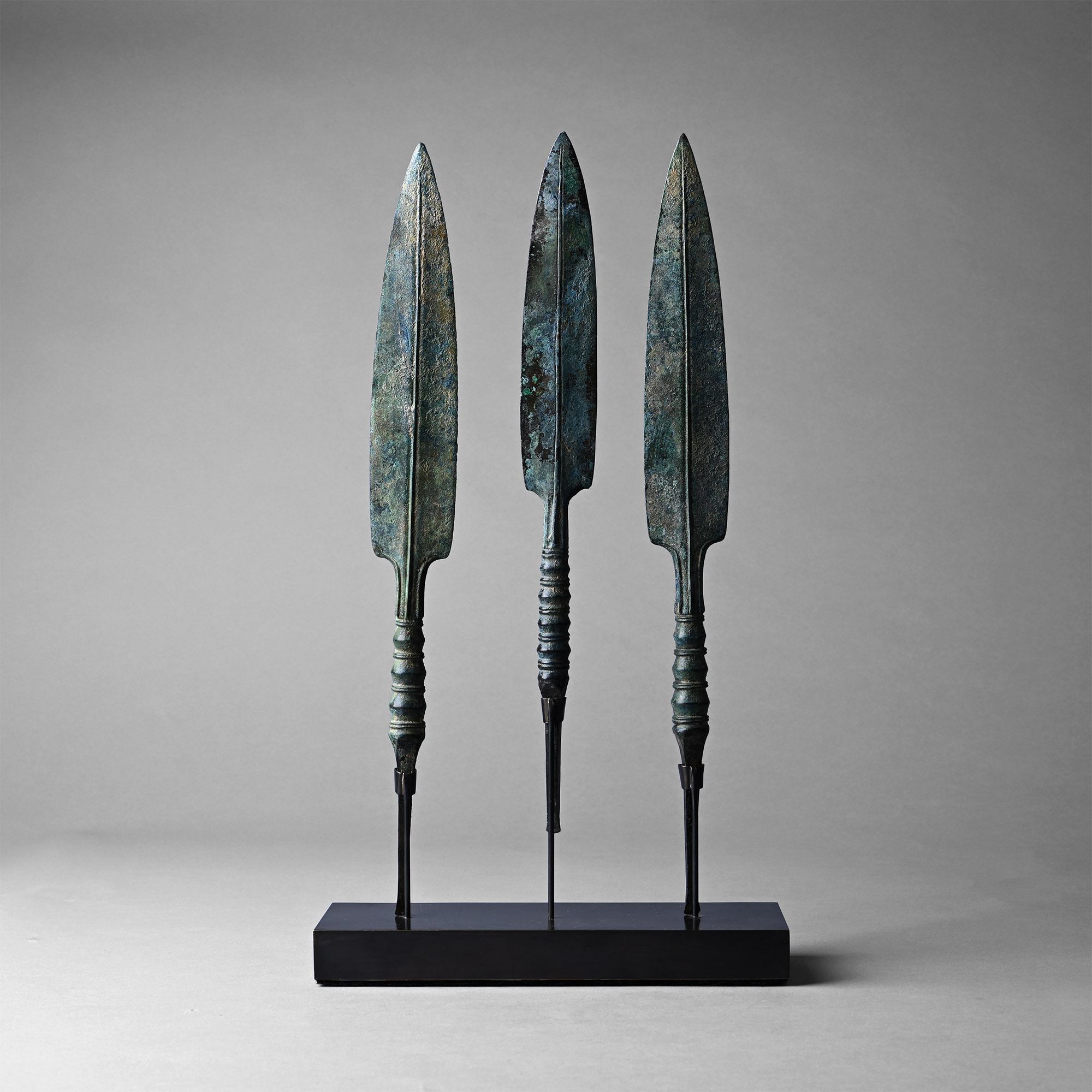
Luristan Bronze Spearhead Collection
CIRCA 1000-700 B.C.
13 5/8 - 15 1/4 in. (1.65 kg total, blades: 34.5-38.6 cm).
Group of three tanged spearheads, each with a slender leaf-shaped two-edged blade and midrib, tiered ribbing to the neck, square-section tang with chisel tip; mounted on a custom-made stand. [3]
ProvenanceEx London, UK, gallery, 1971-early 2000s.
London, UK, collection.
This lot has been checked against the Interpol Database of stolen works of art and is accompanied by search certificate number no.13245-252972.
Cf. Gorelik, M., Weapons of Ancient East, IV millennium BC-IV century BC, Saint Petersburg (2003) in Russian, pl. XXXV, no.21, for the type.
FootnotesSpearheads of this kind were realised by mould casting. They were of different lengths and used by Luristan, Hamadan, early Median and Achaemenid warriors.
CONDITIONTimeLine Auctions follows a vetting process to ensure the authenticity and legality of all items, reinforcing our commitment to integrity and responsible trading. Each antiquity, antique, and coin lot undergoes thorough examination by a vetting committee of at least ten external specialists, professional trade association members, scientists, and archaeologists: Our Vetting Process
AUCTIONS:
TimeLine is a leading auction house specialising in antiquities, ancient art, collectables, natural history, coins, medals, and books. Our auctions offer museums, collectors, historians, and enthusiasts the opportunity to acquire unique and historically significant pieces.
-
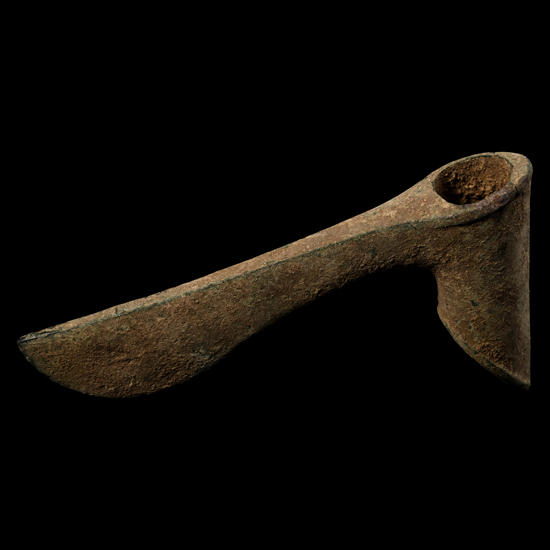
Luristan Bronze Socketted Axehead
2nd millennium B.C.Sold for (Inc. bp): £117
With a long D-shaped blade with a scooped profile and a tubular socket offset at the base. 313 grams, 16 cm
Ex Abelita family collection, 1980s-2000s.
Many examples of bronze axeheads are attributed to the Luristan culture and various shapes have been discussed by different scholars. Moorey (1971, pp.39-41) shows similar axeheads, stating that the texts executed on some specimens have shown them made of arsenical bronze, and attributes them to the late 3rd millennium B.C. or 2nd millennium B.C., period in which this alloy was used abundantly. -
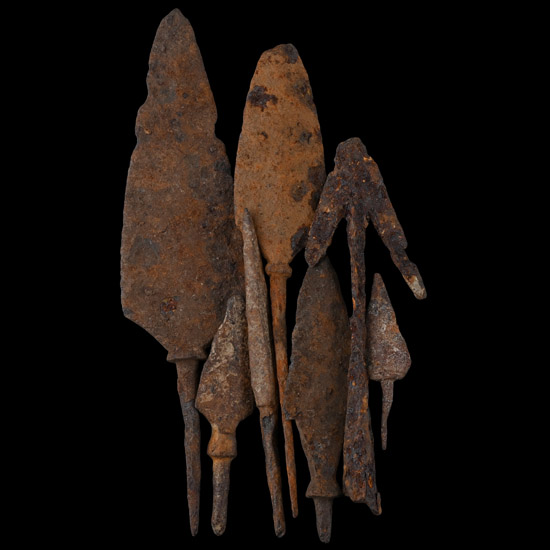
Roman to Medieval Iron Arrowhead Collection
3rd-14th century A.D.Sold for (Inc. bp): £117
Comprising seven tanged arrowheads, one a swallowtail type. 86 grams total, 5.7-13 cm
Ex German art market, 2000s. Acquired from an EU collector living in London. From the collection of a Surrey, UK, gentleman. -
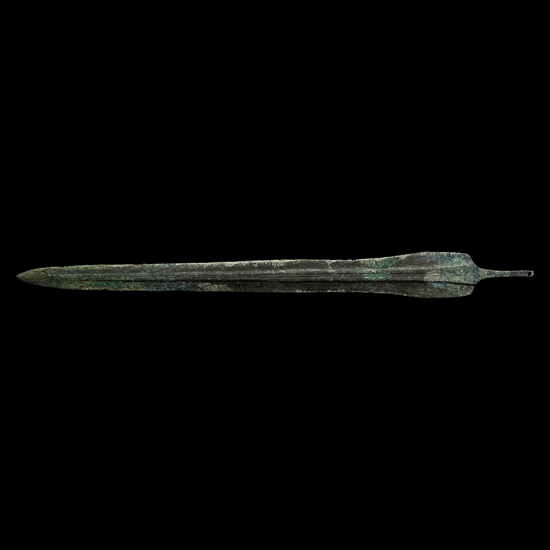
Luristan Bronze Tanged Dirk
Early 1st millennium B.C.Sold for (Inc. bp): £208
Comprising a slender blade with a raised midrib with grooves, a short rectangular-section tang pierced at the end. 200 grams, 41.5 cm
Ex Abelita family collection, 1980s-2000s.
The Luri people produced a quantity of fine metalwork, which, according to Dr Khorasani, could be due to a settled period arising as a result of the defeat of the Elamites by the Babylonians, leaving the Luristani people in relative peace for a period of time after 1200 BC. According to Khorasani, 'A culture of innovation and experimentation flourished, and the repertoire of the Luristan smiths expanded in the period between 1150-1050 B.C.'
