
Loading, please wait...
LOT 1280
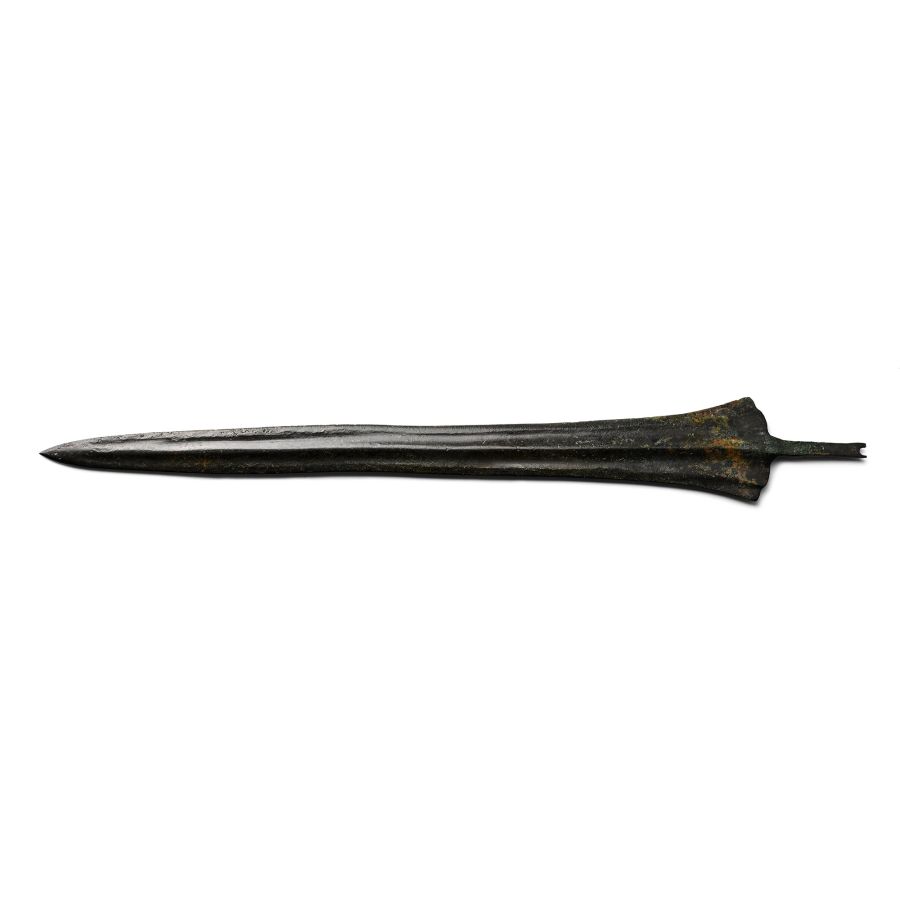
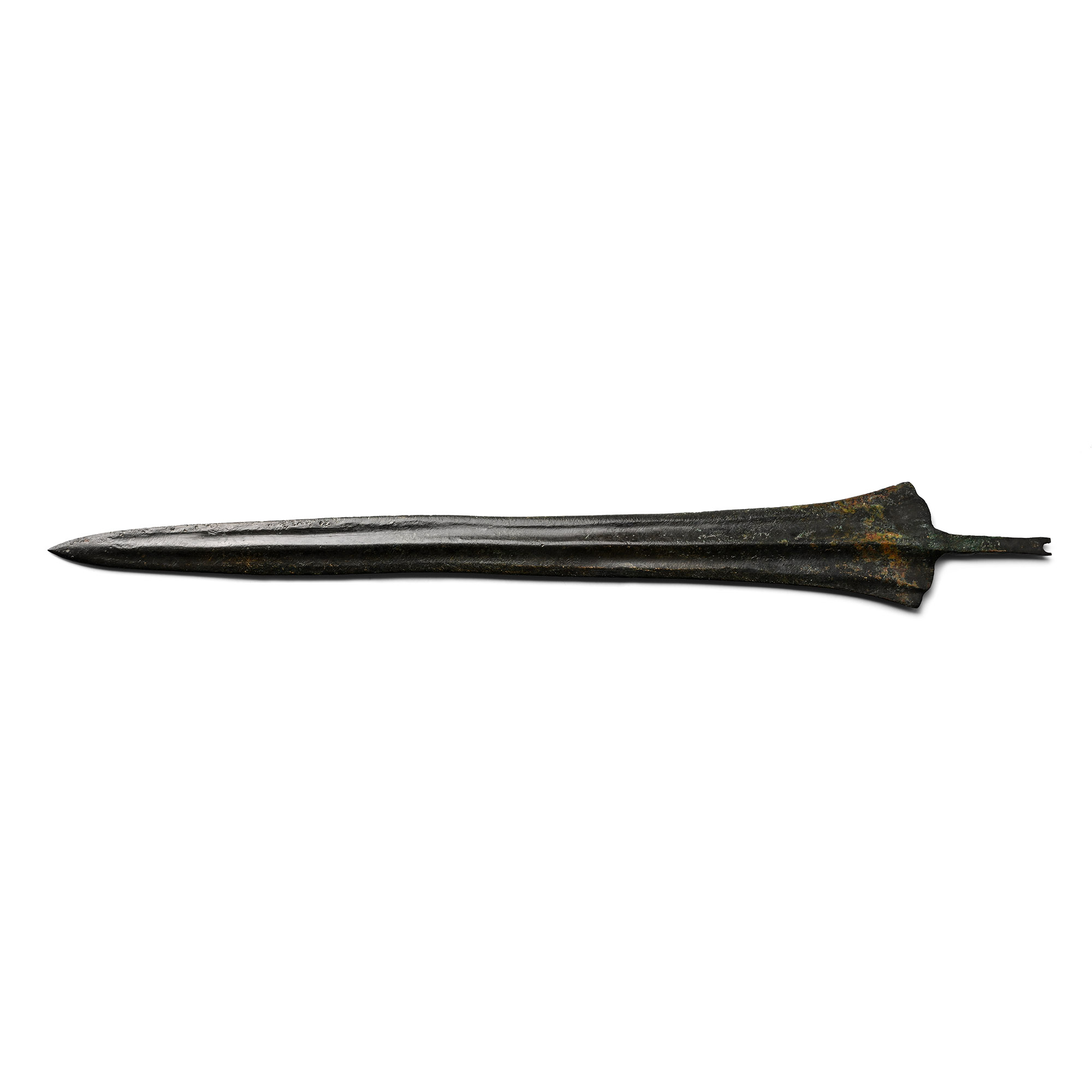
Luristan Bronze Spearhead Blade
14TH-10TH CENTURY B.C.
15 3/4 in. (245 grams, 40 cm).
With rounded shoulders and square-sectioned mid-rib running to the blade tip; short tang with fastening hole.
ProvenanceEx Abelita family collection, 1980s-2000s.
LiteratureCf. Khorasani, M.M., Arms and Armor from Iran: The Bronze Age to the End of the Qajar Period, Tübingen, 2006, p.628, no.275, for type.
FootnotesThe spearhead belongs to the type VI spearhead of the Khorasani classification. It is characterised by a long blade and short tang, slightly rounded shoulders and pronounced midrib. Similar weapons were excavated by Prof. Negahban in the royal cemetery of Marlik.
CONDITIONTimeLine Auctions follows a vetting process to ensure the authenticity and legality of all items, reinforcing our commitment to integrity and responsible trading. Each antiquity, antique, and coin lot undergoes thorough examination by a vetting committee of at least ten external specialists, professional trade association members, scientists, and archaeologists: Our Vetting Process
AUCTIONS:
TimeLine is a leading auction house specialising in antiquities, ancient art, collectables, natural history, coins, medals, and books. Our auctions offer museums, collectors, historians, and enthusiasts the opportunity to acquire unique and historically significant pieces.
-
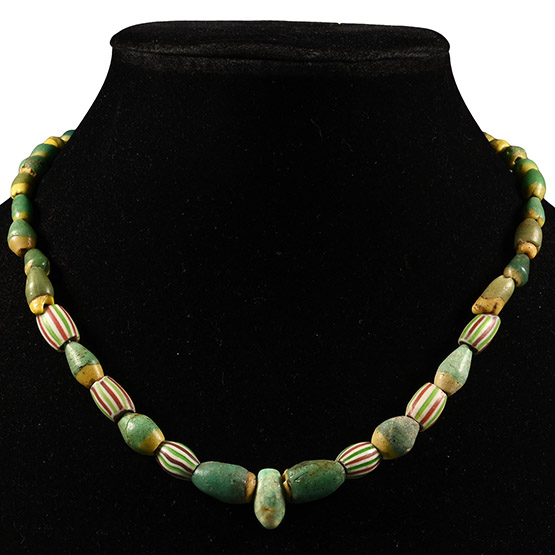
Western Asiatic and Other Green Glass Bead Necklace
20th century A.D.Estimate: £280 - 380 (+bp*)
Opening Bid: £140
A restrung designer necklace including Roman green and yellow 'date heads', Venetian striped 'watermelon' cheveron beads. 36.3 grams, 43 cm
From the collection of a gentleman, acquired on the London art market in the 1990s. -
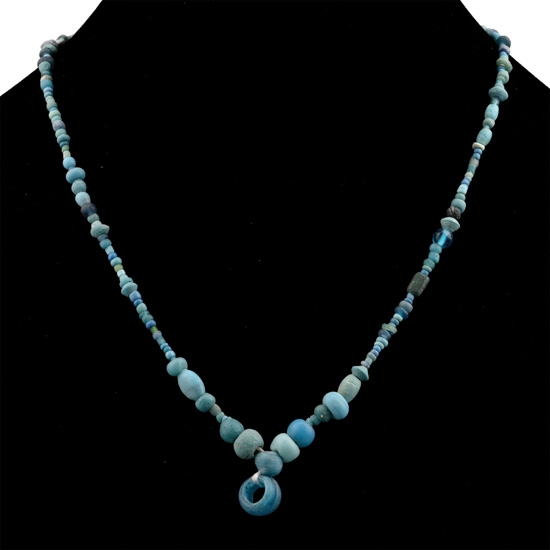
Western Asiatic Mixed Blue Bead Necklace String
1st millennium B.C. and laterSold for (Inc. bp): £52
Composed of annular, oblate and other beads, the central feature composed of a larger oblate and an annular bead; restrung. 12.38 grams, 45 cm
From London, UK, gallery collection, 1990s. -
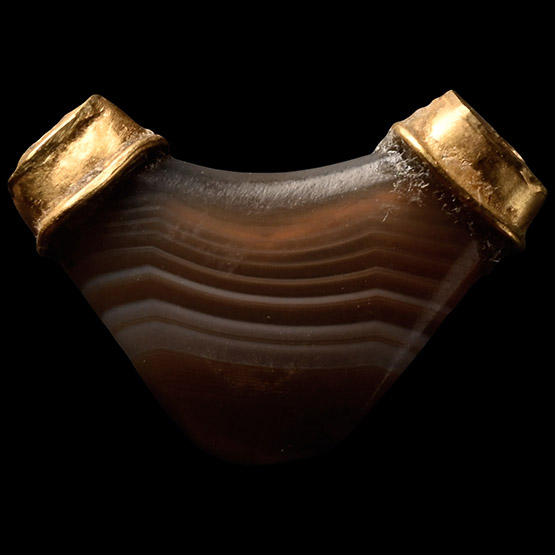
Achaemenid Banded Agate Elbow Bead
6th-4th century B.C.Estimate: £300 - 400 (+bp*)
Opening Bid: £150
With an ellipsoid cap to each finial. 1.26 grams, 19 mm
From the collection of a late Japanese gentleman, 1970s onwards.
