
Loading, please wait...
LOT 1119
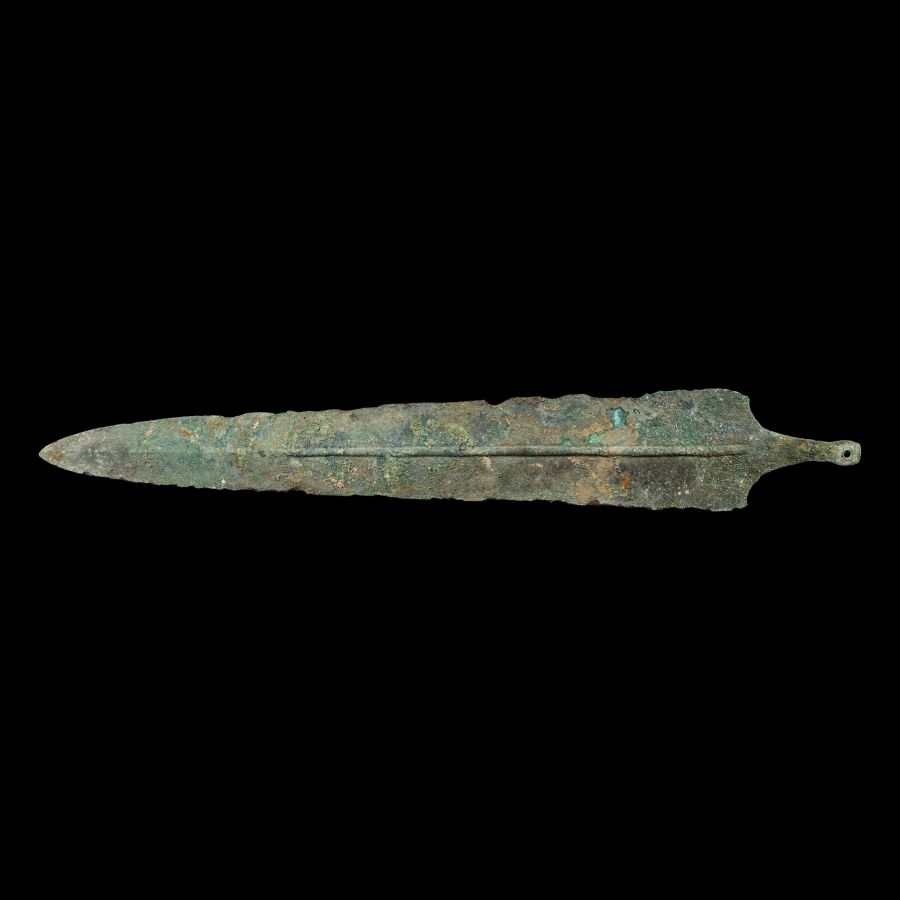
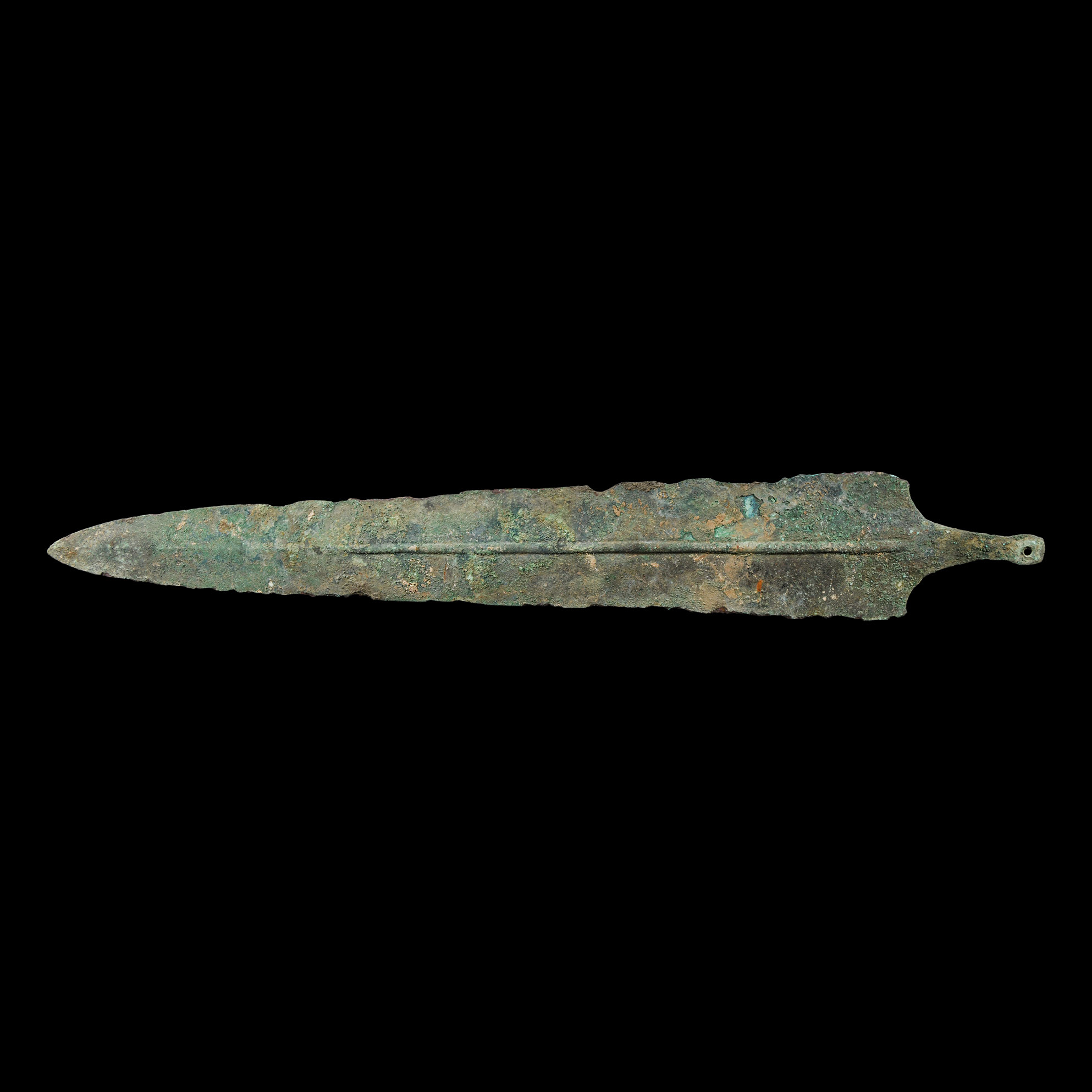
Luristan Bronze Spearhead Blade
2ND-1ST MILLENNIUM B.C.
13 in. (254 grams, 33 cm).
With a short tang and long blade, raised midrib, a rivet to the base.
ProvenanceAcquired 1980-2015.
Ex Abelita family collection.
See Negahban, E., Weapons from Marlik, Berlin, 1995, plate IX, no.117; Khorasani M.M., Arms and Armour from Iran. The Bronze Age to the End of the Qajar Period, Tübingen, 2006, item 283, for type.
FootnotesThe spearhead belongs to type 2 according to the classification of Khorasani. A similar specimen was excavated by Negahban in Marlik.
CONDITIONTimeLine Auctions follows a vetting process to ensure the authenticity and legality of all items, reinforcing our commitment to integrity and responsible trading. Each antiquity, antique, and coin lot undergoes thorough examination by a vetting committee of at least ten external specialists, professional trade association members, scientists, and archaeologists: Our Vetting Process
AUCTIONS:
TimeLine is a leading auction house specialising in antiquities, ancient art, collectables, natural history, coins, medals, and books. Our auctions offer museums, collectors, historians, and enthusiasts the opportunity to acquire unique and historically significant pieces.
-
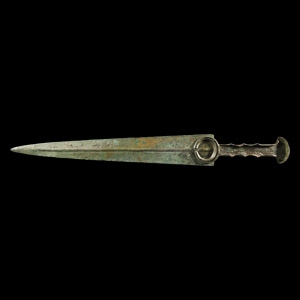
Luristan Bronze Short Sword
Circa 1000 B.C.Estimate: £400 - 600 (+bp*)
Opening Bid: £210
The blade with a tapering profile, triangular in overall form, with square shoulders, penannular guard with strong midrib, flanged hilt with crenellated grip, widening slightly into a fan-shaped pommel; tip repaired. 383 grams, 44 cm long
Acquired 1980-2015. Ex Abelita family collection.
These types of short sword or dirks were usually cast in one piece, and the penannular rib in relief was cast on at the same time with the handle of the blade. In some cases, however, the penannular rib was later cast on the dagger, possibly to strengthen a weak point at the junction of hilt and blade. The flanged hilt was originally filled with organic material like bone. -
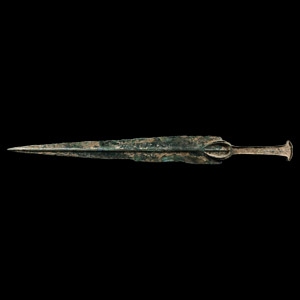
Marlik Bronze Sword
14th-10th century B.C.Sold for (Inc. bp): £416
With a slender triangular blade, raised midrib, penannular guard and scooped shoulders, columnar grip with two gusseted hoops, crescent pommel. 265 grams, 46 cm
Acquired 1980-2015. Ex Abelita family collection.
This short sword or dagger belongs to the category of blades with pennanular guard, with hilt and guard cast in one piece with the grip. Negahban excavated similar weapons from the Marlik cemeteries. Often this type combines grip and penannular guard with flanged hilts open to accept inlays. -
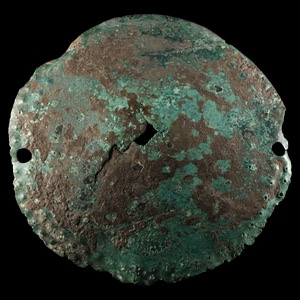
European Bronze Age Boss
2nd-1st millennium B.C.Sold for (Inc. bp): £104
Of repoussé form, slightly convex in profile with two concentric bands of pierced ornament and two attachment holes at edge. 36 grams, 95 mm
Ex English collection, pre-2000. The Kusmirek Collection, UK. Accompanied by a previous dealer's certificate of authenticity.
