
Loading, please wait...
LOT 1172
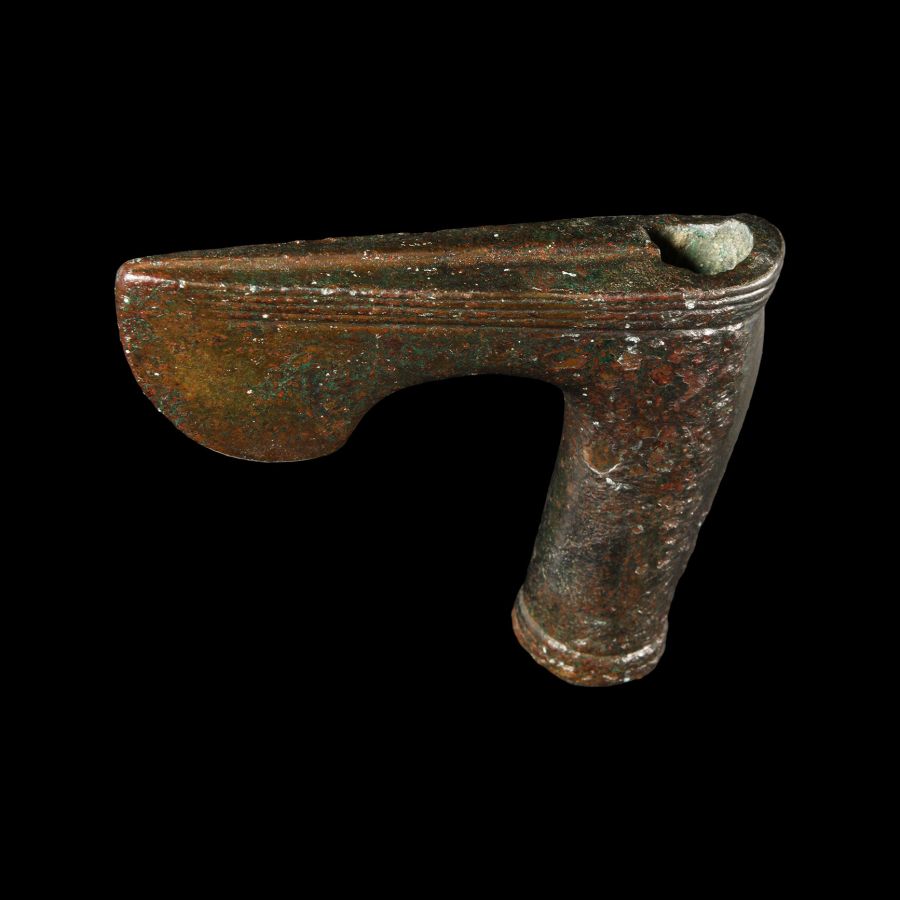
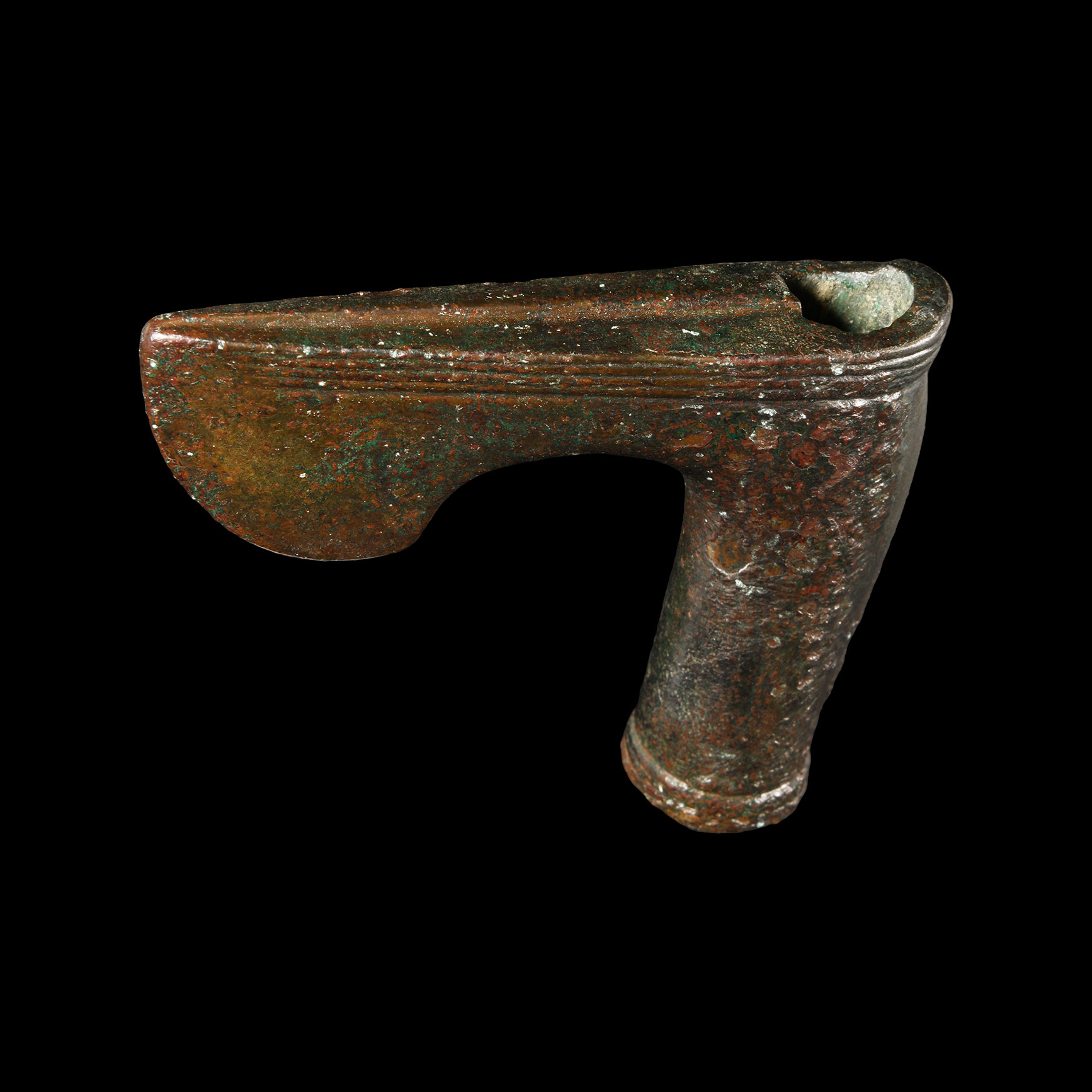
Luristan Bronze Socketted Axe
13TH-7TH CENTURY B.C.
4 in. (371 grams, 10.2 cm).
Composed of a cylindrical socket with channeled lip to upper edge and raised rib to top face, convex cutting edge and raised ridge to butt.
ProvenanceAcquired 1980-2015.
Ex Abelita family collection.
TimeLine Auctions follows a vetting process to ensure the authenticity and legality of all items, reinforcing our commitment to integrity and responsible trading. Each antiquity, antique, and coin lot undergoes thorough examination by a vetting committee of at least ten external specialists, professional trade association members, scientists, and archaeologists: Our Vetting Process
AUCTIONS:
TimeLine is a leading auction house specialising in antiquities, ancient art, collectables, natural history, coins, medals, and books. Our auctions offer museums, collectors, historians, and enthusiasts the opportunity to acquire unique and historically significant pieces.
LOT 1172
Luristan Bronze Socketted Axe
Estimate £180 - 240€210 - 280 (for guidance only)$240 - 320 (for guidance only)
-
Australian Aboriginal Wood Boomerang
19th century A.D. or earlierSold for (Inc. bp): £286
Formed with a gently curving profile and showing transverse grooves from the carving technique; bearing handwritten collector's inventory number 'RO518.01.00'. 182 grams, 53 cm
Private U.K. family collection formed in the early 1970s. The property of Mr and Mrs P.R. of East Sussex. Thence by descent to family members. -
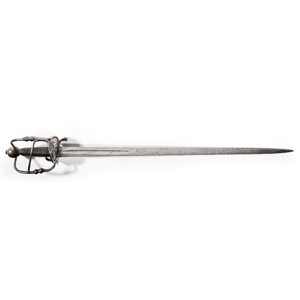
Dutch Thumb Ring Sword
Mid 16th century A.D.Sold for (Inc. bp): £1,430
The blade composed of a straight, double edge with single fuller and clear running wolf marks; signed 'S AH A GOM' in both fullers with 'shooting star' below and with punched crown mark just below the hilt; twisted wire grip, thumb ring, leaf-shaped guard to hilt, bulbous pommel. 826 grams, 84 cm
Acquired from West Street Antiques, Dorking, Surrey, UK, 2015. The Kusmirek Collection, UK. Accompanied by copy of a previous listing and item ticket. -
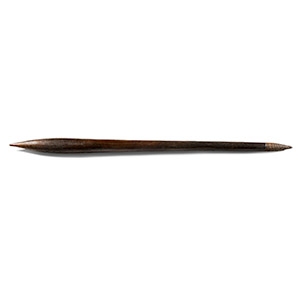
Australian Aboriginal Throwing Club
19th century A.D.Sold for (Inc. bp): £117
The round-section shaft with one tapered end and a pointed, bulbous head. 435 grams, 69 cm
Acquired UK market. Property of a Kent collector.
Used for hunting and in warfare. Possibly engraved using a possum tooth.
