Loading, please wait...
LOT 1860
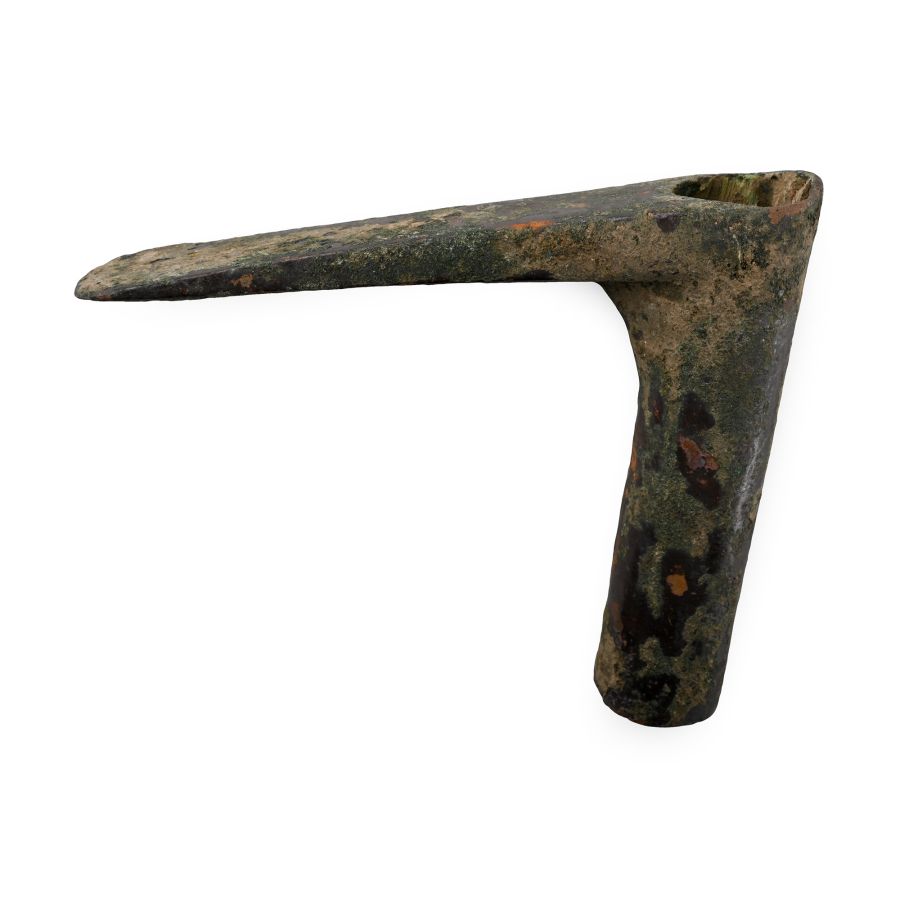
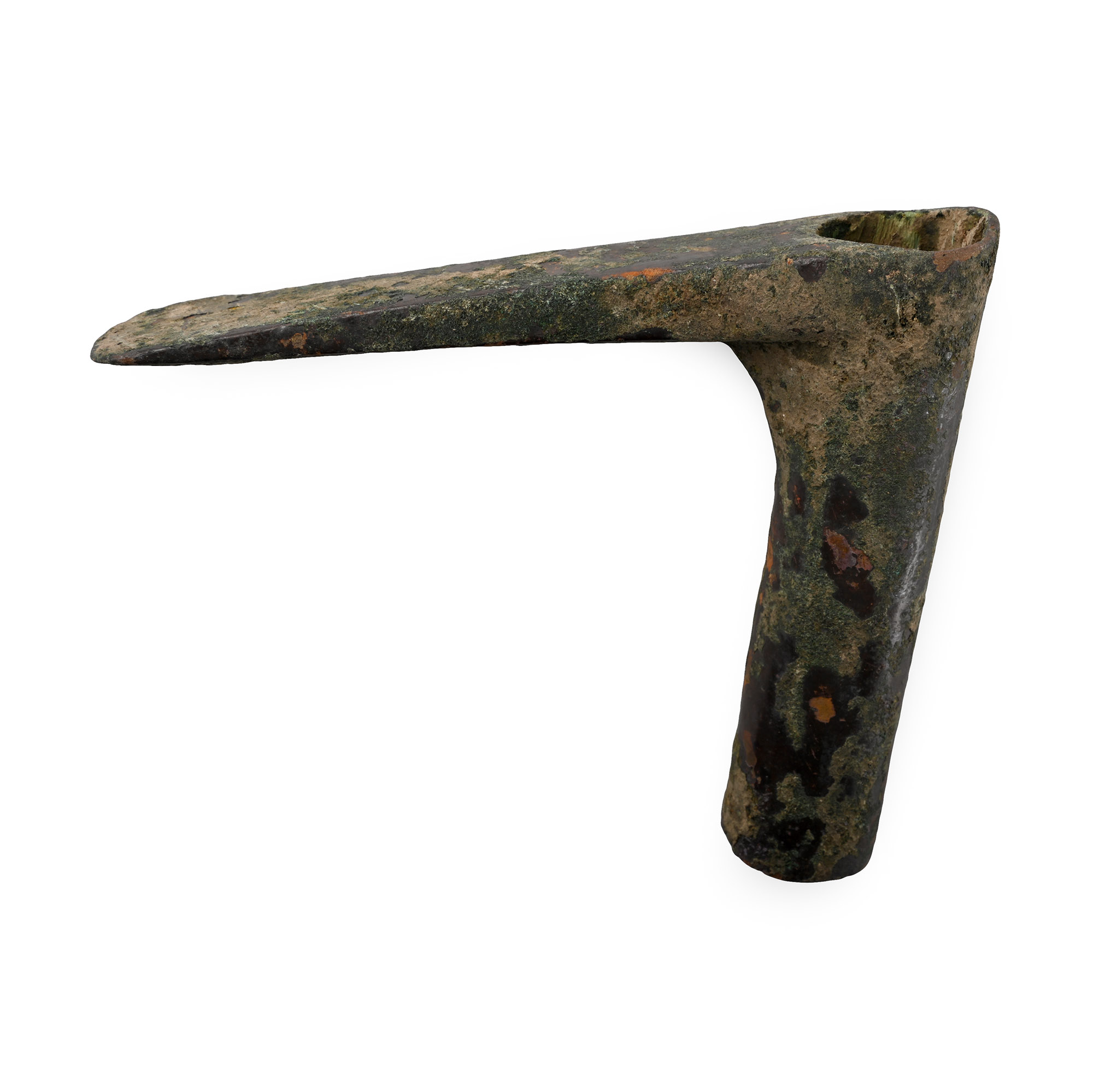
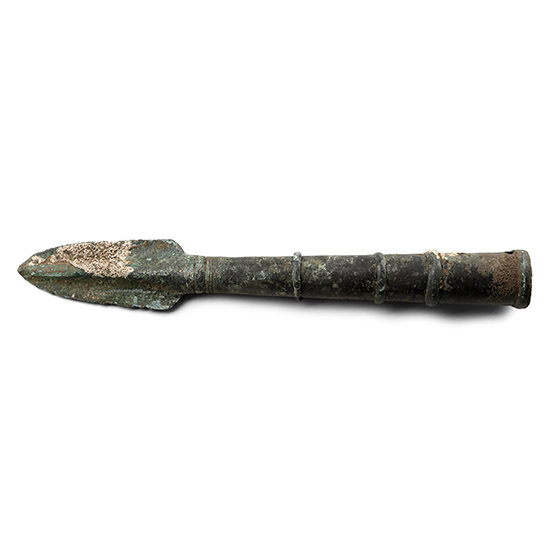
Luristan Bronze Socketted Adze
2ND-1ST MILLENNIUM B.C.
5 1/2 in. (355 grams, 14.2 cm).
Long tubular socket, rectangular-section tapering blade with convex cutting edge. [No Reserve]
ProvenanceEx Abelita family collection, 1980s-2000s.
CONDITIONTimeLine Auctions follows a vetting process to ensure the authenticity and legality of all items, reinforcing our commitment to integrity and responsible trading. Each antiquity, antique, and coin lot undergoes thorough examination by a vetting committee of at least ten external specialists, professional trade association members, scientists, and archaeologists: Our Vetting Process
AUCTIONS:
TimeLine is a leading auction house specialising in antiquities, ancient art, collectables, natural history, coins, medals, and books. Our auctions offer museums, collectors, historians, and enthusiasts the opportunity to acquire unique and historically significant pieces.
-
Japanese Edo Period Samurai Suit of Armour with Wooden Storage Boxes
Edo Period, 1603–1867 A.D. and laterSold for (Inc. bp): £13,000
Comprising: an iron and copper-alloy old style Gomai kabuto ridged helmet with suji-kabuto bowl, suji-tate raised ridges, terminating in a small four-stage tehen kanamono hole, fitted with a crossed plate; gilt-copper maedate (frontal ornament) with high raised datemono, antennae; mabizashi, (integral peak visor), lined with silk; fukigaeshi, (steel wings); the neck of the helmet is protected by a laminated shikoro (neck guard with solid plates), made of five steel plates (hachi tsuke- not-ita, ni-no-ita, san-no-ita, yon-no-ita), with red braid sugake-odoshi spaced lacing; the helmet with internal lining (ushibari); behind the nape of the bowl attached a kasa jirushi no kan ring for the red tuft; a fine mempō iron face mask, black lacquered on the outside, red on the inside, with high cheekbones engraved with deep wrinkles on either cheek, detachable nose with simple hooked nails odayori no kugi, flared nostrils and open mouth, moustache, to which is attached a laminated yodare-kake, (throat guard), made of four numbered iron gilded plates with red braid sugake-odoshi spaced lacing; a hybrid armour, composed of a okegawa-do type, constructed with large gilded iron solid horizontal plates joined by the lacing system known as sugake-odoshi in the upper part and kebiki-odoshi in the lower part; composing two valves (ni-mai) attached on the right side and over the shoulders by strings (aibiki no o), attached to it a kusazuri protection made from hardened leather plates hanging from the front and back of the dō to protect the lower body and upper leg; fastening lace agemaki-bow suspended from a ring on the back upper plate and on the sides of a central bronze dragon plaque; oda gote vambraces, arm protection with gilded lacquered splint iron plates (shino) connected with chain armour gusari fitted with tekkō gauntlets, the shino and tekkō decorated with gilded rosette motifs; mogani-sode, slightly curved shoulder guards, composed from six gilded raw-hide plates, fitted with red kake-o (suspending cords) and uke-o (securing cord), bordered by kesho-no-ita (strips of wood covered with leather) and a silk-lined kamuri-ita; Ita-haidate, thighguards, faced with fusa-gusari mail and connected with gilded rawhide splint armour, the upper part lined with silk; O-tateage no-suneate, with gilded iron splint armour (shino), fitted with small round armour plates (kikko) protecting the knees; in two metal-bound wooden transport cases. 29.95 kg total, 157 cm high (assembled)
Private collection, UK. Accompanied by a certificate issued by Chairman Hitoshi Nagata of the Japan Armour and Weapons Research Preservation Association, certificate no. Qing 1309. Accompanied by an academic report by Dr Raffaele D'Amato. This lot has been checked against the Interpol Database of stolen works of art and is accompanied by search certificate number no.13254-252260. -
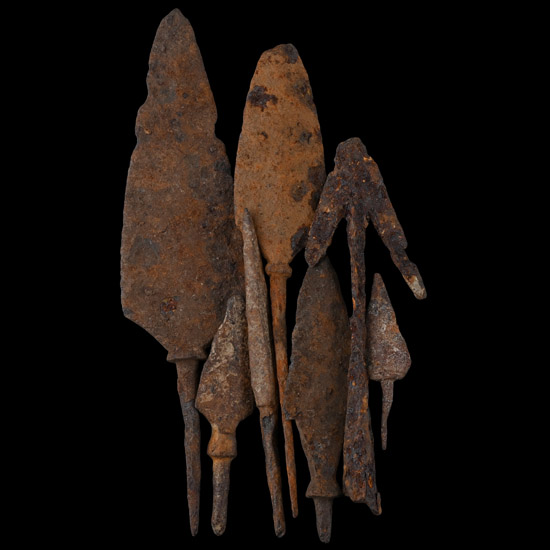
Western Asiatic Bronze Arrowhead Collection
1000-700 B.C.Sold for (Inc. bp): £286
Comprising fifteen tanged arrowheads, four with elongated triangular blades and raised midrib, two of squared type with flat tang, three with barbed shoulders and short cylindrical stem with handle for the shaft; two with squared shoulders and rectangular stem with handle for the shaft, one with leafed elongated blade, one with wide triangular head and long handle for the shaft, and other two long and spiked with raised midrib. 240 grams total, 7.1-16.5 cm
London, UK, collection, 1990s.
Some of the arrowheads belong to type V of the Khorasani classification: subtype D (triangular arrowheads with rounded or angular midrib) and subtype C, arrowheads with elongated, triangular shape with barbed shoulders and convex sides, and a raised midrib with a sharp central line. -
Luristan Bronze Socketted Axehead
2nd millennium B.C.Sold for (Inc. bp): £117
With a long D-shaped blade with a scooped profile and a tubular socket offset at the base. 313 grams, 16 cm
Ex Abelita family collection, 1980s-2000s.
Many examples of bronze axeheads are attributed to the Luristan culture and various shapes have been discussed by different scholars. Moorey (1971, pp.39-41) shows similar axeheads, stating that the texts executed on some specimens have shown them made of arsenical bronze, and attributes them to the late 3rd millennium B.C. or 2nd millennium B.C., period in which this alloy was used abundantly.