
Loading, please wait...
LOT 1768
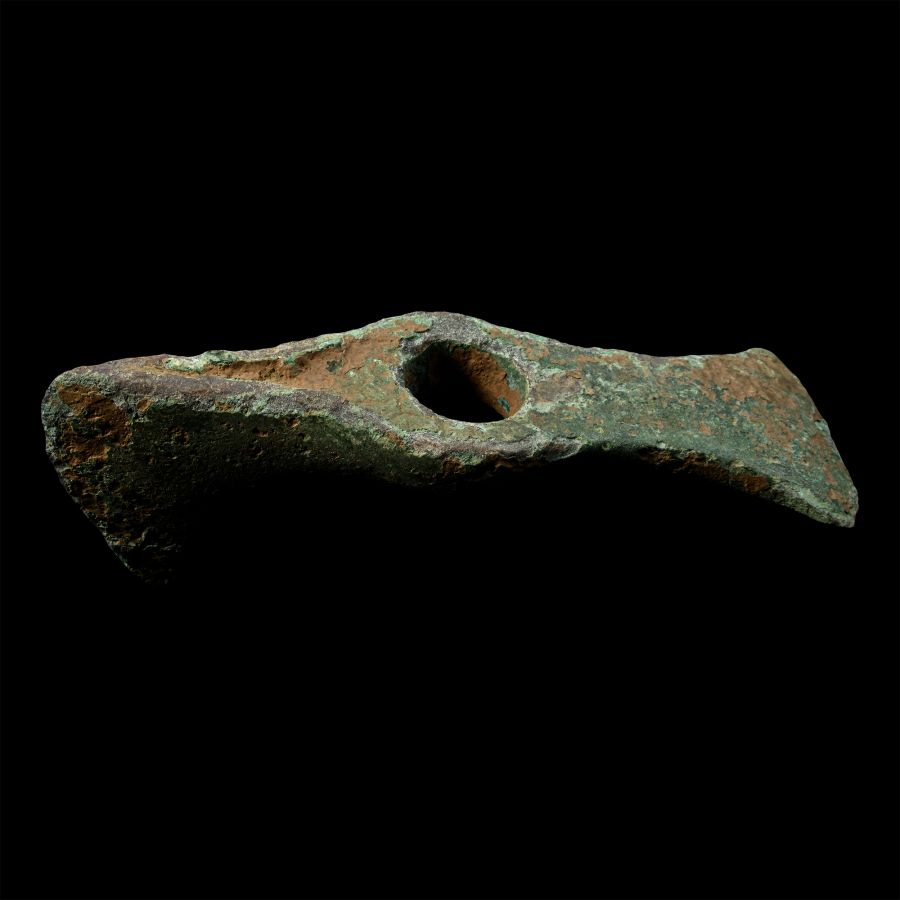
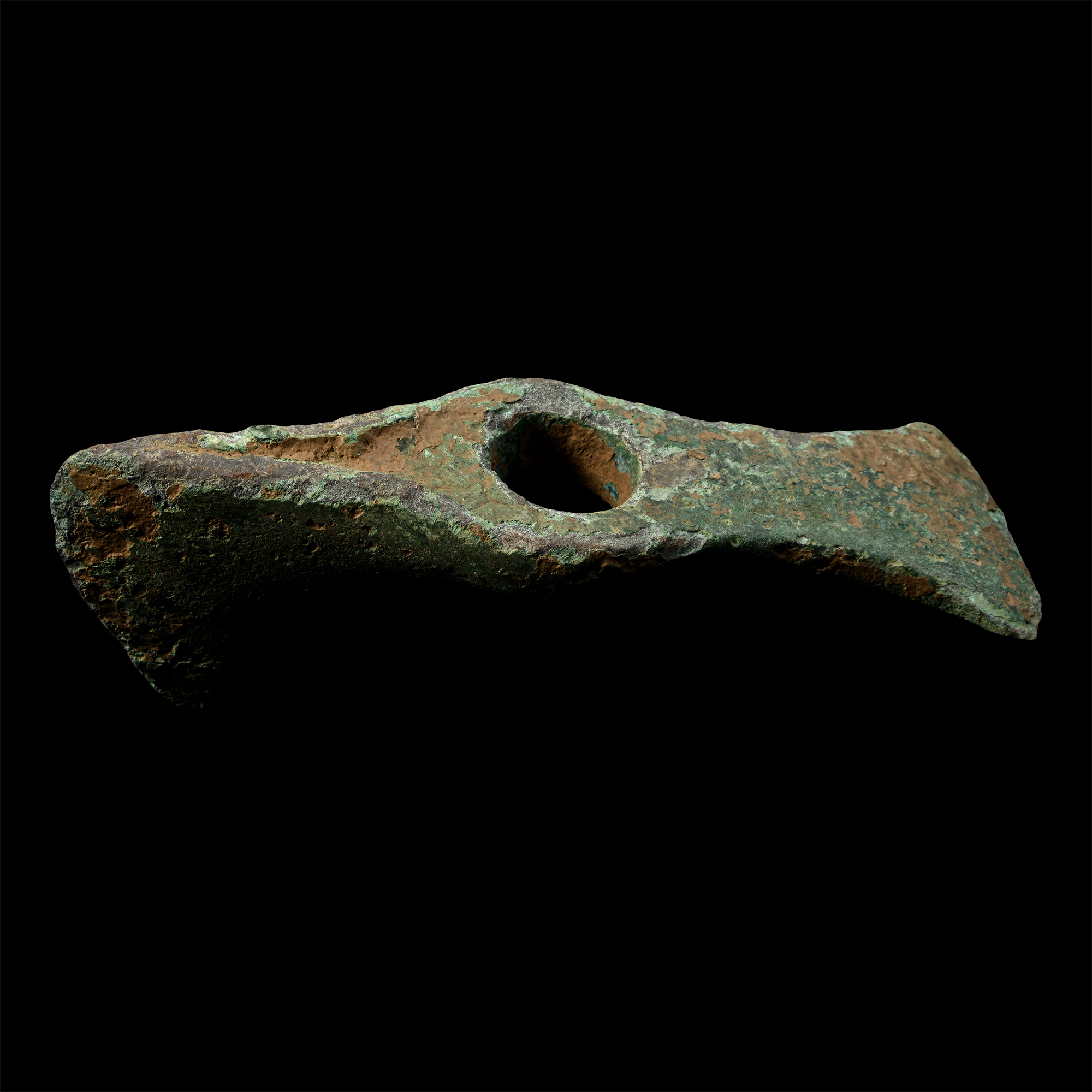
Luristan Bronze Socketted Adze-Axehead
2ND-1ST MILLENNIUM B.C.
7 1/2 in. (741 grams, 19 cm).
Comprising a triangular-section blade with a curved cutting edge and a rectangular-section blade with a gently curving cutting edge flanking a round socket.
ProvenanceEx Abelita family collection, 1980s-2000s.
LiteratureCf. Christie's, The Axel Guttmann Collection of Ancient Arms and Armour, part 2, London, 2004, item 34, p.32.
FootnotesThe adze-axe was a fundamental weapon of many Bronze Age cultures around the world. The form lends itself to dual purposes - for war and peace. As a tool, it was used for fabricating wood; as a weapon, its heavy mass and compact form make it a deadly striking and chopping weapon, even able to defeat light armour.
CONDITIONTimeLine Auctions follows a vetting process to ensure the authenticity and legality of all items, reinforcing our commitment to integrity and responsible trading. Each antiquity, antique, and coin lot undergoes thorough examination by a vetting committee of at least ten external specialists, professional trade association members, scientists, and archaeologists: Our Vetting Process
AUCTIONS:
TimeLine is a leading auction house specialising in antiquities, ancient art, collectables, natural history, coins, medals, and books. Our auctions offer museums, collectors, historians, and enthusiasts the opportunity to acquire unique and historically significant pieces.
-
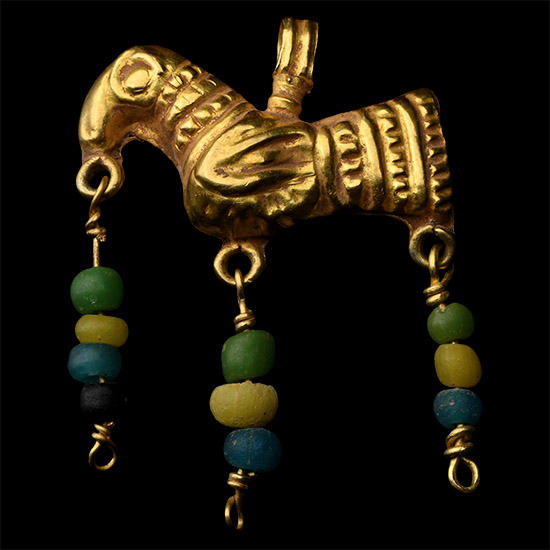
Western Asiatic Gold Bird Pendant with Droplets
12th-15th century A.D.Estimate: £500 - 700 (+bp*)
Opening Bid: £250
Hollow-formed sheet gold bird pendant with beaded dangles. 2.93 grams, 35 mm
Acquired before 1983. Ex London gallery, 1990s. Private collection, London, UK. -
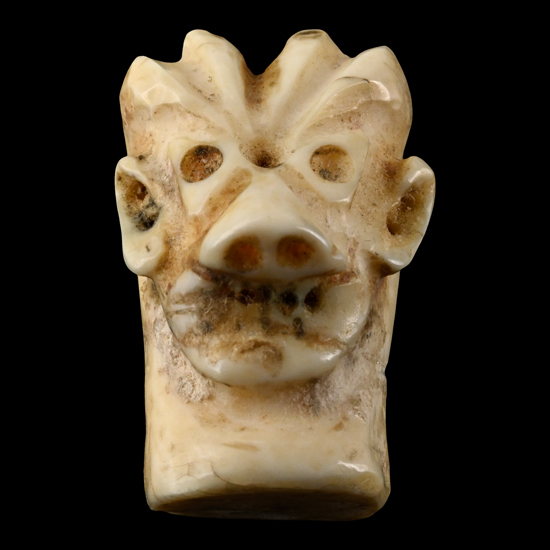
Western Asiatic Bone Pazuzu Amulet
1st millennium B.C.Sold for (Inc. bp): £312
Carved in the round grotesque head with angled snout, triangular eyes, ribbed upper head, frontally-placed ears; possibly Pazuzu. 5.10 grams, 25 mm
From the collection of a gentleman, acquired on the London art market in the 1990s. -
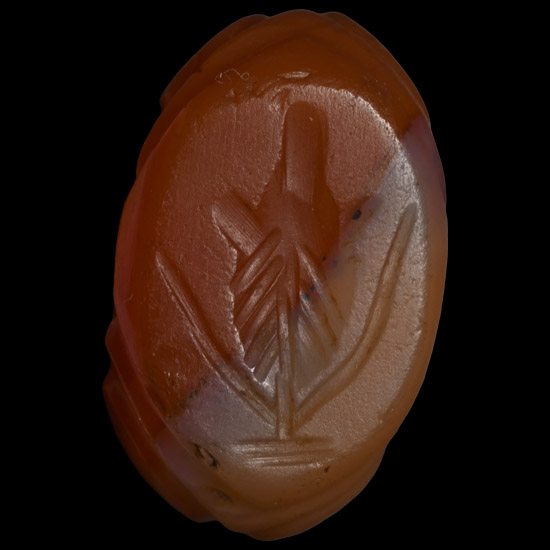
Sasanian Carnelian Stamp Seal with Flower
Circa 3rd-7th century A.D.Sold for (Inc. bp): £26
With segmented upper body, incuse floral design. 2.55 grams, 15.64 mm
From the private collection of a European gentleman (1942-2024), formed since the 1970s.
