
Loading, please wait...
LOT 1156
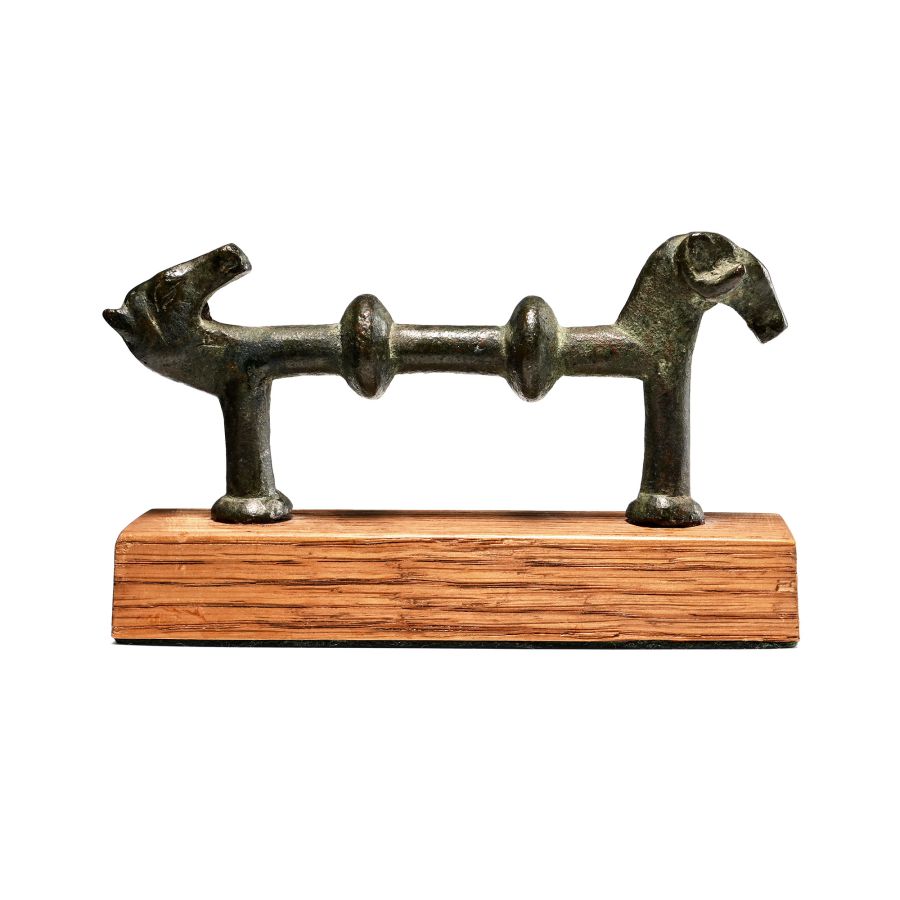
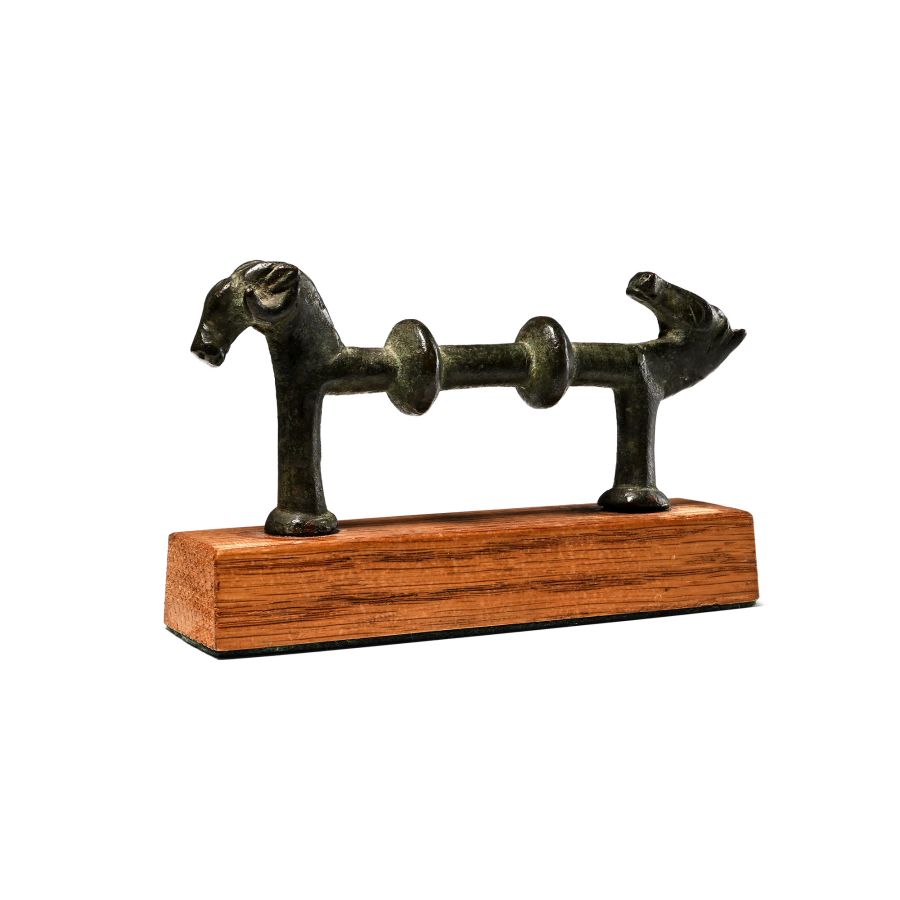
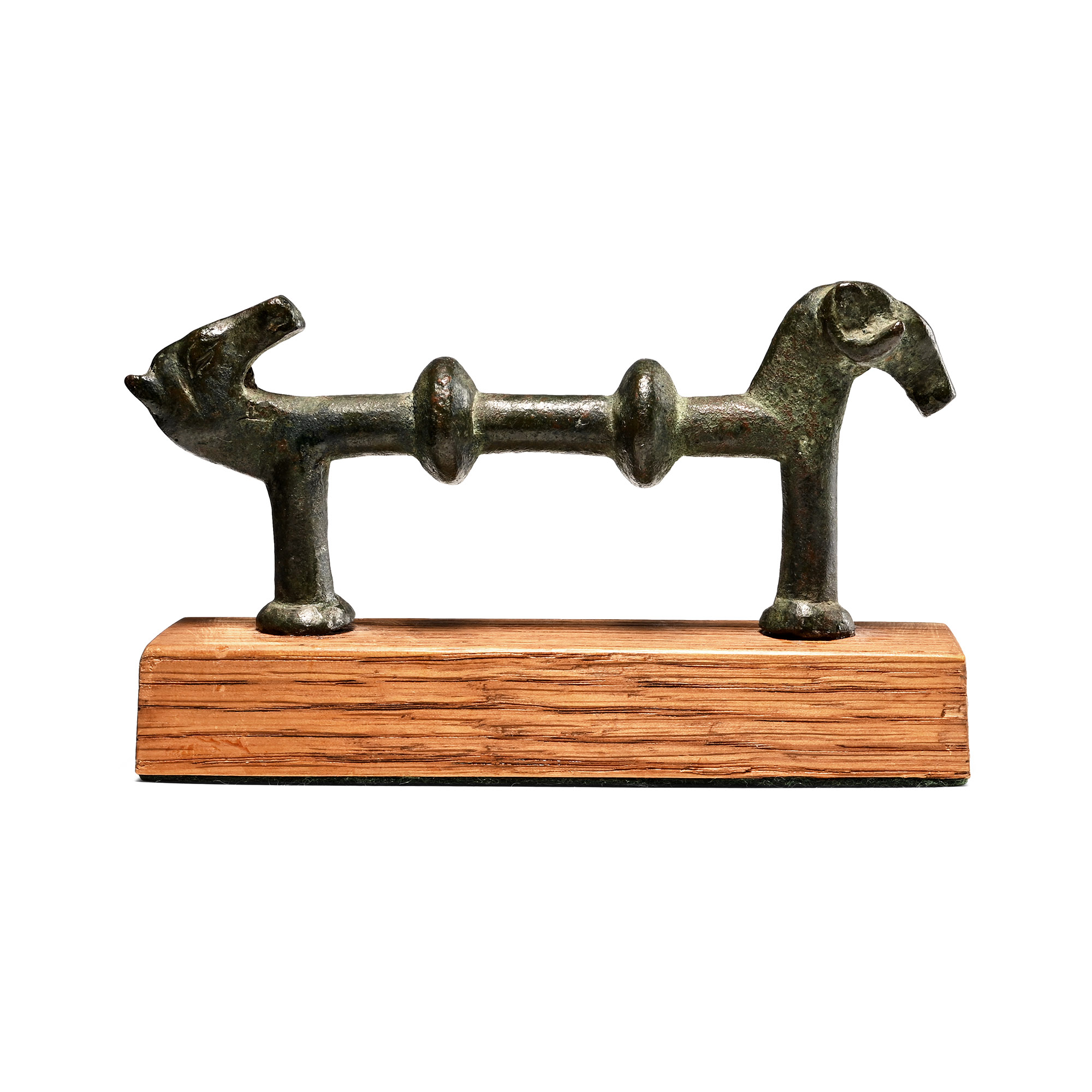
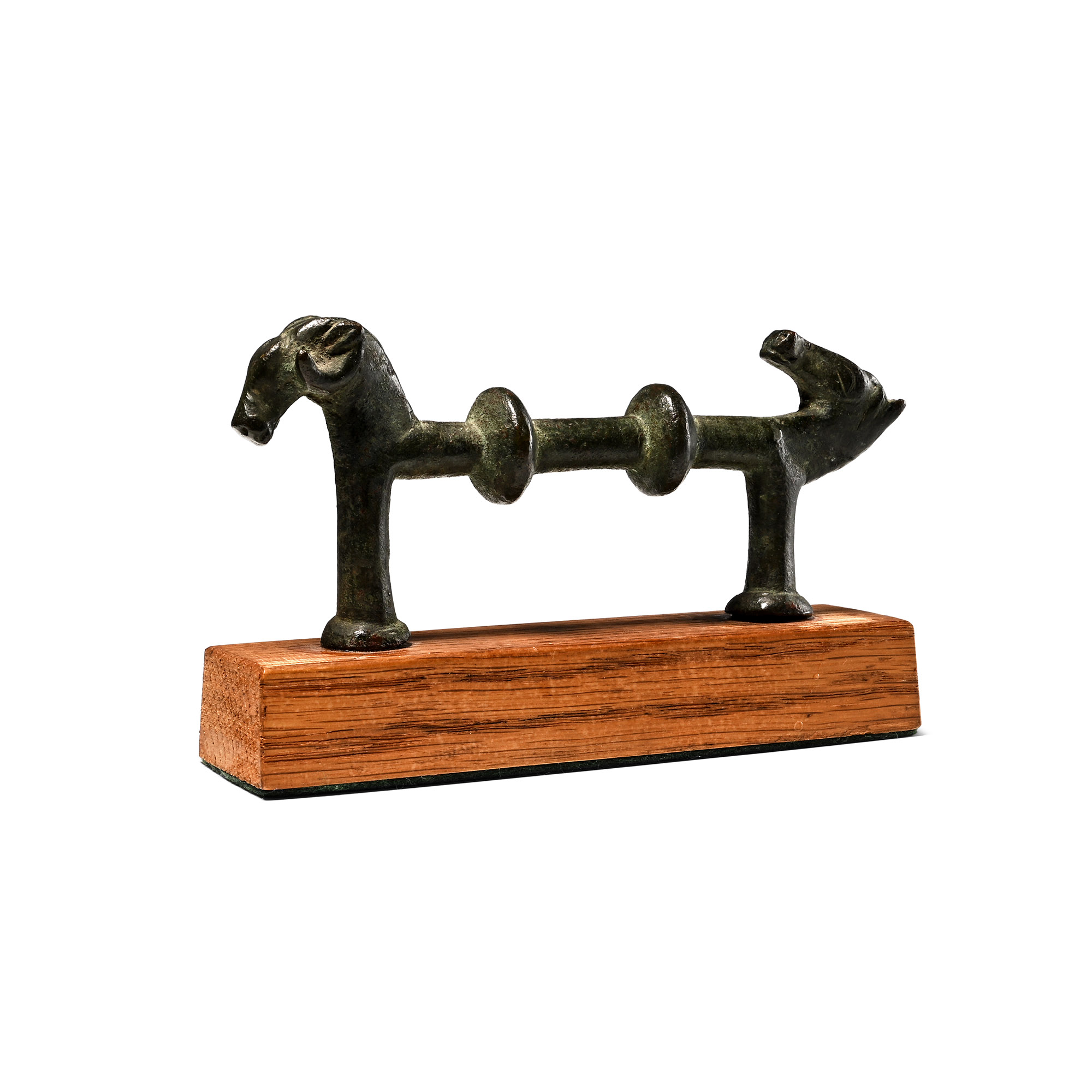
Luristan Bronze Situla Handle with Ram and Horse Head
2ND-1ST MILLENNIUM B.C.
4 3/4 in. (191 grams total, 12 cm wide including stand).
Round-section bar with two biconvex collars, horse-head finial at one end and perpendicular ram-head at the other; mounted on a custom-made stand. [No Reserve]
ProvenanceFrom a Scottish gentleman’s collection, Glasgow, formed from the early 2000s.
CONDITIONTimeLine Auctions follows a vetting process to ensure the authenticity and legality of all items, reinforcing our commitment to integrity and responsible trading. Each antiquity, antique, and coin lot undergoes thorough examination by a vetting committee of at least ten external specialists, professional trade association members, scientists, and archaeologists: Our Vetting Process
AUCTIONS:
TimeLine is a leading auction house specialising in antiquities, ancient art, collectables, natural history, coins, medals, and books. Our auctions offer museums, collectors, historians, and enthusiasts the opportunity to acquire unique and historically significant pieces.
-
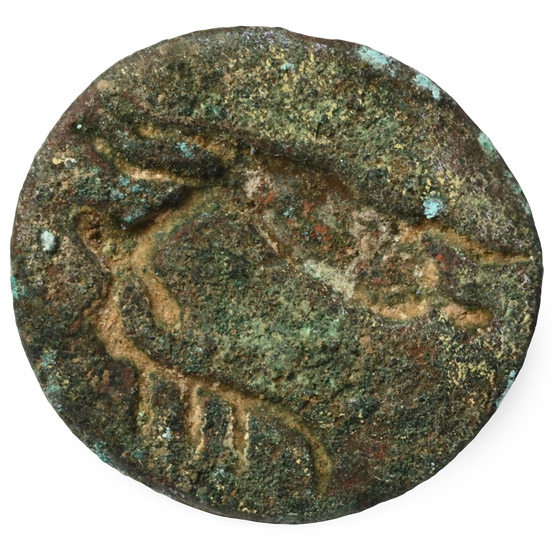
Large Central Asian Floral Backed Bronze Floral Seal
3rd-1st century B.C.Estimate: £100 - 140 (+bp*)
Opening Bid: £50
Discoid seal with incuse design; accompanied by an old scholarly note, typed and signed by W.G. Lambert, late Professor of Assyriology, University of Birmingham, 1970-1993, which states: 'Stamp Seal of Bronze 23 x 24 x 10 mm This is a flat disc with a loop handle. pierced, from the same sheet metal attached to the back. The face shows a deeply engraved stag in a flying gallop. This is reported to have come from west-central Asia, and it fits the area and date c. 300-1 B.C.[sic] It has some incrustation on the surface which could be removed, but is in very good condition.' 6.06 grams, 24 mm
Ex 'S' collection, 1970s-1990s. -
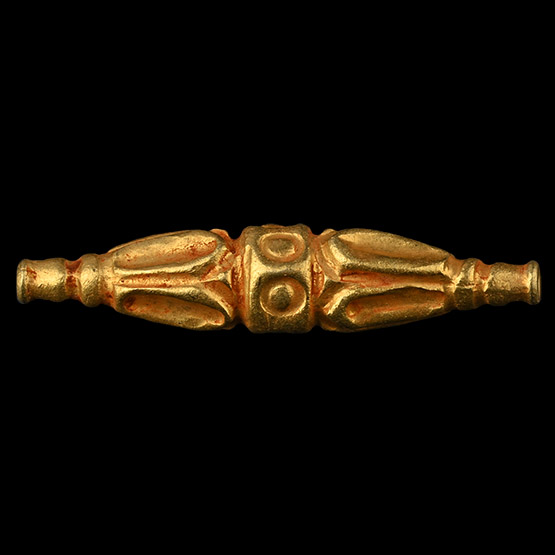
Kushan Gold Pendant Bead
2nd-3rd century A.D.Sold for (Inc. bp): £416
Fusiform with fluted ends, median baluster with impressed bosses. 1.26 grams, 30 mm
From the collection of a late Japanese gentleman, 1970-2000s. -
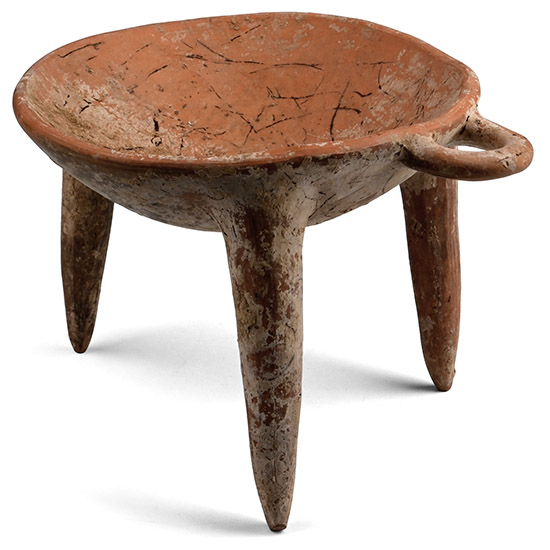
Western Asiatic Pottery Raised Tripod Dish
1st millennium B.C.Sold for (Inc. bp): £117
Shallow discoid bowl with three slender slanting legs, loop handle below rim. 635 grams, 19.5 cm wide
From the collection of a gentleman, 1988-2000s.
