
Loading, please wait...
LOT 1485
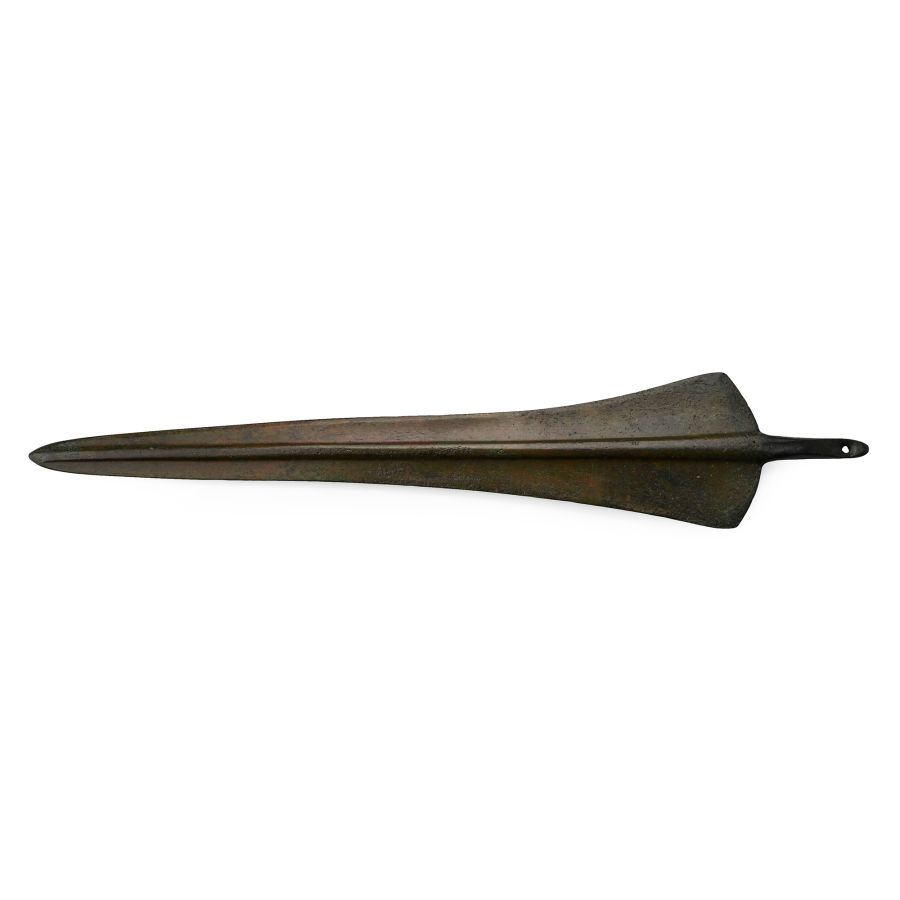
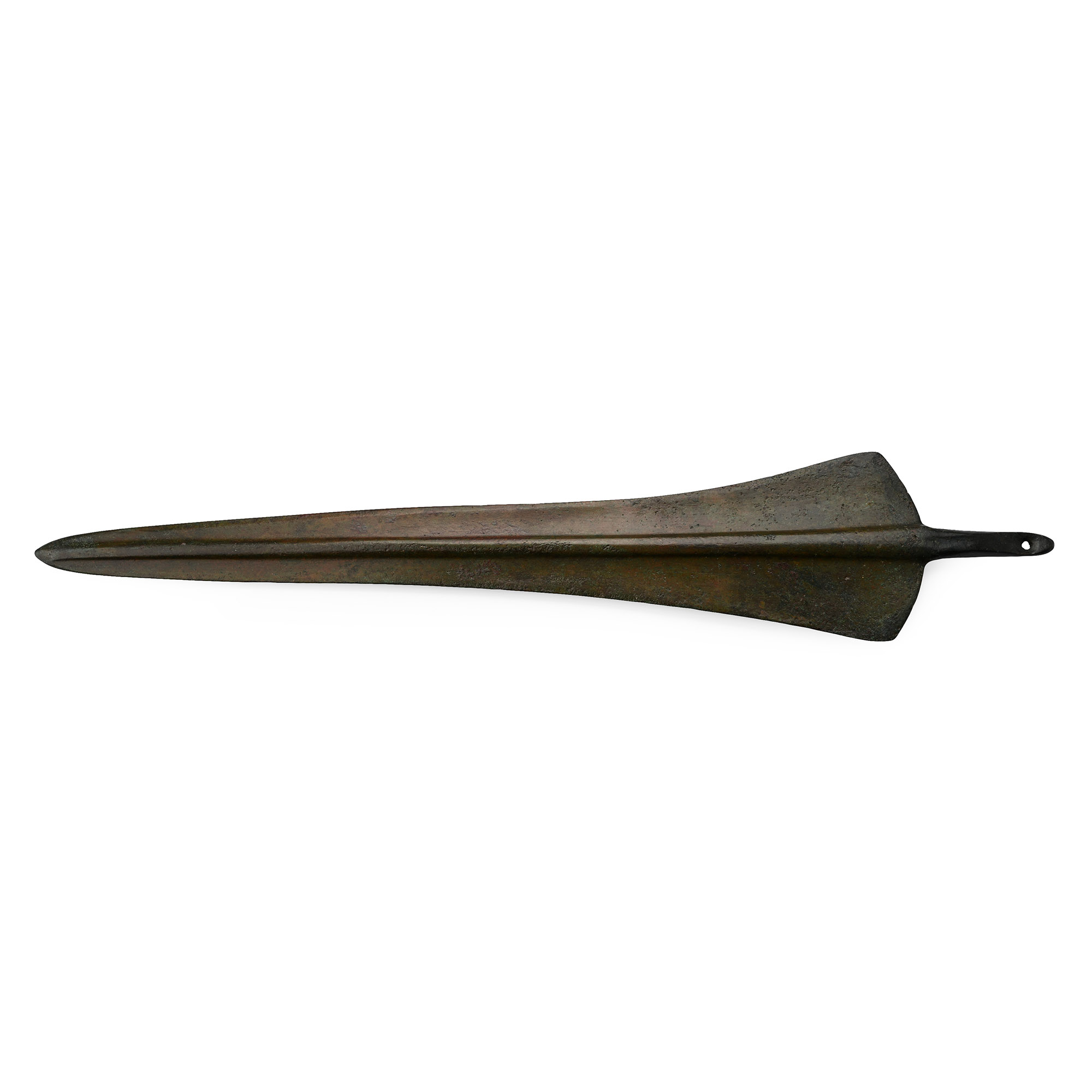
Luristan Bronze Short Sword
2ND-1ST MILLENNIUM B.C.
14 1/2 in. (295 grams, 37 cm).
Triangular in plan with thick round-section midrib, rounded shoulders, narrow tip; short tang with hole for fixing pin for the organic grip.
ProvenanceAcquired in the 1990s.
Ex Abelita family collection.
This lot is accompanied by an illustrated lot declaration signed by the Head of the Antiquities Department, Dr Raffaele D'Amato.
Cf. Christie's, The Axel Guttmann Collection of Ancient Arms and Armour, part 1, London, 2002, p.34, no.31.
CONDITIONTimeLine Auctions follows a vetting process to ensure the authenticity and legality of all items, reinforcing our commitment to integrity and responsible trading. Each antiquity, antique, and coin lot undergoes thorough examination by a vetting committee of at least ten external specialists, professional trade association members, scientists, and archaeologists: Our Vetting Process
AUCTIONS:
TimeLine is a leading auction house specialising in antiquities, ancient art, collectables, natural history, coins, medals, and books. Our auctions offer museums, collectors, historians, and enthusiasts the opportunity to acquire unique and historically significant pieces.
-
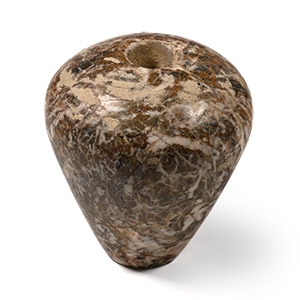
Western Asiatic Stone Macehead
3rd-2nd millennium B.C.Sold for (Inc. bp): £117
Piriform with vertical socket expanding towards the narrower end. 550 grams, 82 mm
Ex London, UK, collection, 1990-2000s. This lot is accompanied by an illustrated lot declaration signed by the Head of the Antiquities Department, Dr Raffaele D'Amato. -
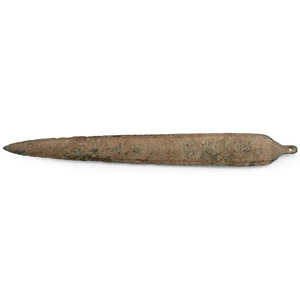
Luristan Bronze Dagger Blade
2nd-1st millennium B.C.Sold for (Inc. bp): £117
Tapering leaf-shaped two-edged blade, lentoid in section, developing to a tubby tang pierced at the end. 230 grams, 32.5 cm
Acquired in the 1990s. Ex Abelita family collection. This lot is accompanied by an illustrated lot declaration signed by the Head of the Antiquities Department, Dr Raffaele D'Amato. -
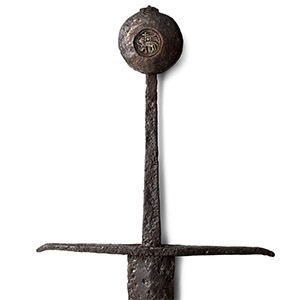
Massive Medieval Iron Hand-and-a-Half Knight's Sword with Lamb of God Pommel
Western Europe, 14th-15th century A.D.Sold for (Inc. bp): £8,450
Of Oakeshott's Type XV or XVIII, cross style 8, pommel style J (recessed) with a strongly tapering, pointed blade of 'flattened diamond'-section; tapering lower-guard with downturned finials; long, slightly tapering grip and a large disc pommel with chamfered edges, inlay to both sides with a low-relief image of Lamb of God, possibly a later addition; some contemporary repairs. 1.6 kg, 1.19 m
From the private family collection of a lady, UK; acquired in Germany mid 20th century. Accompanied by an academic report by Dr Raffaele D’Amato. This lot has been checked against the Interpol Database of stolen works of art and is accompanied by search certificate number no.12787-240329. This lot has been cleared against the Art Loss Register database, and is accompanied by an illustrated lot declaration signed by the Head of the Antiquities Department, Dr Raffaele D'Amato.
Many swords of this type have long grips, like the war-swords of Type XIII. After about 1350, nine swords out of ten seem to have such grips, and are today variously referred to as 'Hand-and-a-half' or 'Bastard' swords. The latter term was used in the 15th century, but it is not certain that it was applied to this particular kind of weapon. 'Hand-and-a-half'', though modern, is a far more fitting name; these swords were single-handed weapons, but by being furnished with long grips, could at need be wielded easily in both.
