
Loading, please wait...
LOT 0295
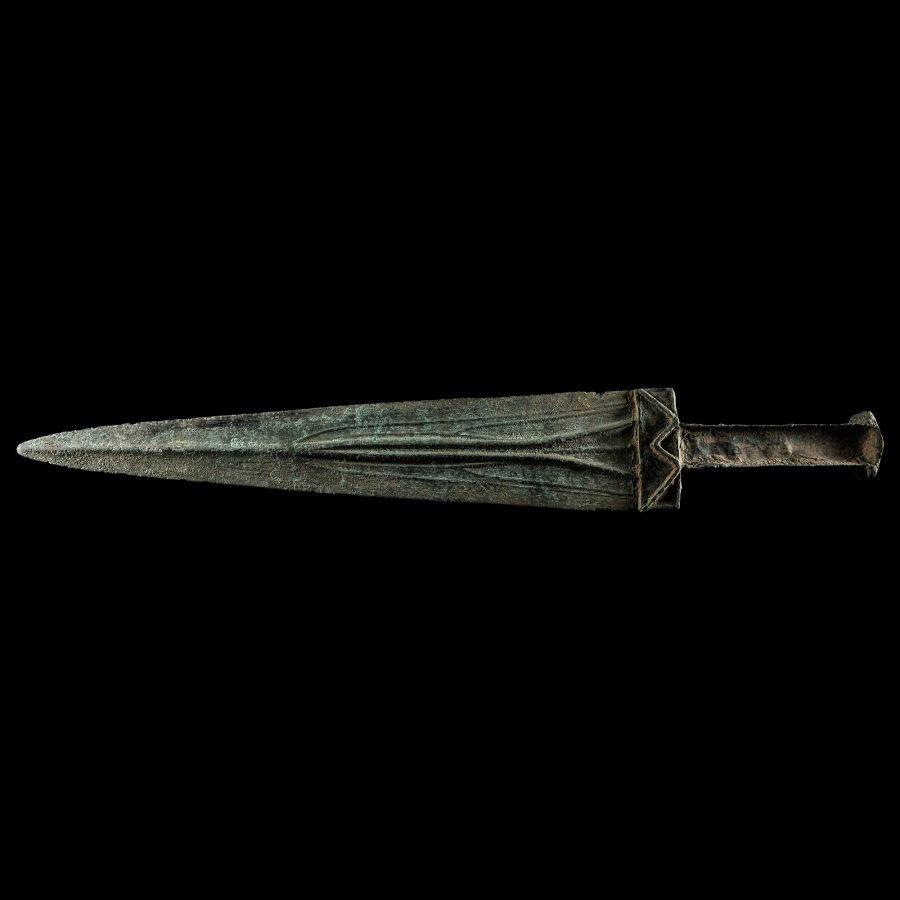
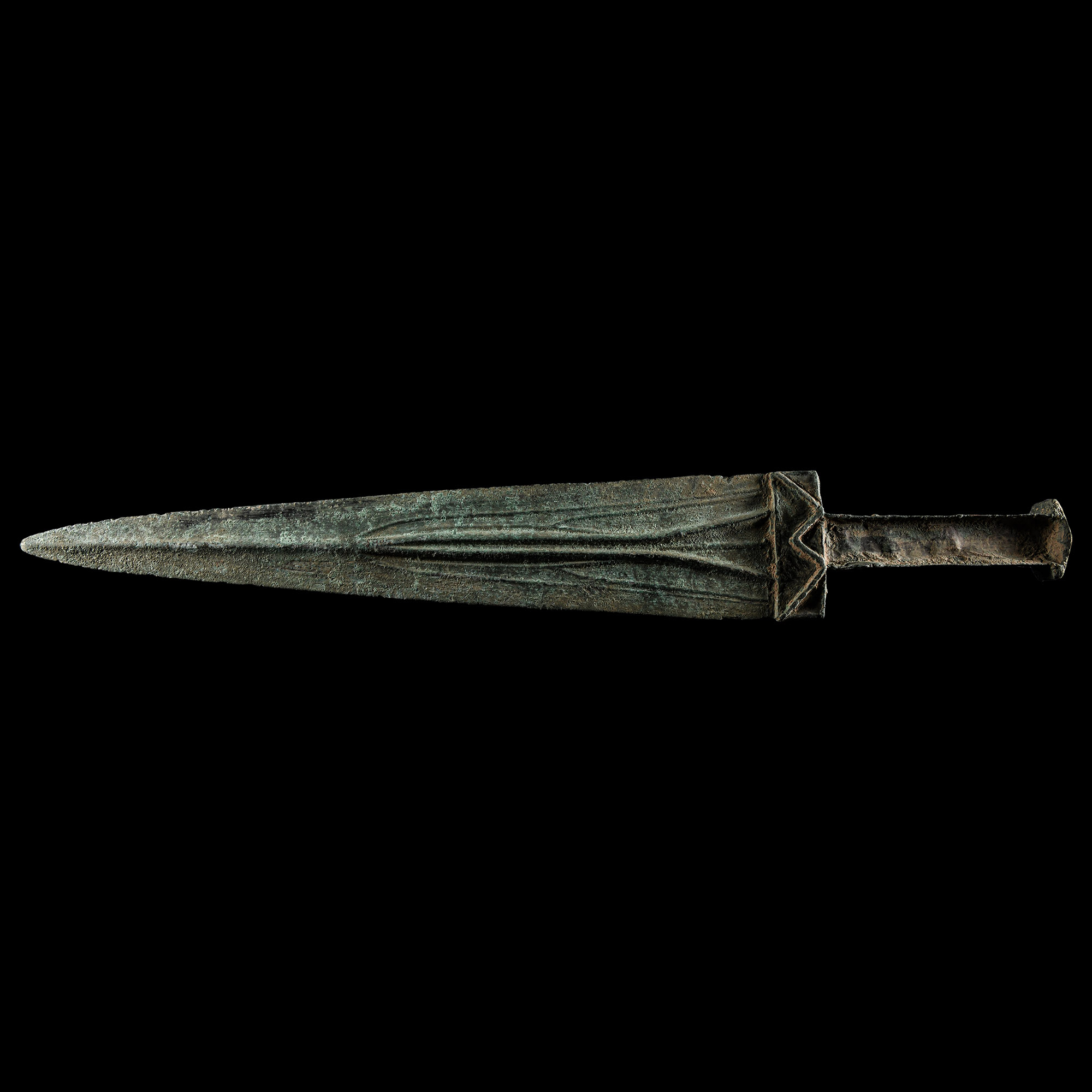
Luristan Bronze Short Sword
10TH CENTURY B.C.
17 3/4 in. (367 grams, 45 cm).
With triangular blade in outline and prominent mid-rib divided in three sections; square shoulders with rectangular guard; rectangular grip with openings for inlays on either side.
ProvenanceAcquired 1980-2015.
Ex Abelita family collection.
For similar examples of swords see Gorelik, M., Weapons of Ancient East, IV millennium BC-IV century BC, Saint Petersburg (2003), pl.VI, no.34 (Luristan).
FootnotesThis bronze sword has the handle cast onto the blade. The grip is flanged for accepting inlays. The blade has square shoulders and is decorated with geometric triangles. According to Moorey this type dates to the turn of 2nd millennium B.C.
CONDITIONTimeLine Auctions follows a vetting process to ensure the authenticity and legality of all items, reinforcing our commitment to integrity and responsible trading. Each antiquity, antique, and coin lot undergoes thorough examination by a vetting committee of at least ten external specialists, professional trade association members, scientists, and archaeologists: Our Vetting Process
AUCTIONS:
TimeLine is a leading auction house specialising in antiquities, ancient art, collectables, natural history, coins, medals, and books. Our auctions offer museums, collectors, historians, and enthusiasts the opportunity to acquire unique and historically significant pieces.
-
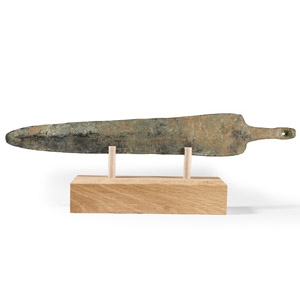
Luristan Short Sword Blade
Circa 13th-6th century B.C.Sold for (Inc. bp): £156
With a broad, lentoid-section blade and wide raised flange down centre, rounded tip, straight sides, well marked shoulders with narrow tang, one hole for rivet to attach an organic hilt; mounted on a custom-made stand. 880 grams total, 38 cm wide including stand
Acquired 1980-1990s. From the private collection of H.N., Milton Keynes, Bedfordshire, UK.
This kind of weapon was used in the early 2nd millennium B.C. in Mesopotamia and in Syria and as late as the mid-first millennium in Luristan. -
.jpg)
Siamese 'Wild Tigers Corps' Type 62 Pattern 1907 Bayonet and Scabbard
Dated 1919 A.D.Sold for (Inc. bp): £65
Stamped 2642 in Thai numerals at top of blade with 'tiger mask' mark for Siam, together with original British marks, fitted with wood grip scales and spring release button; the scabbard with original throat and chape, modified in Thailand to replace the original leather main section. 726 grams, 58.5 cm
Property of a Luton, UK gentleman, by inheritance.
The Type 62 is a re-badged British Pattern 1907 bayonet. Siam purchased 10,000 SMLE rifles and Pattern 1907 bayonets from Britain in 1919 to equip the 'Wild Tiger Corps', royal bodyguard of Vajiravudh, King Rama VI (reigned 1910–1925). The tiger figural on the ricasso is representative of the Wild Tiger Corps. Year 2462 on the Buddhist Calendar corresponds to 1919. SMLE rifles and Pattern 1907 bayonets were taken from British stocks, refurbished by Birmingham Small Arms (BSA), and remarked with Siamese markings. The bayonets were shipped with standard steel-mounted leather scabbards. However, the leather rapidly deteriorated in the tropical climate, so the Siamese made a replacement steel scabbard body to which the original steel mounts were brazed. -
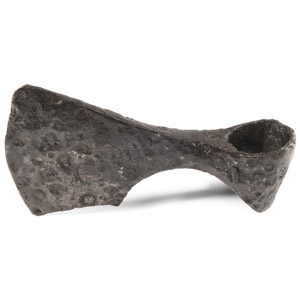
Viking Age Finno-Ugrian Socketted Axehead
10th-13th century A.D.Sold for (Inc. bp): £104
Hand-forged with triangular-section narrow blade widening to a broad bevelled edge with square chin and spur to the rear, socket with flanges to the rear. 548 grams, 17 cm
From the private collection of a London gentleman, from his grandfather's collection formed before the early 1970s.
During the mid 13th century, the axes were favourite weapons among Baltic people. For instance the Curonian army included lightly armed soldiers who fought with spears, shields, fighting knives and axes. A heavily armed soldier could also carry a sword, a helmet, a shield and a wide-bladed axe.
