
Loading, please wait...
LOT 1535
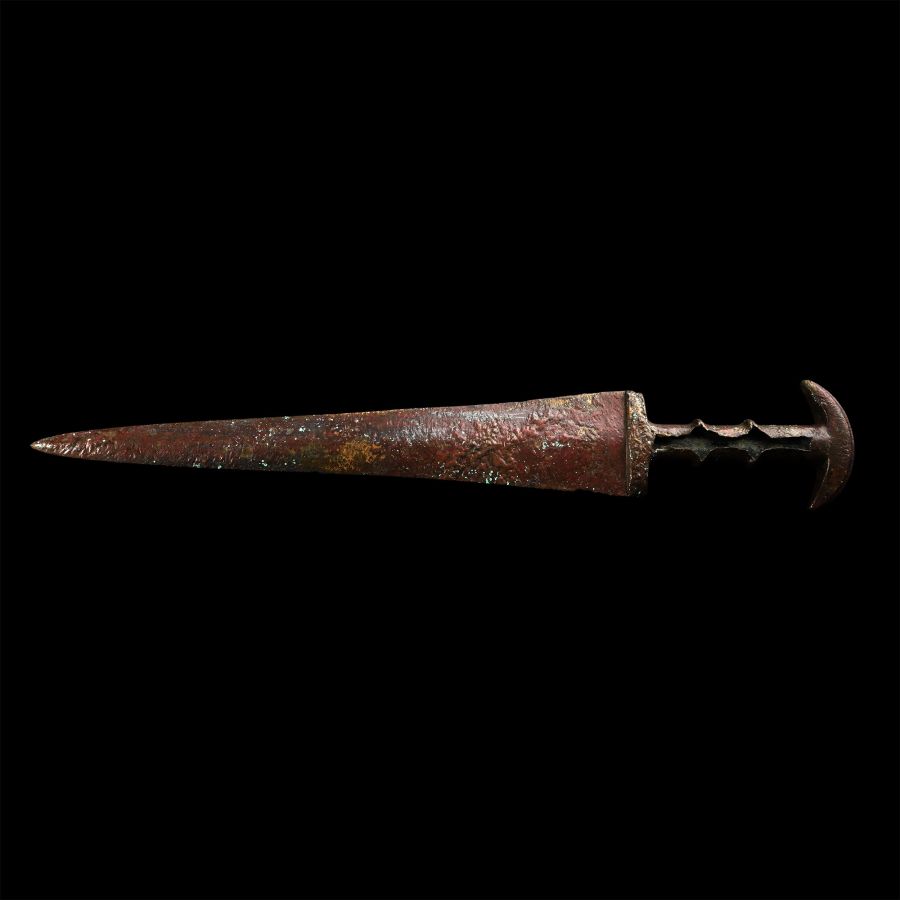
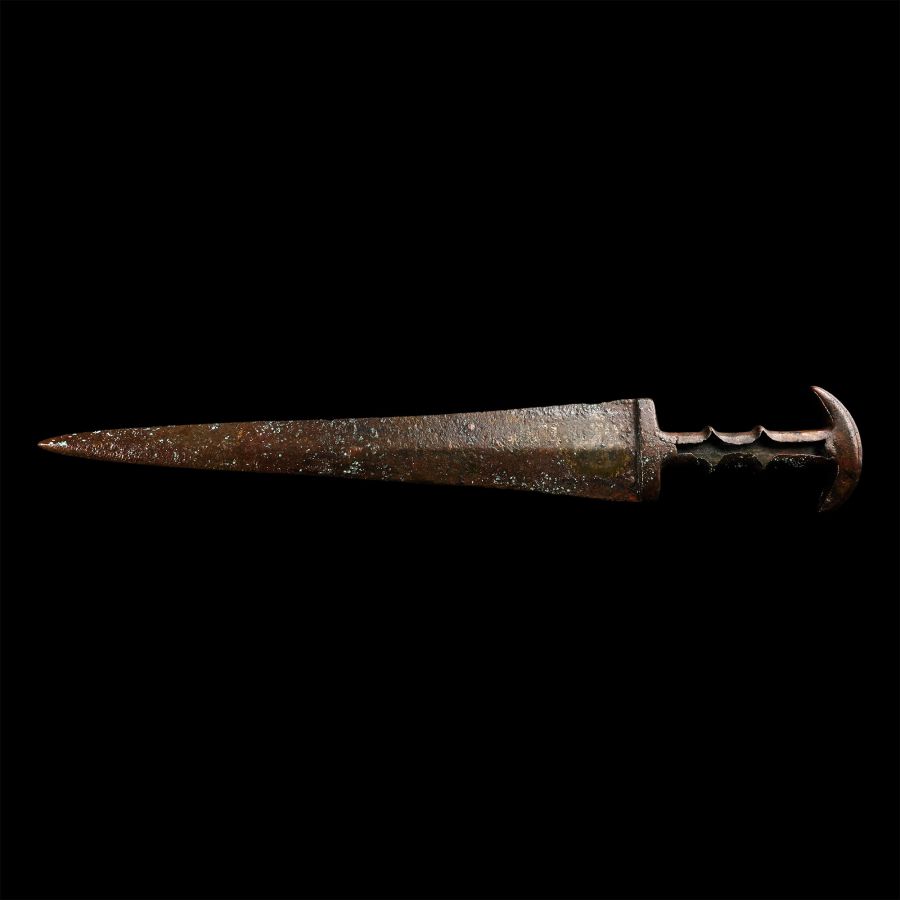
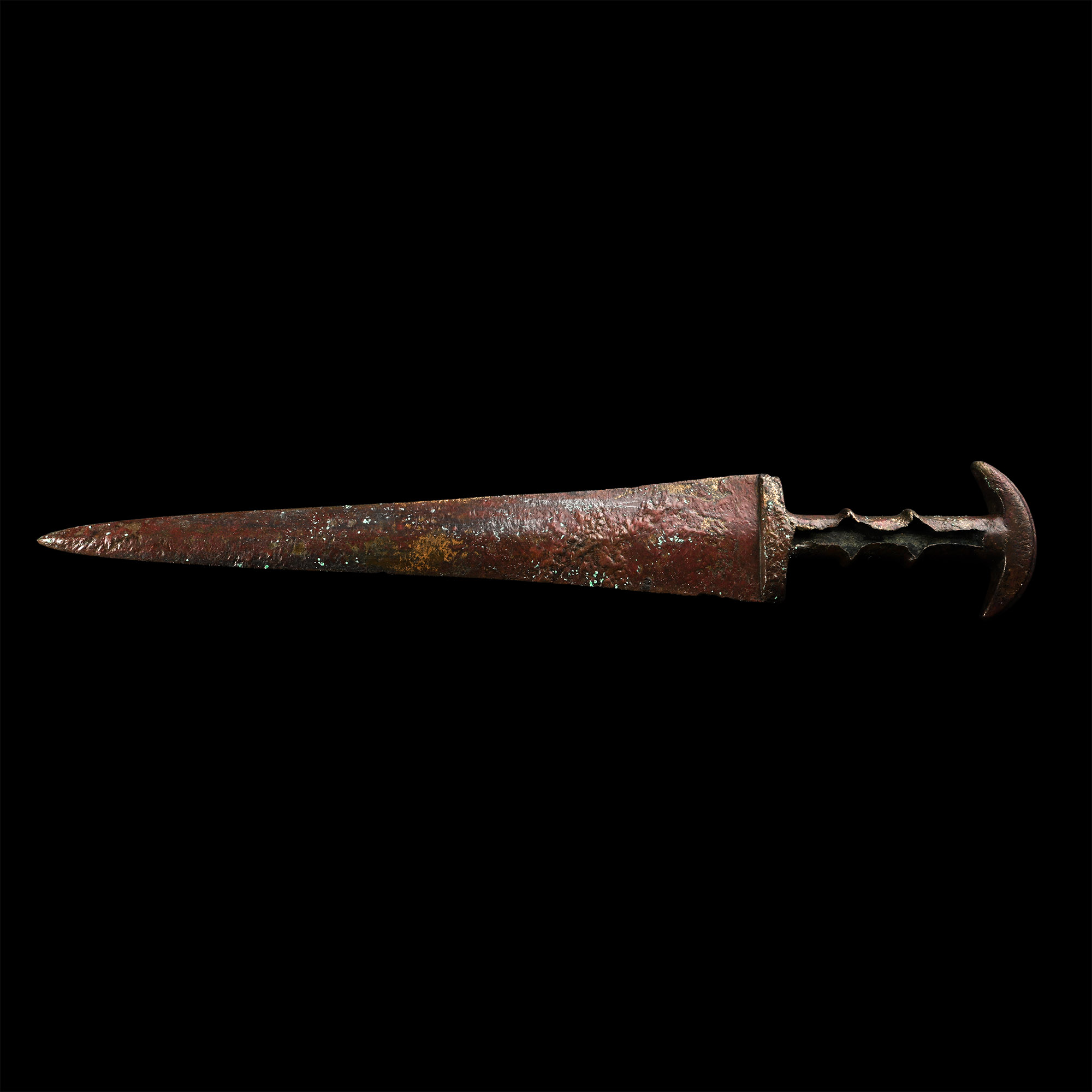
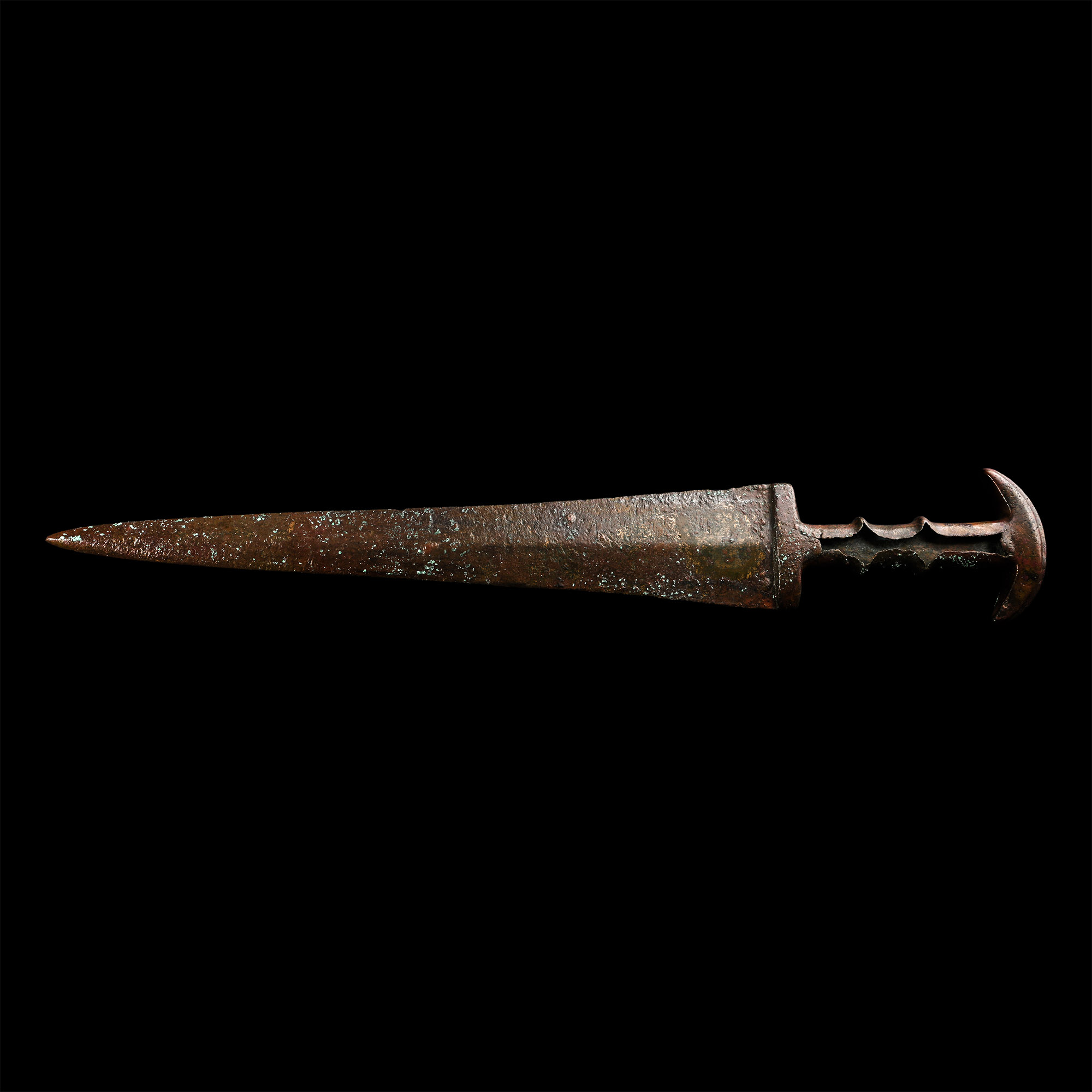
Luristan Bronze Short Sword with Crescent-Shaped Pommel
10TH CENTURY B.C.
15 3/4 in. (450 grams, 40 cm).
Comprising a triangular blade with integral ribbed handle and a crescentic pommel.
ProvenanceEx Abelita family collection, 1980s-2000s.
LiteratureCf. Khorasani, M.M., Arms and Armour from Iran - The Bronze Age to the End of the Qajar Period, Tübingen, 2006, p.380, cat.43. for a similar type from Marlik.
FootnotesThese kinds of bronze daggers or dirks, typical of Marlik culture, were cast in a one piece mould according to Negahban, although in some specimens the guard was later cast into the blade. The separate sets of encircling ribs on the grips are again typical of swords from the Marlik area. In our specimen the grip is opened on one side to receive organic filling.
CONDITIONTimeLine Auctions follows a vetting process to ensure the authenticity and legality of all items, reinforcing our commitment to integrity and responsible trading. Each antiquity, antique, and coin lot undergoes thorough examination by a vetting committee of at least ten external specialists, professional trade association members, scientists, and archaeologists: Our Vetting Process
AUCTIONS:
TimeLine is a leading auction house specialising in antiquities, ancient art, collectables, natural history, coins, medals, and books. Our auctions offer museums, collectors, historians, and enthusiasts the opportunity to acquire unique and historically significant pieces.
LOT 1535
Luristan Bronze Short Sword with Crescent-Shaped Pommel
Sold for (Inc. bp): £520
-
.jpg)
Viking Age Iron Bearded Axehead
Circa 9th-11th century A.D.Sold for (Inc. bp): £254
Broad blade with thickened edge, rounded socket with lateral triangular extensions. 269 grams, 13.5 cm
Ex North American collection, 1970s. -
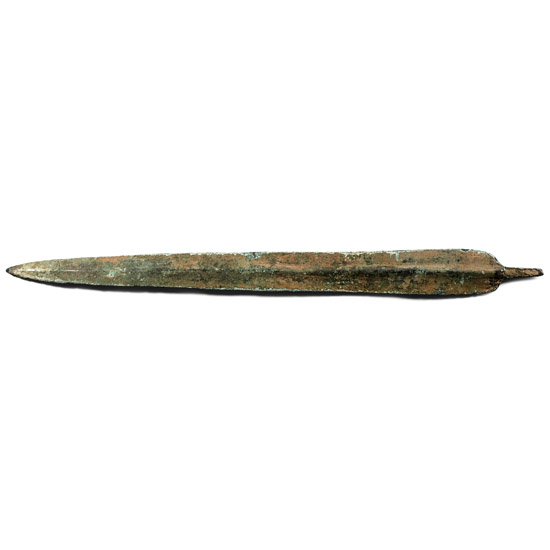
Western Asiatic Bronze Sword Blade
1st millennium B.C.Sold for (Inc. bp): £156
Slender double-edged blade with raised midrib and short tang. 224 grams, 42.2 cm
From a UK collection formed in the 1980s. Property of an Essex, UK, gentleman. -
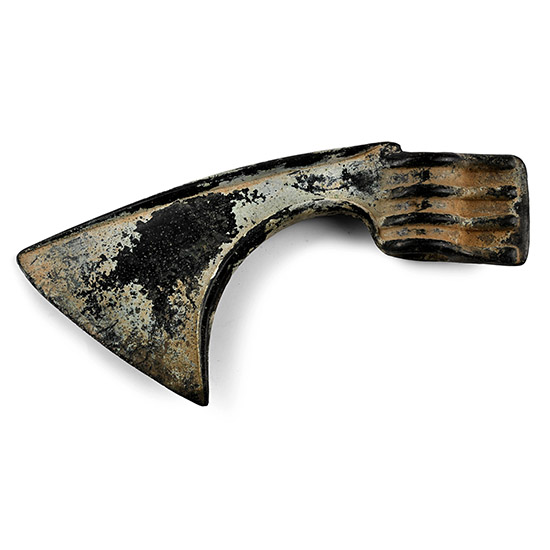
Luristan Bronze Axehead
12th-11th century B.C.Sold for (Inc. bp): £286
A spike-butted axehead with a short cylindrical socket with four furrowed ribs leading to four short spikes, blade with curved upper and lower edges and a convex cutting edge. 390 grams, 22 cm
Ex Abelita family collection, 1980s-2000s.
It is difficult to know whether this type of axe, given its high decoration in some specimens, was used as a weapon or was a symbol of rank and prestige, employed for ceremonial or cult purposes. However, considering that the concept of parade weapons did not exist in the surrounding areas in antiquity, these axes were most probably used for both military and ceremonial purposes.
