
Loading, please wait...
LOT 1871
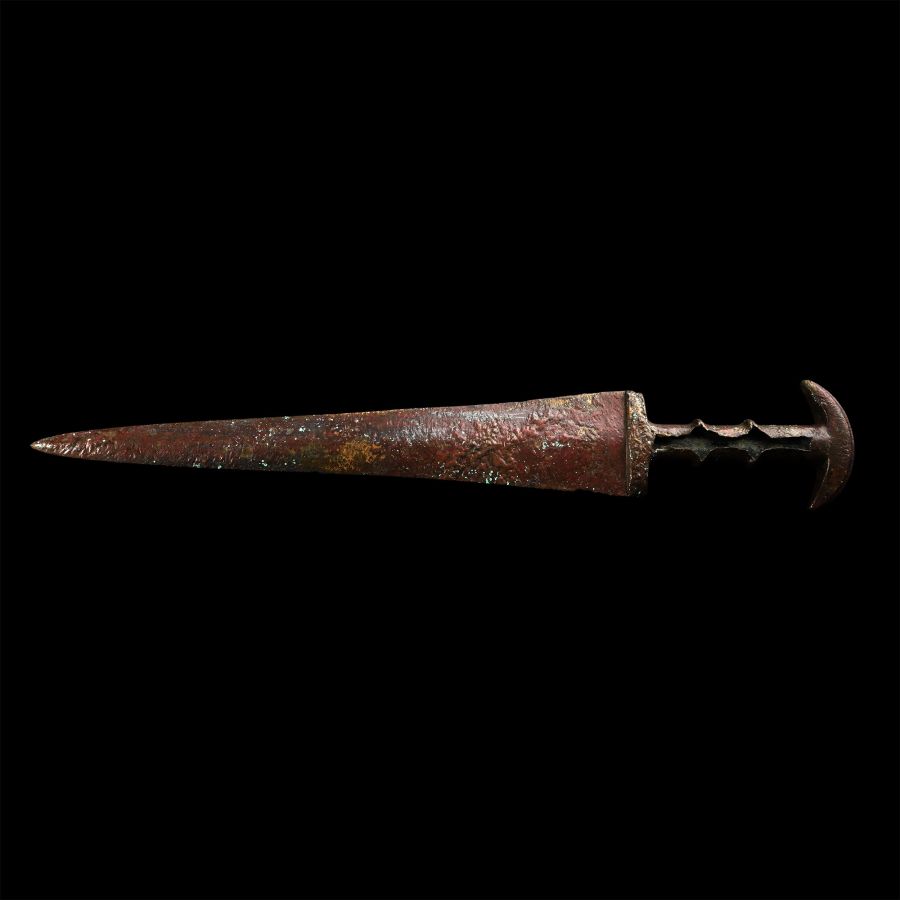
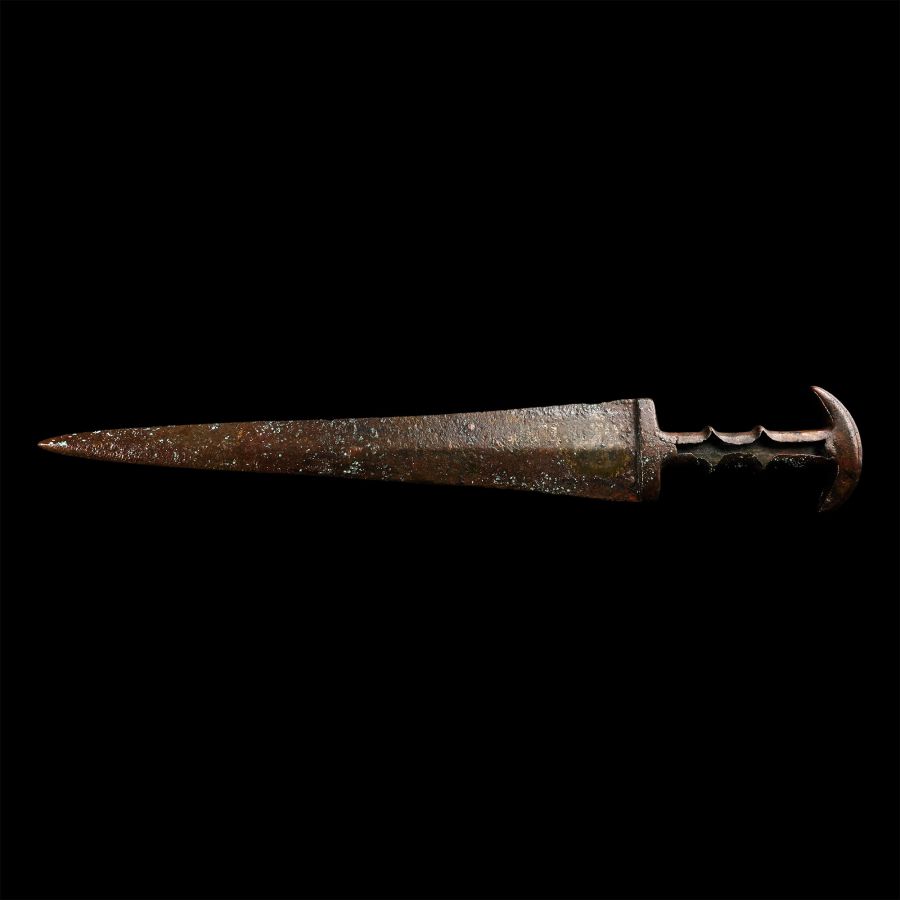
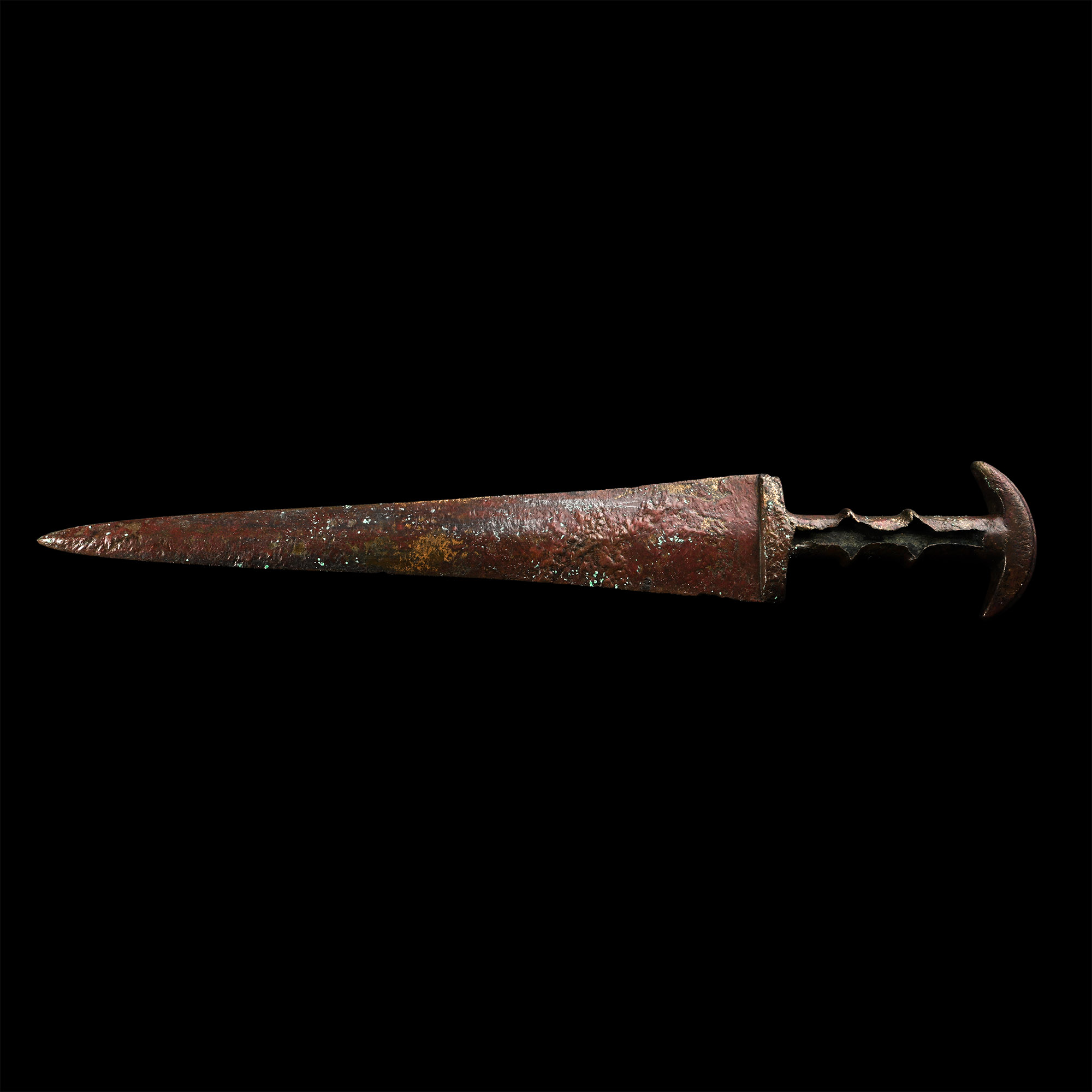
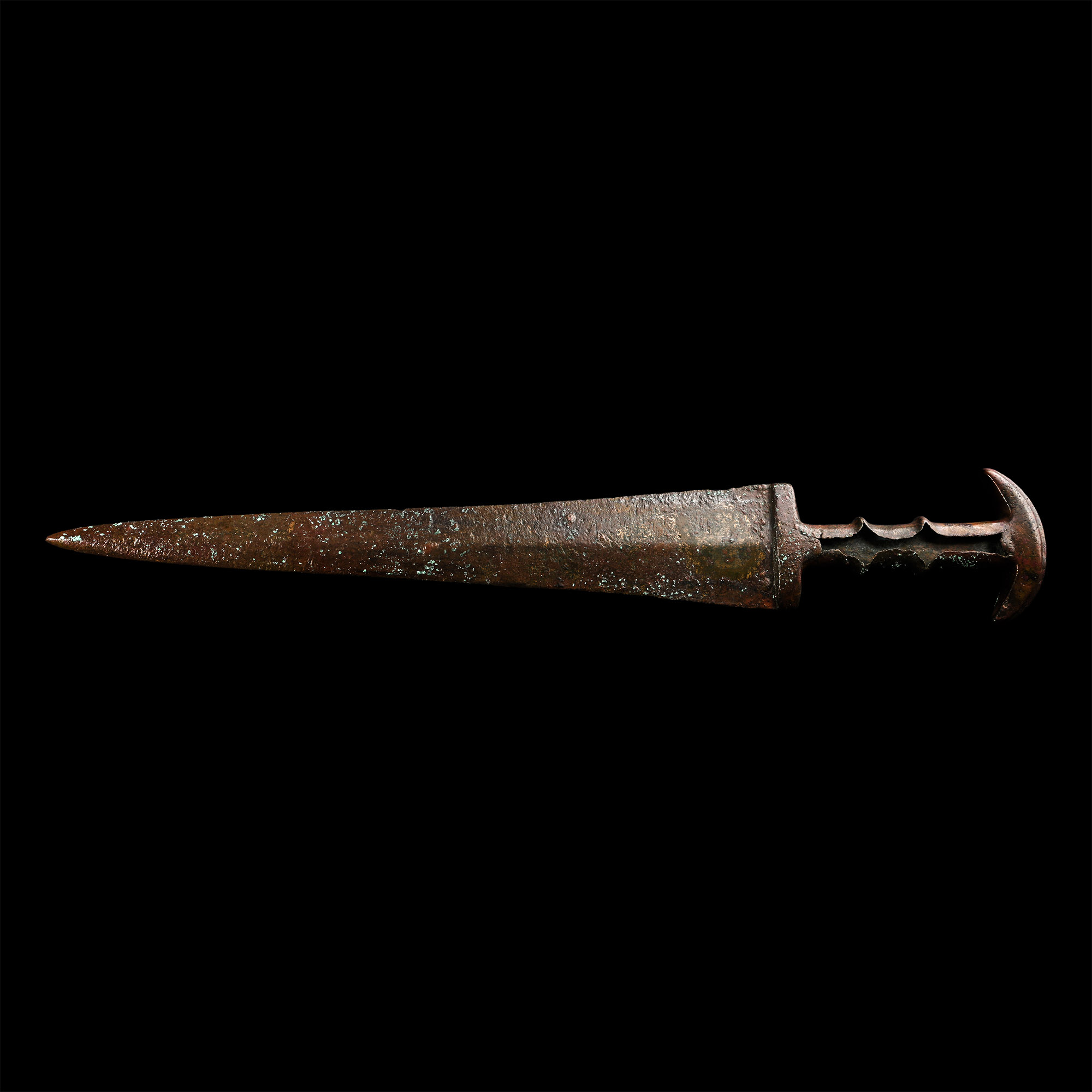
Luristan Bronze Short Sword with Crescent-Shaped Pommel
10TH CENTURY B.C.
15 3/4 in. (450 grams, 40 cm).
Comprising a triangular blade with integral ribbed handle and a crescentic pommel.
ProvenanceEx Abelita family collection, 1980s-2000s.
LiteratureCf. Khorasani, M.M., Arms and Armour from Iran - The Bronze Age to the End of the Qajar Period, Tübingen, 2006, p.380, cat.43. for a similar type from Marlik.
FootnotesThese kinds of bronze daggers or dirks, typical of Marlik culture, were cast in a one piece mould according to Negahban, although in some specimens the guard was later cast into the blade. The separate sets of encircling ribs on the grips are again typical of swords from the Marlik area. In our specimen the grip is opened on one side to receive organic filling.
CONDITIONTimeLine Auctions follows a vetting process to ensure the authenticity and legality of all items, reinforcing our commitment to integrity and responsible trading. Each antiquity, antique, and coin lot undergoes thorough examination by a vetting committee of at least ten external specialists, professional trade association members, scientists, and archaeologists: Our Vetting Process
AUCTIONS:
TimeLine is a leading auction house specialising in antiquities, ancient art, collectables, natural history, coins, medals, and books. Our auctions offer museums, collectors, historians, and enthusiasts the opportunity to acquire unique and historically significant pieces.
LOT 1871
Luristan Bronze Short Sword with Crescent-Shaped Pommel
Estimate £500 - 700€580 - 810 (for guidance only)$680 - 950 (for guidance only)
-
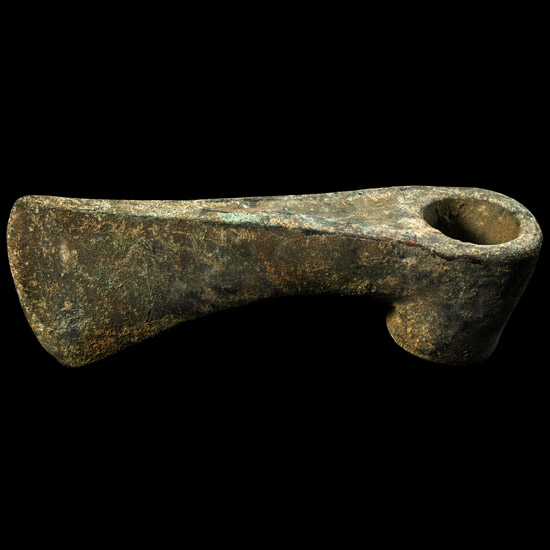
Luristan Bronze Socketted Axehead
3rd millennium B.C.Sold for (Inc. bp): £124
Circular socket and a slender triangular-section blade with a curving cutting edge. 691 grams, 15 cm
Ex Abelita family collection, 1980s-2000s.
This is an example of socketted axes with plano-convex blade, variant H2Cd of Gernez classification. Unadorned weapons, especially axes, adzes and picks, were made by Luristan craftsmen using simple clay or stone bivalve moulds. Typically, the metallic composition consisted of a combination of arsenical bronze and copper, together with a small percentage of lead. -
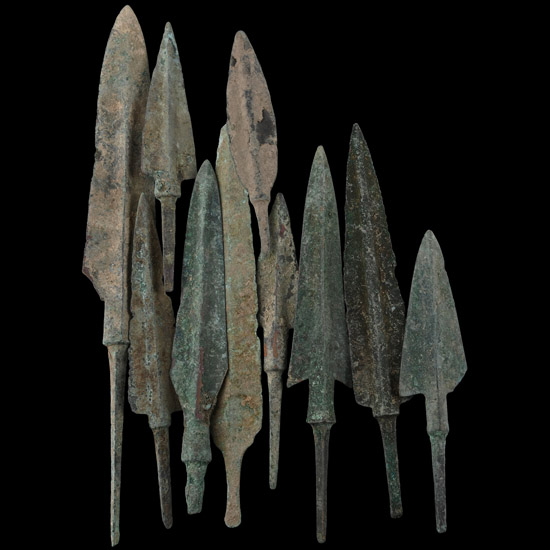
Western Asiatic Bronze Arrowhead Collection
2nd-1st millennium B.C.Sold for (Inc. bp): £312
Comprising leaf-shaped and triangular tanged arrowheads, most with a raised midrib. 238 grams total, 8.1-18.7 cm
London, UK, collection, 1990s.
All these bronze typologies of arrowheads were cast in moulds. Similar specimens have been found in Northwest and West Iran, Azerbaijan, Luristan and Amlash. Most of these blades are bipartite, but the definition of the bipartite type is not absolute, as it brings together weapons of very different and unrelated designs. In fact, some weapons do not have a sufficiently characteristic shape to be interpreted as a javelin or long arrowhead. -
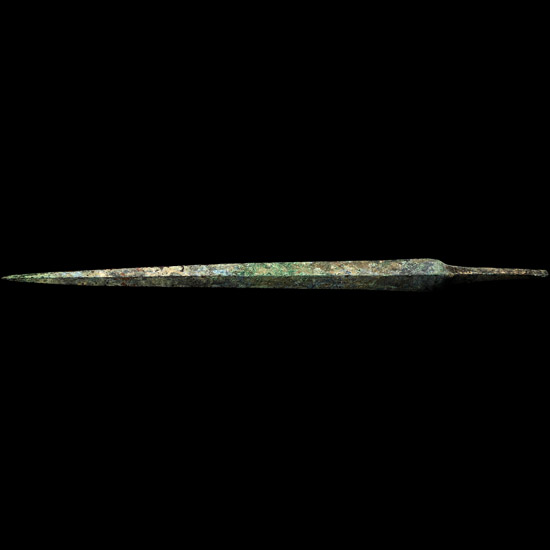
Luristan Bronze Tanged Lancehead
800-600 B.C.Sold for (Inc. bp): £124
With a tapering rectangular-section blade and a short tang. 239 grams, 31 cm
Ex Abelita family collection, 1980s-2000s.
These shoulderless spearheads are introducing the Luristan and Hamadan in the Median and Achaemenid Periods. The bronze type was cast in a mould, and the length suggests it was a throwing weapon or used in conjunction with a chariot.
