
Loading, please wait...

LOT 1414
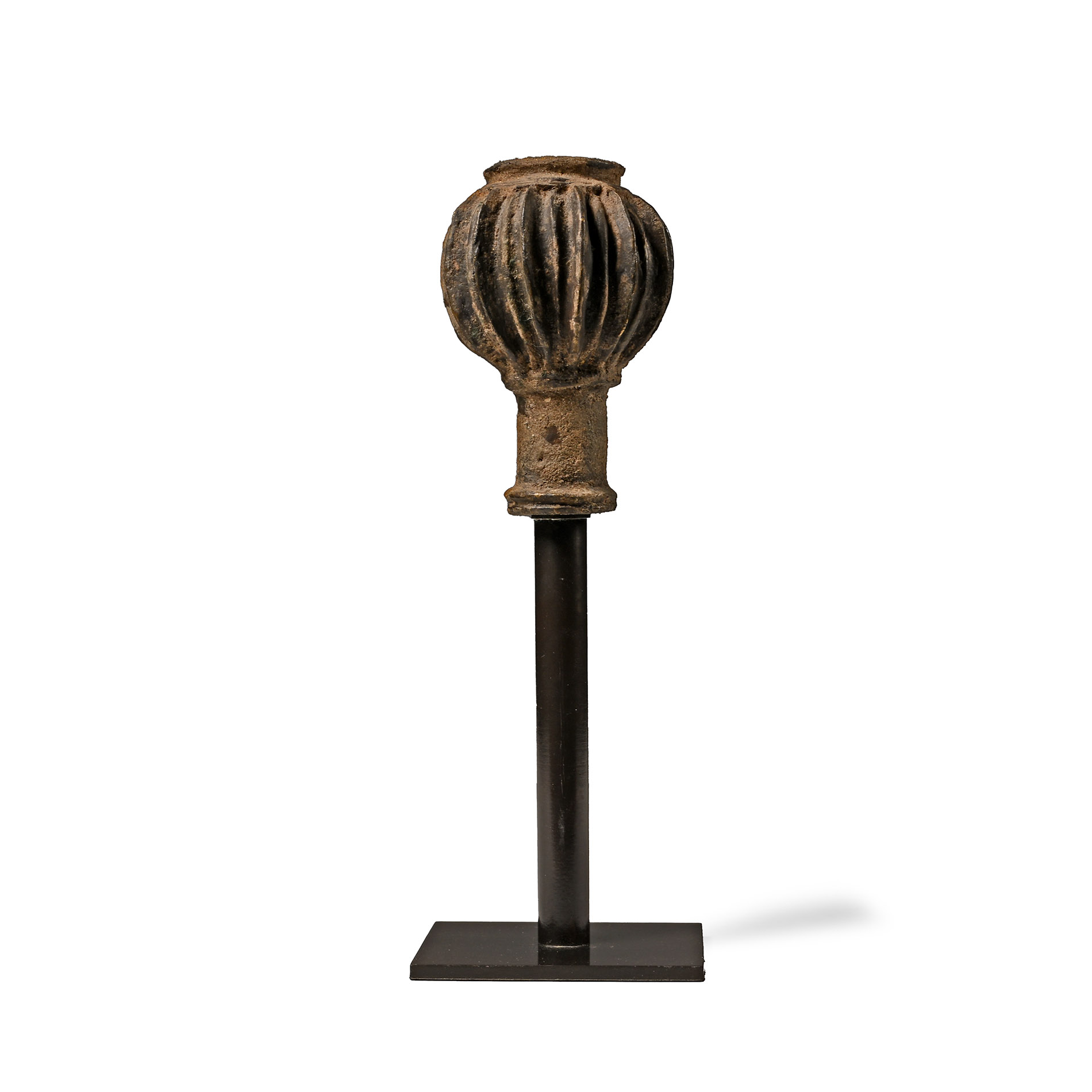
Luristan Bronze Ribbed Macehead
13TH-7TH CENTURY B.C.
3 1/4 in. (7 1/2 in.) (367 grams, 83 mm (633 grams total, 19 cm high including stand)).
Of Sara Gorz type with cylindrical shaft extended over the top, rounded knobs around the swollen head, flanked by horizontal grooved bands; mounted on a custom-made stand.
ProvenanceEnglish private collection.
with ArtAncient Ltd, 2013.
Private collection, London.
Cf. Musé Cernuschi, Bronzes du Luristan: Enigmes De L'Iran Ancien IIIe-Ier millenaire ac. j.-c., Paris musées, 2008, p.103, for a comparable item.
CONDITIONTimeLine Auctions follows a vetting process to ensure the authenticity and legality of all items, reinforcing our commitment to integrity and responsible trading. Each antiquity, antique, and coin lot undergoes thorough examination by a vetting committee of at least ten external specialists, professional trade association members, scientists, and archaeologists: Our Vetting Process
AUCTIONS:
TimeLine is a leading auction house specialising in antiquities, ancient art, collectables, natural history, coins, medals, and books. Our auctions offer museums, collectors, historians, and enthusiasts the opportunity to acquire unique and historically significant pieces.
-
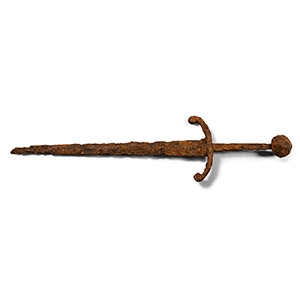
Medieval Iron Dagger Relic
14th-15th century A.D.Sold for (Inc. bp): £403
Comprising a slender lozenge-section blade, drooping quillons, long tang and large spherical pommel. 221 grams, 36.5 cm
Acquired on the UK art market circa 2005. From an old North Country, UK, collection. -
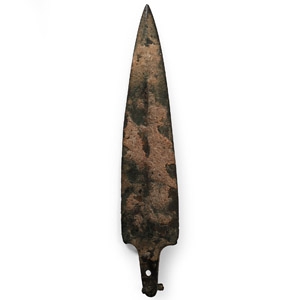
Luristan Bronze Rivetted Dagger
13th-7th century B.C.Sold for (Inc. bp): £46
Leaf-shaped blade with slight midrib, slightly recurved shoulders, stub tang pierced to accept attachment rivets, two in situ. 68 grams, 16.6 cm
Acquired in Oxford, UK. From the private collection of Kenneth Machin (1936-2020), Buckinghamshire, UK; with collection no.BA20; his collection of antiquities and natural history was formed since 1948; thence by descent. -
.jpg)
Smith and Wesson Old Model No 2 Revolver
1861-1874 A.D.Sold for (Inc. bp): £520
Also known as 'Model No 2 Army' with hinged frame, six shot .32 calibre rimfire cylinder with 'PATENTED APRIL 3 1855 JULY 5 1859 & DEC 18 1860' and 15cm (6") octagonal barrel marked 'SMITH & WESSON SPRINGFIELD MASS' to top with fixed extractor pin and spur trigger; serial number 47946 to butt strap with plain wood grip scales; action working. 690 grams, 27 cm
Acquired from Bolk Antique Arms, Netherlands, 2016. Ex Kusmirek Collection, UK. Accompanied by an original Bolk invoice (1,075.00 Euros).
Sold as an exempt item under Section 58 (2) of the Firearms Act, 1968, to be held as a curiosity or ornament. No license required but buyer must be over 18 years of age. Overseas bidders should note that, due to UK regulations governing export of all firearms, overseas buyers will need to make arrangements for shipping this lot out of the UK directly, by air freight, with a specialist company or agent.
