
Loading, please wait...
LOT 1684
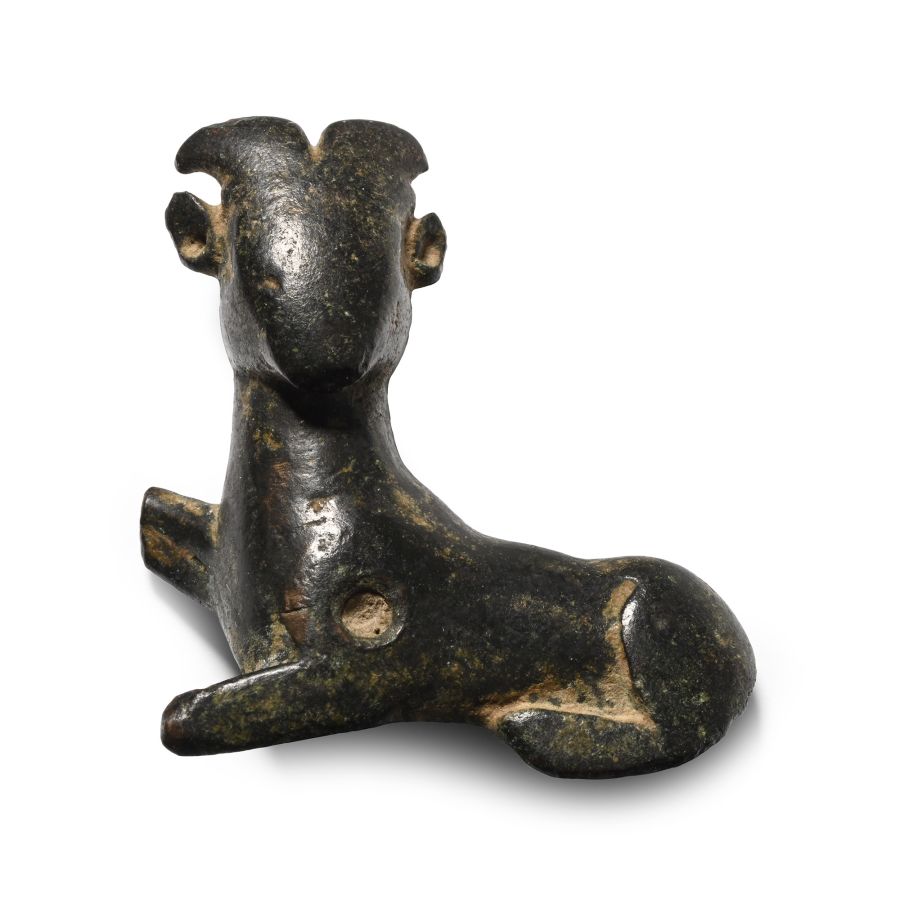
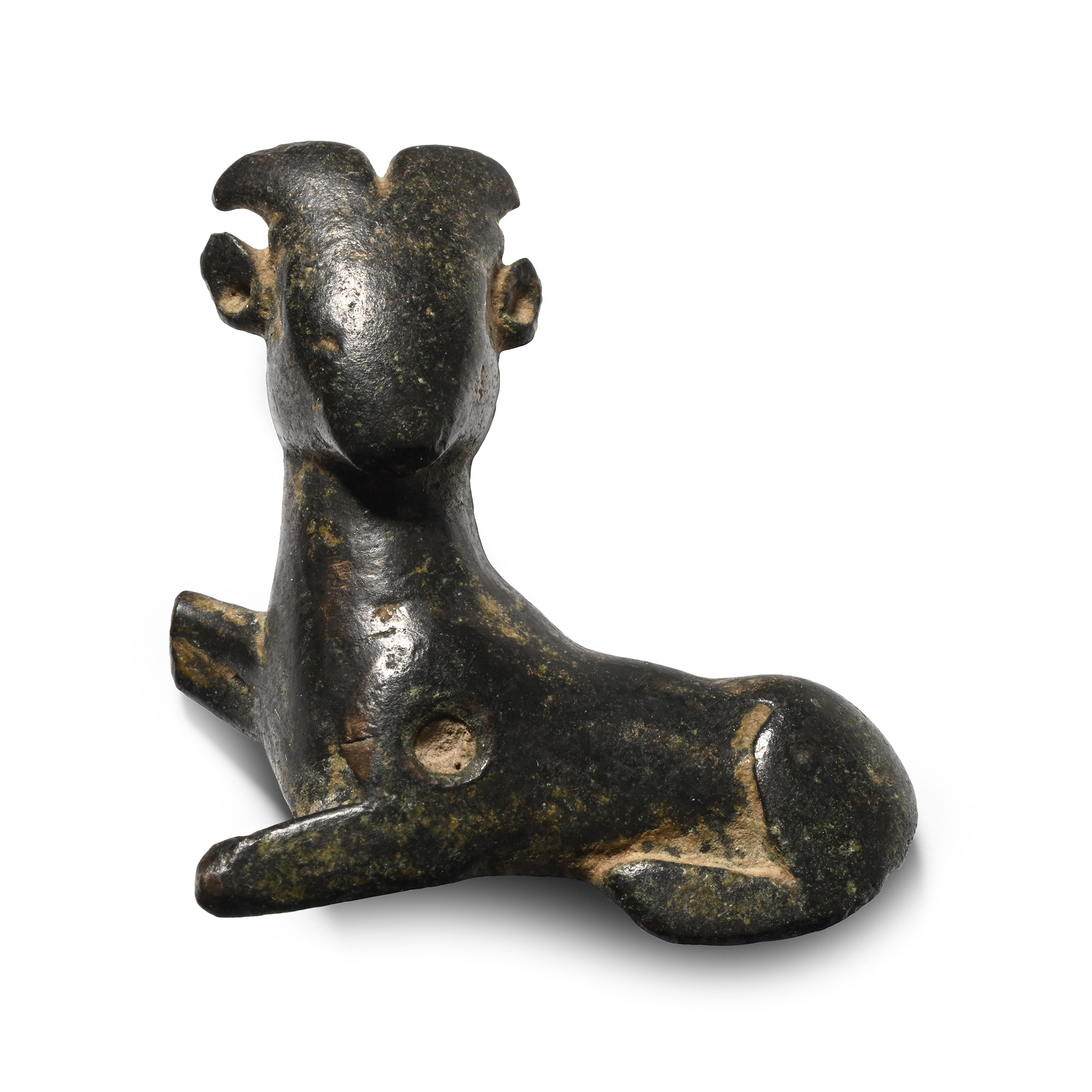
Luristan Bronze Recumbent Deer Mount
1ST MILLENNIUM B.C.
1 1/4 in. (16.1 grams, 33.4 mm high).
Modelled in the half-round with its head turned and right front leg raised, lug to the rear. [No Reserve]
ProvenanceFrom the private collection of a European gentleman (1942-2024), formed since the 1970s.
CONDITIONTimeLine Auctions follows a vetting process to ensure the authenticity and legality of all items, reinforcing our commitment to integrity and responsible trading. Each antiquity, antique, and coin lot undergoes thorough examination by a vetting committee of at least ten external specialists, professional trade association members, scientists, and archaeologists: Our Vetting Process
AUCTIONS:
TimeLine is a leading auction house specialising in antiquities, ancient art, collectables, natural history, coins, medals, and books. Our auctions offer museums, collectors, historians, and enthusiasts the opportunity to acquire unique and historically significant pieces.
-
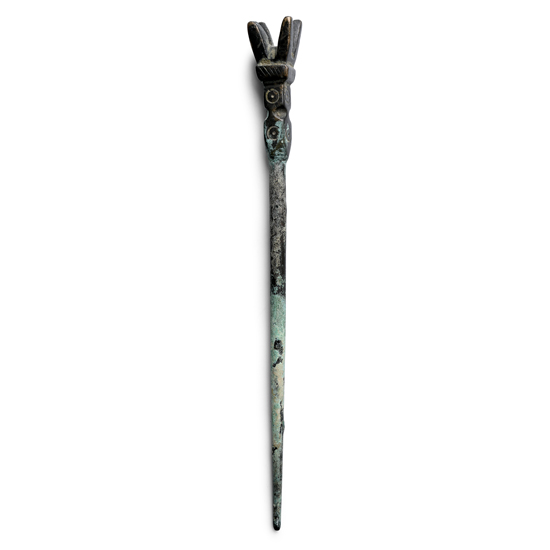
Western Asiatic Bronze Cloak Pin
Bronze Age, 2nd-1st millennium B.C.Sold for (Inc. bp): £65
Comprising a round-section tapering pin, columnar finial with ring-and-dot decoration, and four vertical projections at the top. 29.2 grams, 14.5 cm
From the private collection of a European gentleman (1942-2024), formed since the 1970s. -
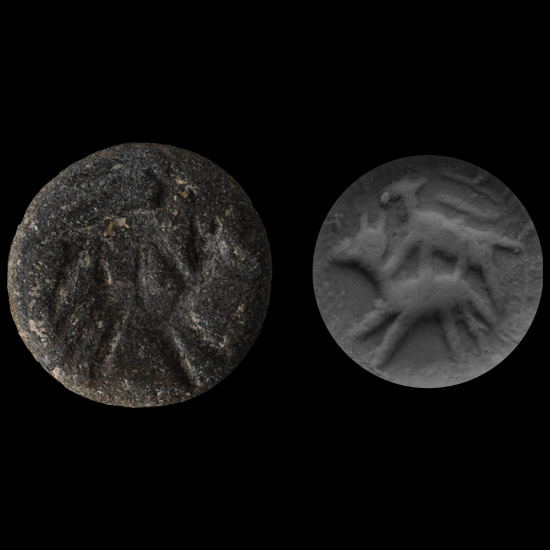
Western Asiatic Stone Stamp Seal with Mating Animals
1st millennium B.C.Sold for (Inc. bp): £20
Conical seal pierced through the body, underside with two copulating quadrupeds. 3.9 grams, 19 mm
From a late Warwickshire numismatic collector, his collection formed from the early 1980s. -
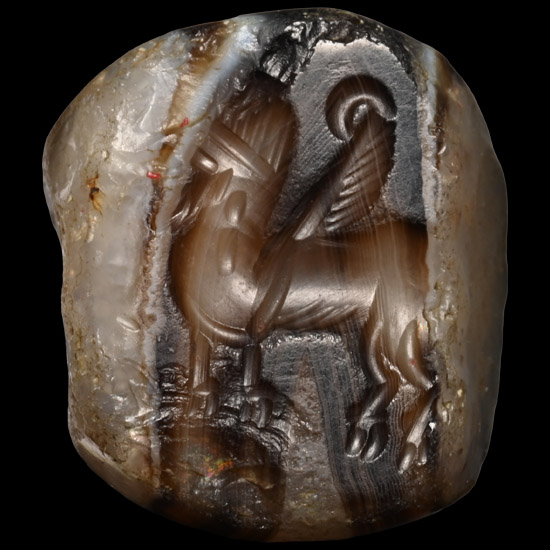
Neo-Babylonian Reused Banded Agate Stamp Seal with Lamassu
Circa 6th century B.C.Sold for (Inc. bp): £143
Plano-convex type with lamassu motif; lateral edges chipped. 8.62 grams, 20.36 mm
From the private collection of a European gentleman (1942-2024), formed since the 1970s.
