
Loading, please wait...
LOT 1438
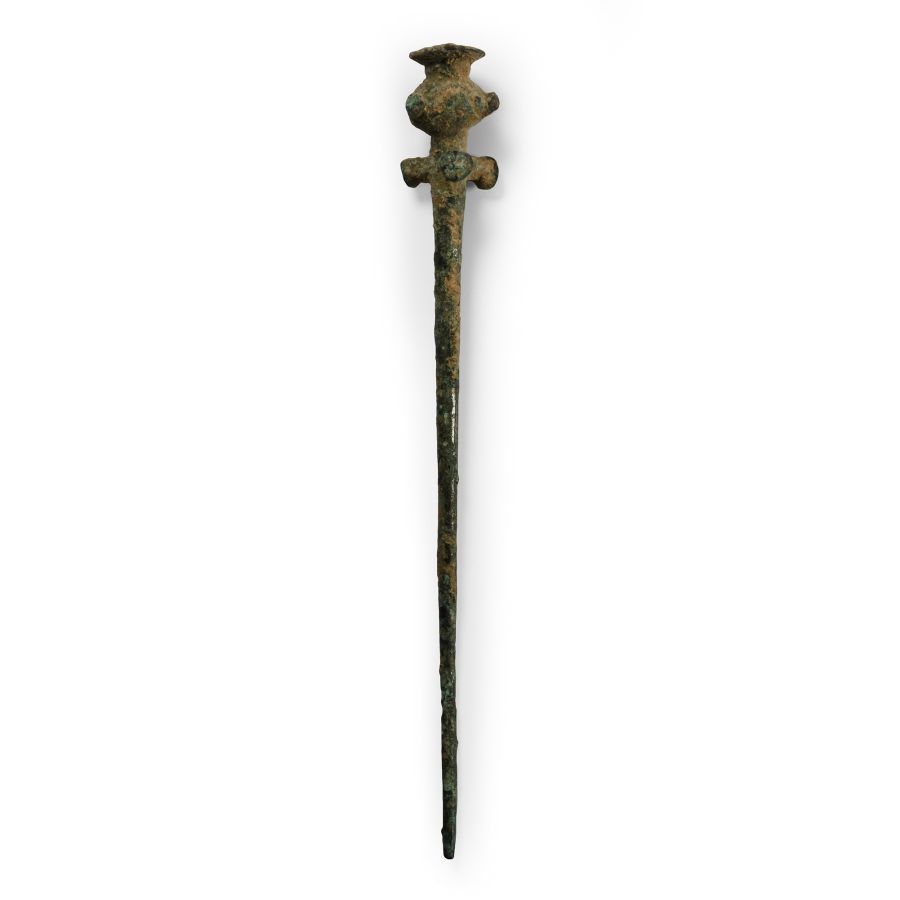
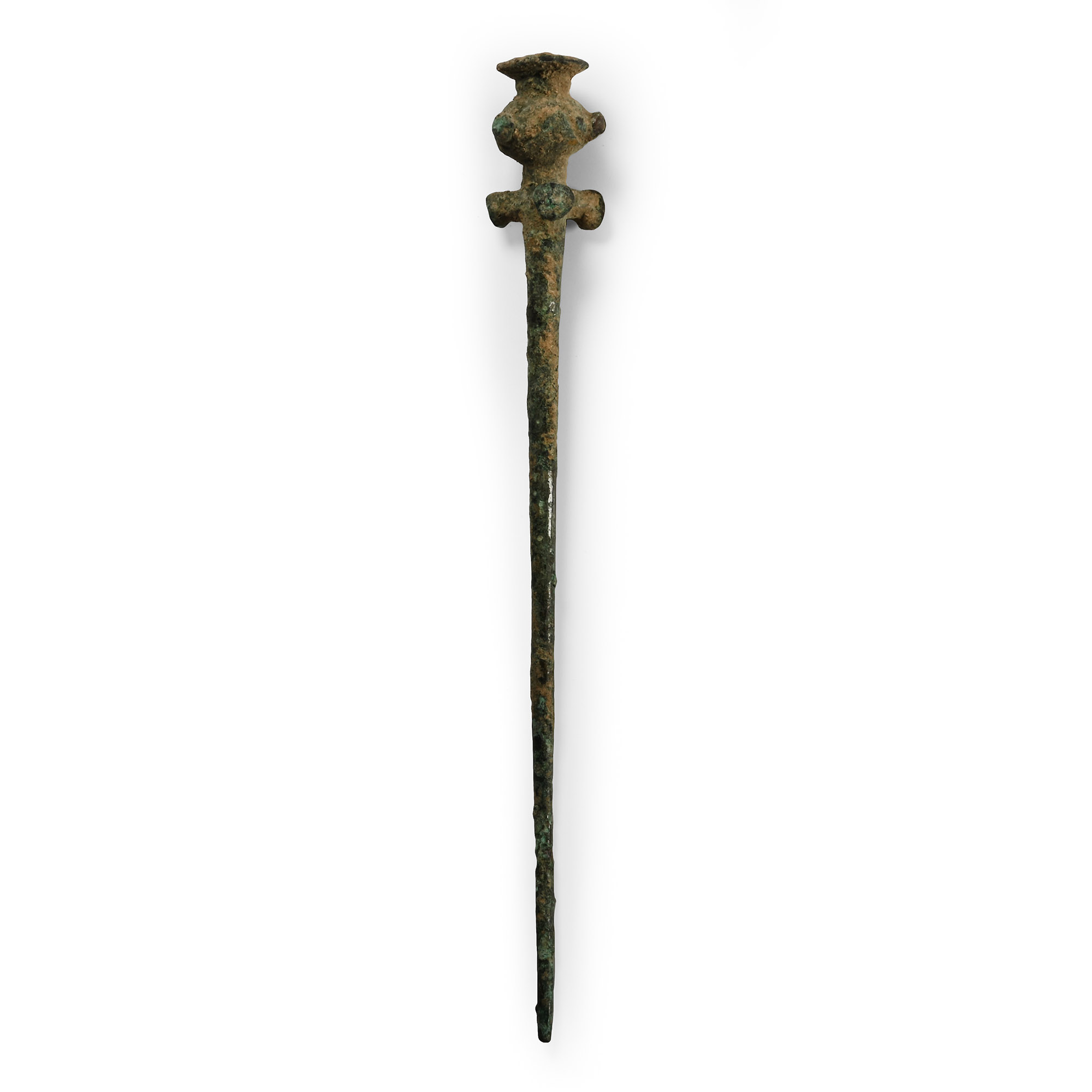
Luristan Bronze Poppy-Headed Dress Pin
13TH-7TH CENTURY B.C.
5 in. (17.9 grams, 12.5 cm).
With a short tapering body, poppy-head finial and three radiating lugs. [No Reserve]
ProvenanceAcquired on the UK art market before 2000.
Property of an Essex, UK, gentleman.
This lot has been cleared against the Art Loss Register database, and is accompanied by an illustrated lot declaration signed by the Head of the Antiquities Department, Dr Raffaele D'Amato.
TimeLine Auctions follows a vetting process to ensure the authenticity and legality of all items, reinforcing our commitment to integrity and responsible trading. Each antiquity, antique, and coin lot undergoes thorough examination by a vetting committee of at least ten external specialists, professional trade association members, scientists, and archaeologists: Our Vetting Process
AUCTIONS:
TimeLine is a leading auction house specialising in antiquities, ancient art, collectables, natural history, coins, medals, and books. Our auctions offer museums, collectors, historians, and enthusiasts the opportunity to acquire unique and historically significant pieces.
-
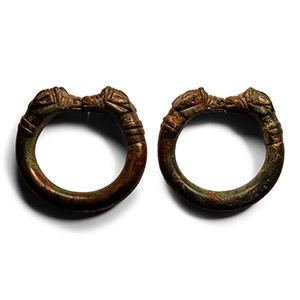
Large Luristan Armlet Pair with Lion Terminals
1000-600 B.C.Estimate: £1,000 - 1,400 (+bp*)
Opening Bid: £350
Each a substantial round-section ring with finials formed as opposed lion-heads with ribbed neck and muzzle, D-shaped ears laid flat, incised eyes. 1.19 kg total, 12.8-13.1 cm
with a London, UK gallery 1971-early 2000s. This lot has been cleared against the Art Loss Register database, and is accompanied by an illustrated lot declaration signed by the Head of the Antiquities Department, Dr Raffaele D'Amato. -
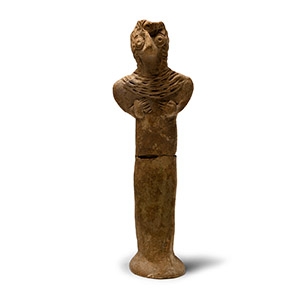
Western Asiatic Terracotta Standing Idol
3rd-2nd millennium B.C.Estimate: £300 - 400 (‡+bp*)
Opening Bid: £150
Freestanding, with a pinched face, elaborate applied hairstyle, circular eyes and prick-decorated collar, hand clasped with palms to chest; repaired. 69 grams, 15 cm high
Acquired in the 1970s. Ex European private collection. This lot has been cleared against the Art Loss Register database, and is accompanied by an illustrated lot declaration signed by the Head of the Antiquities Department, Dr Raffaele D'Amato. -
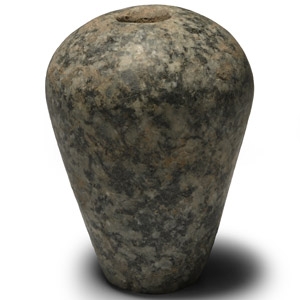
Western Asiatic Stone Macehead
3rd-2nd millennium B.C.Sold for (Inc. bp): £234
Piriform with vertical socket expanding towards the narrower end. 338 grams, 80 cm
From the collection of a London, UK, gentleman, 1990s. This lot has been cleared against the Art Loss Register database, and is accompanied by an illustrated lot declaration signed by the Head of the Antiquities Department, Dr Raffaele D'Amato.
