
Loading, please wait...
LOT 1259
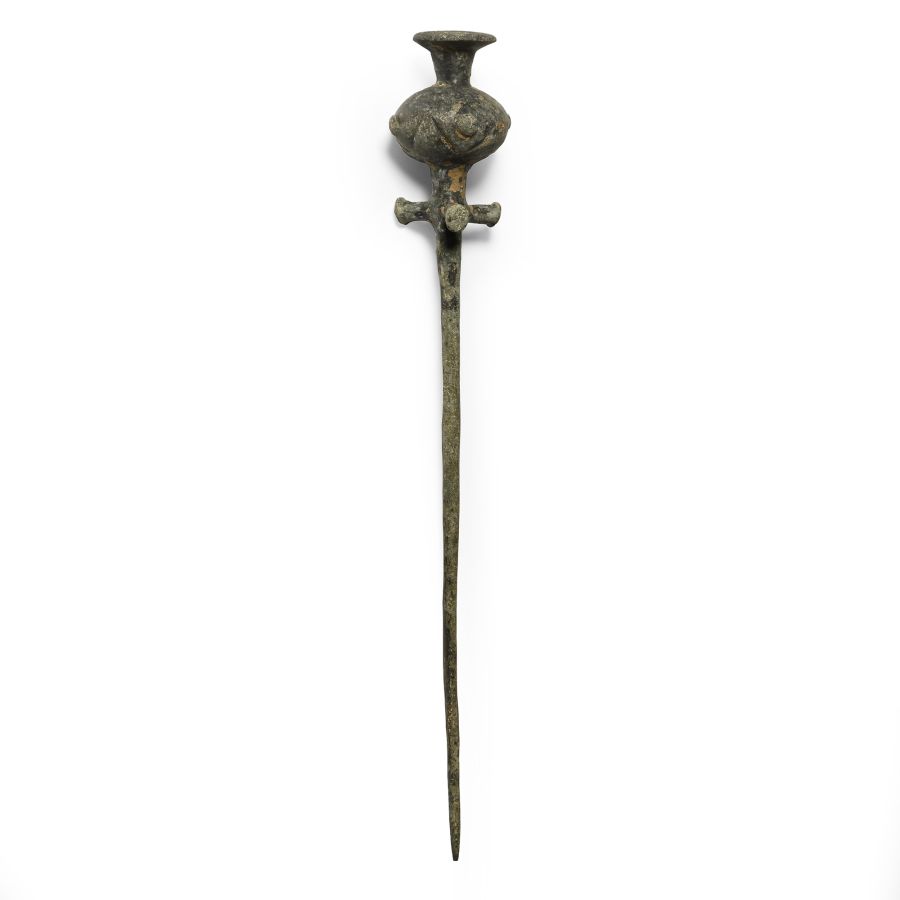
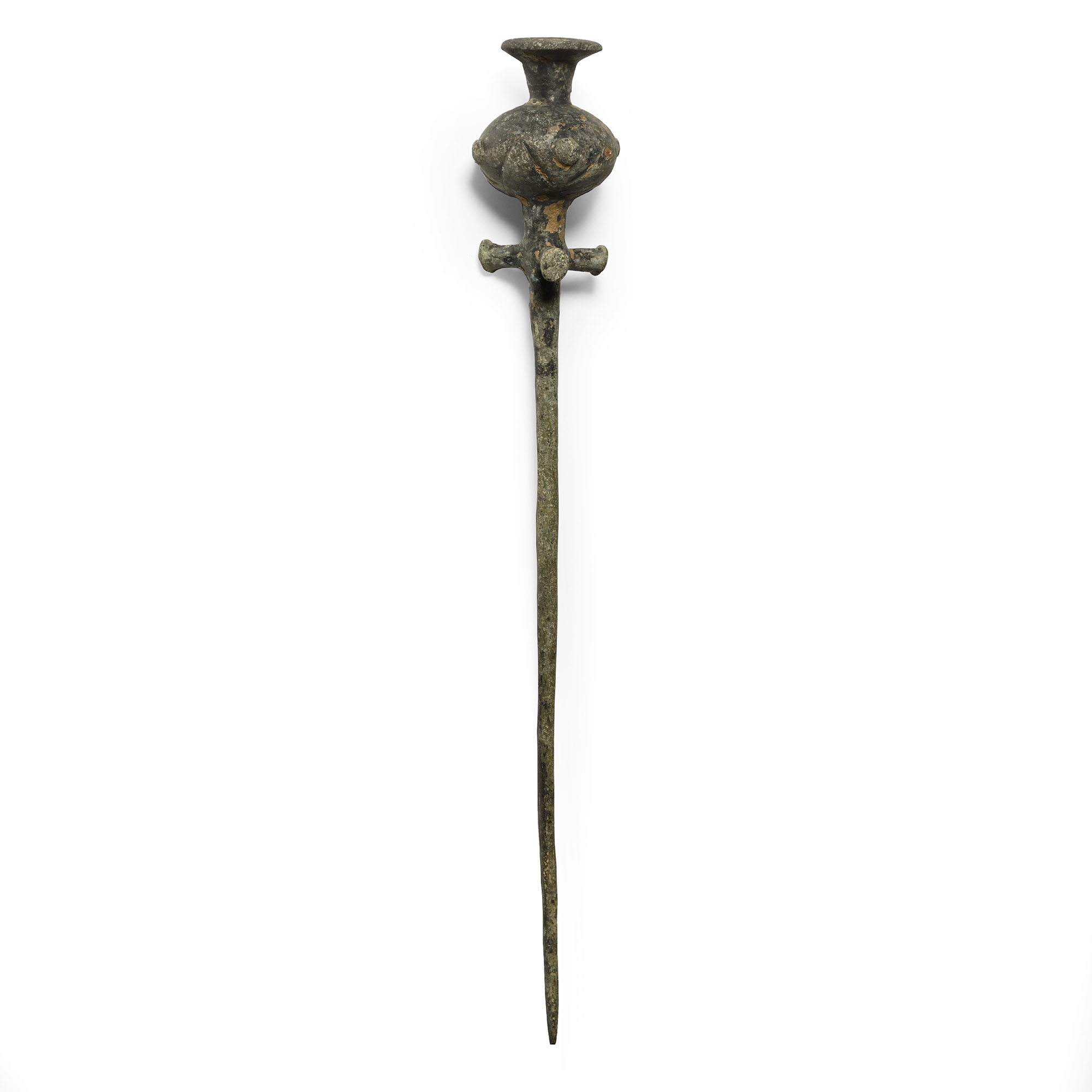
Luristan Bronze Poppy-Headed Cloak Pin
13TH-7TH CENTURY B.C.
9 1/2 in. (136 grams, 24 cm).
Comprising a substantial round-sectioned pin with bulbous poppy-shaped head with four radiating conical arms below. [No Reserve]
ProvenanceAcquired 1980-2015.
Ex Abelita family collection.
This lot has been cleared against the Art Loss Register database, and is accompanied by an illustrated lot declaration signed by the Head of the Antiquities Department, Dr Raffaele D'Amato.
Cf. The Metropolitan Museum, accession number 51.44.2, for similar.
CONDITIONTimeLine Auctions follows a vetting process to ensure the authenticity and legality of all items, reinforcing our commitment to integrity and responsible trading. Each antiquity, antique, and coin lot undergoes thorough examination by a vetting committee of at least ten external specialists, professional trade association members, scientists, and archaeologists: Our Vetting Process
AUCTIONS:
TimeLine is a leading auction house specialising in antiquities, ancient art, collectables, natural history, coins, medals, and books. Our auctions offer museums, collectors, historians, and enthusiasts the opportunity to acquire unique and historically significant pieces.
-

Luristan Bronze Arrowhead Group
13th-6th century B.C.Sold for (Inc. bp): £286
Comprising triangular types with thick midrib, heater-shaped, leaf-shaped, and other types. 340 grams total, 9.6-14.3 cm
Acquired 1980-2015. Ex Abelita family collection. This lot has been cleared against the Art Loss Register database, and is accompanied by an illustrated lot declaration signed by the Head of the Antiquities Department, Dr Raffaele D'Amato.
One category of the represented arrowheads has a sharp, flat blade, the ends of which extend to form wings or barbs, and a prominent midrib extending into a long tang that often has a stop; the blade shape varies from deltoid to more triangular. Another form has no barbs, but it has a prominent midrib extending to the tang, and a narrow leaf-shaped blade. -
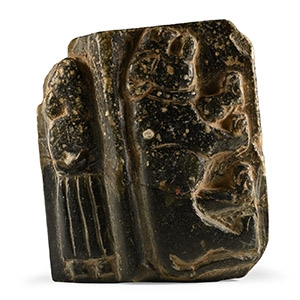
Mesopotamian Black Stone Seal with Lion and Male Figure
2nd-1st millennium B.C.Sold for (Inc. bp): £468
Rectangular in profile with carved detailing; obverse with standing figure in ankle-length robe, bearded head turned; dividing rib beside an advancing lion with mouth open; reverse scene with perching bird and other items; pierced vertically for mounting. 97 grams, 64 mm
Collected from 1970-1999. From the collection of the late Mr S.M., London, UK. This lot has been cleared against the Art Loss Register database, and is accompanied by an illustrated lot declaration signed by the Head of the Antiquities Department, Dr Raffaele D'Amato. -
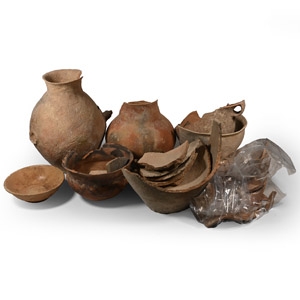
Holy Land and Other Terracotta Pottery Group
3rd-1st millennium B.C. and laterSold for (Inc. bp): £124
Including globular jars, bowls, vases, a polychrome glazed base and other items. 11.45 kg total, 4-29.5 cm
Ex London, UK, gallery, 1980-1990s. This lot has been cleared against the Art Loss Register database, and is accompanied by an illustrated lot declaration signed by the Head of the Antiquities Department, Dr Raffaele D'Amato.
In Early Bronze Age II Period, the pottery tradition of the previous period, in Holy Land, continues, though with a number of significant changes. The jars can be divided into those with and without necks. Thin walled jars were often done of fine, well-levigated ware.
