
Loading, please wait...

LOT 1437
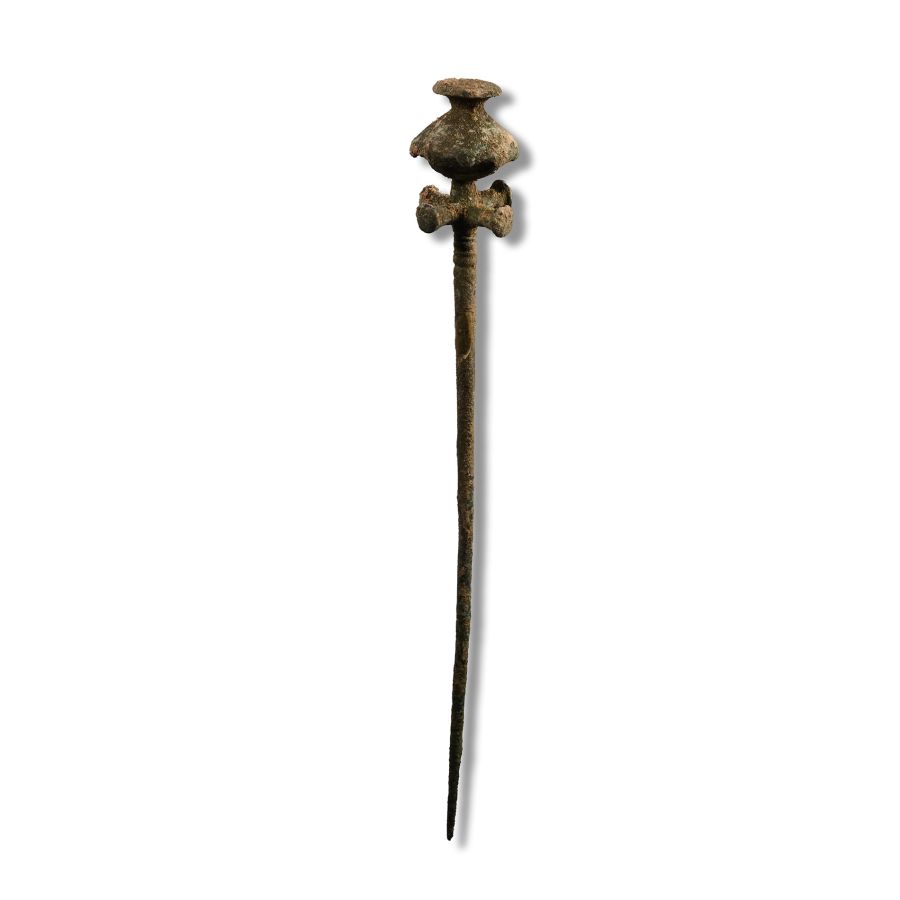
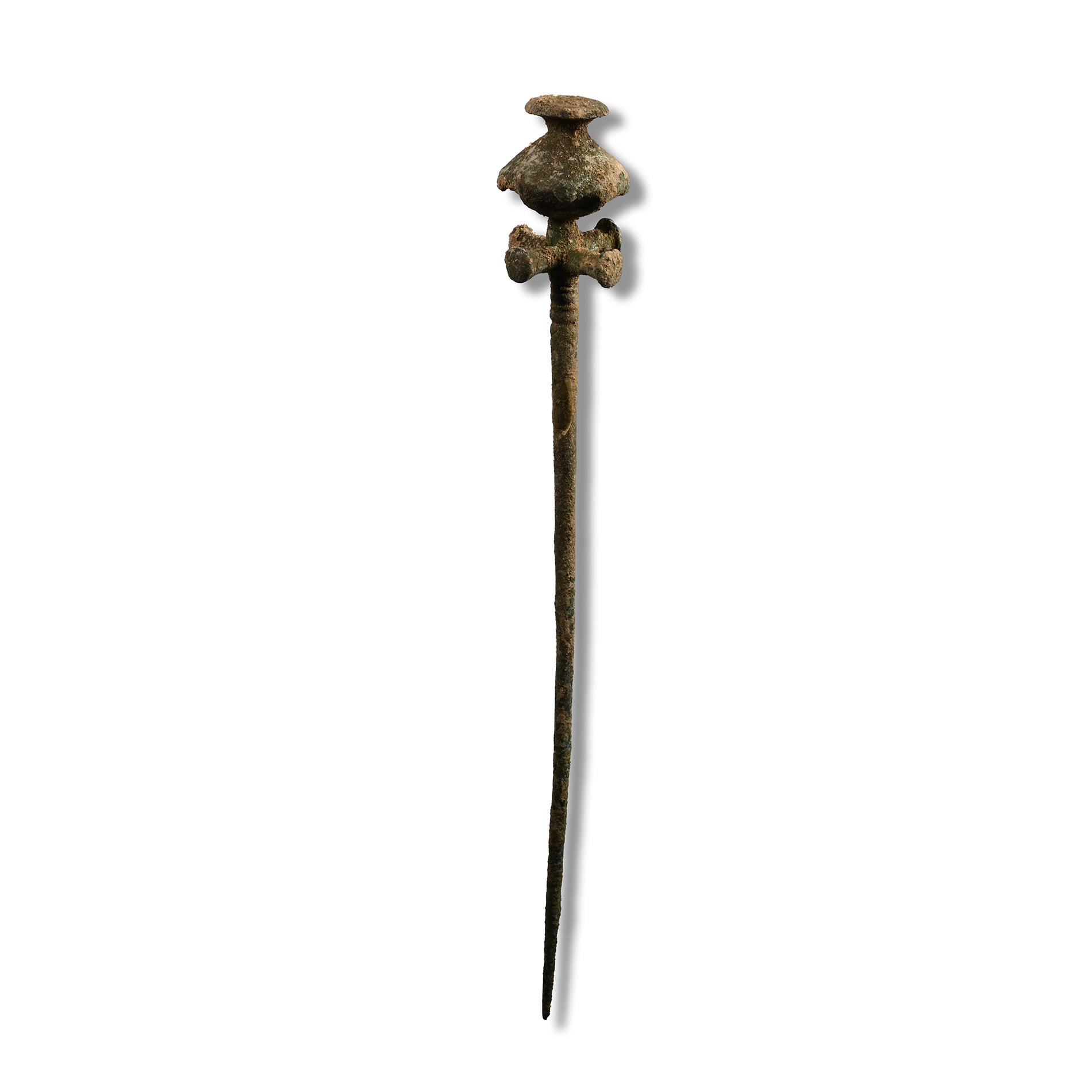
Luristan Bronze Pin with Decorative Head
13TH-6TH CENTURY B.C.
9 7/8 in. (94 grams, 24 cm).
Comprising a substantial round-sectioned pin with bulbous poppy-shaped head with four radiating conical arms below. [No Reserve]
ProvenanceAcquired 1980-2015.
Ex Abelita family collection.
This lot has been cleared against the Art Loss Register database, and is accompanied by an illustrated lot declaration signed by the Head of the Antiquities Department, Dr Raffaele D'Amato.
Cf. The Metropolitan Museum, accession number 51.44.2, for similar.
CONDITIONTimeLine Auctions follows a vetting process to ensure the authenticity and legality of all items, reinforcing our commitment to integrity and responsible trading. Each antiquity, antique, and coin lot undergoes thorough examination by a vetting committee of at least ten external specialists, professional trade association members, scientists, and archaeologists: Our Vetting Process
AUCTIONS:
TimeLine is a leading auction house specialising in antiquities, ancient art, collectables, natural history, coins, medals, and books. Our auctions offer museums, collectors, historians, and enthusiasts the opportunity to acquire unique and historically significant pieces.
-
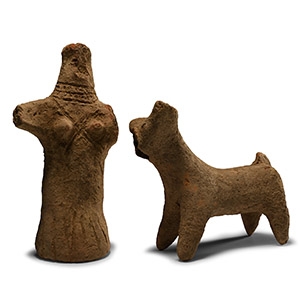
Chalcolithic Terracotta Figure Group
3rd millennium B.C.Sold for (Inc. bp): £117
Comprising: a standing female with collar and fringed robe; standing quadruped. 260 grams total, 9-12.2 cm
From the collection of a London, UK, gentleman, 1979-1999. This lot has been cleared against the Art Loss Register database, and is accompanied by an illustrated lot declaration signed by the Head of the Antiquities Department, Dr Raffaele D'Amato. -
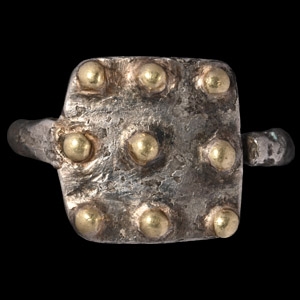
Western Asiatic Silver-Gilt Ring with Bosses
Eastern Roman Period, circa 3rd-5th century A.D.Sold for (Inc. bp): £169
Penannular in form with square bezel, nine gilt bosses. 4.58 grams, 23.23 mm overall, 18.16 mm internal diameter (approximate size British N 1/2, USA 6 3/4, Europe 14.35, Japan 13)
Ex German art market, 2000s. Acquired from an EU collector living in London. From the collection of Surrey, UK, gentleman. This lot has been cleared against the Art Loss Register database, and is accompanied by an illustrated lot declaration signed by the Head of the Antiquities Department, Dr Raffaele D'Amato. -
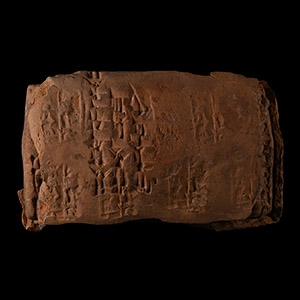
Old Babylonian Cuneiform Contract Tablet for the Purchase of Land with Silver During the Reign of King Manabaltiel of Kisurra
2nd millennium B.C.Sold for (Inc. bp): £2,080
Pillow-shaped ceramic tablet with impressed cuneiform inscriptions, listing the purchase of a parcel of land for 1/3 of a mina of silver, a purchase that cannot be contested, with a list of witnesses; wrapped and enclosed in a clay envelope with cuneiform text to both flat faces. 180 grams, 96 mm
From an important collection of a London gentleman, 1980-2000s. This lot has been cleared against the Art Loss Register database, and is accompanied by an illustrated lot declaration signed by the Head of the Antiquities Department, Dr Raffaele D'Amato.
