
Loading, please wait...
LOT 1402
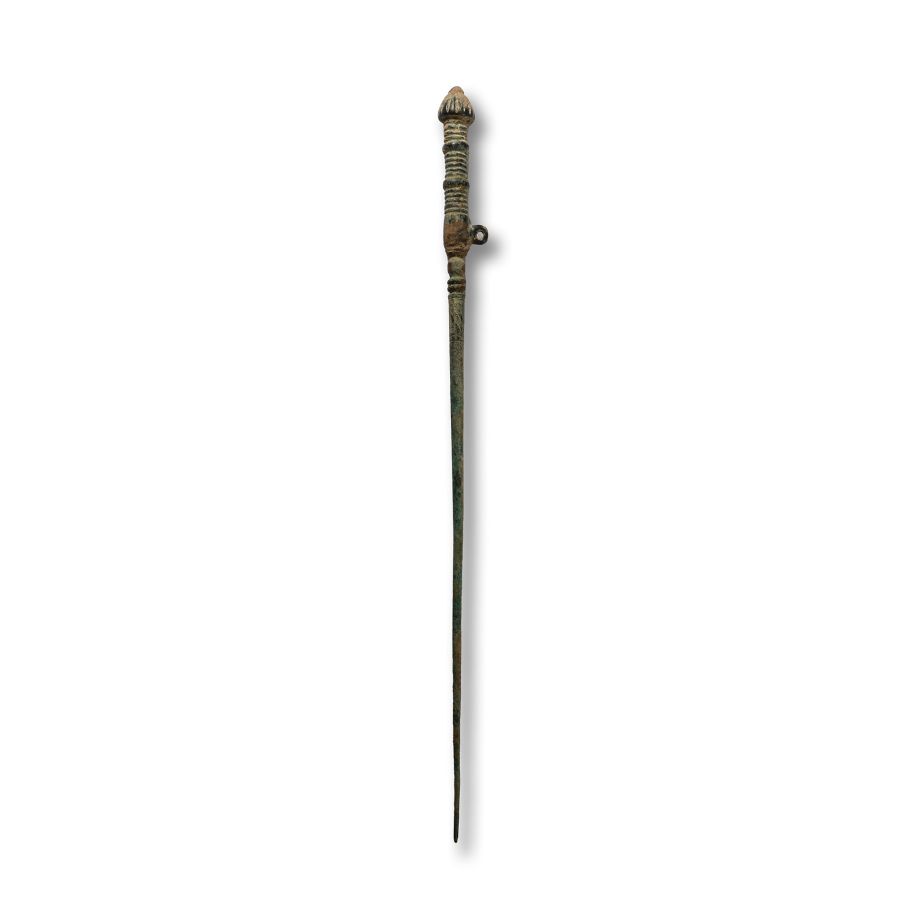
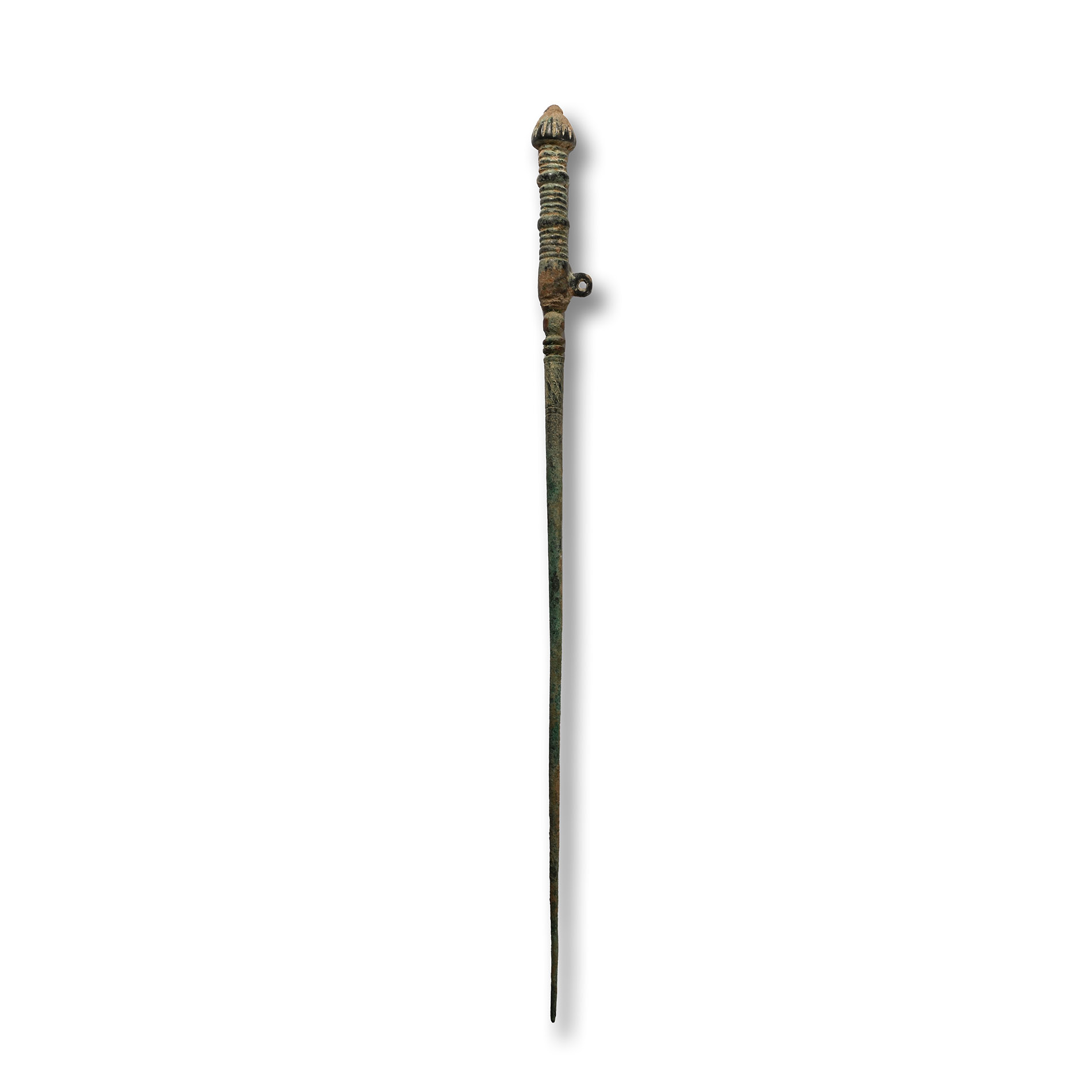
Luristan Bronze Pin with Decorative Head
13TH-6TH CENTURY B.C.
15 1/8 in. (166 grams, 38.5 cm).
With a long tapering shank, a panel of incised diagonal herringbone decoration to the top, long ribbed finial with raised collars and conical top, loop to the side. [No Reserve]
ProvenanceAcquired 1980-2015.
Ex Abelita family collection.
This lot has been cleared against the Art Loss Register database, and is accompanied by an illustrated lot declaration signed by the Head of the Antiquities Department, Dr Raffaele D'Amato.
TimeLine Auctions follows a vetting process to ensure the authenticity and legality of all items, reinforcing our commitment to integrity and responsible trading. Each antiquity, antique, and coin lot undergoes thorough examination by a vetting committee of at least ten external specialists, professional trade association members, scientists, and archaeologists: Our Vetting Process
AUCTIONS:
TimeLine is a leading auction house specialising in antiquities, ancient art, collectables, natural history, coins, medals, and books. Our auctions offer museums, collectors, historians, and enthusiasts the opportunity to acquire unique and historically significant pieces.
-
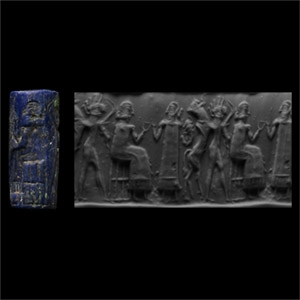
Early Dynastic Lapis Lazuli Cylinder Seal
Circa 2550-2400 B.C.Sold for (Inc. bp): £2,210
Engraved with a religious scene comprising a seated king on a throne-shaped chair, holding a cup and wearing a long garment; standing worshipper or priest before him; before them, a nude hero and a bull-man presented in a contest scene. 4.75 grams, 23 mm
From the 'S' collection, acquired 1970-1990s. The collection was seen and studied by W.G. Lambert, late Professor of Assyriology at the University of Birmingham, 1970-1993. Accompanied by a copy of a report from Assyriologist Hui Li. This lot has been checked against the Interpol Database of stolen works of art and is accompanied by a search certificate number no.12558-231428. This lot has been cleared against the Art Loss Register database, and is accompanied by an illustrated lot declaration signed by the Head of the Antiquities Department, Dr Raffaele D'Amato.
The clearly engraved facial features, the almond-shaped eyes, pointed noses, and abstract outlines shaping the bodies, attest to the iconic glyptic practices of the late Early Dynastic Period. The cup held by the king, containing holy ointment or oil, might have been used as an emblem to signify the elevated rank of a deified king. It may have also been used an alternative religious practice, connecting the secular authority and the divine power during the Early Dynastic Period. -
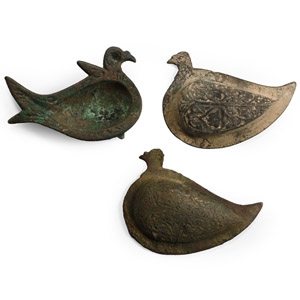
Western Asiatic Bronze Cosmetic Dish Group
12th-13th century A.D.Estimate: £150 - 200 (+bp*)
Opening Bid: £75
Comprising three shallow dishes, each comma-shaped with incised hatching to the narrow rim, bird-head detailing to the spur; one with three stub feet. 114 grams total, 74-78 mm
Ex London, UK, gallery, 1971-early 2000s. London, UK, collection. This lot has been cleared against the Art Loss Register database, and is accompanied by an illustrated lot declaration signed by the Head of the Antiquities Department, Dr Raffaele D'Amato. -
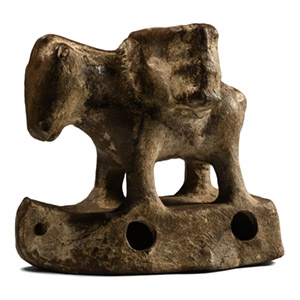
Azerbaijani Terracotta Children's Toy Donkey
1st millennium B.C.Estimate: £700 - 900 (+bp*)
Opening Bid: £275
Modelled in the round with head down, halter to the shoulders and spine supporting panniers open to the upper face; heater-shaped base with raised spur to the apex and transverse hole, circular piercings to the sides. 347 grams, 15.1 cm wide
with a London, UK gallery 1971-early 2000s. This lot has been checked against the Interpol Database of stolen works of art and is accompanied by a search certificate number no.12126-217308. This lot has been cleared against the Art Loss Register database, and is accompanied by an illustrated lot declaration signed by the Head of the Antiquities Department, Dr Raffaele D'Amato.
