
Loading, please wait...
LOT 1652
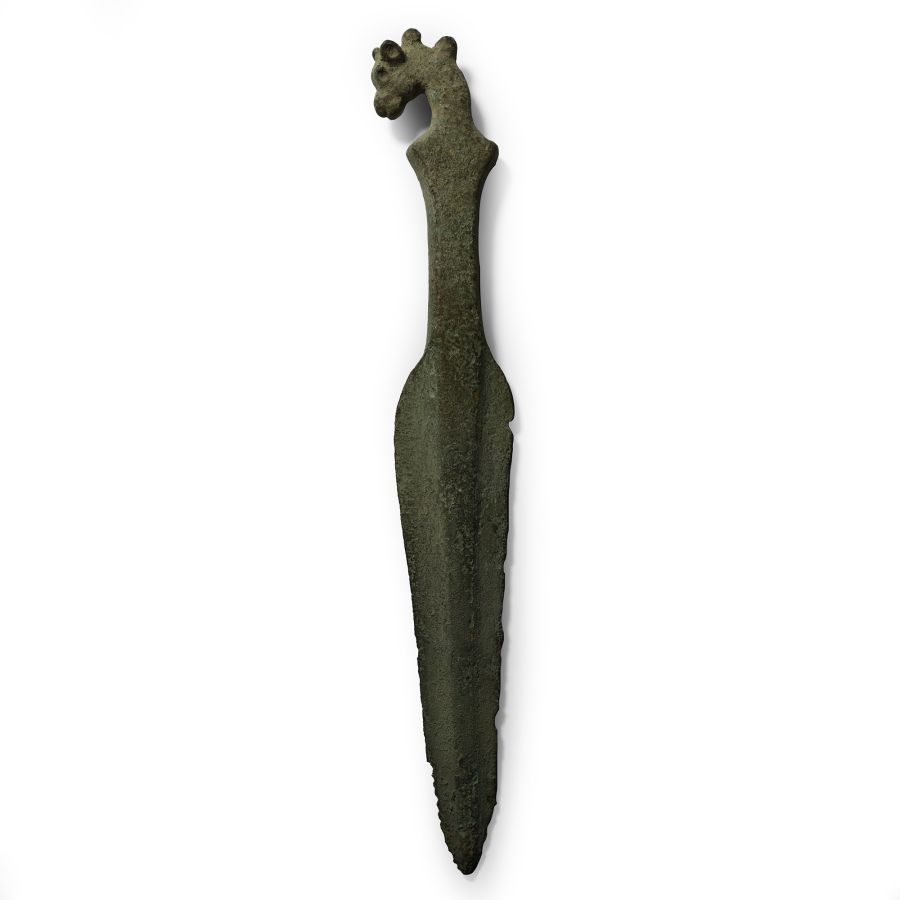
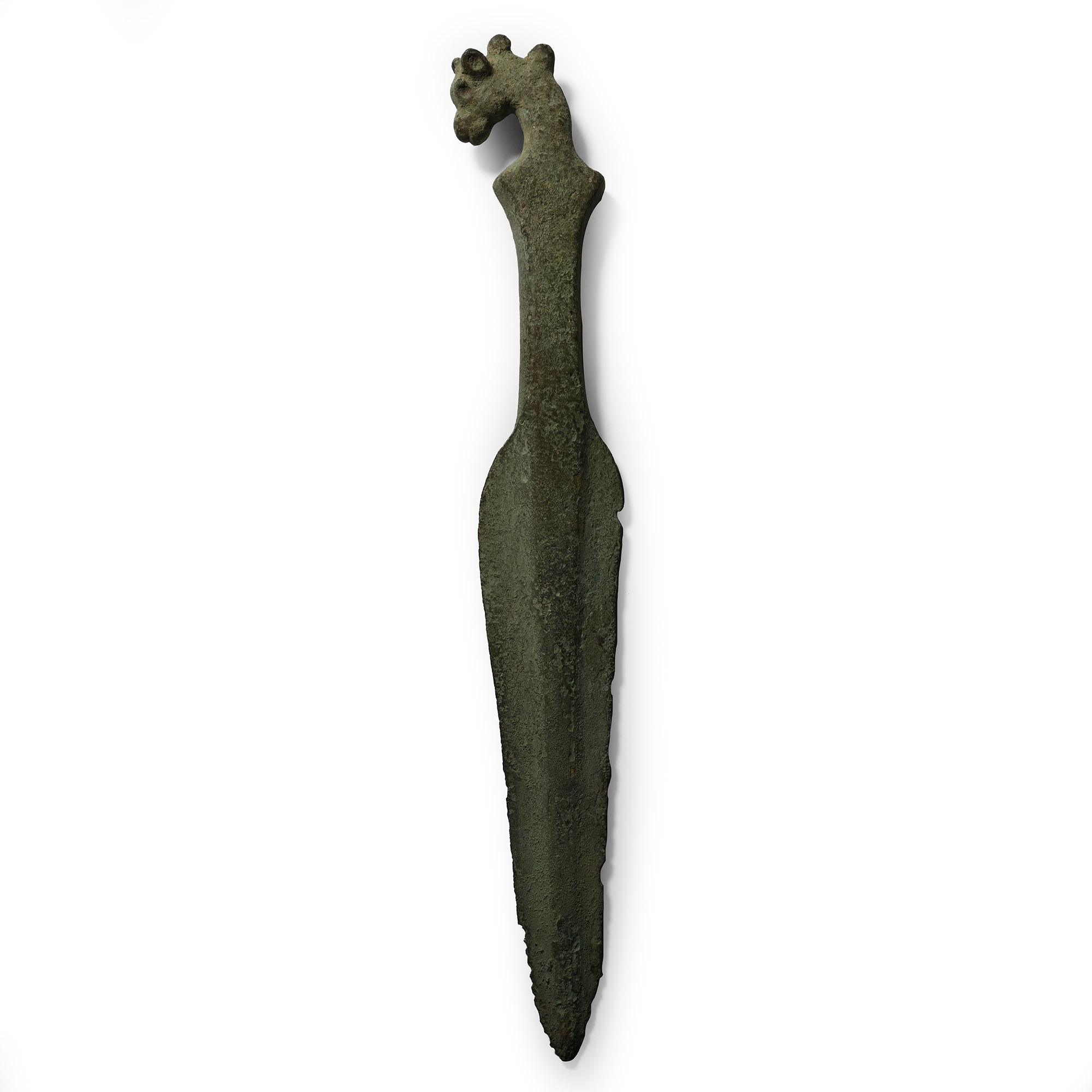
Luristan Bronze Miniature Dagger
12TH-11TH CENTURY B.C.
9 7/8 in. (294 grams, 25.2 cm).
Short dagger with leaf-shaped blade, with a slightly pronounced midrib, expanded handle terminating in an equine protome.
ProvenanceAcquired 1980-2015.
Ex Abelita family collection.
This lot is accompanied by an illustrated lot declaration signed by the Head of the Antiquities Department, Dr Raffaele D’Amato.
Cf. Muscarella, O.W., Bronze and Iron, ancient Near Eastern Artifacts in the Metropolitan Museum of Art, New York, 1988, no.389, for the type.
FootnotesMiniature weapons such as this one apparently functioned as models for actual weapons and may have had a cultic purpose. The hilt of this dagger, if effectively used, should have been flanged for the filling with organic material. Unfortunately, only a few miniature tools and weapons have been found in the archaeological context of the graves, which does not offer clear elements of understanding and comparison.
CONDITIONTimeLine Auctions follows a vetting process to ensure the authenticity and legality of all items, reinforcing our commitment to integrity and responsible trading. Each antiquity, antique, and coin lot undergoes thorough examination by a vetting committee of at least ten external specialists, professional trade association members, scientists, and archaeologists: Our Vetting Process
AUCTIONS:
TimeLine is a leading auction house specialising in antiquities, ancient art, collectables, natural history, coins, medals, and books. Our auctions offer museums, collectors, historians, and enthusiasts the opportunity to acquire unique and historically significant pieces.
-
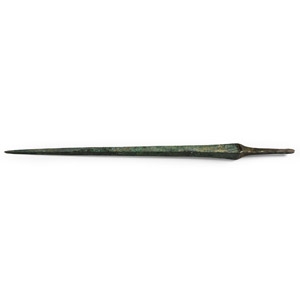
Luristan Bronze Pointed Spear
9th-7th century B.C.Sold for (Inc. bp): £234
Square in section and tapering to a substantial point, with short neck and square-section tang. 201 grams, 34.2 cm
Ex London, UK, gallery, 1971-early 2000s. London, UK, collection. This lot is accompanied by an illustrated lot declaration signed by the Head of the Antiquities Department, Dr Raffaele D’Amato. -
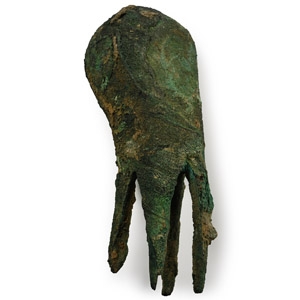
Bactrian Bronze Claw Axehead-Mace
2nd-1st millennium B.C.Sold for (Inc. bp): £117
Egg-shaped with spiked sleeves or prongs, the top of the weapon with a narrow edge. 190 grams, 10.9 cm
Acquired on the UK art market before 2000. Property of an Essex, UK, gentleman. This lot is accompanied by an illustrated lot declaration signed by the Head of the Antiquities Department, Dr Raffaele D’Amato.
The 'claw mace' was an enigmatic ancient bronze weapon from the Bronze Age Near East. The hollow bulbous head was trailed by tines of varying lengths. It is believed that it was affixed over a wooden shaft and used like a club in combat, and not necessarily used as ceremonial weapon. The knife edge bulb end could have broken bones and proven to be a formidable striking weapon requiring no skill to wield. The tines would have not only been decorative, but have served to add strength below the striking end to prevent breakage. In battle, maces were often used by commanders to display rank when giving orders in battle and leading soldiers, inspiring leadership and power. Egg-shaped with spiked sleeves or prongs, the top of the weapon with a narrow edge, the sleeves with small internal tangs for mounting. -
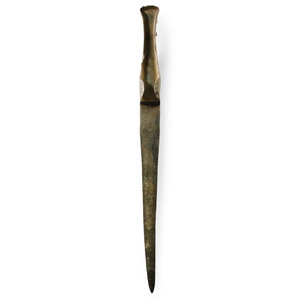
Luristan Bronze Blade
12th century B.C.Sold for (Inc. bp): £260
With lentoid-section blade, tongue-shaped in plan, with integral tapering hilt with flared finial, lateral flanges to accept an organic panel forming the grip. 245 grams, 41 cm
Acquired 1980-2015. Ex Abelita family collection. This lot is accompanied by an illustrated lot declaration signed by the Head of the Antiquities Department, Dr Raffaele D’Amato.
The art of Luristan can be described as the art of nomadic herdsmen and horsemen with an emphasis on the crafting of small, easily portable objects, among these a great number of bronze weapons. The rich and noble aristocrats of the Luristan, Elamites, Hurrians, Lullubians, Kutians, and Kassites, went to battle splendidly equipped and wore magnificent bronze armour, using maces, spears and daggers as offensive weapons, alongside spears, bows and arrows.
